
Close Menu
    Facebook X (Twitter) Instagram
    SciTechDaily
    • Biology
    • Chemistry
    • Earth
    • Health
    • Physics
    • Science
    • Space
    • Technology
    Facebook X (Twitter) Pinterest YouTube RSS
    SciTechDaily
    Home»Health»Yale Research Reveals Interesting Results for Frozen vs. Fresh Embryos for IVF
    Health

    Yale Research Reveals Interesting Results for Frozen vs. Fresh Embryos for IVF

    By Michael Greenwood, Yale UniversityJanuary 16, 2018No Comments3 Mins Read
    Facebook Twitter Pinterest Telegram LinkedIn WhatsApp Email Reddit
    Share
    Facebook Twitter LinkedIn Pinterest Telegram Email Reddit
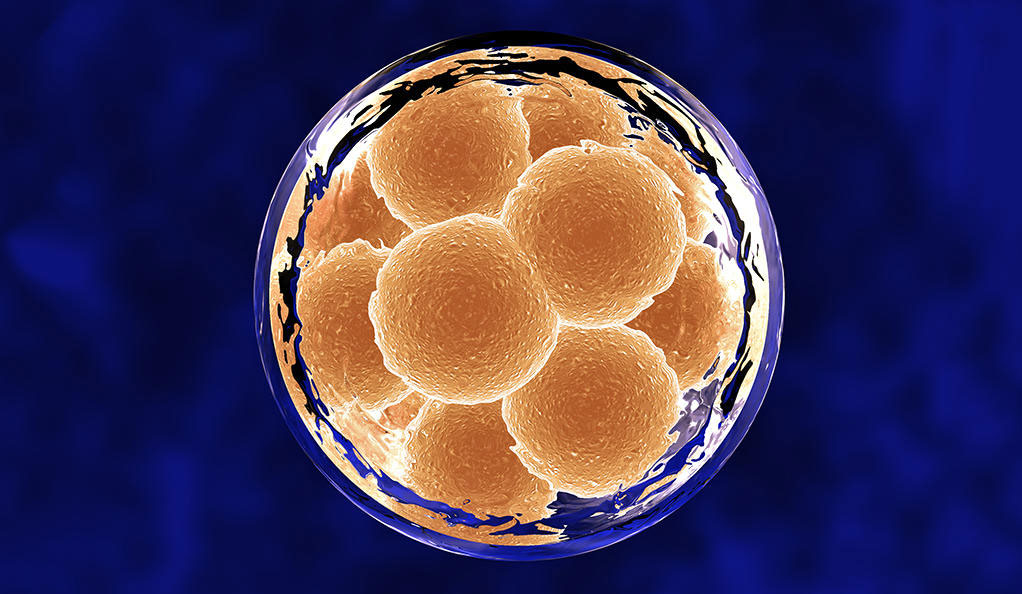
    Study Finds Interesting Results for Frozen vs. Fresh Embryos for IVF
    The study showed no significant difference in live birth rates between women using fresh and frozen embryos. Both groups also had similar rates of pregnancy-related outcomes.

    Many women struggling to have a baby turn to in-vitro fertilization to improve their chances, and then face further uncertainty and anxiety when confronted with the decision of whether to use frozen or fresh embryos. A new study by a researcher at Yale School of Public Health and co-authors in China finds an insignificant difference in live birth rates between the two methods.

    In this study, published in the New England Journal of Medicine, Heping Zhang of the Yale School of Public Health (YSPH) collaborated with scientists from throughout China and monitored 2,157 women who were undergoing their first in-vitro fertilization cycle and were randomly assigned either fresh or frozen embryos.

    Researchers found that women using frozen embryos had a live birth rate of 48.7%, versus a live birth rate of 50.2% for women in the fresh-embryo group. There were also no significant differences between the groups in rates of implantation, clinical pregnancy, overall pregnancy loss, and ongoing pregnancy.

    The study, however, did find that frozen-embryo transfers resulted in a significantly lower risk of ovarian hyperstimulation syndrome (OHSS) than women using fresh-embryo transfers. While most cases of the syndrome are minor, severe cases can lead to illness and even death. Women using frozen embryos were found to have a 0.6% chance of developing OHSS, versus a 2% chance for women receiving fresh embryos.

    “This is an emerging issue of immediate and important concern for couples who are seeking in-vitro fertilization treatment,” said Zhang, the Susan Dwight Bliss Professor of Biostatistics at YSPH.

    Reports by the Society for Assisted Reproductive Technology have noted that more fertility centers choose to defer embryo transfer by freezing embryos, Zhang said. To the researchers’ knowledge, this is the first time that a large clinical trial was conducted to evaluate this change of practice.

    Zhang said that the findings will immediately impact patients and clinicians in their evaluation and consideration with regard to the risk and benefit of different embryo transfer strategies.

    “This study also exemplifies the success of a multidisciplinary and international collaboration in addressing emerging and clinically important issues that patients and clinicians face as the technologies quickly evolve,” he said.

    The study was funded by the National Key Research and Development Program of China and the National Natural Science Foundation of China.

    Reference: “Transfer of Fresh versus Frozen Embryos in Ovulatory Women” by Yuhua Shi, M.D., Ph.D.; Yun Sun, M.D., Ph.D.; Cuifang Hao, M.D., Ph.D.; Heping Zhang, Ph.D.; Daimin Wei, M.D., Ph.D.; Yunshan Zhang, M.D.; Yimin Zhu, M.D., Ph.D.; Xiaohui Deng, M.D.; Xiujuan Qi, M.D.; Hong Li, M.D.; Xiang Ma, M.D., Ph.D.; Haiqin Ren, M.D.; Yaqin Wang, M.D., Ph.D.; Dan Zhang, M.D., Ph.D.; Bo Wang, M.S.; Fenghua Liu, M.D.; Qiongfang Wu, M.D., Ze Wang, M.S., Haiyan Bai, Ph.D.; Yuan Li, M.D., Ph.D.; Yi Zhou, M.D.; Mei Sun, M.D., Ph.D.; Hong Liu, M.D., Ph.D.; Jing Li, M.S.; Lin Zhang, M.S.; Xiaoli Chen, M.D., Ph.D.; Songying Zhang, M.D., Ph.D.; Xiaoxi Sun, M.D., Ph.D.; Richard S. Legro, M.D. and Zi-Jiang Chen, M.D., Ph.D.; 11 January 2018, New England Journal of Medicine.
    DOI: 10.1056/NEJMoa1705334

    Never miss a breakthrough: Join the SciTechDaily newsletter.
    Follow us on Google and Google News.

    Embryo In Vitro Fertilization Medicine Yale University
    Share. Facebook Twitter Pinterest LinkedIn Email Reddit

    Related Articles

    Scientists Identify Link between Inflammation and Type 2 Diabetes

    Potential Over-Treatment of Diabetes in Older Adults

    Researchers May Have Pinpointed a Strategy for Eliminating Latent HIV

    Yale Study Shows Metformin May be Safe for Patients with Kidney Disease

    Antifreeze Protein in Ticks Could Lead to New Antibiotics for Humans

    Study Finds Stimulant Use Increases by 30% During the School Year

    Yale Researchers Discover New Cancer Cell Vulnerability

    Yale Study Shows No Link between Hospital Readmissions and Death Rates

    Intensive Glycemic Control Does Not Definitively Reduce the Risk of Impaired Kidney Function

    Leave A Reply Cancel Reply

    • Facebook
    • Twitter
    • Pinterest
    • YouTube

    Don't Miss a Discovery

    Subscribe for the Latest in Science & Tech!

    Trending News

    Monster Storms on Jupiter Unleash Lightning Beyond Anything on Earth

    Scientists Create “Liquid Gears” That Spin Without Touching

    The Simple Habit That Could Help Prevent Cancer

    Millions Take These IBS Drugs, But a New Study Finds Serious Risks

    Scientists Unlock Hidden Secrets of 2,300-Year-Old Mummies Using Cutting-Edge CT Scanner

    Bread Might Be Making You Gain Weight Even Without Eating More Calories

    Scientists Discover Massive Magma Reservoir Beneath Tuscany

    Europe’s Most Active Volcano Just Got Stranger – Here’s Why Scientists Are Rethinking It

    Follow SciTechDaily
    • Facebook
    • Twitter
    • YouTube
    • Pinterest
    • Newsletter
    • RSS
    SciTech News
    • Biology News
    • Chemistry News
    • Earth News
    • Health News
    • Physics News
    • Science News
    • Space News
    • Technology News
    Recent Posts
    • Scientists Discover a New Meteor Shower From a Mysterious Crumbling Asteroid
    • This Simple Fruit Wash Could Make Produce Safer and Last Days Longer
    • These Tiny Robots 50x Smaller Than a Hair Can Hunt and Move Bacteria
    • Simple Blood Test May Predict Alzheimer’s Years Before Brain Scans Show Signs
    • Scientists Say Adding This Unusual Seafood to Your Diet Could Reverse Signs of Aging
    Copyright © 1998 - 2026 SciTechDaily. All Rights Reserved.
    • Science News
    • About
    • Contact
    • Editorial Board
    • Privacy Policy
    • Terms of Use

    Type above and press Enter to search. Press Esc to cancel.