
The Eyes Might Disclose Everything When It Comes to ADHD and ASD
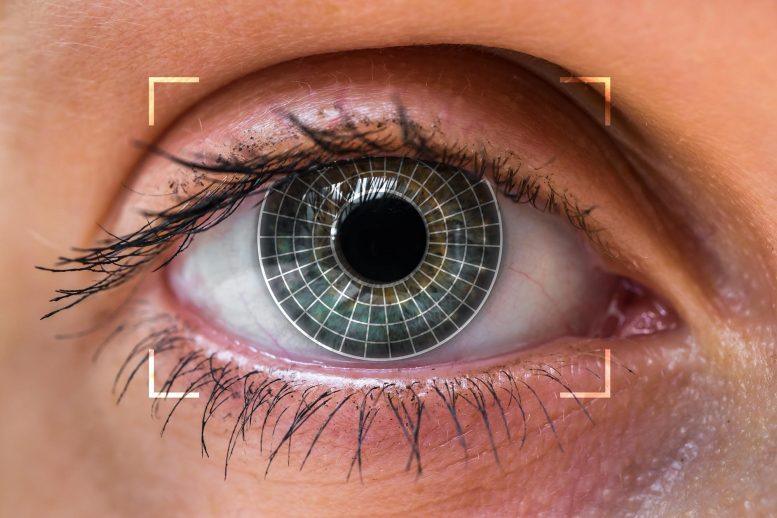
It’s often said that “the eyes tell it all.” According to a recent study from Flinders University and the University of South Australia, regardless of their outward expression, the eyes may be able to signal neurodevelopmental problems like ASD and ADHD.
In the first study of its type, scientists discovered that recordings from the retina could distinguish between different signals for Attention Deficit Hyperactivity Disorder (ADHD) and Autism Spectrum Disorder (ASD), offering a possible biomarker for each disorder.
Differences in Retinal Energy in ADHD vs. ASD
Using the ‘electroretinogram’ (ERG), a diagnostic test that monitors the electrical activity of the retina in response to a light stimulus, researchers discovered that children with ADHD had greater total ERG energy, but children with ASD had lower ERG energy.
Dr. Paul Constable, a research optometrist at Flinders University, believes the early findings point to promising results for future advancements in diagnostics and treatments.
“ASD and ADHD are the most common neurodevelopmental disorders diagnosed in childhood. But as they often share similar traits, making diagnoses for both conditions can be lengthy and complicated,” Dr. Constable says.
“Our research aims to improve this. By exploring how signals in the retina react to light stimuli, we hope to develop more accurate and earlier diagnoses for different neurodevelopmental conditions.
How Retinal Signals Relate to Brain Function
He continues, “Retinal signals have specific nerves that generate them, so if we can identify these differences and localize them to specific pathways that use different chemical signals that are also used in the brain, then we can show distinct differences for children with ADHD and ASD and potentially other neurodevelopmental conditions. This study delivers preliminary evidence for neurophysiological changes that not only differentiate both ADHD and ASD from typically developing children, but also evidence that they can be distinguished from each other based on ERG characteristics.”
According to the World Health Organization, one in 100 children has ASD, with 5-8% of children diagnosed with ADHD.
Attention Deficit Hyperactivity Disorder (ADHD) is a neurodevelopmental condition characterized by being overly active, struggling to pay attention, and having difficulty controlling impulsive behaviors. Autism spectrum disorder (ASD) is also a neurodevelopmental condition where children behave, communicate, interact, and learn in ways that are different from most other people.
Broader Implications for Neurological Conditions
Co-researcher and expert in human and artificial cognition at the University of South Australia, Dr. Fernando Marmolejo-Ramos, says the research has the potential to extend across other neurological conditions.
“Ultimately, we’re looking at how the eyes can help us understand the brain,” Dr. Marmolejo-Ramos says.
“While further research is needed to establish abnormalities in retinal signals that are specific to these and other neurodevelopmental disorders, what we’ve observed so far shows that we are on the precipice of something amazing. It is truly a case of watching this space; as it happens, the eyes could reveal all.”
Reference: “Discrete Wavelet Transform Analysis of the Electroretinogram in Autism Spectrum Disorder and Attention Deficit Hyperactivity Disorder” by Paul A. Constable, Fernando Marmolejo-Ramos, Mercedes Gauthier, Irene O. Lee, David H. Skuse and Dorothy A. Thompson, 6 June 2022, Frontiers in Neuroscience.
DOI: 10.3389/fnins.2022.890461
The study was funded by the Alan B. Slifka Foundation.
Never miss a breakthrough: Join the SciTechDaily newsletter.
Follow us on Google and Google News.