
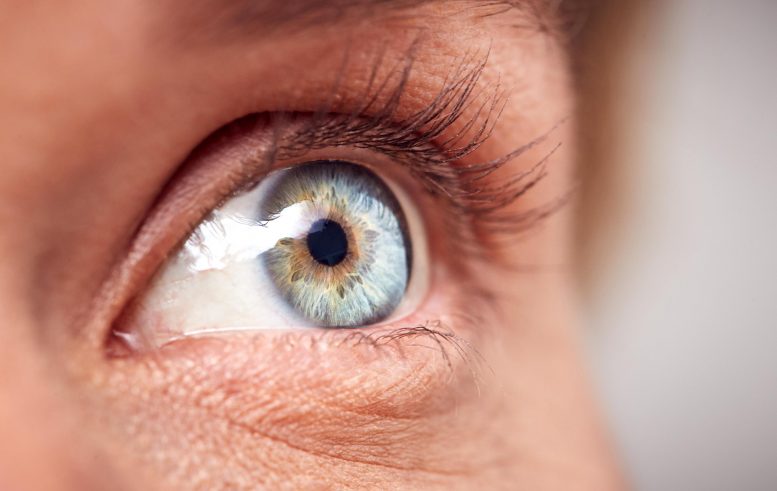
Protein deposits in retina and brain appear to parallel possible neurodegeneration, an insight that might lead to easier, quicker detection.
Amyloid plaques are protein deposits that collect between brain cells, hindering function and eventually leading to neuronal death. They are considered a hallmark of Alzheimer’s disease (AD), and the focus of multiple investigations designed to reduce or prevent their formation, including the nationwide A4 study.
But amyloid deposits may also occur in the retina of the eye, often in patients clinically diagnosed with AD, suggesting similar pathologies in both organs. In a small, cross-sectional study, a team of researchers, led by scientists at University of California San Diego School of Medicine, compared tests of retinal and brain amyloids in patients from the A4 study and another study (Longitudinal Evaluation of Amyloid Risk and Neurodegeneration) assessing neurodegeneration risk in persons with low levels of amyloid.
Eye as a Window to the Brain
Like the proverbial “windows to the soul,” the researchers observed that the presence of retinal spots in the eyes correlated with brain scans showing higher levels of cerebral amyloid. The finding suggests that non-invasive retinal imaging may be useful as a biomarker for detecting early-stage AD risk.
The findings were published in the August 17, 2021 issue of Alzheimer’s & Dementia.
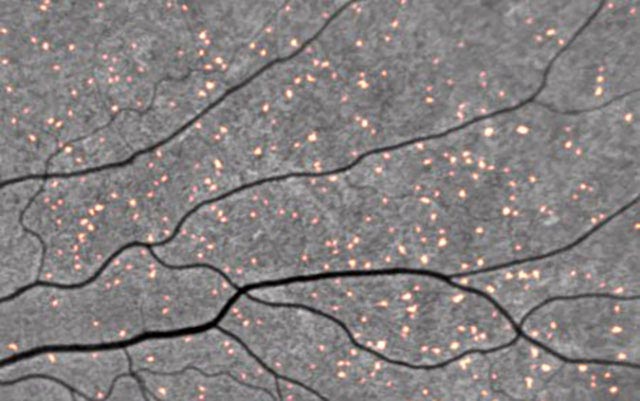
“This was a small initial dataset from the screening visit. It involved eight patients,” said senior author Robert Rissman, PhD, professor of neurosciences at UC San Diego School of Medicine and director of the Biomarker Core for the Alzheimer’s Disease Cooperative Study and the Shiley-Marcos Alzheimer’s Disease Research Center at UC San Diego. “But these findings are encouraging because they suggest it may be possible to determine the onset, spread and morphology of AD — a preclinical diagnosis — using retinal imaging, rather than more difficult and costly brain scans. We look forward to seeing the results of additional timepoint retinal scans and the impact of solanezumab (a monoclonal antibody) on retinal imaging. Unfortunately, we will need to wait to see and analyze these data when the A4 trial is completed.”
The next step, said Rissman, will be to conduct a larger study to more fully document and ascertain the relationship between retinal amyloid and cerebral amyloid, both cross-sectionally and over time.
Reference: “Feasibility study for detection of retinal amyloid in clinical trials: The Anti-Amyloid Treatment in Asymptomatic Alzheimer’s Disease (A4) trial” by Jennifer Ngolab, Michael Donohue, Alison Belsha, Jennifer Salazar, Paula Cohen, Sandhya Jaiswal, Veasna Tan, Devon Gessert, Shaina Korouri, Neelum T. Aggarwal, Jessica Alber, Ken Johnson, Gregory Jicha, Christopher van Dyck, James Lah, Stephen Salloway, Reisa A. Sperling, Paul S. Aisen, Michael S. Rafii and Robert A. Rissman, 17 August 2021, Alzheimer’s & Dementia.
DOI: 10.1002/dad2.12199
Co-authors include: Jennifer Ngolab and Shaina Korouri, UC San Diego; Michael Donohue, Alison Belsha, Jennifer Salazar, Paula Cohen, Sandhya Jaiswal, Veasna Tan, Devon Gessert, Paul S. Aisen and Michael S. Rafii, all at University of Southern California; Neelum T. Aggarwal, Rush University Medical Center; Jessica Alber, University of Rhode Island; Ken Johnson, NeuroVision Imaging Inc; Gregory Jicha, University of Kentucky; Christopher van Dyck, Yale University; James Lah, Emory University; Stephen Salloway, Butler Hospital, R.I.; Reisa A. Sperling, Brigham and Women’s Hospital/Massachusetts General Hospital, Boston.
Funding for this research came, in part, from the National Institutes of Health and National Institute on Aging (grants AG062429, AG018440, AG010483, AG063689), Alzheimer’s Association, Eli Lilly and Company, NeuroVision Inc., Accelerating Medicines Partnership, GHR Foundation, Morton Plant Mease Foundation, plus an anonymous foundation and additional private donors.
Never miss a breakthrough: Join the SciTechDaily newsletter.
Follow us on Google and Google News.