
Researchers from the University of Adelaide have made significant advances in developing a novel vaccine against Zika virus, which could potentially lead to global elimination of the disease.
The virology team, led by Professor Eric Gowans and Dr. Branka Grubor-Bauk — based at the Basil Hetzel Institute for Translational Health Research and supported by The Hospital Research Foundation — has developed a vaccine that prevents Zika infection in pre-clinical models of the disease.
Their findings were published on December 11, 2019, in the leading international journal Science Advances.
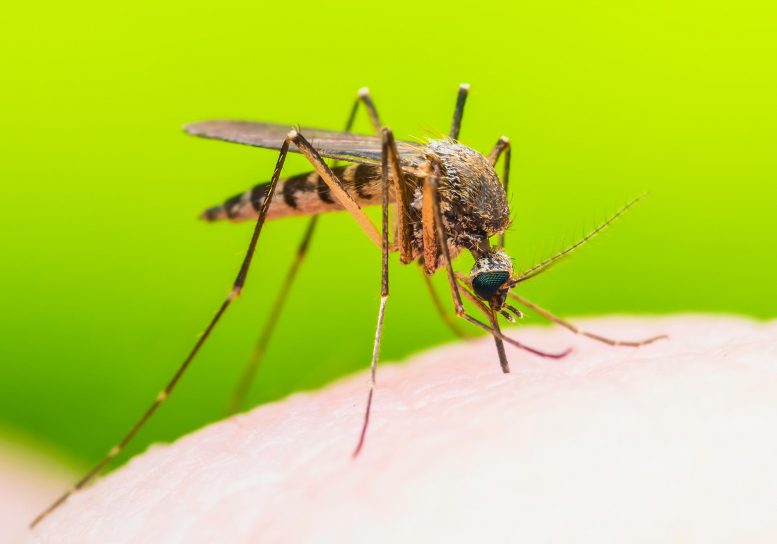
Zika is a mosquito-transmitted ‘flavivirus’ that can cause microcephaly (a birth defect where a baby’s head is significantly smaller than expected) and severe birth defects in infants born to infected mothers.
The introduction of an effective vaccine for Zika will prevent infection of pregnant women and the resultant congenital effects in the unborn child.
Dr. Grubor-Bauk, senior research officer with the Adelaide Medical School, said the team had developed a novel vaccine against Zika that proved effective in mouse models.
“Zika virus is extremely detrimental if you’re pregnant and there has been no therapy or vaccine available to date.” — Dr. Branka Grubor-Bauk
“This is the first vaccine study that shows that a T-cell-based vaccine can confer protection against a systemic Zika infection,’’ she said.
“Our vaccine offers an advantage over other vaccines in development by eliminating the ongoing concerns in the field about enhancement of infection following exposure to dengue virus. This finding demonstrates for the first time that protective T-cell vaccines against Zika are achievable.
“Zika virus is extremely detrimental if you’re pregnant and there has been no therapy or vaccine available to date. If we can progress this work and immunize women who are of reproductive age and most at risk, we can stop the devastating effects of Zika infection in pregnancy and make a huge difference to the health of the global community.”
This research, which has been years in the making, has progressed to this significant stage thanks to funding from National Foundation for Medical Research and Innovation (NFMRI) and ongoing funding from The Hospital Research Foundation.
The work was done in collaboration with eminent global vaccine researcher Prof Dan Barouch, Director of Harvard Medical School’s Center for Virology and Vaccine Research (CVVR) at Beth Israel Deaconess Medical Center; as well as Adelaide’s Prof Sarah Robertson, Director of the Robinson Research Institute, University of Adelaide; and other scientists from the universities of Adelaide, South Australia, and Flinders.
“The next steps are to advance the vaccine to be ready for Phase I human clinical trials. This involves further pre-clinical studies which are vitally important to identify the most effective dosing and demonstrate protection against Zika infection in different pre-clinical models of the disease,” Dr. Grubor-Bauk said.
“The goal is to de-risk and create an attractive technology with a strong IP position, for licensing or co-development with a commercial partner.
“We are grateful to The Hospital Research Foundation which has been instrumental in their support of our research over this time. We could not have reached this point without them.”
The findings of this study will also greatly inform other research in the development of flavivirus vaccines by shifting the focus of vaccine development from viral envelope and antibody-based vaccines to T-cell based vaccines.
Reference: “NS1 DNA vaccination protects against Zika infection through T cell–mediated immunity in immunocompetent mice” by B. Grubor-Bauk, D. K. Wijesundara, M. Masavuli, P. Abbink, R. L. Peterson, N. A. Prow, R. A. Larocca, Z. A. Mekonnen, A. Shrestha, N. S. Eyre, M. R. Beard, J. Gummow, J. Carr, S. A. Robertson, J. D. Hayball, D. H. Barouch and E. J. Gowans, 11 December 2019, Science Advances.
DOI: 10.1126/sciadv.aax2388
Never miss a breakthrough: Join the SciTechDaily newsletter.
Follow us on Google and Google News.