
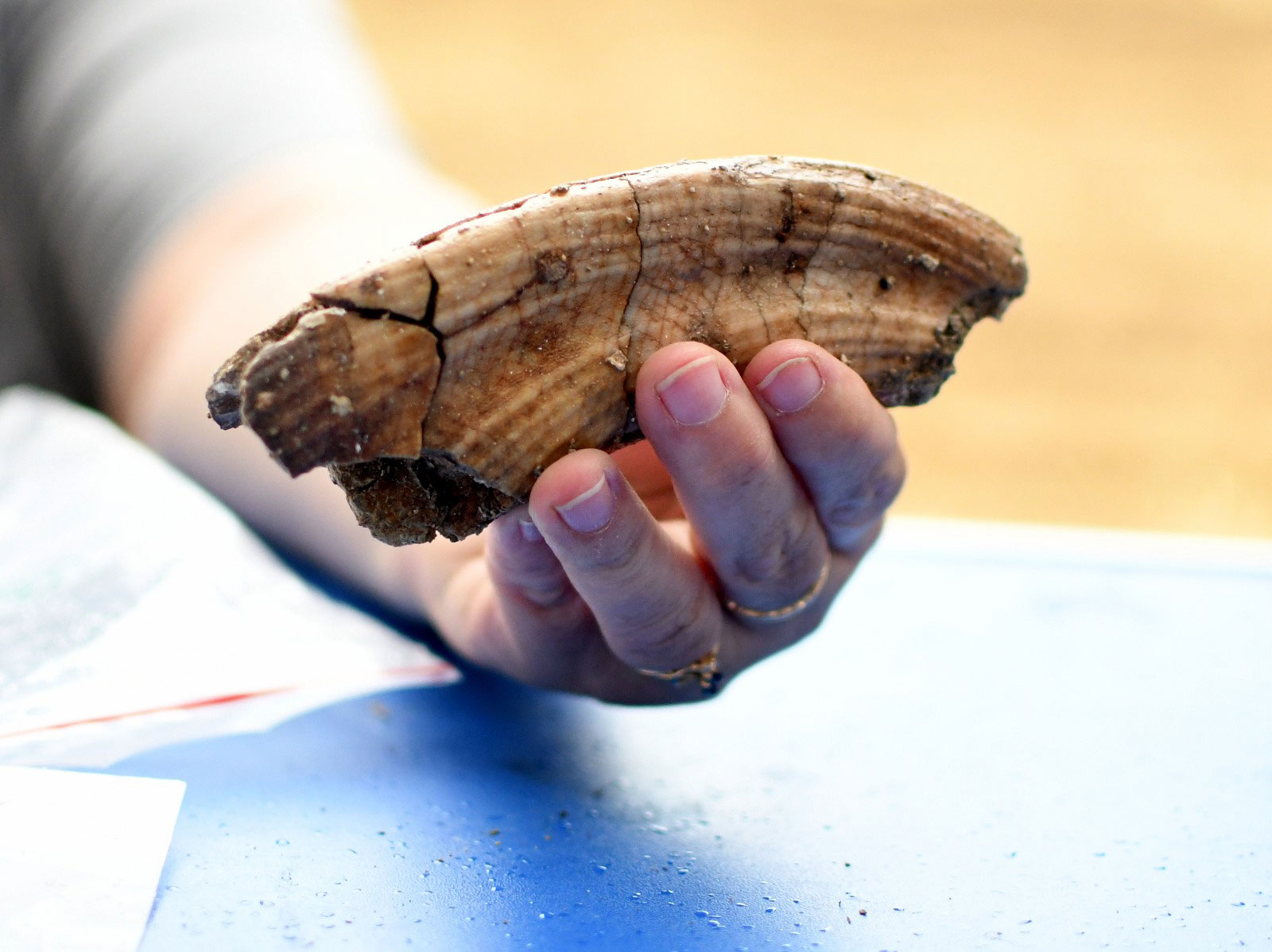
New research is reshaping the timeline of one of the world’s most important prehistoric sites.
Scientists have discovered that the archaeological site of ‘Ubeidiya in the Jordan Valley is at least 1.9 million years old. This pushes back the timeline for early human activity in the region by hundreds of thousands of years. The finding places ‘Ubeidiya alongside Dmanisi in Georgia as one of the earliest known locations showing human presence outside Africa.
The discovery reshapes an important chapter in human evolution. It suggests that early human groups equipped with a variety of stone tools had already settled in the Levant at the very beginning of humanity’s expansion beyond Africa.
The research was led by Prof. Ari Matmon of the Hebrew University of Jerusalem, Prof. Omry Barzilai from the University of Haifa, and Prof. Miriam Belmaker from the University of Tulsa. Their study provides a more precise timeline for one of the most important prehistoric locations for understanding early human evolution.
By combining three advanced dating methods, the team determined that the site of ‘Ubeidiya in the Jordan Valley likely dates to at least 1.9 million years ago.
An Important Window Into Early Human Culture
This revised age places ‘Ubeidiya among the oldest sites known to contain evidence of humans outside Africa.
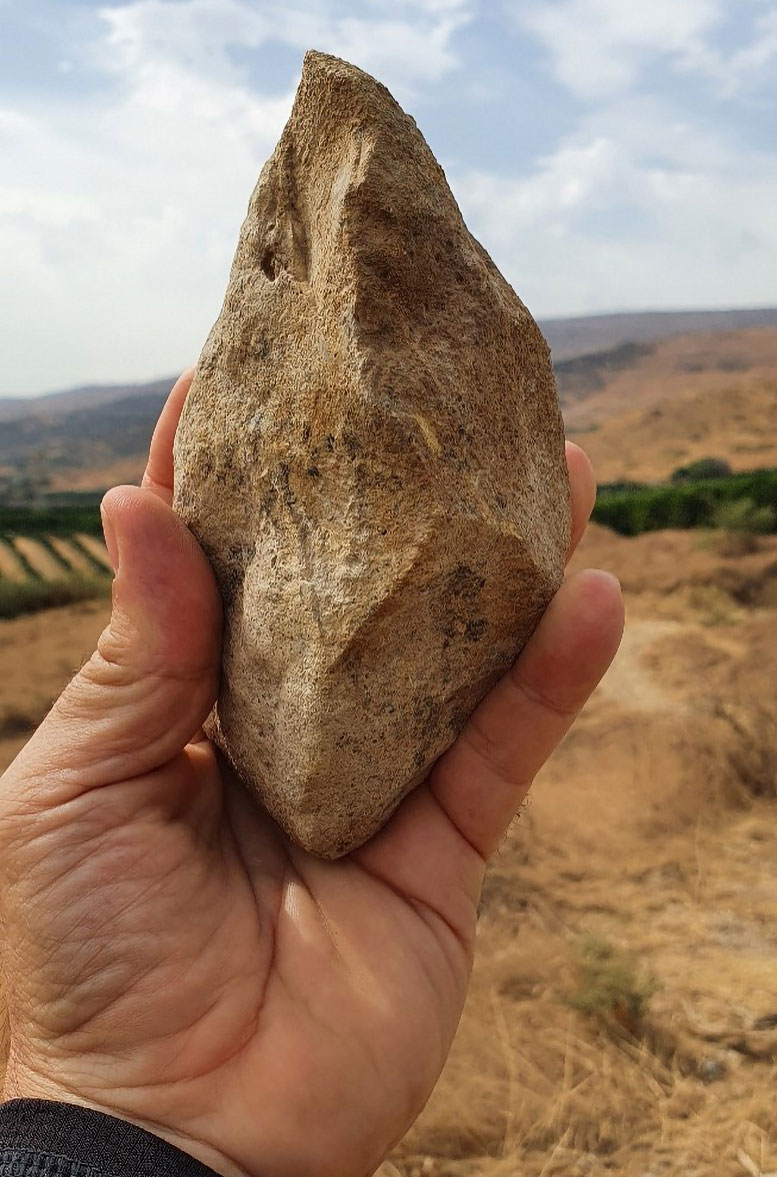
Researchers have long been interested in the ‘Ubeidiya Formation because it preserves early examples of the Acheulean culture. This technological tradition is recognized for its large bifacial stone tools. These artifacts are found alongside a rich collection of animal fossils that include species from both Africa and Asia, several of which are now extinct.
Determining the exact age of the site has been difficult for decades. For many years, scientists estimated that ‘Ubeidiya dated between 1.2 and 1.6 million years ago. However, this estimate relied mainly on relative dating rather than direct measurements.
To establish a more reliable timeframe, the research team returned to the site and collected new samples. They applied several modern dating techniques, each offering a different way to investigate ancient geological layers.
Three Methods to Probe the Deep Past
One of these approaches is called cosmogenic isotope burial dating. This technique measures rare isotopes that form when cosmic rays strike rocks at the Earth’s surface. When those rocks become buried, the isotopes begin to decay at known rates. This process acts like a natural geological clock that reveals how long the rocks have remained underground.
The researchers also studied traces of Earth’s ancient magnetic field preserved in sediments from an ancient lake at the site. As sediment accumulates, it records the direction of the planet’s magnetic field at that time.
By comparing these magnetic signatures with known reversals in Earth’s magnetic history, the scientists concluded that the layers formed during the Matuyama Chron, a period that began more than two million years ago.
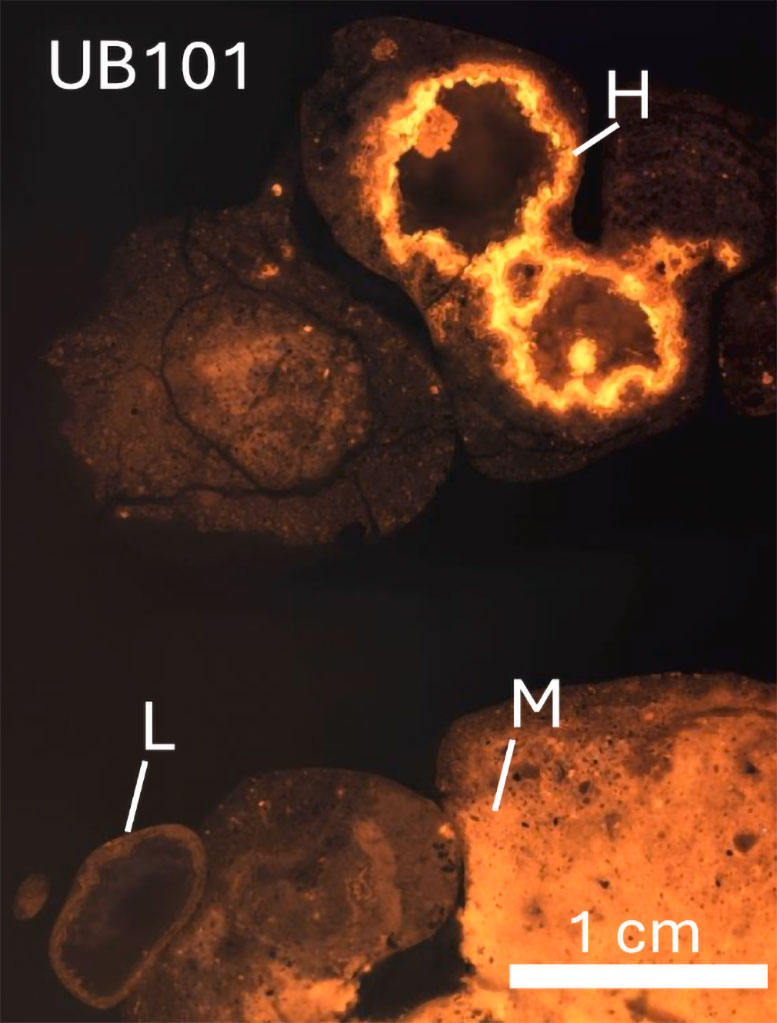
The team also examined fossilized Melanopsis shells. These freshwater snails are preserved within the sediment layers. Using uranium-lead dating on the shells allowed the researchers to determine a minimum age for the layers that contained the stone tools.
Together, the results pointed to an age significantly older than earlier estimates.
The evidence shows that the ‘Ubeidiya site is at least one million nine hundred thousand years old. This finding represents a major shift in the timeline of early human history.
The updated age indicates that ‘Ubeidiya formed at roughly the same time as the well-known Dmanisi site in Georgia. This suggests that early humans were spreading into different regions at about the same time.
The results also indicate that two different stone tool traditions left Africa during this period. These include the simpler Oldowan technology and the more advanced Acheulean toolmaking tradition. Different groups of hominins likely carried these technologies as they expanded into new environments.
Solving a Geological Puzzle
The study also addressed a major scientific hurdle: the initial isotope readings suggested the rocks were 3 million years old, which contradicted paleomagnetic, paleontological, geological, and archaeological evidence. The researchers addressed this hurdle by demonstrating that the sediments containing human remains have a long history of recycling within the Dead Sea rift and along its margins.
“The exposure-burial history that emerges from the model implies recycling of sediments previously deposited and buried in the rift valley… and then redeposited along the ‘Ubeidiya paleo lake shoreline.”
Reference: “Complex exposure-burial history and Pleistocene sediment recycling in the dead sea rift with implications for the age of the Acheulean site of ‘Ubeidiya” by A. Matmon, A. Kuzmenko, R. Shaar, P. Nuriel, A. Hidy, M. Guillong, R. Blevis, N. Wieler, S. Vainer, Y. Asscher, M. Belmaker and O. Barzilai, 17 February 2026, Quaternary Science Reviews.
DOI: 10.1016/j.quascirev.2026.109871
Never miss a breakthrough: Join the SciTechDaily newsletter.
Follow us on Google and Google News.
6 Comments
AND THERE YOU ARE, STILL SUBSCRIBING TO THE “OUT OF AFRICA” THEORY. Your first statement just has to include reference to the Out of Africa Theory as if it is still relevant. neverending apologia. you could have dispensed with that.
The ape species most closely related to us are the chimps, the bonobos, and the gorillas, all African species. Early Homo species were also found only in Africa, with the Dmanisi Homo species being later than the earliest finds of Homo species in Africa. Australopithecus species were also found only in Africa. Orangutans are found in Asia, but they are thought to be a bit less closely related to us and to the African ape species. So I guess this seems like good evidence for the early Homo species found in western Asia, to have gotten there from Africa, where even earlier Homo species were found. So that seems like good evidence for the out of Africa theory. The several gibbon species of east Asia are even less closely related to us. So I think that is good evidence that the genus Homo originated in Africa, and later some of them moved o west Asia, and later beyond. The Dmanisi site is in Georgia, and there is a controversy whether Georgia should be considered to be in east Europe or west Asia, that depends on where you put the boundary between Asia and Europe in that region. But this site in the Jordan valley mentioned in the article, is clearly in west Asia, close to Africa. And from there you can go east, or a bit northeast, to Georgia. The people in Georgia generally prefer Georgia to be considered part of east Europe, because most are Christian. But if you put the border between Asia and Europe there along the Caucasus mountains, then Georgia would be in Asia. So that is the controversy. Of course I am not referring to the other Georgia, in the US.
@Tom confusingly, the Multi-regional hypothesis *and* the Out of Africa hypothesis both suggest our ancestry goes back to Africa, and both accept that Homo erectus left Africa and then spread out. That much isn’t in much doubt. The disagreement as I understand it seems to be whether the first Homo sapiens repeated this process by also appearing in Africa and later spreading out, or whether Homo sapiens evolved from Homo erectus in multiple regions seperately and simultaneously.
I also understood that the genetic similarity of people outside of Africa compared to the wide genetic diversity of people in Africa is an example of the founder effect and had pretty much settled the issue in favour of the Out of Africa hypothesis. But this isn’t my field so I may have misunderstood what @Janet was trying to say.
I wonder if these were early Homo sapiens people, or maybe some ancestor, which would not be considered Homo sapiens? For example the Neanderthal people are believed to have never lived in Africa. And likewise the Denisovan people. And they were human species quite closely related to us, Homo sapiens.
OK, I have now looked up the Dmanisi site on the internet, and found that the hominins found there were of the genus Homo, but further identification of species is uncertain, whether they belonged to Homo erectus, or another Homo species. But clearly some early Homo species, either ancestral to more modern species, including Homo sapiens, Homo neanderthalis, etc., or else related to the ancestor species.
@Janet, I’m puzzled by your comment.
As I understand it, the Multi-regional hypothesis suggests that Homo erectus originated in Africa and then left to later simultaneously evolve into Homo sapiens in multiple regions.
In contrast the Out of Africa hypothesis suggests Homo sapiens also originated in Africa and then emigrated and replaced Homo erectus and its descendants.
My understanding is that recent genetic discoveries (such as the higher diversity of DNA of humans in Africa than elsewhere) have led to the Out of Africa hypothesis becoming the dominant model.
Are you saying you still prefer the Multi-regional hypothesis despite all the evidence against it? Or have I misunderstood you?