

Neanderthals knew how to control fire and used it to cook food. Researchers have learned about their habits and diet from the traces found near hearths. Angelucci: “More than different species, I would speak of different human forms.”
The fact that Neanderthals were able to make a fire and use it, among other things, for cooking, demonstrates their intelligence.
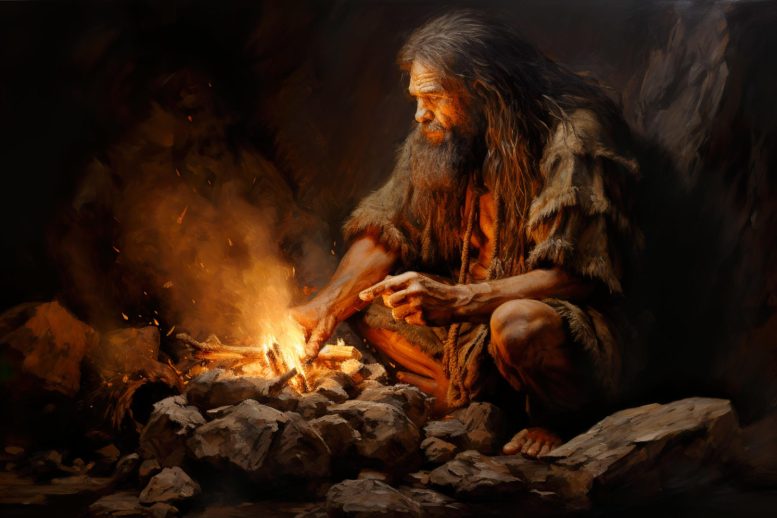
“This confirms our observations and theories from previous studies – explains Diego Angelucci, archaeologist at the University of Trento and co-author of the study. Neanderthals were capable of symbolic thought, could create artistic objects, knew how to decorate their bodies using personal ornaments, and had an extremely varied diet. Add to that that, based on our findings, we can say with certainty that they habitually ate cooked food. This ability confirms that they were as skilled as the sapiens who lived millennia later.”
But how did we learn that Neanderthals knew how to use fire? “There is a general agreement among archaeologists that they knew how to use fire. However, one thing is to use fire started by natural processes, such as lightning, another is to make it, feed it with wood, and use it for cooking, heating, and defense. In this study, we demonstrate that there is no doubt that Neanderthals could make a fire and that fire was a central element in their daily life.”
Twenty Years of Excavations
The article documents and compares the remains of structured fires found in the same location: the Gruta de Oliveira in central Portugal, one of the most important European archaeological sites for the Middle Palaeolithic. What is so exceptional about this cave is that excavations were conducted systematically and with great accuracy for more than twenty years between 1989 and 2012.
The works were led by an international group of archaeologists supervised by João Zilhão (University of Lisbon), who authored the study together with Diego Angelucci (UniTrento) and Mariana Nabais (IPHES, Catalan Institute for Human Paleoecology and Social Evolution, Tarragona).
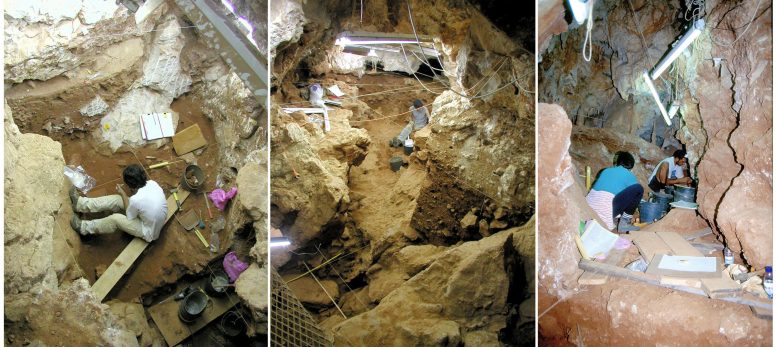
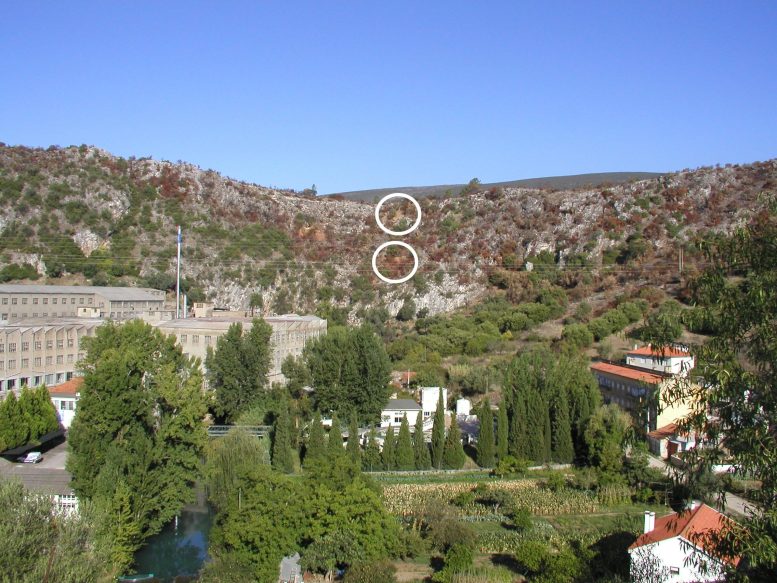
The cave is part of the Almonda karst system, a vast network of caves placed at different elevations above a large spring that has been inhabited in different periods during Prehistory. The oldest layers of the Gruta de Oliveira, which includes a number of passages, date back to about 120,000 years ago, the most recent to about 40,000: it is believed that Neanderthals inhabited this place between 100,000 and 70,000 years ago.
“For us, Almonda is a gift that keeps on giving for the variety and quantity of artifacts and remains that we have found over the years: from the remains dating back to the Lower Palaeolithic to the chipped stones of the Mousterian culture, there is really everything,” Angelucci comments.
Hearths and Food Remains
In this case, however, what caught the attention of archaeologists were the traces of hearths intentionally built and used in the cave. The archaeologists found about a dozen hearths at various stratigraphic levels in an excavation area of about 30 square meters and 6 meters deep.
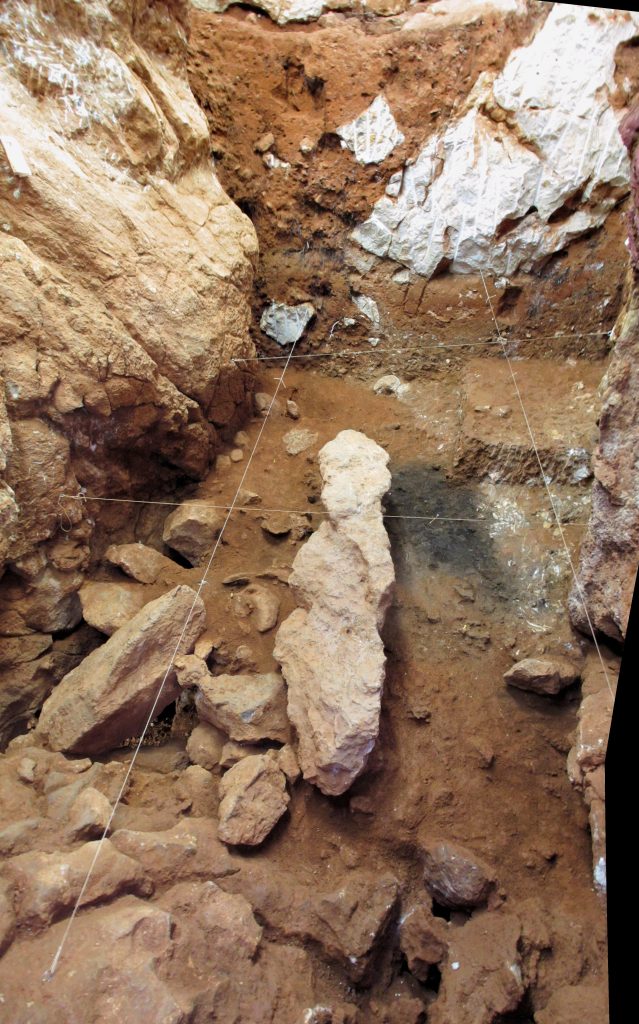
The unmistakable basin-like, circular structures were filled with remains. Findings from inside and near the hearths demonstrate that the inhabitants of the caves used to cook their food: “We found burnt bones, burnt wood, and ash remains. And the rock underneath – continues Angelucci – has been reddened by the heat: this is a crucial detail because it tells us that the structure is in a primary position. And it has always been there. Fire is a fundamental element in their daily lives. It makes the place comfortable and helps socialization. It gives back that basic idea of “home” that perhaps could also apply to them.”
A Varied Diet
What did Neanderthals eat? “We were able to find out what they ate and even the cooking techniques they used. We found the remains and burnt bones of cooked goats, deer, horses, aurochs (extinct bulls), rhinos, and turtles, which were probably laid on their carapace and stewed on hot stones. Meat was on the menu in this inland cave, but in other excavations in caves overlooking the western Mediterranean Sea near Cartagena (Spain), remains of fish, mussels, and mollusks, even roasted pine nuts, were found. We had already demonstrated in 2020 in another paper that appeared in Science that Neanderthals had a varied diet, but the Portuguese excavations have further confirmed that they used fire to cook food.”
Despite the excavations, the archaeologists were not able to determine how the Neanderthals started a fire.
“Perhaps they did as in Neolithic times, striking flint rocks against another rock to throw sparks on a tinder, such as a dry nest for example. This is a prehistoric technique that was discovered by studying Ötzi, the Ice Man. So far, however, we have found no evidence of this.”
Excavating a series of layers that cover 30,000 years, however, gave archaeologists the opportunity to compare the data with other sites in the same area that date back to Upper Palaeolithic and involve a more recent period, where Homo Sapiens were confirmed in the area.
“We found no difference: they lived in the caves in similar ways. Their skills are also a sign of intelligence. They did not belong to different species, I would say that they were different human forms.”
The Study
This article represents the end of a long data analysis work that examined thirty years of findings. The Portuguese team of João Zilhão studied the stone tools, while Mariana Nabais analyzed the bone remains and conducted spatial analyses to examine the position of the finds in the cave and the location of the fires. The research group of the University of Trento (Department of Humanities) focused on stratigraphy and microscopic studies.
“We relied on the techniques of interdisciplinary archaeology: preliminary on-site studies, meticulous excavation, accurate positioning of all the finds, systematic sieving, the precise method of collecting data in the field, the collection of samples for subsequent analysis under the microscope or in the laboratory: this type of archaeology is carried out with the most advanced methodologies. They require time and resources and this is what we teach our students.”
Reference: “Formation processes, fire use, and patterns of human occupation across the Middle Palaeolithic (MIS 5a-5b) of Gruta da Oliveira (Almonda karst system, Torres Novas, Portugal)” by Diego E. Angelucci, Mariana Nabais and João Zilhão, 11 October 2023, PLOS ONE.
DOI: 10.1371/journal.pone.0292075
Never miss a breakthrough: Join the SciTechDaily newsletter.
Follow us on Google and Google News.
4 Comments
Deliberately creating fire in varied geographical locations is not necessarily feasible, much less using it as a basis of intelligence. Imagine, if you will, having a 21st Century man/woman attempt to adopt a Neanderthal “lifestyle” without benefit of modern technology. They’d be dead within a month, ditto if we transported one of them here. There are no “primitives” living an original lifestyle, now, so how much research is “biased” and wishful thinking?
That’s why they said “More than different species, I would speak of different human forms.”.
Don’t compare Oranges and Lemons. Nor Whales and Monkeys!
Their bodies ware different then ours too.
If your not aware, there are various types of intelligence! Their intelligence was used to fetch food, just as yours – but you have to study to buy food in the supermarket, they needed to know how to hunt to eat.
They were rational, but rely on instinct and observation. We are the ones who need to study and develop a good communication to eat and be able to live.
You are born in China you speak Mandarin, other is born in USA speaks English – do they understand each other?? That’s the gap of understanding their type of intelligence – when you don’t even understand their language.
In the end there are many types of genius – some are natural-born, others are acquired, etc.
Why would a genius waste their time in math if math didn’t feed him? Is being “smart” more important then being alive?
Do you think you’re smarter then there because someone shared with you the thought of real genius? Do you know somethings you learn later in school and study – sometimes hard – were ideas child with astronomical IQ had? Your and ape if you think you’re smarter the all of Neanderthals.
P.S: Imagining a Neanderthal in today’s world, and a Sapiens in the world back then is a Fallacious comparison.
That’s a low bar.
That’s why they said “More than different species, I would speak of different human forms.”.
Don’t compare Oranges and Lemons. Nor Whales and Monkeys!
Their bodies ware different then ours too.
If your not aware, there are various types of intelligence! Their intelligence was used to fetch food, just as yours – but you have to study to buy food in the supermarket, they needed to know how to hunt to eat.
They were rational, but rely on instinct and observation. We are the ones who need to study and develop a good communication to eat and be able to live.
You are born in China you speak Mandarin, other is born in USA speaks English – do they understand each other?? That’s the gap of understanding their type of intelligence – when you don’t even understand their language.
In the end there are many types of genius – some are natural-born, others are acquired, etc.
Why would a genius waste their time in math if math didn’t feed him? Is being “smart” more important then being alive?
Do you think you’re smarter then there because someone shared with you the thought of real genius? Do you know somethings you learn later in school and study – sometimes hard – were ideas child with astronomical IQ had? Your and ape if you think you’re smarter the all of Neanderthals.
P.S: Imagining a Neanderthal in today’s world, and a Sapiens in the world back then is a Fallacious comparison.