
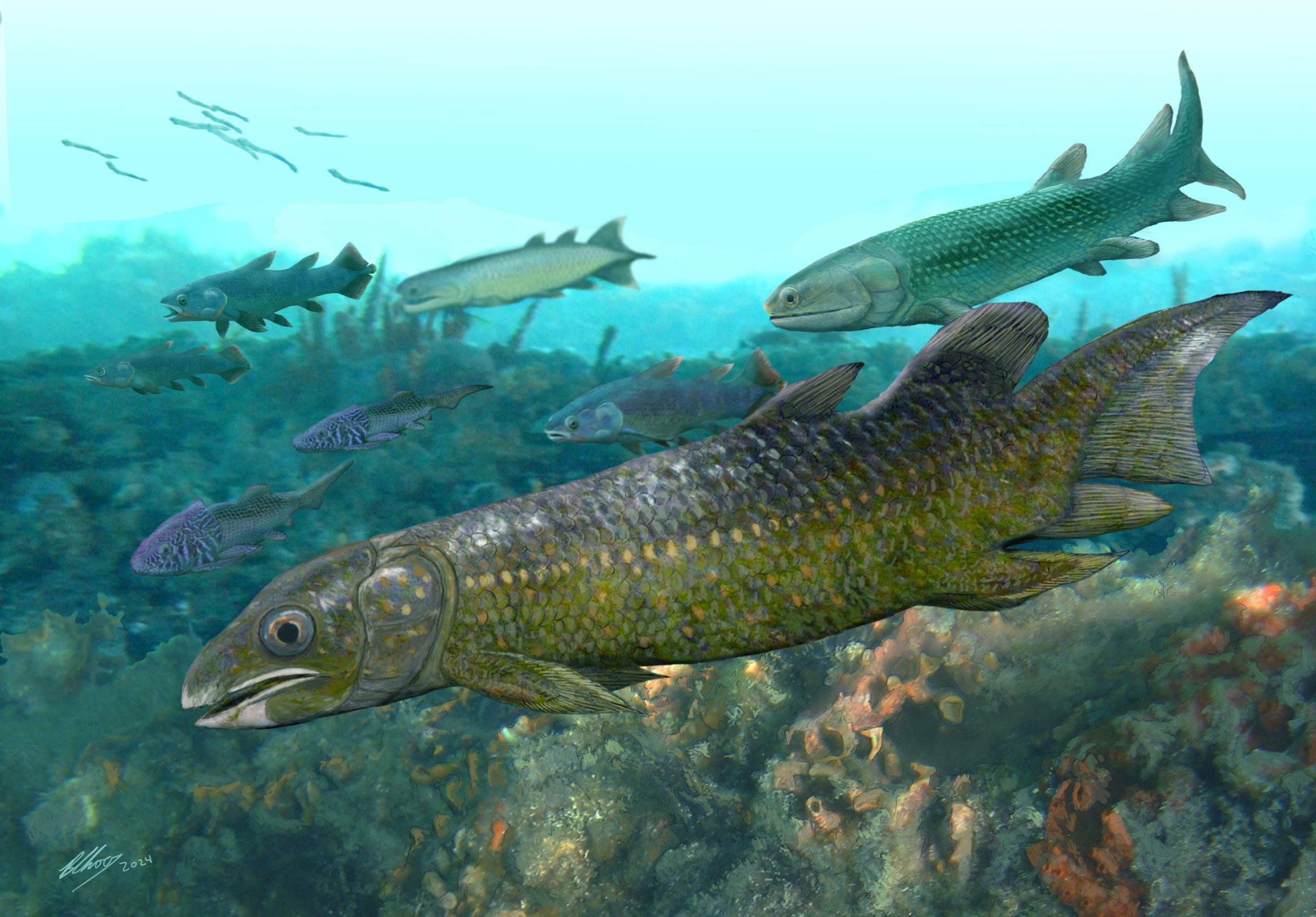
Advanced CT imaging of rare Devonian lungfish fossils in Australia and China is revealing unexpected anatomical details.
Scientists have uncovered new insights into the evolution of some of the earliest fish to inhabit Earth more than 400 million years ago.
Two independent studies conducted by research teams in Australia and China provide new evidence about ancient lungfish, which are the closest living relatives of vertebrates that eventually moved onto land. These discoveries expand on decades of fieldwork at the fossil-rich Gogo site in far northern Western Australia, led by Flinders University in collaboration with the Chinese Academy of Sciences.
By examining both living and fossil lungfish, researchers gain important anatomical information about how tetrapods evolved. Tetrapods are vertebrates with limbs, including humans, that made the transition from water to land during the Devonian period.
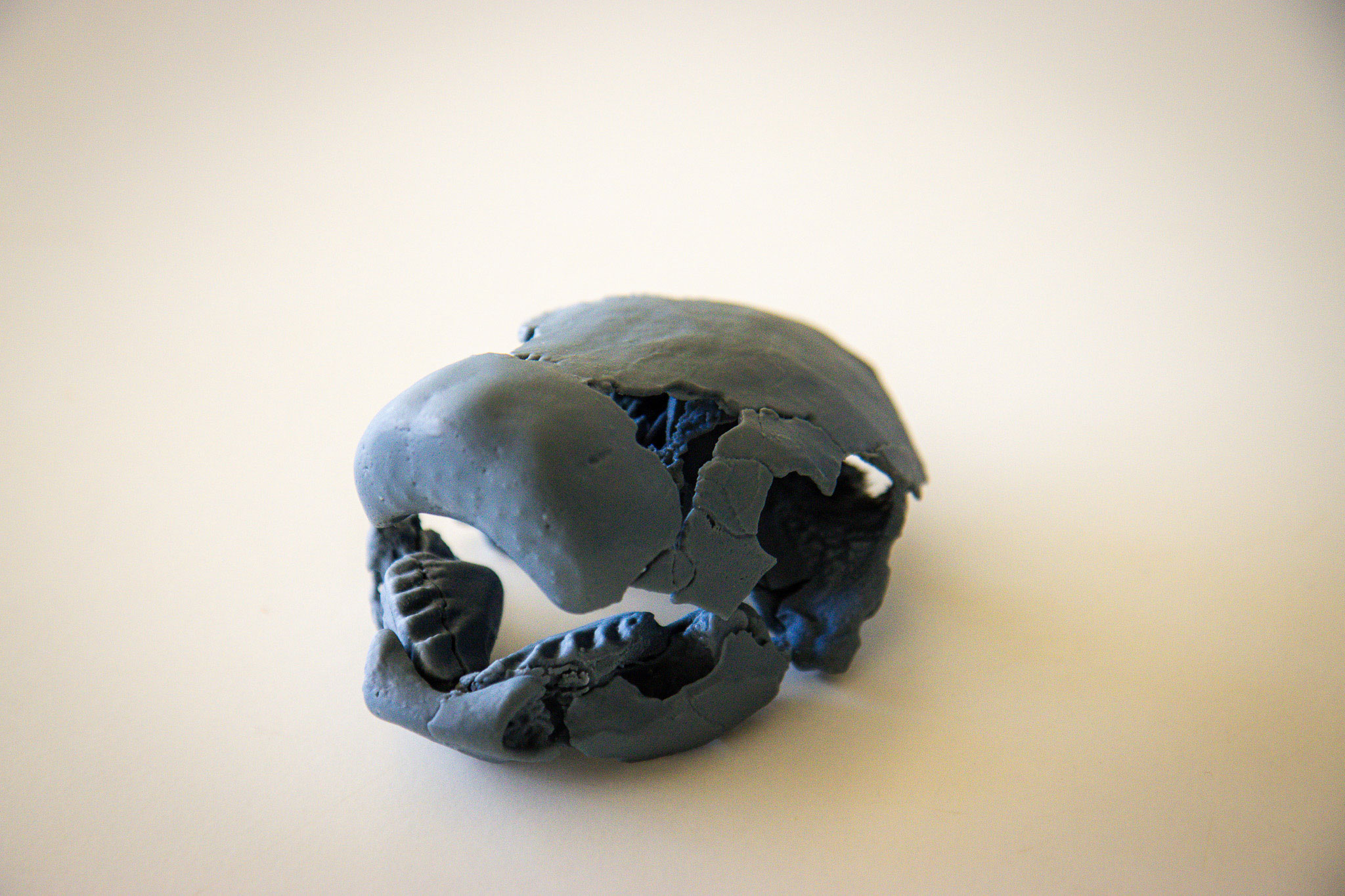
A particularly puzzling fossil from the Late Devonian Gogo Formation in Western Australia has now been reanalyzed using advanced imaging tools such as CT scanning and computed tomography. The findings were published in the Canadian Journal of Zoology.
According to lead author Dr. Alice Clement of Flinders University’s Palaeontology Lab, each new study adds to scientists’ understanding of the extraordinary diversity of lungfish preserved at the Gogo site, including specimens that were previously considered too poorly preserved to yield meaningful detail.
Reexamining an Enigmatic Fossil
One damaged fossil in particular has provided important new information. The specimen comes from what is often described as Australia’s first ‘Great Barrier Reef,’ a Devonian-age reef system in the Kimberley region of northern WA.
“The unusual specimen was so enigmatic, the authors who first described it in 2010 considered it could be a whole new type of fish never before seen in science,” explains Dr. Clement, from the College of Science and Engineering.
“Using high-tech scanning, this time we were able to create comprehensive new digital images of the external and internal cranium, showcasing the complexity of the brain cavity of this fascinating lungfish,” she says.
“In fact, we were also able to confirm that previous impressions were probably viewed upside down and back to front.”
Coauthor Hannah Thiele, with support from multiple museums and facilities such as Australian Nuclear Science and Technology Organisation (ANSTO), was able to use the advanced technologies to put a new lens on this most enigmatic specimen.
“We were able to compare its most preserved inner ear area with other Gogo lungfish. This is an extra data point in the amazing collection of lungfish and early vertebrate species,” she says.
“It adds to the wider understanding of the evolution of these earliest lobe-finned fishes, both in Gondwana and across the world.”
A 410-Million-Year-Old Skull from China
Meanwhile, in the journal Current Biology, another reconstruction of an early fish skull has described a species called Paleolophus – a lungfish that swam in the South Chinese seas 410 million years ago.
Flinders researcher Dr. Brian Choo and colleagues at the Chinese Academy of Sciences, led by the Institute of Vertebrate Paleontology and Paleoanthropology in Beijing, have called the new fossil, Paleolophus yunnanensis (‘Old crest from Yunnan’).
“Paleolophus gives us an unprecedented look at a lungfish from a time between their earliest appearance and their great diversification a few million years later,” says Dr. Choo, from the College of Science and Engineering at Flinders University.
“It was a time when the group was just starting to develop the distinctive feeding adaptations that would serve them for the remainder of the Devonian and onwards to the present day.”
Lungfish are an incredibly ancient lineage, he says, “including the still living Australian lungfish from Queenland, that have long fascinated researchers due to their close relationship to the tetrapods, or backboned animals with limbs, including humans”.
“The exceptional lungfish skull unearthed in 410 million-year-old rocks in Yunnan gives us major insights into the rapid evolutionary diversification between the early-, mid-, and late Devonian.”
Dr. Choo adds that the new specimen had similar and divergent features compared to the earliest and most primitive Diabolepis fossil in southern China, and species such as Uranolophus from Wyoming in the US and other forms like Australia’s Dipnorhynchus.
References: “Deciphering Cainocara enigma from the Late Devonian Gogo Formation, Australia” by Hannah S. Thiele, John A. Long, Joseph J. Bevitt and Alice M. Clement, 28 January 2026, Canadian Journal of Zoology.
DOI: 10.1139/cjz-2025-0109
“A new fossil fish sheds light on the rapid evolution of early lungfishes” by Tuo Qiao, Xindong Cui, Wenjin Zhao, Chengxi Liu, Maokun Li, Jing Lu, Brian Choo and Min Zhu, 10 December 2025, Current Biology.
DOI: 10.1016/j.cub.2025.11.032
The China study was supported by the National Natural Science Foundation of China (92255301 and 42302005) and the Australian Research Council Discovery Project (DP 220100825).
The Gogo study was supported by funding from the Australian Research Council (ARC DP 220100825). Researchers acknowledge the Gooniyandi community and country for access to their land, fossils and knowledge.
Never miss a breakthrough: Join the SciTechDaily newsletter.
Follow us on Google and Google News.