
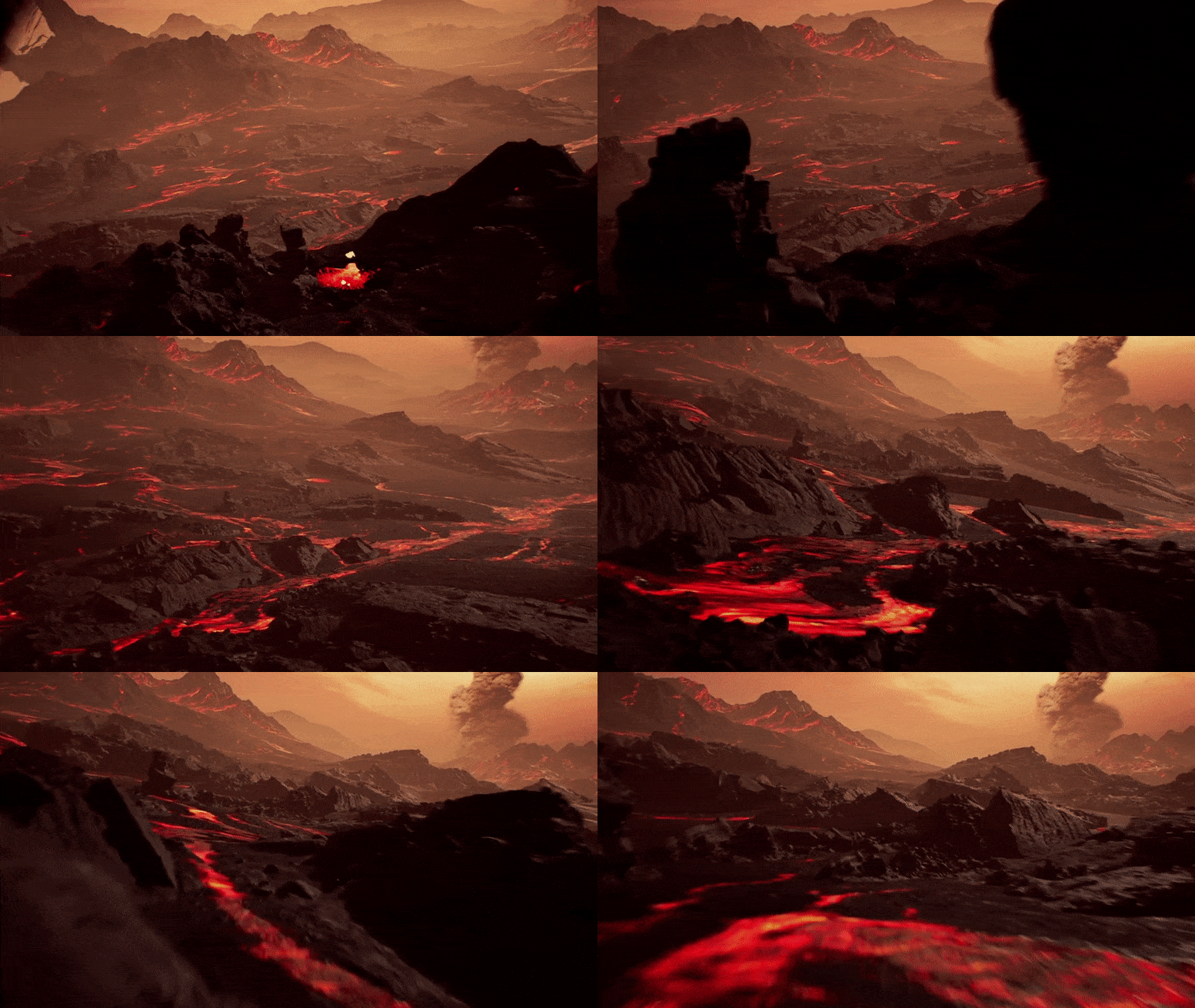
MAROON-X instrument built by University of Chicago team measures its first planet.
In the past two decades, scientists have discovered more and more planets orbiting distant stars—but in some sense, they’re still just dots on a map.
“It’s kind of like looking at a map of Europe and seeing the dot that’s labeled ‘Paris,’” said University of Chicago astrophysicist Jacob Bean. “You know where it is, but there’s a whole lot that you’re missing about the city.”
Scientists are developing new telescopes and instruments to fill in more and more of that picture. Bean led the creation of one such instrument called MAROON-X, which was installed at the Gemini Telescope in Hawaii last year. It allowed scientists to not only confirm the existence of the third-nearest star with a transiting exoplanet, but to take extraordinarily precise measurements of that planet and discover that it is rocky like Earth.
A Rocky World Nearby
The new planet, called Gliese 486 b, is located just over two dozen light-years from Earth in the direction of the constellation Virgo, and is also made out of rock—though it is hotter and three times larger than our home.
“This is the third-nearest system with a transiting exoplanet, and it should be just the first in a long line of them for MAROON-X,” said Bean, an associate professor in the Department of Astronomy and Astrophysics. “We’re really happy. We’re going to learn a lot about terrestrial exoplanets over the coming years.”
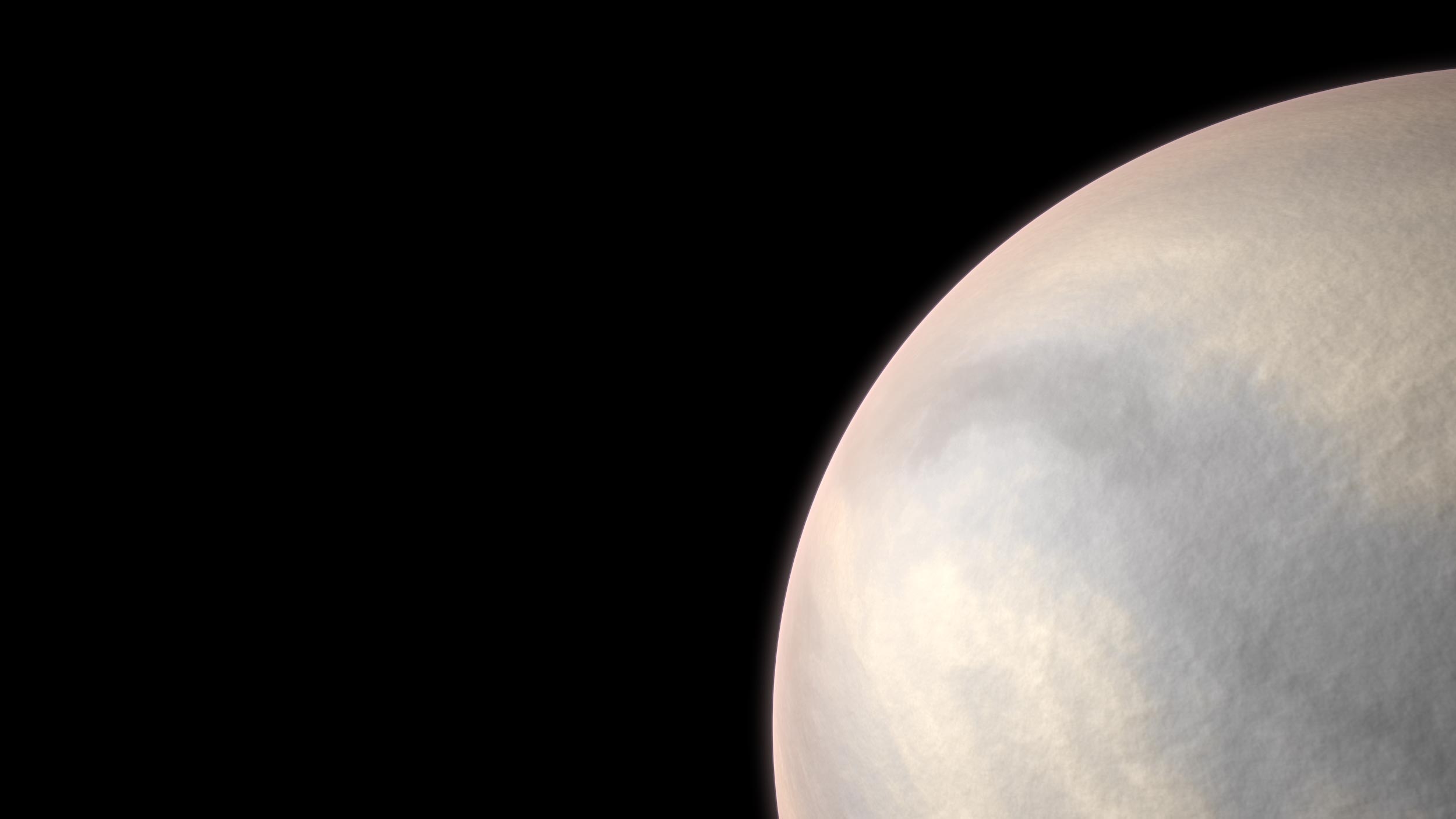
For centuries, astronomers didn’t have powerful enough telescopes to find exoplanets, because they’re really, really hard to see next to the blinding light of their stars. Even with better equipment, attacking the problem with several different methods can still yield better results.
Designed to work in partnership with other exoplanet-hunting instruments, MAROON-X catches tiny changes in the light spectrum of a star as an orbiting planet pulls it in a synchronized dance around the common center of mass. Using that information, scientists can calculate the mass of the unseen planet. They can then combine those calculations with readings from NASA’s TESS spacecraft—which measures the size of the planet—to find out whether the planet is dense and rocky, like Earth, or gaseous like Jupiter.
TESS had already registered the possible existence of a planet near the star Gliese 486, which the MAROON-X team identified as a good candidate for its first observational run.
“Looking at the data, right away we realized that the star it orbits turned out to be remarkably quiet, compared to other stars that flare a lot,” Bean said. “Combined with our really sensitive instruments, we had a beautiful opportunity to make a really accurate mass measurement.”
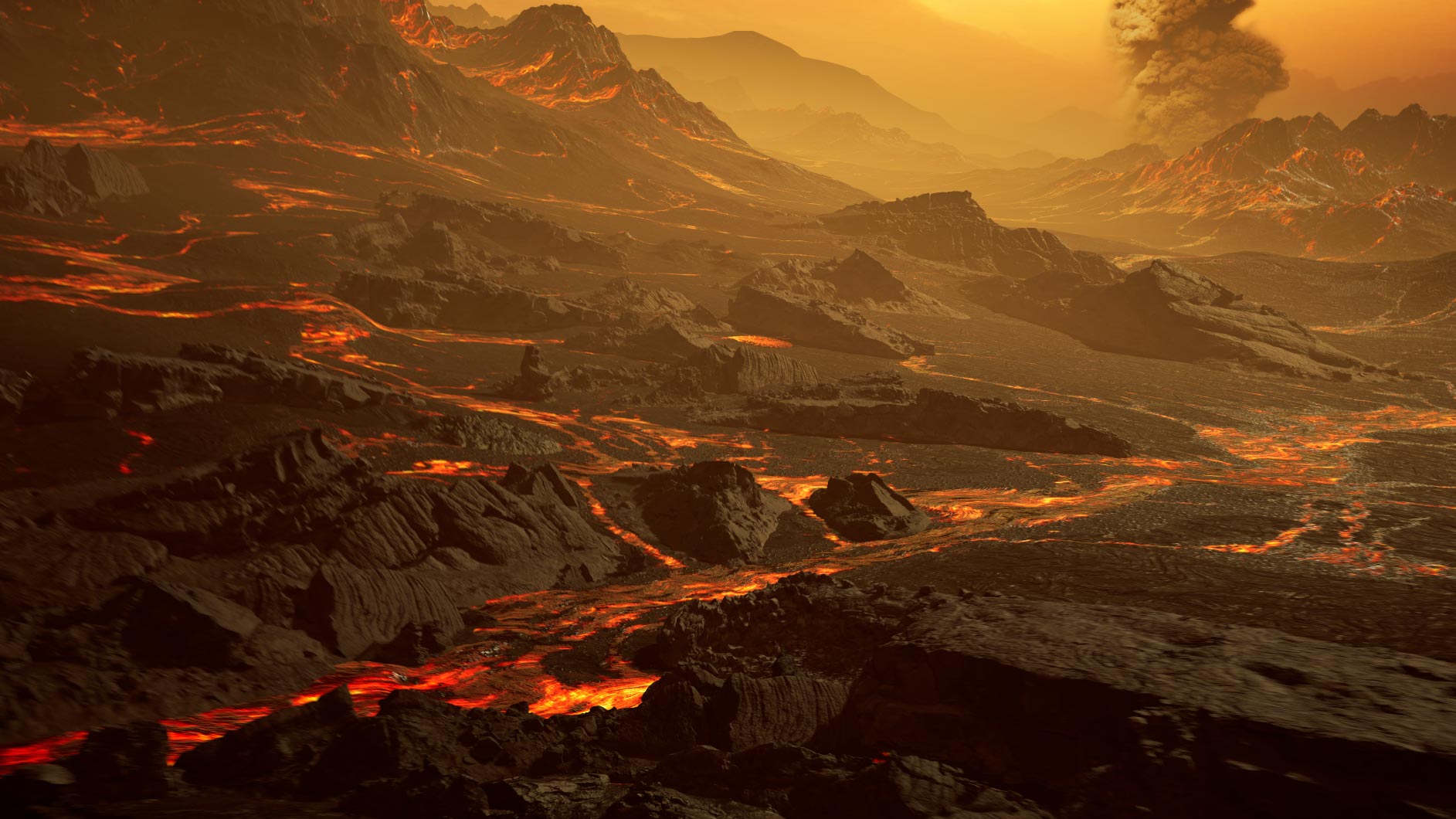
The planet Gl 486 b circles a red dwarf star, which is a little smaller than our sun, but is the most common kind of star in the galaxy. However, it’s so close to the star that the planet’s surface is probably about 800 degrees Fahrenheit (425 degrees Celsius)—not likely to be habitable, experts say.
But the nearness and clearness of Gl 486 b makes it a perfect candidate to help scientists learn more about the compositions and atmospheres of other planets.
Atmospheres Beyond Earth
“Just by looking at the planets in our own solar system, we can see a huge diversity,” Bean said. “For example, Venus and Mars are both rocky planets, but Venus has a thick carbon dioxide atmosphere that keeps it extremely hot, whereas Mars lost its atmosphere and is cold and dry.
“That tells us to suspect that there are a lot of very different atmospheres out there. Right now, we can’t predict them. This planet is going to be the key to understanding atmospheres in rocky exoplanets.”
“This planet is going to be the key to understanding atmospheres in rocky exoplanets.”
Assoc. Prof. Jacob Bean
Bean’s team is hoping Gl 486 b will be one of the first planets observed by NASA’s new James Webb Space Telescope, the successor to the Hubble Telescope due to be launched in late 2021. Webb’s much larger mirror will enable it to detect light in the infrared range that will be particularly useful for exoplanet studies.
“Webb will be so powerful that in just a few hours of looking at this planet, we’ll be able to tell if it has an atmosphere,” said Bean, who proposed a method in 2019 to use the Webb Telescope’s capabilities to detect exoplanet atmospheres much more easily than previous methods.
In the meantime, the team will continue to improve the performance of MAROON-X, which was installed in late 2019. Although the Gemini Observatory was temporarily shut down due to the COVID-19 pandemic, it was able to resume taking data for several stretches in 2020—data which Bean and his fellow scientists were able to analyze in Chicago.
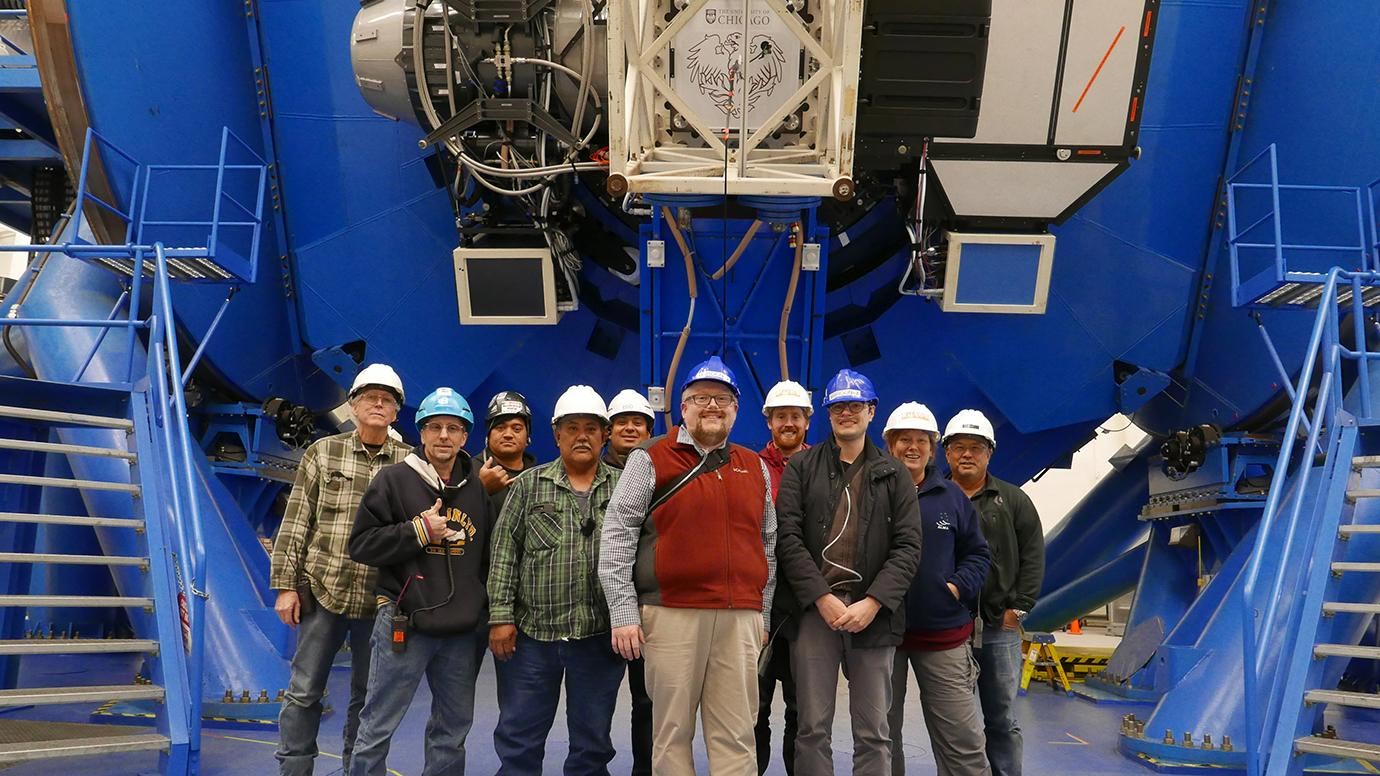
“The nice thing is that the entire operation is already designed to be run remotely, because of the extreme conditions at the telescope,” Bean said; atop Mauna Kea at 14,000 feet above sea level, it’s difficult to breathe, let alone operate complicated equipment.
Bean’s research group runs MAROON-X, but so many astronomers have requested to use it that the Gemini North facility has announced it will “adopt” the instrument as part of its permanent array. “We’re running it and analyzing the data, but we also have several ideas for improving it,” Bean said. “There’s so much more science to do.”
For more on this discovery:
- Alien Super-Earth Planet Discovered Just 26 Light Years Away – Probably Has an Atmosphere
- Earth Has a Hot New Neighbor – And It Could Change How We Look for Life in the Universe
- Earth Has a Hot New Neighbor: Discovery of a Nearby Exoplanet Suitable for Atmospheric Investigation
Reference: “A nearby transiting rocky exoplanet that is suitable for atmospheric investigation” by T. Trifonov, J. A. Caballero, J. C. Morales, A. Seifahrt, I. Ribas, A. Reiners, J. L. Bean, R. Luque, H. Parviainen, E. Pallé, S. Stock, M. Zechmeister, P. J. Amado, G. Anglada-Escudé, M. Azzaro, T. Barclay, V. J. S. Béjar, P. Bluhm, N. Casasayas-Barris, C. Cifuentes, K. A. Collins, K. I. Collins, M. Cortés-Contreras, J. de Leon, S. Dreizler, C. D. Dressing, E. Esparza-Borges, N. Espinoza, M. Fausnaugh, A. Fukui, A. P. Hatzes, C. Hellier, Th. Henning, C. E. Henze, E. Herrero, S. V. Jeffers, J. M. Jenkins, E. L. N. Jensen, A. Kaminski, D. Kasper, D. Kossakowski, M. Kürster, M. Lafarga, D. W. Latham, A. W. Mann, K. Molaverdikhani, D. Montes, B. T. Montet, F. Murgas, N. Narita, M. Oshagh, V. M. Passegger, D. Pollacco, S. N. Quinn, A. Quirrenbach, G. R. Ricker, C. Rodríguez López, J. Sanz-Forcada, R. P. Schwarz, A. Schweitzer, S. Seager, A. Shporer, M. Stangret, J. Stürmer, T. G. Tan, P. Tenenbaum, J. D. Twicken, R. Vanderspek and J. N. Winn, 5 March 2021, Science.
DOI: 10.1126/science.abd7645
Funding: Deutsche Forschungsgemeinschaft, Agencia Estatal de Investigación of the Ministerio de Ciencia e Innovación and the European Regional Development Fund, Klaus Tschira Stiftung, European Union’s Horizon 2020, “la Caixa”, NASA, Japan Society for the Promotion of Science KAKENHI, Japan Science and Technology Agency PRESTO.
Never miss a breakthrough: Join the SciTechDaily newsletter.
Follow us on Google and Google News.