
Close Menu
    Facebook X (Twitter) Instagram
    SciTechDaily
    • Biology
    • Chemistry
    • Earth
    • Health
    • Physics
    • Science
    • Space
    • Technology
    Facebook X (Twitter) Pinterest YouTube RSS
    SciTechDaily
    Home»Space»A Christmas Comet for Solar Orbiter: Heliospheric Imager Captures Comet Leonard
    Space

    A Christmas Comet for Solar Orbiter: Heliospheric Imager Captures Comet Leonard

    By European Space Agency (ESA)December 24, 2021No Comments3 Mins Read
    Facebook Twitter Pinterest Telegram LinkedIn WhatsApp Email Reddit
    Share
    Facebook Twitter LinkedIn Pinterest Telegram Email Reddit
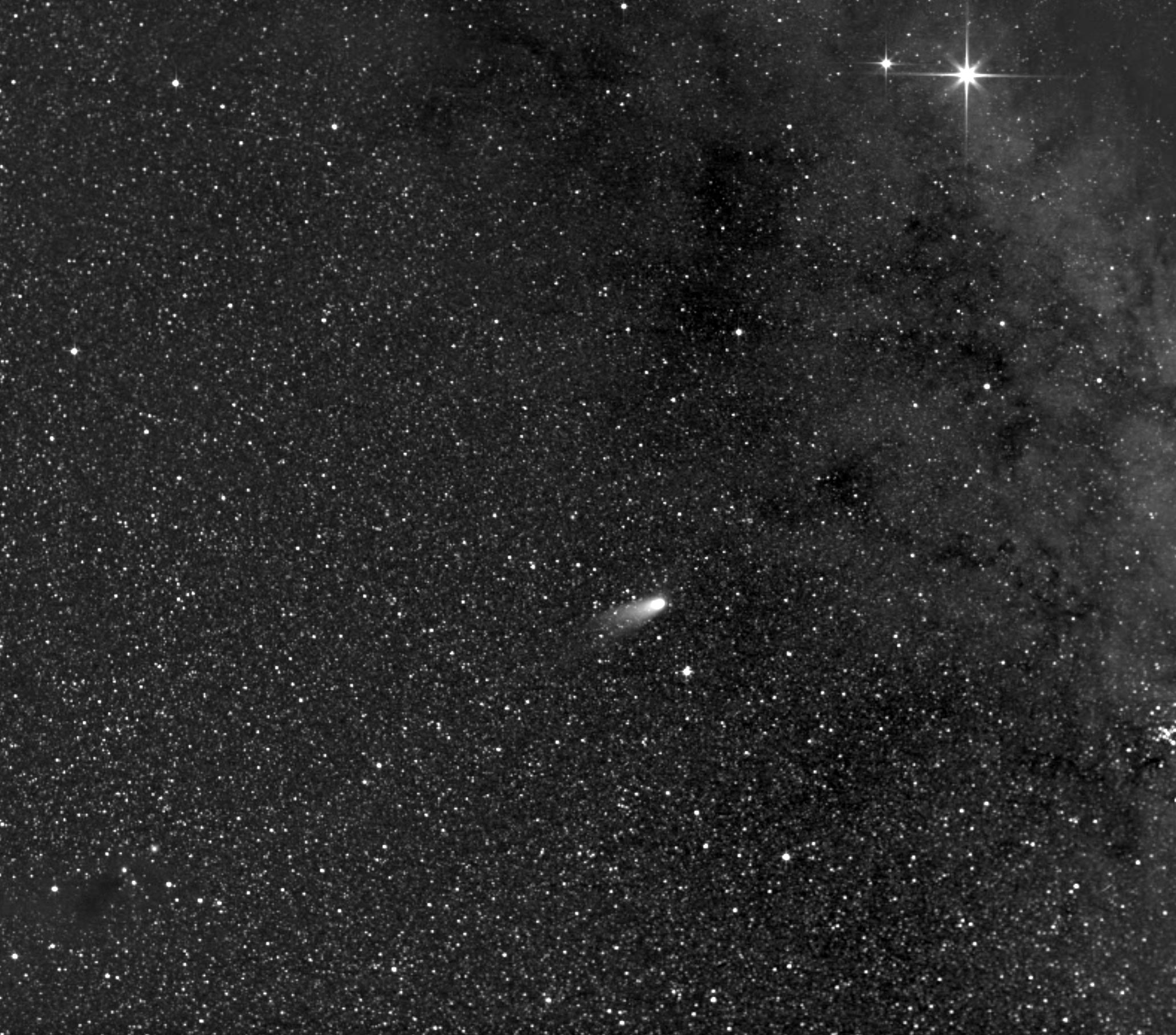
    Comet Leonard by SoloHI
    Frame from a movie captured by the SoloHI instrument on the ESA/NASA Solar Orbiter spacecraft of Comet Leonard on December 17-18, 2021. Credit: ESA/NASA/NRL/SoloHI

    Solar Orbiter captured Comet Leonard’s dramatic approach to the Sun, its last journey before heading into interstellar space.

    Comet Leonard, a mass of space dust, rock, and ice about a kilometer across is heading for a close pass of the Sun on 3 January, and the ESA/NASA Solar Orbiter spacecraft has been watching its evolution over the last few days.

    The Solar Orbiter Heliospheric Imager (SoloHI) captured an animated sequence of images 17-19 December that shows comet Leonard streaking diagonally across the field of view with the Milky Way as a stunning backdrop. Venus and Mercury are also visible in the top right, Venus appearing brighter and moving from left to right.

    The comet is currently on its inbound journey around the Sun with its tail streaking out behind. When SoloHI recorded these images, the comet was approximately between the Sun and the spacecraft, with its gas and dust tails pointing towards the spacecraft. Toward the end of the image sequence, our view of both of the tails improves as the viewing angle at which we see the comet increases, and SoloHI gets a side-on view of the comet.

    A faint coronal mass ejection front is also visible moving from the right-hand side of the frame in the final second of the movie.

    SoloHI will continue observing the comet until it leaves its field of view on December 22, and will be complemented by other instrument observations.

    Ground-based telescopes and other spacecraft have also been following the comet on its journey through the Solar System and providing images, including NASA’s Solar Terrestrial Relations Observatory-A spacecraft – see here.

    Comet Leonard, formally known as C/2021 A1 (Leonard), was discovered in January 2021 by Gregory Leonard, who spotted it in images taken from the Mt. Lemmon Observatory in Arizona. Its closest pass on 3 January 2022 will take it within 90 million kilometers of the Sun, slightly more than half Earth’s distance to the Sun. If it doesn’t disintegrate, its trajectory will fling it into interstellar space, never to return.

    About Solar Orbiter

    Solar Orbiter launched on 10 February 2020 and is on a mission to provide the first views of the Sun’s uncharted polar regions, giving unprecedented insight into how our parent star works. It will investigate how intense radiation and energetic particles being blasted out from the Sun and carried by the solar wind through the Solar System impact our home planet, to better understand and predict periods of stormy ‘space weather.’

    Never miss a breakthrough: Join the SciTechDaily newsletter.
    Follow us on Google and Google News.

    Astronomy Comet European Space Agency Solar Orbiter
    Share. Facebook Twitter Pinterest LinkedIn Email Reddit

    Related Articles

    Incredible New Views of the Sun – As You’ve Never Seen It Before

    Solar Orbiter: Tracking Sunspots Up Close

    Solar Orbiter Spacecraft Captures the Full Sun in Unprecedented Detail

    Massive Solar Eruption Captured by Solar Orbiter Spacecraft

    Solar Orbiter Spacecraft Catches a Second Comet by the Tail

    Solar Orbiter Has Already Made a Wealth of Science Discoveries

    Don’t Miss: Comet Leonard May Be Visible to the Naked Eye Today

    Solar Orbiter Captures Venus’ Glare During Close Pass of Our Solar System’s Hottest Planet

    “Campfires” on the Sun Offer Clue to Solar Heating Mystery

    Leave A Reply Cancel Reply

    • Facebook
    • Twitter
    • Pinterest
    • YouTube

    Don't Miss a Discovery

    Subscribe for the Latest in Science & Tech!

    Trending News

    First-of-Its-Kind Discovery: Homer’s Iliad Found Embedded in a 1,600-Year-Old Egyptian Mummy

    Beyond Inflammation: Scientists Uncover New Cause of Persistent Rheumatoid Arthritis

    A Simple Molecule Could Unlock Safer, Easier Weight Loss

    Scientists Just Built a Quantum Battery That Charges Almost Instantly

    Researchers Unveil Groundbreaking Sustainable Solution to Vitamin B12 Deficiency

    Millions of People Have Osteopenia Without Realizing It – Here’s What You Need To Know

    Researchers Discover Boosting a Single Protein Helps the Brain Fight Alzheimer’s

    World-First Study Reveals Human Hearts Can Regenerate After a Heart Attack

    Follow SciTechDaily
    • Facebook
    • Twitter
    • YouTube
    • Pinterest
    • Newsletter
    • RSS
    SciTech News
    • Biology News
    • Chemistry News
    • Earth News
    • Health News
    • Physics News
    • Science News
    • Space News
    • Technology News
    Recent Posts
    • After Decades, MIT Researchers Capture the First 3D Atomic View of a Mysterious Material
    • Your Favorite Fishing Spot Is Turning Brown – and the Fish Are Changing
    • 380-Million-Year-Old Fish Fossil Reveals Secrets of Life’s First Steps Onto Land
    • Mezcal “Worm” in a Bottle Mystery: DNA Testing Reveals a Surprise
    • Scientists Turn Red Lettuce Green, Unlocking Hidden Nutrients
    Copyright © 1998 - 2026 SciTechDaily. All Rights Reserved.
    • Science News
    • About
    • Contact
    • Editorial Board
    • Privacy Policy
    • Terms of Use

    Type above and press Enter to search. Press Esc to cancel.