
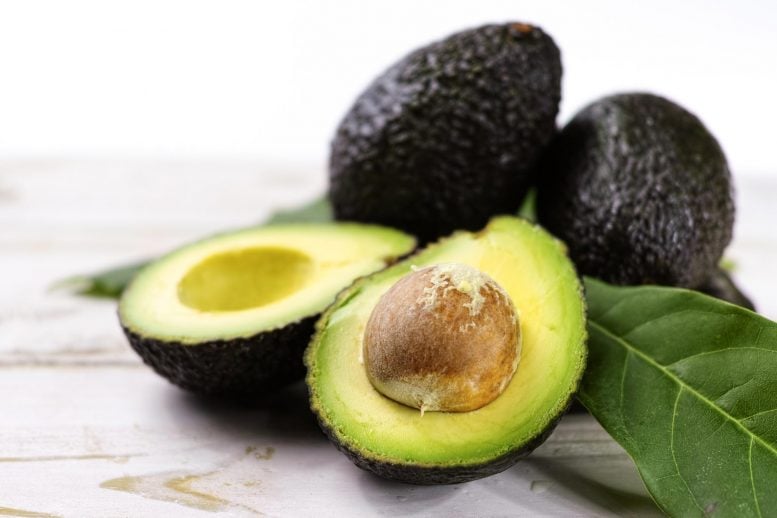
Eating two servings of avocado weekly may reduce cardiovascular disease risk, especially when replacing saturated fats, according to a 30-year study that supports heart-healthy diets.
- A 30-year study of more than 110,000 health professionals found that participants who ate at least two servings of avocado a week had a lower risk of cardiovascular disease compared to those who rarely ate avocados.
- Replacing animal products like butter, cheese, or bacon with avocado was also associated with a lower risk of cardiovascular disease events.
Eating two or more servings of avocado weekly was associated with a lower risk of cardiovascular disease, and substituting avocado for certain fat-containing foods like butter, cheese, or processed meats was associated with a lower risk of cardiovascular disease events, according to new research published today in the Journal of the American Heart Association, an open access, peer-reviewed journal of the American Heart Association.
Avocados contain dietary fiber, unsaturated fats especially monounsaturated fat (healthy fats) and other favorable components that have been associated with good cardiovascular health. Clinical trials have previously found avocados have a positive impact on cardiovascular risk factors including high cholesterol.
Researchers believe this is the first, large, prospective study to support the positive association between higher avocado consumption and lower cardiovascular events, such as coronary heart disease and stroke.
“Our study provides further evidence that the intake of plant-sourced unsaturated fats can improve diet quality and is an important component in cardiovascular disease prevention,” said Lorena S. Pacheco, Ph.D., M.P.H., R.D.N., lead author of the study and a postdoctoral research fellow in the nutrition department at the Harvard T.H. Chan School of Public Health in Boston. “These are particularly notable findings since the consumption of avocados has risen steeply in the U.S. in the last 20 years, according to data from the U.S. Department of Agriculture.”
For 30 years, researchers followed more than 68,780 women (ages 30 to 55 years) from the Nurses’ Health Study and more than 41,700 men (ages 40 to 75 years) from the Health Professionals Follow-up Study. All study participants were free of cancer, coronary heart disease, and stroke at the start of the study and living in the United States. Researchers documented 9,185 coronary heart disease events and 5,290 strokes during more than 30 years of follow-up. Researchers assessed participants’ diet using food frequency questionnaires given at the beginning of the study and then every four years. They calculated avocado intake from a questionnaire item that asked about the amount consumed and frequency. One serving equaled half of an avocado or a half cup of avocado.
Benefits of Replacing Saturated Fats with Avocado
The analysis found:
- After considering a wide range of cardiovascular risk factors and overall diet, study participants who ate at least two servings of avocado each week had a 16% lower risk of cardiovascular disease and a 21% lower risk of coronary heart disease, compared to those who never or rarely ate avocados.
- Based on statistical modeling, replacing half a serving daily of margarine, butter, egg, yogurt, cheese or processed meats such as bacon with the same amount of avocado was associated with a 16% to 22% lower risk of cardiovascular disease events.
- Substituting half a serving a day of avocado for the equivalent amount of olive oil, nuts and other plant oils showed no additional benefit.
- No significant associations were noted in relation to stroke risk and how much avocado was eaten.
The study’s results provide additional guidance for health care professionals to share. Offering the suggestion to “replace certain spreads and saturated fat-containing foods, such as cheese and processed meats, with avocado is something physicians and other health care practitioners such as registered dietitians can do when they meet with patients, especially since avocado is a well-accepted food,” Pacheco said.
Study Aligns with Heart-Healthy Diets
The study aligns with the American Heart Association’s guidance to follow the Mediterranean diet – a dietary pattern focused on fruits, vegetables, grains, beans, fish and other healthy foods and plant-based fats such as olive, canola, sesame and other non-tropical oils.
“These findings are significant because a healthy dietary pattern is the cornerstone for cardiovascular health, however, it can be difficult for many Americans to achieve and adhere to healthy eating patterns,” said Cheryl Anderson, Ph.D., M.P.H., FAHA, chair of the American Heart Association’s Council on Epidemiology and Prevention.
“We desperately need strategies to improve intake of AHA-recommended healthy diets — such as the Mediterranean diet — that are rich in vegetables and fruits,” said Anderson, who is professor and dean of the Herbert Wertheim School of Public Health and Human Longevity Science at University of California San Diego. “Although no one food is the solution to routinely eating a healthy diet, this study is evidence that avocados have possible health benefits. This is promising because it is a food item that is popular, accessible, desirable and easy to include in meals eaten by many Americans at home and in restaurants.”
The study is observational, so a direct cause and effect cannot be proved. Two other limitations of the research involve data collection and the composition of the study population. The study analyses may be affected by measurement errors because dietary consumption was self-reported. Participants were mostly white nurses and health care professionals, so these results may not apply to other groups.
Reference: “Avocado Consumption and Risk of Cardiovascular Disease in US Adults” by Lorena S. Pacheco, Yanping Li, Eric B. Rimm, JoAnn E. Manson, Qi Sun, Kathryn Rexrode, Frank B. Hu and Marta Guasch‐Ferré30 March 2022, Journal of the American Heart Association.
DOI: 10.1161/JAHA.121.024014
Co-authors are Yanping Li, Ph.D.; Eric B. Rimm, Sc.D.; JoAnn E. Manson, M.D., Dr.P.H.; Qi Sun, M.D., Sc.D., M.M.S.; Kathryn Rexrode, M.D., M.P.H.; Frank B. Hu, M.D., Ph.D., M.P.H.; and Marta Guasch-Ferré, Ph.D.
The study was funded by the National Institutes of Health, the National Institute of Diabetes and Digestive and Kidney Diseases, a division of the National Institutes of Health and the Harvard Chan Yerby Fellowship at Harvard T.H. Chan School of Public Health.
Never miss a breakthrough: Join the SciTechDaily newsletter.
Follow us on Google and Google News.
1 Comment
I’ve Read up on the latest research about Nutritious Foods!In addition,I’ve Eperimented with the Knowledge I acquired and based My findings! Nutritious and Healthy Foods plays a Major Role in keeping an Individual Healthy! In fact,nutitious Foods also Prevent Health deteriorating Conditions from setting up shop in the Body! More over, My findings we’re based on a Decade of consuming only very Nutritious Foods that keeps an Individual Healthy. And Prevents Them from developing Health deteriorating Conditions.In fact, Hypertension and Diabetes were thought to be Hereditary on My Mother side of My Family! As a result, of My experiments with Nutritious Foods. These conditions occurred from a Dietary bases more so than Hereditary! To summarize My findings I went to My Physician for an examination! My Blood Pressure was 103/67 and My Blood Sugar was 75! Strokes and Heart Attacks were the main causes of death in My Family!