
Close Menu
    Facebook X (Twitter) Instagram
    SciTechDaily
    • Biology
    • Chemistry
    • Earth
    • Health
    • Physics
    • Science
    • Space
    • Technology
    Facebook X (Twitter) Pinterest YouTube RSS
    SciTechDaily
    Home»Space»“Space Butterfly” Is Actually a Nursery for Hundreds of Baby Stars
    Space

    “Space Butterfly” Is Actually a Nursery for Hundreds of Baby Stars

    By NASAApril 13, 2022No Comments2 Mins Read
    Facebook Twitter Pinterest Telegram LinkedIn WhatsApp Email Reddit
    Share
    Facebook Twitter LinkedIn Pinterest Telegram Email Reddit
    W40 Space Butterfly
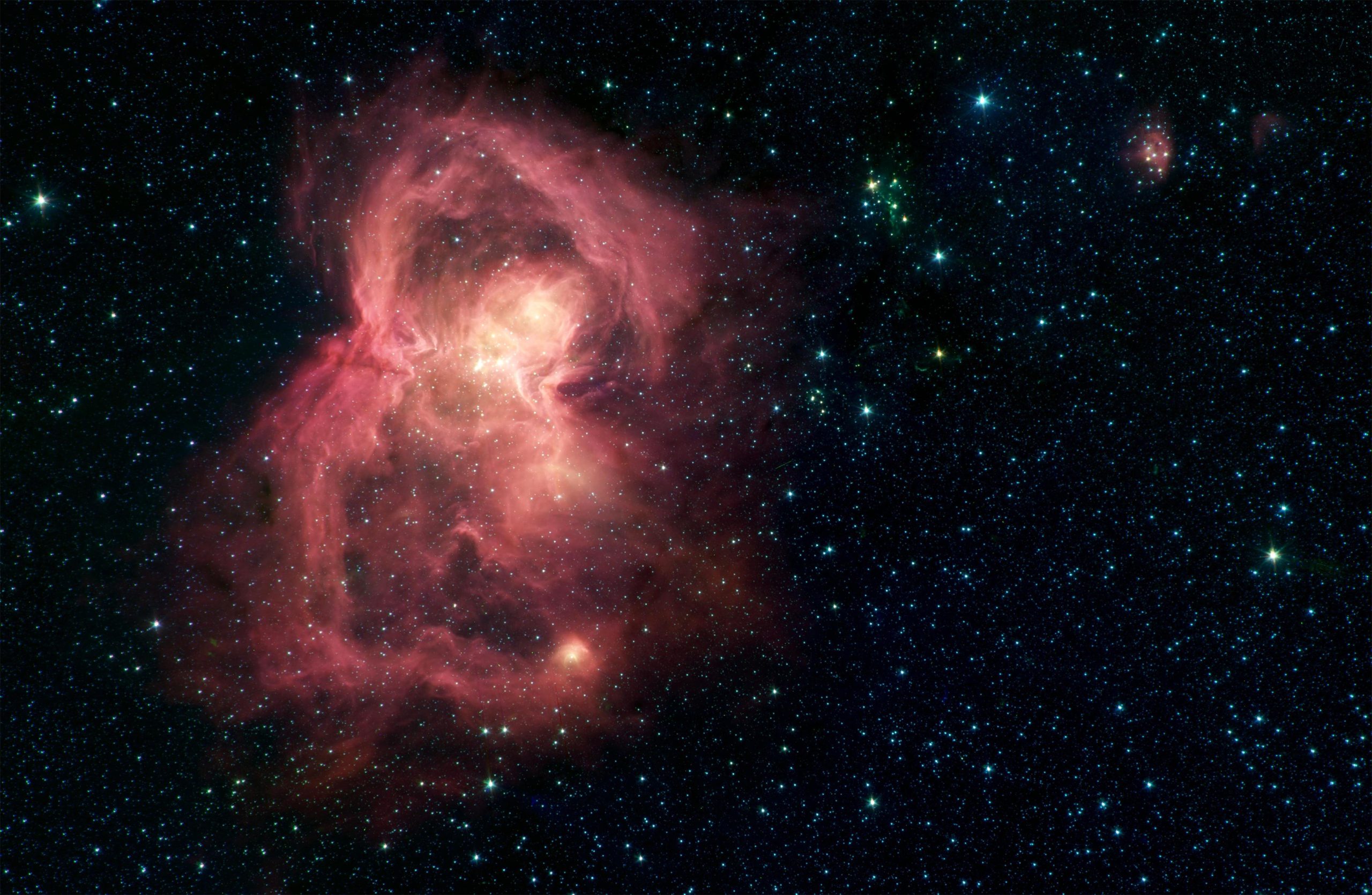
    Spitzer Space Telescopee image of nebula W40, a nursery for hundreds of baby stars. Credit: NASA/JPL-Caltech

    Spitzer’s infrared telescope revealed the W40 nebula, a cosmic nursery 1,400 light-years away, shaped like a red butterfly.

    What looks like a red butterfly in space is in reality a nursery for hundreds of baby stars, revealed in this infrared image from NASA’s Spitzer Space Telescope. Officially named W40, the butterfly is a nebula – a giant cloud of gas and dust in space where new stars may form. The butterfly’s “wings” are giant bubbles of hot, interstellar gas blowing from the hottest, most massive stars in this region.

    The material that forms W40’s wings was ejected from a dense cluster of stars that lies between the wings in the image. The hottest, most massive of these stars, W40 IRS 1a, lies near the center of the star cluster.

    W40 is about 1,400 light-years from the Sun, about the same distance as the well-known Orion nebula, although the two are almost 180 degrees apart in the sky.
    15 Years in Space for Spitzer Space Telescope
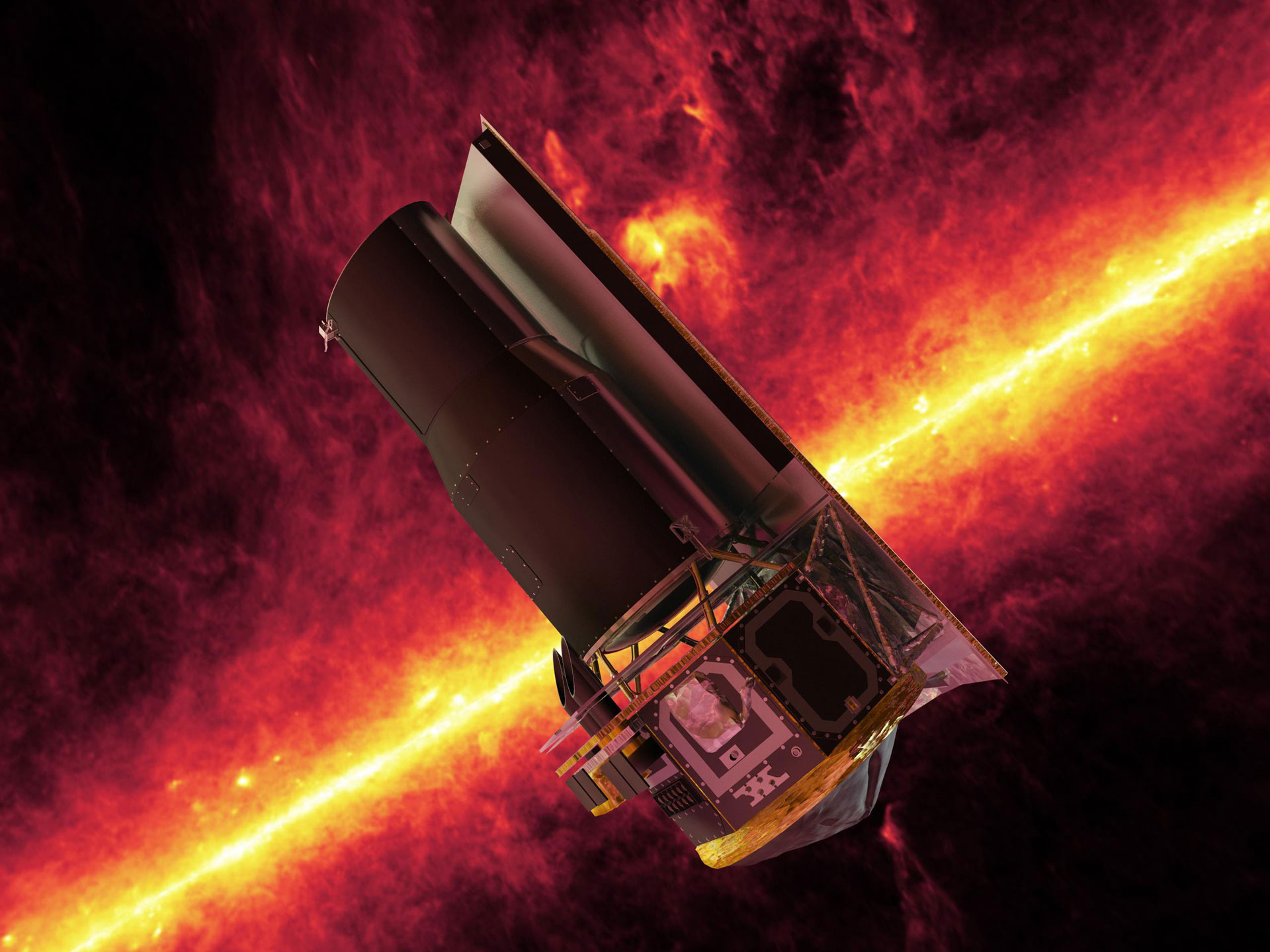
    This image shows an artist’s impression of the Spitzer Space Telescope. The background shows an infrared image from Spitzer of the plane of the Milky Way galaxy. Credit: NASA/JPL

    Launched on August 25, 2003, NASA’s Spitzer Space Telescope’s goal was to provide a unique, infrared view of the universe and allow us to peer into regions of space that are hidden from optical telescopes. It was the final mission in NASA’s Great Observatories Program — a family of four space-based observatories, each observing the Universe in a different kind of light. The other missions in the program include the visible-light Hubble Space Telescope (HST), Compton Gamma-Ray Observatory (CGRO), and the Chandra X-Ray Observatory (CXO). Its mission ended on January 30, 2020.

    Never miss a breakthrough: Join the SciTechDaily newsletter.
    Follow us on Google and Google News.

    Astronomy NASA Spitzer Space Telescope
    Share. Facebook Twitter Pinterest LinkedIn Email Reddit

    Related Articles

    Incredibly Sharp Webb Space Telescope Test Images Hint at New Possibilities for Science

    Scores of Baby Stars Revealed in the Orion Constellation

    NASA’s Spitzer Space Telescope Illuminates Exoplanets

    Godzilla Nebula: A “Monster” Star-Forming Region Spied by NASA’s Spitzer Space Telescope

    Hidden Supernova: Stars Are Exploding in Dusty Galaxies – We Just Can’t Always See Them

    New Worlds in a River of Young Stars Discovered by NASA’s Transiting Exoplanet Survey Satellite

    3D Map of Cosmic Neighborhood Created With Help From Worldwide Network of Citizen Scientists

    Stellar Snowflake Cluster Spotted by Spitzer Space Telescope

    Chaos Swirls at the Heart of the Orion Nebula

    Leave A Reply Cancel Reply

    • Facebook
    • Twitter
    • Pinterest
    • YouTube

    Don't Miss a Discovery

    Subscribe for the Latest in Science & Tech!

    Trending News

    First-of-Its-Kind Discovery: Homer’s Iliad Found Embedded in a 1,600-Year-Old Egyptian Mummy

    Beyond Inflammation: Scientists Uncover New Cause of Persistent Rheumatoid Arthritis

    A Simple Molecule Could Unlock Safer, Easier Weight Loss

    Scientists Just Built a Quantum Battery That Charges Almost Instantly

    Researchers Unveil Groundbreaking Sustainable Solution to Vitamin B12 Deficiency

    Millions of People Have Osteopenia Without Realizing It – Here’s What You Need To Know

    Researchers Discover Boosting a Single Protein Helps the Brain Fight Alzheimer’s

    World-First Study Reveals Human Hearts Can Regenerate After a Heart Attack

    Follow SciTechDaily
    • Facebook
    • Twitter
    • YouTube
    • Pinterest
    • Newsletter
    • RSS
    SciTech News
    • Biology News
    • Chemistry News
    • Earth News
    • Health News
    • Physics News
    • Science News
    • Space News
    • Technology News
    Recent Posts
    • After Decades, MIT Researchers Capture the First 3D Atomic View of a Mysterious Material
    • Your Favorite Fishing Spot Is Turning Brown – and the Fish Are Changing
    • 380-Million-Year-Old Fish Fossil Reveals Secrets of Life’s First Steps Onto Land
    • Mezcal “Worm” in a Bottle Mystery: DNA Testing Reveals a Surprise
    • Scientists Turn Red Lettuce Green, Unlocking Hidden Nutrients
    Copyright © 1998 - 2026 SciTechDaily. All Rights Reserved.
    • Science News
    • About
    • Contact
    • Editorial Board
    • Privacy Policy
    • Terms of Use

    Type above and press Enter to search. Press Esc to cancel.