
University of Leeds
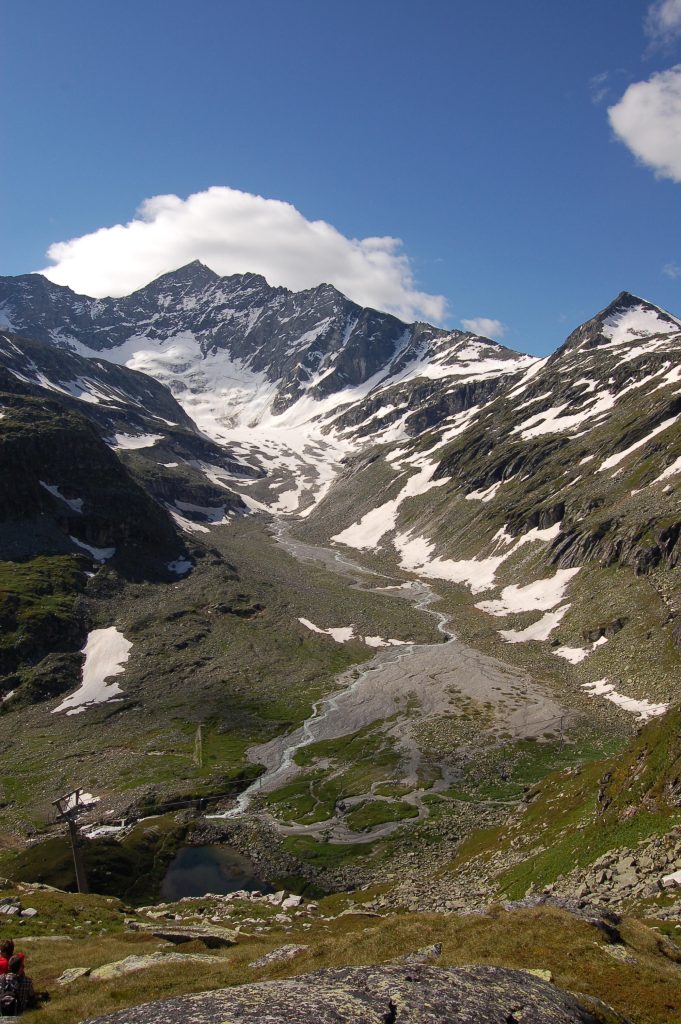
According to researchers, the rapid melting of glaciers due to climate change is causing widespread habitat loss for the invertebrates that live in the cold meltwater rivers of the European Alps
Species of invertebrates are expected to be limited to higher, colder habitats in the mountains, which are also under threat from skiing, tourism, and the development of hydroelectric plants.
The research study – led jointly by the University of Leeds and the University of Essex – calls on conservationists to consider new measures to protect aquatic biodiversity.
Invertebrates – a Key Role in Ecosystems
The invertebrates, which include stoneflies, midges, and flatworms, play a key role in nutrient cycling and organic matter transfer to fish, amphibians, birds, and mammals in the wider Alpine ecosystem.
Using glacier, landscape, and biodiversity mapping data collected across the Alps, scientists from across Europe simulated how key invertebrate populations across the mountain range are likely to change between now and 2100 because of climate change.
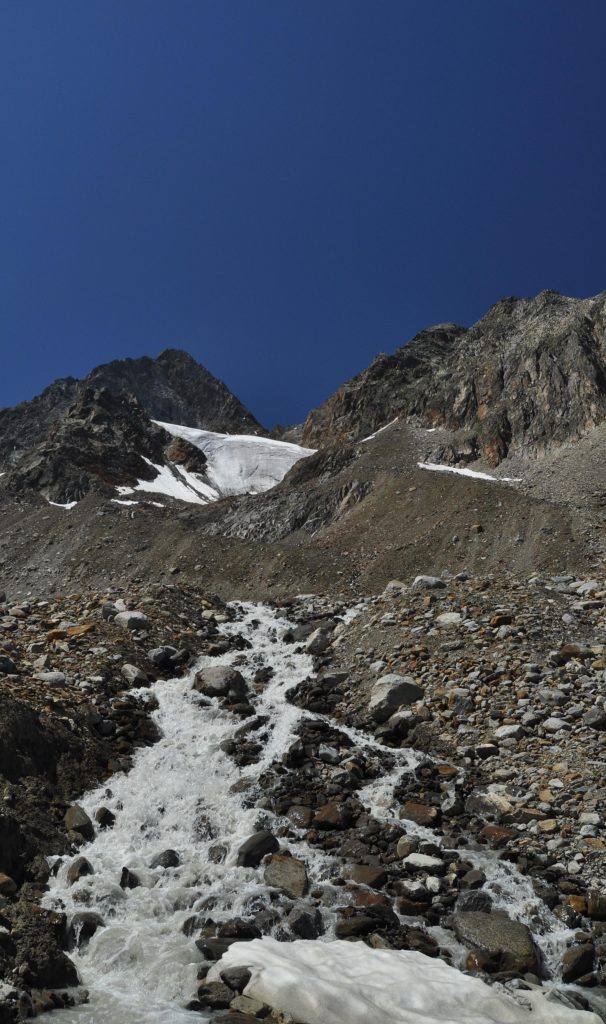
As the climate warms, the modeling predicted the invertebrate species would seek out colder conditions in the highest parts of the mountain range. In the future, these colder areas are also likely to be prioritized for skiing or tourism, or the development of hydropower plants.
University of Leeds
Lee Brown, Professor of Aquatic Science at the University of Leeds who co-led the research, said: “Conservationists need to be thinking about how protected area designations must evolve to take into account the effects of climate change.
“It may be that some species will have to be moved to refuge areas if we want to safeguard their survival as many of them are not strong fliers so they cannot disperse easily through the mountains.”
The research paper was recently published in the journal Nature Ecology & Evolution.
Alpine Climate Is Changing Rapidly
The research, involving a collaboration between nine European research institutions, brought together data on invertebrate species distribution in the Alps, an area that covers more than 34,000 square kilometers, and mapped it alongside expected changes to glaciers and river flows.
There was sufficient data to model what was likely to happen to 19 invertebrate species, mainly aquatic insects, that live in the cold-water regions of the Alps.
Dr Jonathan Carrivick, from the School of Geography at Leeds who co-led the research, said: “We have quantified that as glaciers melt and retreat, the rivers running through the Alps will experience major changes in their water source contributions.
University of Leeds
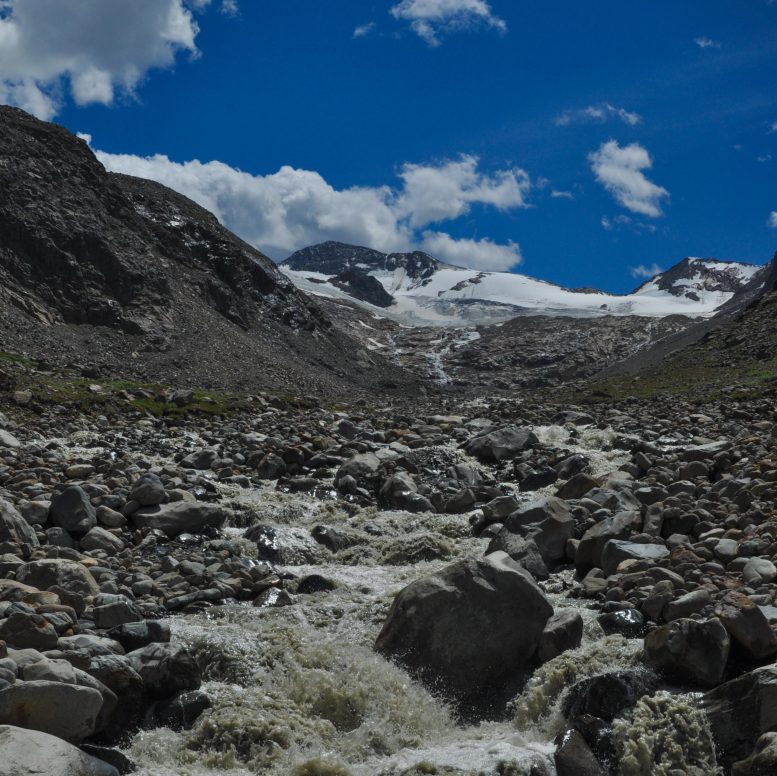
“In the short term, some will carry more water and some new tributary rivers will form, but over several decades from now – most rivers will become drier, flow slower, and become more stable, and there could even have periods in a year when there is no water flow. Additionally, most water in Alpine rivers will also be warmer in the future.”
Losers and Winners
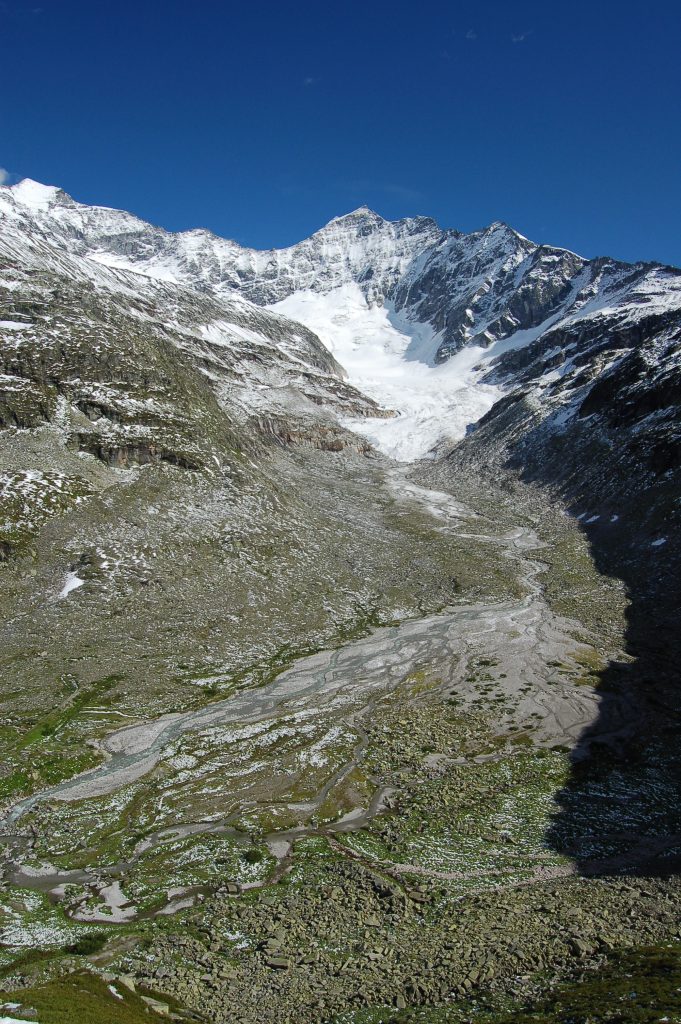
By the turn of the century, the modeling predicts that most of the species would have experienced “consistent losses” of habitat.
Those hardest hit are expected to be the non-biting midges, Diamesa latitarsis grp., D. steinboecki, and D. bertrami; the stonefly, Rhabdiopteryx alpina; and mayfly, Rhithrogena nivata.
University of Leeds
However, several species are expected to benefit from the habitat changes, including the flatworm, Crenobia alpina and the flat-headed mayfly, Rhithrogena loyolaea.
Other species would find refuge in new locations. The scientists predict the stonefly Dictyogenus alpinus and the caddisfly Drusus discolor will be able to survive in the Rhone valley in southeast France while other species will be lost from the rivers that flow into the Danube basin.
Conservation
Writing in the paper, the researchers describe the “substantial work” that is necessary to protect the biodiversity in rivers that are being fed by retreating glaciers. The locations where glaciers still exist late in the 21st century are likely to be prioritized for hydropower dam construction and ski resort development.
Dr. Martin Wilkes, from the University of Essex and who co-led the research, said: “The losses we predict for Alpine biodiversity by the end of this century relate to just one of several possible climate change scenarios.
“Decisive action by world leaders to reduce greenhouse gas emissions could limit the losses. On the other hand, inaction could mean that the losses happen sooner than we predict.”
Understanding how invertebrate populations respond to climate changes is key to understanding how biodiversity in high mountainous areas can be affected, and the techniques developed in the study could be applied to other mountain environments.
Reference: “Glacier retreat reorganizes river habitats leaving refugia for Alpine invertebrate biodiversity poorly protected” by M. A. Wilkes, J. L. Carrivick, E. Castella, C. Ilg, S. Cauvy-Fraunié, S. C. Fell, L. Füreder, M. Huss, W. James, V. Lencioni, C. Robinson and L. E. Brown, 4 May 2023, Nature Ecology & Evolution.
DOI: 10.1038/s41559-023-02061-5
The study was funded by the UK’s Natural Environment Research Council.
Never miss a breakthrough: Join the SciTechDaily newsletter.
Follow us on Google and Google News.