
Close Menu
    Facebook X (Twitter) Instagram
    SciTechDaily
    • Biology
    • Chemistry
    • Earth
    • Health
    • Physics
    • Science
    • Space
    • Technology
    Facebook X (Twitter) Pinterest YouTube RSS
    SciTechDaily
    Home»Space»This Week @NASA: New Earth Information Center, Atmosphere Search Around Rocky Exoplanet
    Space

    This Week @NASA: New Earth Information Center, Atmosphere Search Around Rocky Exoplanet

    By NASAJune 25, 2023No Comments4 Mins Read
    Facebook Twitter Pinterest Telegram LinkedIn WhatsApp Email Reddit
    Share
    Facebook Twitter LinkedIn Pinterest Telegram Email Reddit
    NASA Earth Winds
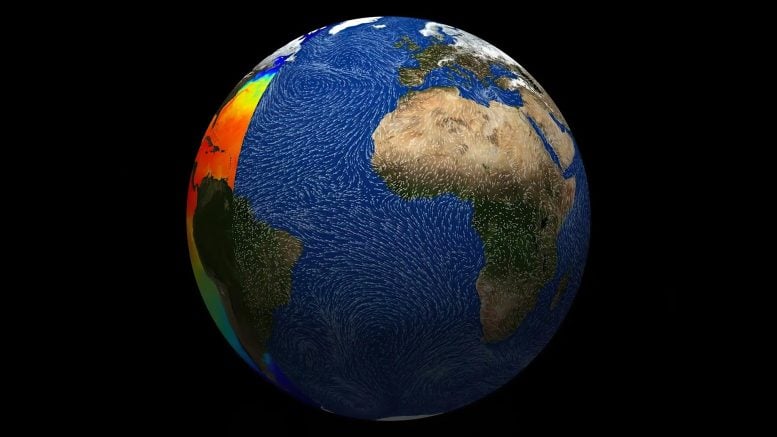
    NASA unveiled a new Earth Information Center at its headquarters, providing both a physical exhibit and a virtual platform that demonstrate how NASA’s data can be used to address climate change, environmental challenges, and disaster management. Drawing on six decades of Earth-monitoring data, the center will serve a wide array of users from firefighters to farmers, home buyers to land-use planners, helping them make informed decisions. The center, established in collaboration with several government and industry partners, opens to the public on June 26. Credit: NASA

    Showcasing NASA’s new Earth Information Center …

    In search of an atmosphere around a rocky exoplanet …

    And getting ready for an important delivery …

    A few of the stories to tell you about – This Week at NASA!

    Showcasing the New Earth Information Center

    On June 21, NASA hosted a ribbon-cutting ceremony at NASA’s headquarters in Washington to showcase NASA’s new Earth Information Center. The center is part physical space and part virtual experience. It shows how data from Earth-monitoring satellites and instruments that we make available to researchers and others can help improve life on Earth in the face of disasters, environmental challenges, and climate change. NASA created the Earth Information Center with several partner agencies. Learn more at climate.nasa.gov.
    Rocky Exoplanet TRAPPIST-1 c
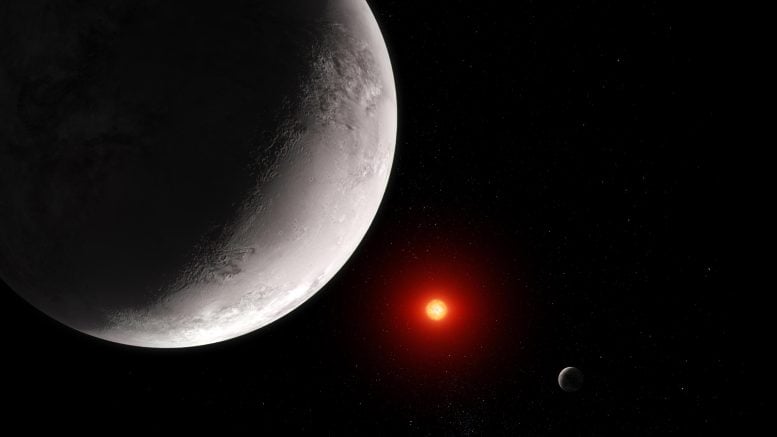
    This artist’s concept shows what the hot rocky exoplanet TRAPPIST-1 c could look like based on new research. TRAPPIST-1 c, the second of seven known planets in the TRAPPIST-1 system, orbits its star at a distance of 0.016 AU (about 1.5 million miles), completing one circuit in just 2.42 Earth-days. TRAPPIST-1 c is slightly larger than Earth, but has around the same density, which indicates that it must have a rocky composition. Webb’s measurement of 15-micron mid-infrared light emitted by TRAPPIST-1 c suggests that the planet has either a bare rocky surface or a very thin carbon dioxide atmosphere. Credit: NASA, ESA, CSA, Joseph Olmsted (STScI), Sebastian Zieba (MPI-A), Laura Kreidberg (MPI-A)

    Webb Characterizes Rocky Exoplanet

    An international team of researchers has used NASA’s James Webb Space Telescope to calculate the amount of heat energy coming from the exoplanet TRAPPIST-1 c. The result suggests that if there is an atmosphere around the rocky exoplanet, it is extremely thin. This result marks another step in determining whether planets orbiting small red dwarfs like the host star in the TRAPPIST system – can sustain atmospheres needed to support life as we know it.
    Asteroid Bennu Mosaic OSIRIS-REx
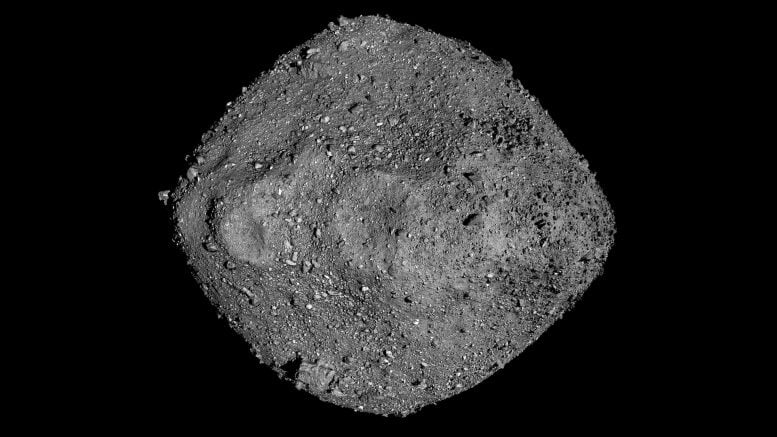
    This mosaic of Bennu was created using observations made by NASA’s OSIRIS-REx spacecraft that was in close proximity to the asteroid for over two years. Credit: NASA/Goddard/University of Arizona

    OSIRIS-REx Mission Asteroid Sample Will Have New Home in Houston

    A new curation facility at NASA’s Johnson Space Center will eventually house the sample material from asteroid Bennu that is being returned to Earth by NASA’s OSIRIS-REx mission. The new facility will enable researchers to preserve, protect, handle, and examine the rock and dust samples – or regolith. The samples could provide insight into what role ancient asteroids like Bennu may have played in the formation of planets and other processes that may have ultimately led to life on Earth. The O-REx return capsule is scheduled to land in the Utah desert in late September.
    NASA STS-7/Challenger Mission
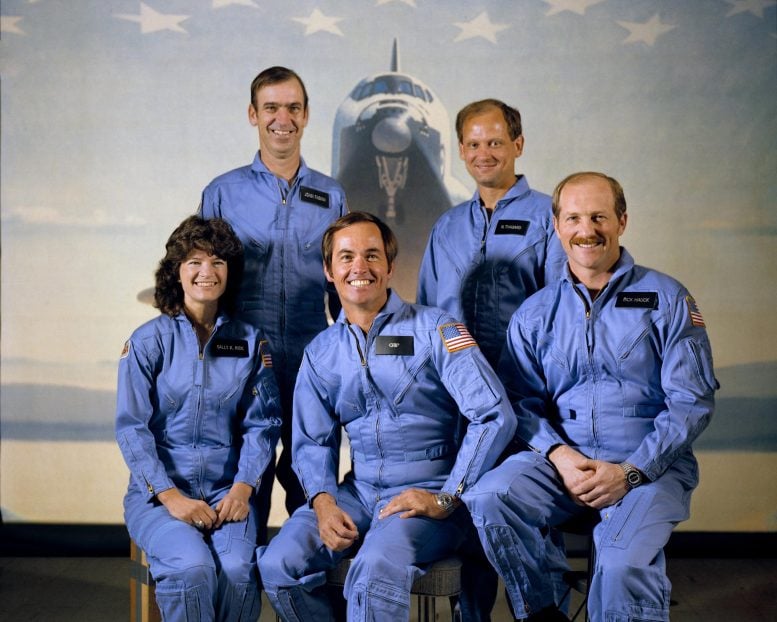
    Astronauts of the STS-7/Challenger mission are left to right first row: Sally K. Ride (mission specialist), Robert L. Crippen (commander), Frederick H. Hauck (pilot); rear row: John M. Fabian (left) and Norman E. Thagard (mission specialists). STS-7 launched the first five-member crew and the first American female astronaut into space on June 18, 1983. Credit: NASA

    40 Years Ago: STS-7 and the Flight of Sally Ride

    On June 18, NASA marked the 40-year anniversary of the late Sally Ride becoming the first American woman in space. Ride journeyed to orbit on that date in 1983 aboard the space shuttle Challenger on STS-7 as part of NASA’s first five-person crew. The six-day mission also featured the first release and retrieval of a satellite using the Canadian robotic arm, and the launches of two other satellites.

    That’s what’s up this week @NASA!

    Never miss a breakthrough: Join the SciTechDaily newsletter.
    Follow us on Google and Google News.

    NASA
    Share. Facebook Twitter Pinterest LinkedIn Email Reddit

    Related Articles

    The Cosmic “Hand of God” Just Got Even Stranger

    NASA’s Parker Solar Probe Just Solved a 70-Year Solar Mystery

    NASA’s Perseverance Mars Rover Spots Bizarre Helmet-Shaped Rock and Mysterious Megaripples

    Hubble Reveals a Rare Interstellar Comet Racing at 130,000 MPH Through Our Solar System

    Stunning New NASA Perseverance Rover Images Show Mars Clearer Than Ever Before

    NASA Unveils Possible Building Blocks of Life on Saturn’s Moon Titan

    NASA’s Curiosity Mars Rover Just Got a Big Brain Upgrade

    NASA’s Webb May Have Found a Planet Next Door. Then It Vanished

    NASA’s Lunar Trailblazer Moon Mission Lost Just a Day After Launch

    Leave A Reply Cancel Reply

    • Facebook
    • Twitter
    • Pinterest
    • YouTube

    Don't Miss a Discovery

    Subscribe for the Latest in Science & Tech!

    Trending News

    Giant Crocodylians Ruled South America’s Ancient Food Chain

    Breakthrough in a Bizarre Galaxy Could Help Unlock the Mystery of Dark Matter

    Just 4 Minutes of Daily Strength Training Can Quadruple Fitness in Older Adults

    Almost All Plant-Based Meat Alternatives Contain Mycotoxins, Study Finds

    Astronomers Detect a Record-Breaking “Cosmic Laser” From 8 Billion Light-Years Away

    A 47-Year-Old Scientist Tracked Himself for Months – His Biological Age Fell to 32

    Construction Crew Uncovers Giant 20-Meter Dinosaur in Brazil

    30 Years of Hurricane Data Reveal 4 Warning Signs Before Storms Strengthen

    Follow SciTechDaily
    • Facebook
    • Twitter
    • YouTube
    • Pinterest
    • Newsletter
    • RSS
    SciTech News
    • Biology News
    • Chemistry News
    • Earth News
    • Health News
    • Physics News
    • Science News
    • Space News
    • Technology News
    Recent Posts
    • Scientists Find a Clue to Making Brain Stimulation More Reliable
    • A Hidden Gut Reaction May Explain Why Vegetables Are So Good for You
    • New “Invisible” Cell Therapy Could Provide Side-Effect-Free Diabetes Treatment
    • Researchers Solve Two Major Problems Holding Back SiC Electronics
    • Physicists Hunted a Mysterious Particle – and Found Two Unexpected Structures Instead
    Copyright © 1998 - 2026 SciTechDaily. All Rights Reserved.
    • Science News
    • About
    • Contact
    • Editorial Board
    • Privacy Policy
    • Terms of Use

    Type above and press Enter to search. Press Esc to cancel.