
Close Menu
    Facebook X (Twitter) Instagram
    SciTechDaily
    • Biology
    • Chemistry
    • Earth
    • Health
    • Physics
    • Science
    • Space
    • Technology
    Facebook X (Twitter) Pinterest YouTube RSS
    SciTechDaily
    Home»Space»Don’t Miss: Best Meteor Shower of the Year Peaks This Weekend
    Space

    Don’t Miss: Best Meteor Shower of the Year Peaks This Weekend

    By Lauren Perkins, NASA Marshall Space Flight CenterAugust 11, 2023No Comments4 Mins Read
    Facebook Twitter Pinterest Telegram LinkedIn WhatsApp Email Reddit
    Share
    Facebook Twitter LinkedIn Pinterest Telegram Email Reddit
    Meteor Shower Concept
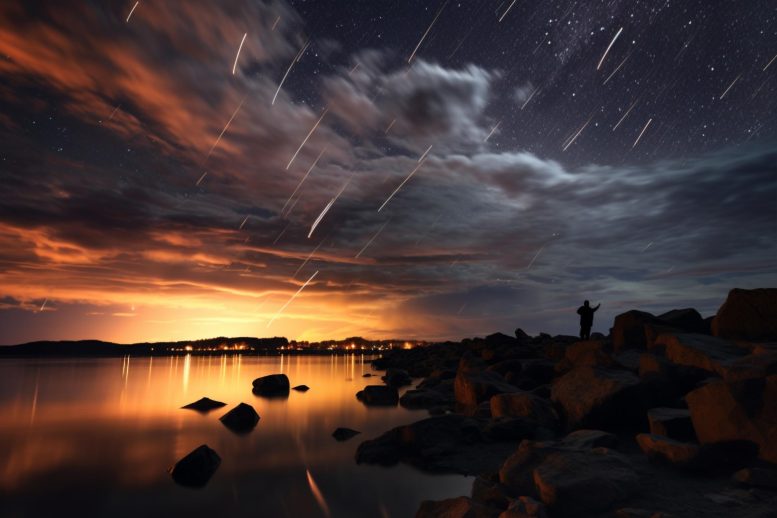
    The Perseid meteor shower will peak on August 12, with a waning crescent moon making this year’s viewing especially favorable. People in the U.S. can expect to see around 40 meteors per hour on peak nights, though this number is significantly reduced in suburban areas. Credit: SciTechDaily.com

    Recognized as one of the best meteor showers, the Perseids are especially notable this year due to a waning crescent moon, enhancing visibility.

    The NASA All Sky Fireball Network is already detecting the first meteors of this year’s Perseid meteor shower! The meteor shower peaks on the night of August 12 as the Earth passes through the dustiest debris of comet Swift-Tuttle’s trails.
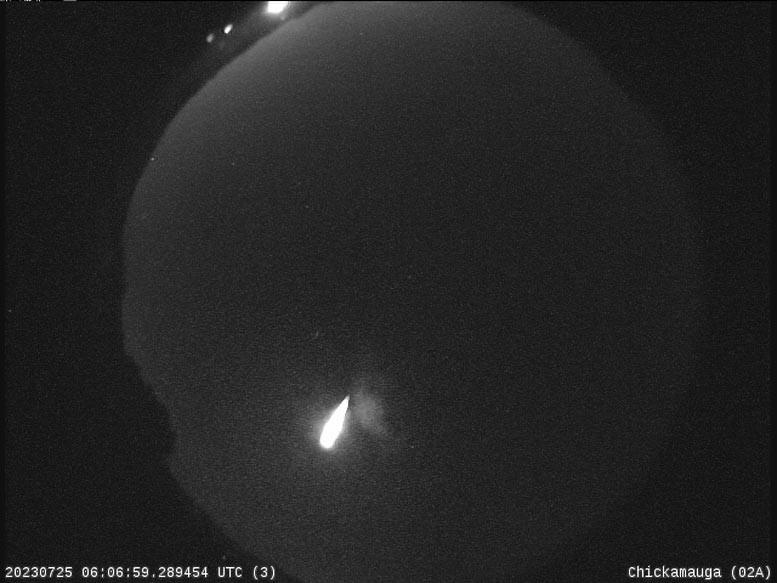
    First Perseid Meteor of 2023
    On July 26, 2023, the NASA All Sky Fireball Network detected the first Perseid meteor of the year. Credit: NASA/All Sky Fireball Network

    The Perseid meteor shower is often considered to be the best meteor shower of the year due to its high rates and pleasant late-summer temperatures. Unlike last year’s shower, which coincided with the full moon, this year’s moon will be a waning crescent. This will allow even some of the fainter meteors to be seen.

    Expected Viewing Numbers

    So, how many can you see?

    “People in the U.S. can reasonably expect to see around 40 Perseids in the hour just before dawn on the peak nights. That’s about one every couple of minutes, which is not bad,” said Bill Cooke, who leads NASA’s Meteoroid Environment Office. “However, we are assuming you are out in the country, well away from cities and suburbs.”

    The brighter skies of suburban areas greatly reduce the viewing rates, with 10 or fewer expected in an hour.
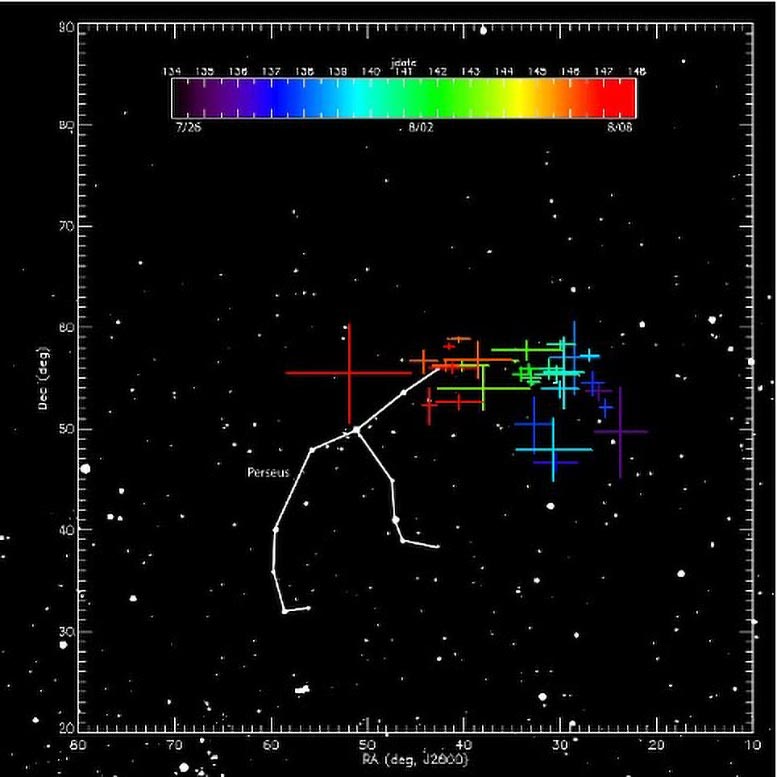
    Change in Direction of Perseid Radiant
    This diagram, based on data from the NASA Fireball Network, shows the change in the direction of the Perseid radiant with time. This is caused by Earth’s motion about the Sun, causing the radiant to appear to “drift” with respect to the background stars. Credit: Danielle Moser, NASA Meteoroid Environment Office

    You can see the Perseid meteor shower best in the Northern Hemisphere. All you need to catch the show is a clear sky, darkness, and a bit of patience. You don’t need to look in any particular direction; meteors can generally be seen all over the sky.

    The Perseids appear to radiate from a point in the constellation Perseus, and each meteor has a similar orbit. Meteor showers take their name from the location of their point of origin, or what is known as the radiant.

    Space Shuttle Orbiter Discovery
    On June 1, 1993, the orbiter Discovery is shown here being rolled into the Vehicle Assembly Building (VAB) for mating with the external tank and twin solid rocket boosters. At the time, Discovery was being prepared for mission STS-51, targeted for a mid-July liftoff. Credit: NASA/JSC

    Fun fact:

    The Perseid meteor shower is the only meteor shower to delay a Space Shuttle launch. In 1993, the NASA – STS-51 launch was delayed due to concerns about the Perseid meteor shower activity being forecast to be extremely heavy, increasing the chance that a spacecraft in Earth orbit could be damaged by a piece of the debris.

    Origin

    The Perseid meteor shower is caused by the Earth passing through the debris left behind by the comet Swift-Tuttle. As this debris enters the Earth’s atmosphere, it burns up, creating bright streaks across the sky, commonly referred to as “shooting stars” or meteors.

    The Perseids are named after the constellation Perseus because the meteors appear to radiate from a point in that constellation. However, they can generally be seen all over the sky. The shower is particularly well-known for its bright and fast meteors and can produce dozens of meteors per hour at its peak.

    Cultural and Scientific Significance

    The Perseid meteor shower has been observed for nearly 2,000 years and holds a special place in both cultural lore and scientific study. It offers a spectacular show for casual stargazers and provides valuable data for astronomers studying meteoroids and cometary debris.

    Never miss a breakthrough: Join the SciTechDaily newsletter.
    Follow us on Google and Google News.

    Astronomy Meteors NASA NASA Marshall Space Flight Center Perseid Meteor Shower Popular
    Share. Facebook Twitter Pinterest LinkedIn Email Reddit

    Related Articles

    Perseid Peak: Witness the Meteor Shower Spectacle Illuminating the Night Sky

    Don’t Miss: Perseid Meteor Shower Spectacle Lights Up the Night Sky

    Don’t Miss: “Gorgeously Green” Geminid Meteor Shower Peaks This Week

    Perseids Meteor Shower on the Way – But There’s a Big Problem

    Don’t Miss the Geminid Meteor Shower – And Check Out NASA’s Live Meteor Camera

    Don’t Miss: Hunter’s, Blood Moon and Orionid Meteor Shower

    Don’t Miss “Prime Time” for the Perseid Meteor Shower

    Treasure Trove of Cosmic Delights Revealed by NASA’s Chandra X-ray Observatory

    NASA TV Will Broadcast Perseid Meteor Shower Program

    Leave A Reply Cancel Reply

    • Facebook
    • Twitter
    • Pinterest
    • YouTube

    Don't Miss a Discovery

    Subscribe for the Latest in Science & Tech!

    Trending News

    Scientists Warn That This Common Pet Fish Can Wreck Entire Ecosystems

    Scientists Make Breakthrough in Turning Plastic Trash Into Clean Fuel Using Sunlight

    This Popular Supplement May Interfere With Cancer Treatment, Scientists Warn

    Scientists Finally Solved One of Water’s Biggest Mysteries

    Could This New Weight-Loss Pill Disrupt the Entire Market? Here’s What You Should Know About Orforglipron

    Earth’s Crust Is Tearing Open in Africa, and It Could Form a New Ocean

    Breakthrough Bowel Cancer Trial Leaves Patients Cancer-Free for Nearly 3 Years

    Natural Compound Shows Powerful Potential Against Rheumatoid Arthritis

    Follow SciTechDaily
    • Facebook
    • Twitter
    • YouTube
    • Pinterest
    • Newsletter
    • RSS
    SciTech News
    • Biology News
    • Chemistry News
    • Earth News
    • Health News
    • Physics News
    • Science News
    • Space News
    • Technology News
    Recent Posts
    • Kratom Use Explodes in the US, With Life-Changing Consequences
    • Scientists Uncover Fatal Weakness in “Zombie Cells” Linked to Cancer
    • World-First Study Reveals Human Hearts Can Regenerate After a Heart Attack
    • Why Your Dreams Feel So Real Sometimes and So Strange Other Times
    • Scientists Debunk 100-Year-Old Belief About Brain Cells, Rewriting Textbooks
    Copyright © 1998 - 2026 SciTechDaily. All Rights Reserved.
    • Science News
    • About
    • Contact
    • Editorial Board
    • Privacy Policy
    • Terms of Use

    Type above and press Enter to search. Press Esc to cancel.