
Close Menu
    Facebook X (Twitter) Instagram
    SciTechDaily
    • Biology
    • Chemistry
    • Earth
    • Health
    • Physics
    • Science
    • Space
    • Technology
    Facebook X (Twitter) Pinterest YouTube RSS
    SciTechDaily
    Home»Space»This Week @NASA: Artemis II Astronauts Meet Orion, Webb Reveals Most Distant Star Ever Detected
    Space

    This Week @NASA: Artemis II Astronauts Meet Orion, Webb Reveals Most Distant Star Ever Detected

    By NASAAugust 13, 2023No Comments4 Mins Read
    Facebook Twitter Pinterest Telegram LinkedIn WhatsApp Email Reddit
    Share
    Facebook Twitter LinkedIn Pinterest Telegram Email Reddit
    Artemis II Crew Visits Their Orion Spacecraft
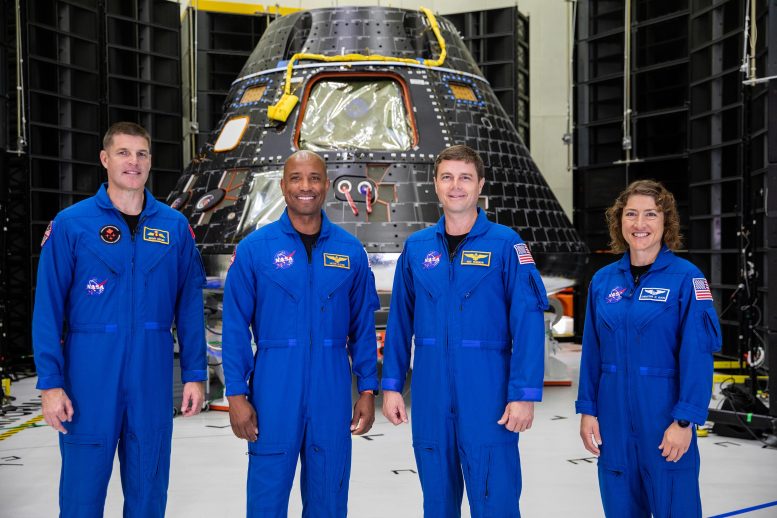
    Inside the high bay of the Neil Armstrong Operations and Checkout Building at NASA’s Kennedy Space Center in Florida on Tuesday, August 8, Artemis II NASA astronauts Reid Wiseman, Victor Glover, and Christina Koch, and CSA (Canadian Space Agency) astronaut Jeremy Hansen visit the Orion spacecraft that will take them on a 10-day journey around the Moon as the first Artemis crew. Credit: NASA/Kim Shiflett

    The Artemis II astronauts check out their ride to the Moon …

    Practicing post-splashdown recovery operations for Artemis II …

    And the Webb Space Telescope checks out a record-breaking star …

    A few of the stories to tell you about – This Week at NASA!

    The Artemis II Crew Visits Space Coast

    On August 8, the Artemis II astronauts visited NASA’s Kennedy Space Center to check out the Orion spacecraft that will carry them around the Moon and back. They also participated in a news conference with NASA leadership to discuss Artemis II and how it will help pave the way for future long-term human exploration missions to the Moon, and eventually to Mars.

    “The measure of success for Artemis II is seeing our colleagues on the lunar surface, seeing our colleagues assembling Gateway. And then, seeing people that are following in our footsteps walking on Mars and coming back to planet Earth.” Reid Wiseman, NASA Astronaut

    Artemis II will be the first mission with astronauts to the Moon in more than 50 years.

    NASA Completes First Recovery Test for Artemis II
    Naval helicopters from Helicopter Sea Combat Squadron (HSC) 23 “Wildcards” fly over the Orion Crew Module Test Article (CMTA) with American flags after completing operations during an Artemis II mission simulation during NASA’s Underway Recovery Test 10 (URT-10) off the coast of San Diego. Credit: NASA/Kenny Allen

    NASA Completes First Recovery Test for Artemis II

    Teams from NASA and the Department of Defense recently completed Underway Recovery Test 10 off the coast of San Diego. They practiced operational activities that will be used to safely retrieve the Artemis II astronauts and Orion spacecraft from the Pacific Ocean at the end of the mission. The approximately 10-day flight will be the first Artemis mission to send astronauts around the Moon and return them safely to Earth.
    Sunrise Arc (Webb NIRCam Image)
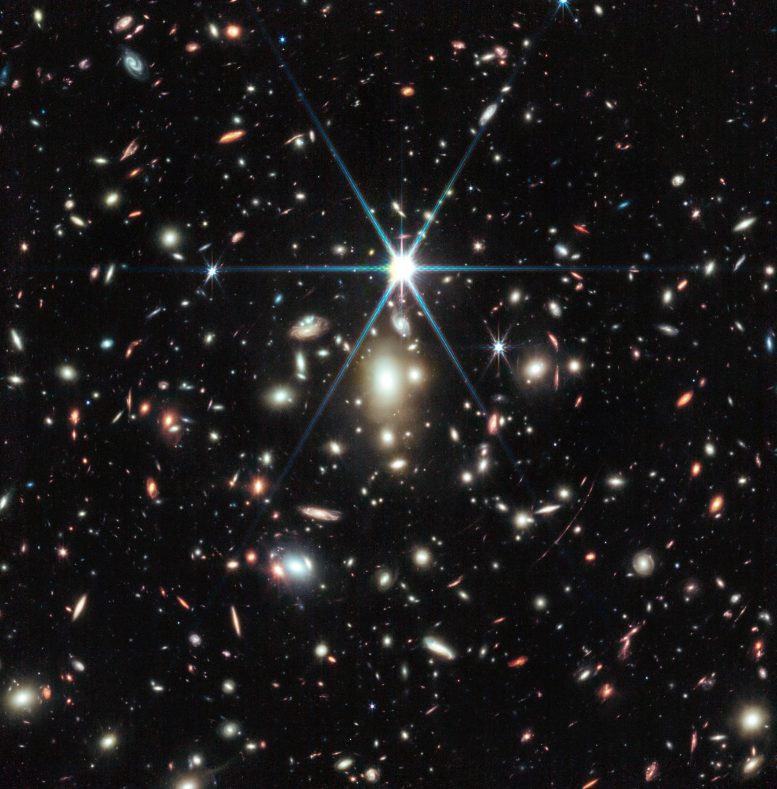
    This image from NASA’s James Webb Space Telescope of a massive galaxy cluster called WHL0137-08 contains the most strongly magnified galaxy known in the universe’s first billion years: the Sunrise Arc, and within that galaxy, the most distant star ever detected. The star, nicknamed Earendel, was first discovered by the Hubble Space Telescope. Credit: NASA, ESA, CSA, Dan Coe (STScI/AURA for ESA, JHU), Brian Welch (NASA-GSFC, UMD), Zolt G. Levay

    Webb Reveals Colors of Most Distant Star Ever Detected

    NASA’s James Webb Space Telescope followed up on the Hubble Space Telescope’s observations of Earendel – the farthest star ever detected in the very distant universe, within the first billion years after the big bang. Webb’s Near-Infrared Camera revealed that the massive star is more than twice as hot as our Sun, and about a million times more luminous. Astronomers also think that, based solely on the colors of Earendel, it might have a cooler redder companion star.

    Monthly Themes to Celebrate the Heliophysics Big Year

    This October, NASA will launch the Heliophysics Big Year – a global celebration of solar science and the Sun’s influence on Earth and the entire solar system. We will celebrate a theme each month from October 2023 to December 2024, and share opportunities to participate in solar science events, like observing solar eclipses, or other fun Sun-related activities.

    That’s what’s up this week @NASA!

    Never miss a breakthrough: Join the SciTechDaily newsletter.
    Follow us on Google and Google News.

    NASA
    Share. Facebook Twitter Pinterest LinkedIn Email Reddit

    Related Articles

    “At First, We Thought Something Was Wrong” – NASA DART Mission Reveals a Cosmic Snowball Fight

    Astronomers Discover an Earth-Like Planet With a Dangerous Temperature Problem

    NASA Prepares Its First Crewed Moon Orbit in Over 50 Years

    A Record-Setting NASA Astronaut Says Goodbye

    NASA’s Artemis II Is on the Launch Pad and the Moon Is Next

    NASA Executes Rare Medical Evacuation From the International Space Station

    NASA Powers Up a Massive Solar Engine for the Moon

    A Massive Rocket Is Rolling and NASA’s Return to the Moon Is Getting Real

    Don’t Miss: Jupiter at Its Biggest and Brightest

    Leave A Reply Cancel Reply

    • Facebook
    • Twitter
    • Pinterest
    • YouTube

    Don't Miss a Discovery

    Subscribe for the Latest in Science & Tech!

    Trending News

    The Universe Is Expanding Too Fast and Scientists Can’t Explain Why

    “Like Liquid Metal”: Scientists Create Strange Shape-Shifting Material

    Early Warning Signals of Esophageal Cancer May Be Hiding in Plain Sight

    Common Blood Pressure Drug Shows Surprising Power Against Deadly Antibiotic-Resistant Superbug

    Scientists Uncover Dangerous Connection Between Serotonin and Heart Valve Disease

    Scientists Discover a “Protector” Protein That Could Help Reverse Hair Loss

    Bone-Strengthening Discovery Could Reverse Osteoporosis

    Scientists Uncover Hidden Trigger Behind Stem Cell Aging

    Follow SciTechDaily
    • Facebook
    • Twitter
    • YouTube
    • Pinterest
    • Newsletter
    • RSS
    SciTech News
    • Biology News
    • Chemistry News
    • Earth News
    • Health News
    • Physics News
    • Science News
    • Space News
    • Technology News
    Recent Posts
    • Scientists Overcome Major Quantum Bottleneck, Potentially Transforming Teleportation and Computing
    • Quantum Physics’ Strangest Problem May Hold the Key to Time Itself
    • Scientists Create “Liquid Gears” That Spin Without Touching
    • The Simple Habit That Could Help Prevent Cancer
    • Forgotten Medicinal Plant Shows Promise in Fighting Dangerous Superbugs
    Copyright © 1998 - 2026 SciTechDaily. All Rights Reserved.
    • Science News
    • About
    • Contact
    • Editorial Board
    • Privacy Policy
    • Terms of Use

    Type above and press Enter to search. Press Esc to cancel.