
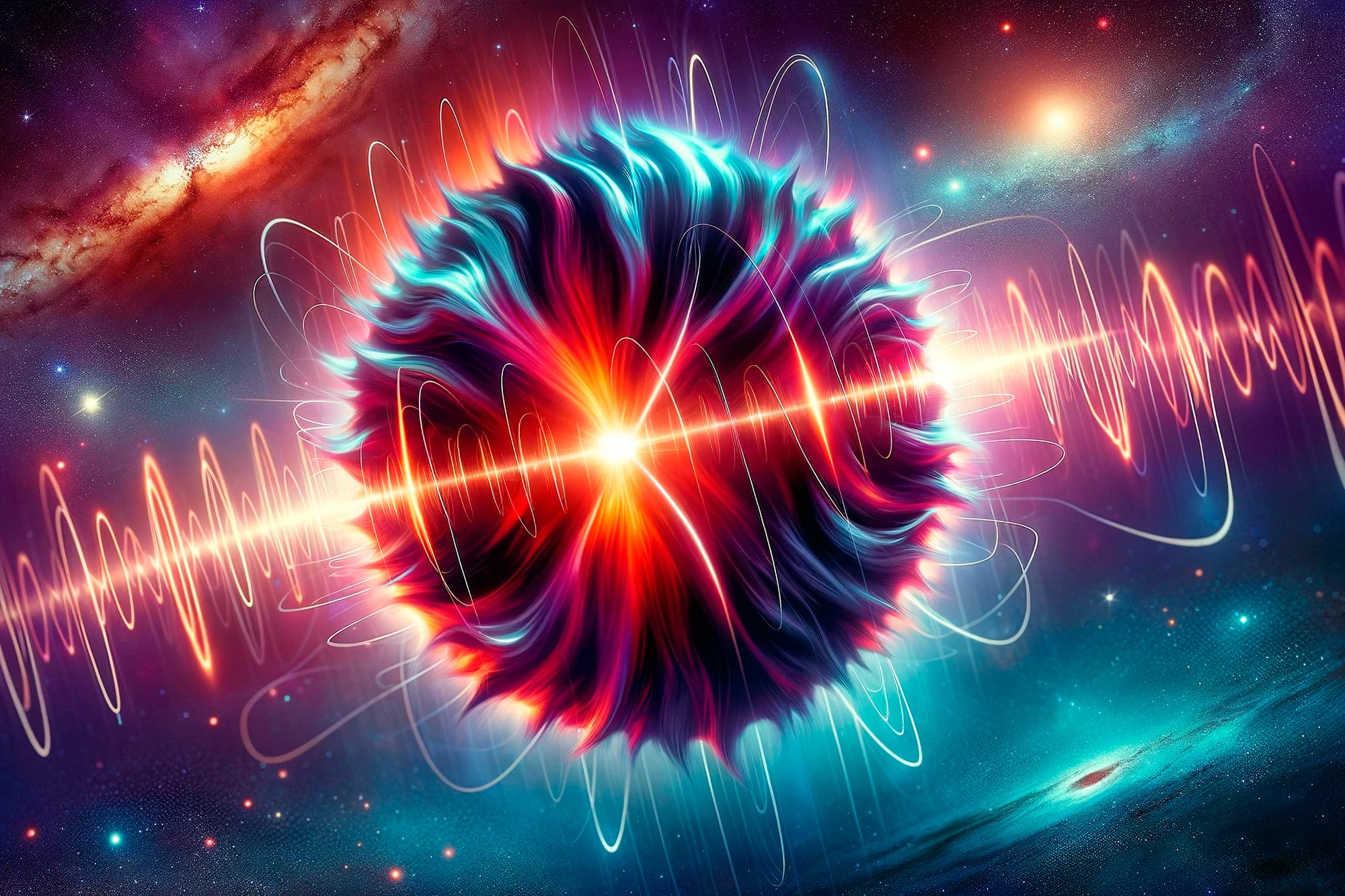
A universal relation for pulsars, magnetars, and potentially fast radio bursts.
An international research team led by Michael Kramer and Kuo Liu from the Max Planck Institute for Radio Astronomy in Bonn, Germany, have studied a rare species of ultra-dense stars, so-called magnetars, to uncover an underlying law that appears to apply universally to a range of objects known as neutron stars. This law gives insight into how these sources produce radio emission and it may provide a link to the mysterious flashes of radio light, Fast Radio Bursts, that originate from the distant cosmos.
The results are published in the journal Nature Astronomy.
Understanding Neutron Stars
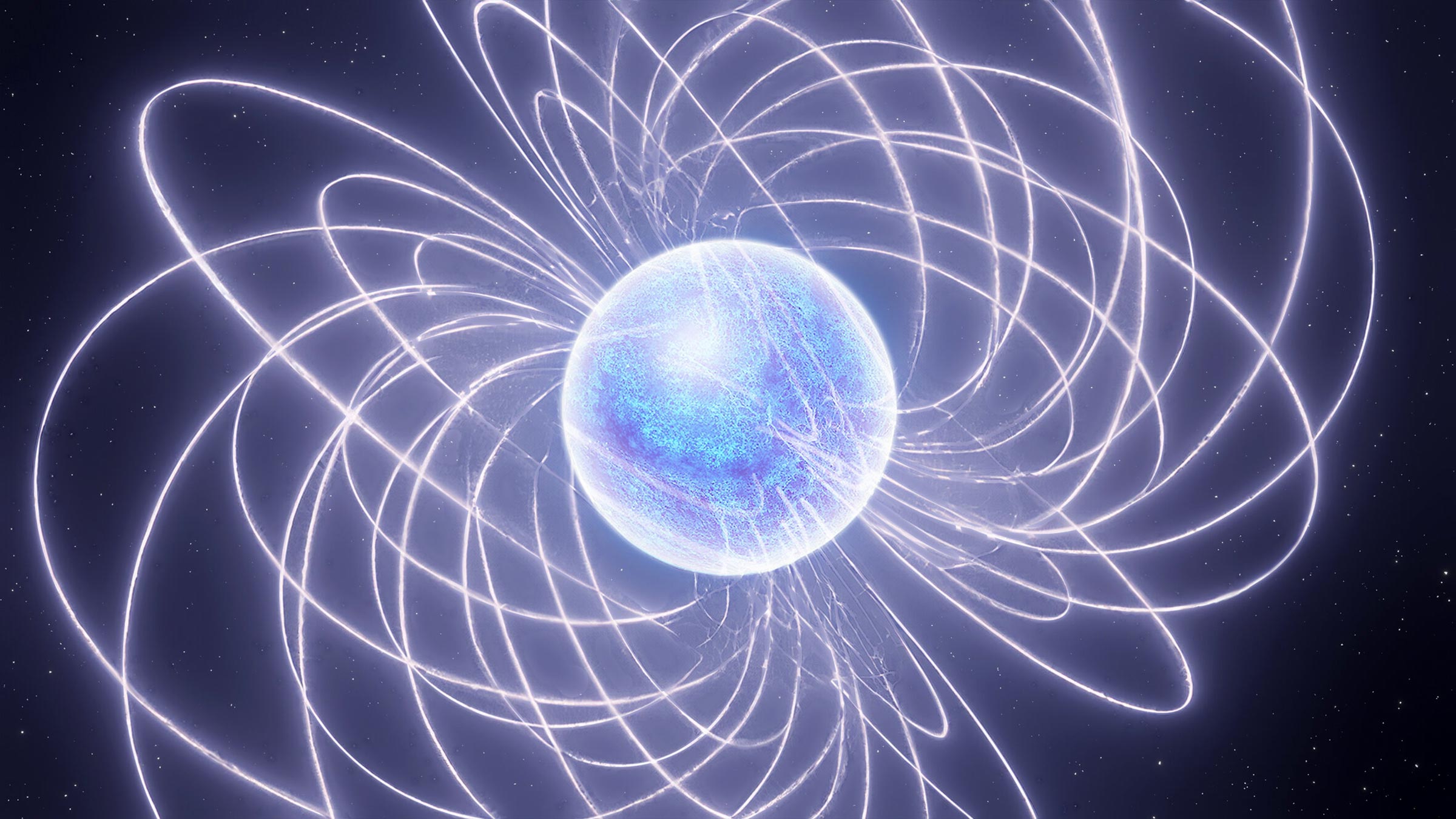
Neutron stars are the collapsed cores of massive stars, concentrating up to twice the mass of the sun in a sphere of less than 25 km (15 miles) in diameter. As a result, the matter there is the most densely packed one in the observable Universe, squeezing electrons and protons into neutrons, hence the name. More than 3000 neutron stars can be observed as radio pulsars, when they emit a radio beam that is visible as a pulsating signal from Earth, when the rotating pulsar shines its light towards our telescopes.
Magnetars and Their Unique Characteristics
The magnetic field of pulsars is already a thousand billion times stronger than the magnetic field of the Earth, but there is a small group of neutron stars that have magnetic fields even 1000 times stronger still! These are the so-called magnetars.
Of the about 30 magnetars known, six have also been found to emit radio emissions, at least occasionally. Extragalactic magnetars have been suggested to be the origin of the Fast Radio Bursts (FRBs). In order to study this link, researchers from the Max Planck Institute for Radio Astronomy (MPIfR) with help from colleagues at the University of Manchester, have inspected the individual pulses of magnetars in detail and detected sub-structure in those. It turns out that a similar pulse structure was also seen in pulsars, the fast-rotating millisecond pulsars, and in other neutron star sources known as Rotating Radio Transients.
Universal Scaling Law Discovered
To their surprise, the researchers found that the timescale of magnetars and that of the other types of neutron stars all follow the same universal relationship, scaling exactly with the rotation period. The fact that a neutron star with a rotation period of less than a few milliseconds and one with a period of nearly 100 seconds behave like magnetars suggests that the intrinsic origin of the subpulse structure must be the same for all radio-loud neutron stars. It reveals information about the plasma process responsible for the radio emission itself, and it offers a chance to interpret similar structures seen in FRBs as the result of a corresponding rotational period.
Insights from the Research Team
“When we set out to compare magnetar emission with that of FRBs, we expected similarities,” recalls Michael Kramer, first author of the paper and Director at MPIfR. “What we didn’t expect is that all radio-loud neutron stars share this universal scaling.”
“We expect magnetars to be powered by magnetic field energy, while the others are powered by their rotational energy,” complements Kuo Liu. “Some are very old, some are very young, and yet all seem to follow this law.”
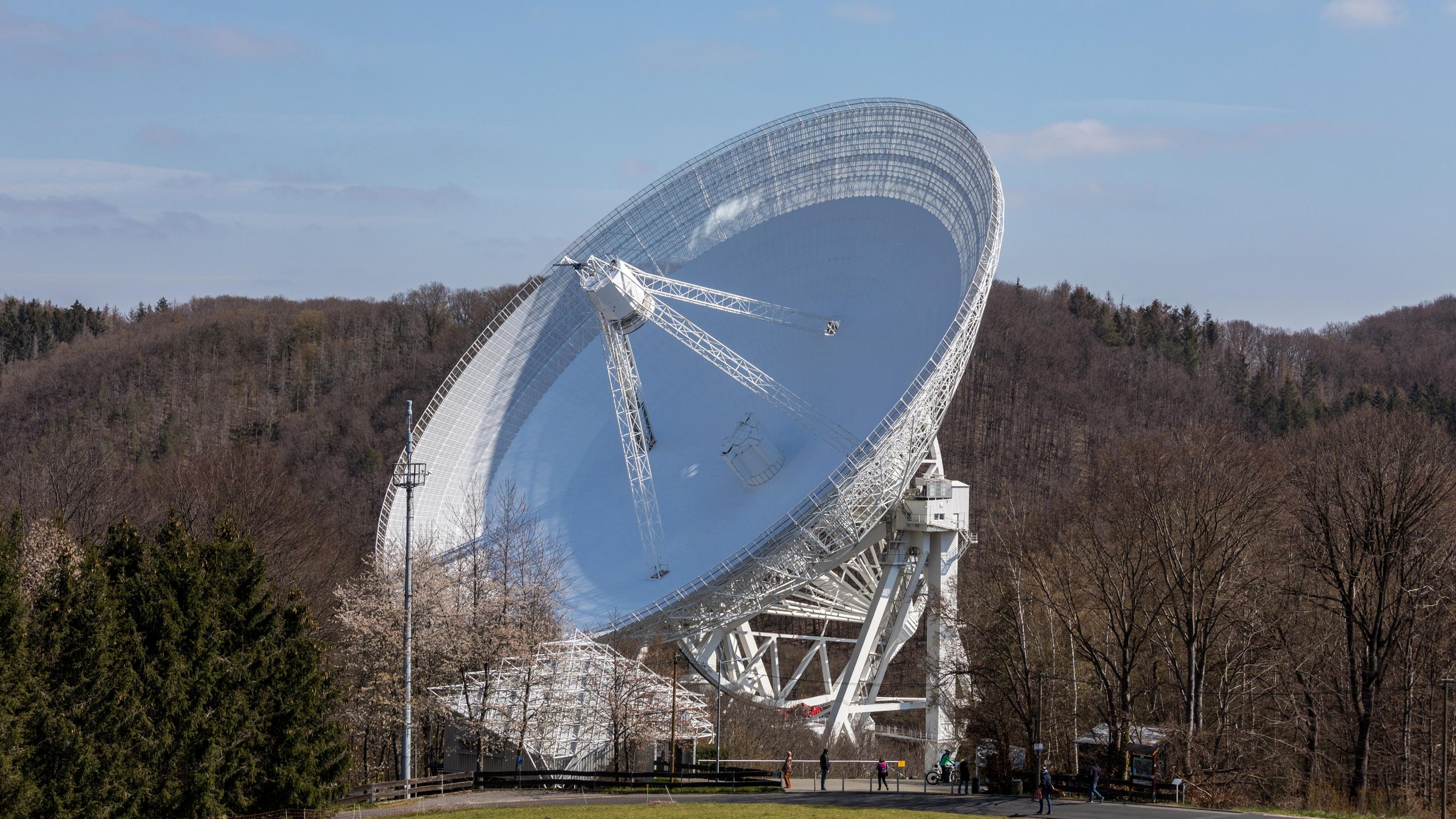
Gregory Desvignes describes the experiment: “We observed the magnetars with the 100-m radio telescope in Effelsberg and compared our result also to archival data, since magnetars do not emit radio emission all the time.”
“Since magnetar radio emission is not always present, one needs to be flexible and react quickly, which is possible with telescopes like the one in Effelsberg,” confirms Ramesh Karuppusamy.
Connecting FRBs and Magnetars
For Ben Stappers, co-author of the study, the most exciting aspect of the result is the possible connection to FRBs: “If at least some FRBs originate from magnetars, the timescale of the substructure in the burst might then tell us the rotation period of the underlying magnetar source. If we find this periodicity in the data, this would be a milestone in explaining this type of FRB as radio sources.”
“With this information, the search is on!” concludes Michael Kramer.
Additional Information
Magnetars are among the most energetic neutron stars attributed to their extremely high magnetic fields. Out of the above thirty magnetars discovered so far, only six are known to exhibit radio emission. Recently, research interest in their properties has drastically increased due to their possible link to fast radio bursts (FRBs). FRBs are millisecond-long bursts of radio emission generated by extra-galactic sources. Though the origin of these radio bursts has not been understood, magnetars are speculated to be one of the possible FRB sources.
Sub-structure with short-duration, concentrated emission was detected in the radio signal of pulsars soon after their first discovery. Typically, the sub-structure has a characteristic quasi-periodicity and width, both of which have been found to scale with the rotational period of the pulsar. This relation has been established in canonical pulsars for decades, and expanded to the millisecond pulsar population in recent years. Very recently, the same type of short-duration ‘micro-pulse’ has also been seen in some FRBs, indicating the presence of a similar underlying emission process in both scenarios.
The research used observations of all six radio-loud magnetars which were carried out by the Effelsberg 100-m telescope at CX band (4-8 GHz) and a few other 100-m class radio telescopes around the globe.
Reference: “Quasi-periodic sub-pulse structure as a unifying feature for radio-emitting neutron stars” by Michael Kramer, Kuo Liu, Gregory Desvignes, Ramesh Karuppusamy and Ben W. Stappers, 23 November 2023, Nature Astronomy.
DOI: 10.1038/s41550-023-02125-3
The authors of the paper are Michael Kramer, Kuo Liu, Gregory Desvignes, Ramesh Karuppusamy and Ben W. Stappers. The first four authors are all affiliated with the Max Planck Institute for Radio Astronomy.
Never miss a breakthrough: Join the SciTechDaily newsletter.
Follow us on Google and Google News.