
Close Menu
    Facebook X (Twitter) Instagram
    SciTechDaily
    • Biology
    • Chemistry
    • Earth
    • Health
    • Physics
    • Science
    • Space
    • Technology
    Facebook X (Twitter) Pinterest YouTube RSS
    SciTechDaily
    Home»Space»Hubble Discovers NGC 1073, A Barred Spiral Galaxy Similar to Milky Way
    Space

    Hubble Discovers NGC 1073, A Barred Spiral Galaxy Similar to Milky Way

    By SciTechDailyFebruary 3, 2012No Comments2 Mins Read
    Facebook Twitter Pinterest Telegram LinkedIn WhatsApp Email Reddit
    Share
    Facebook Twitter LinkedIn Pinterest Telegram Email Reddit
    ngc-1073-galaxy
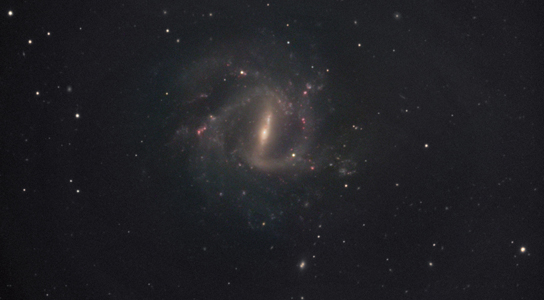
    NGC 1073, a barred spiral galaxy like the Milky Way, is located 55 million light-years away in the Cetus constellation.

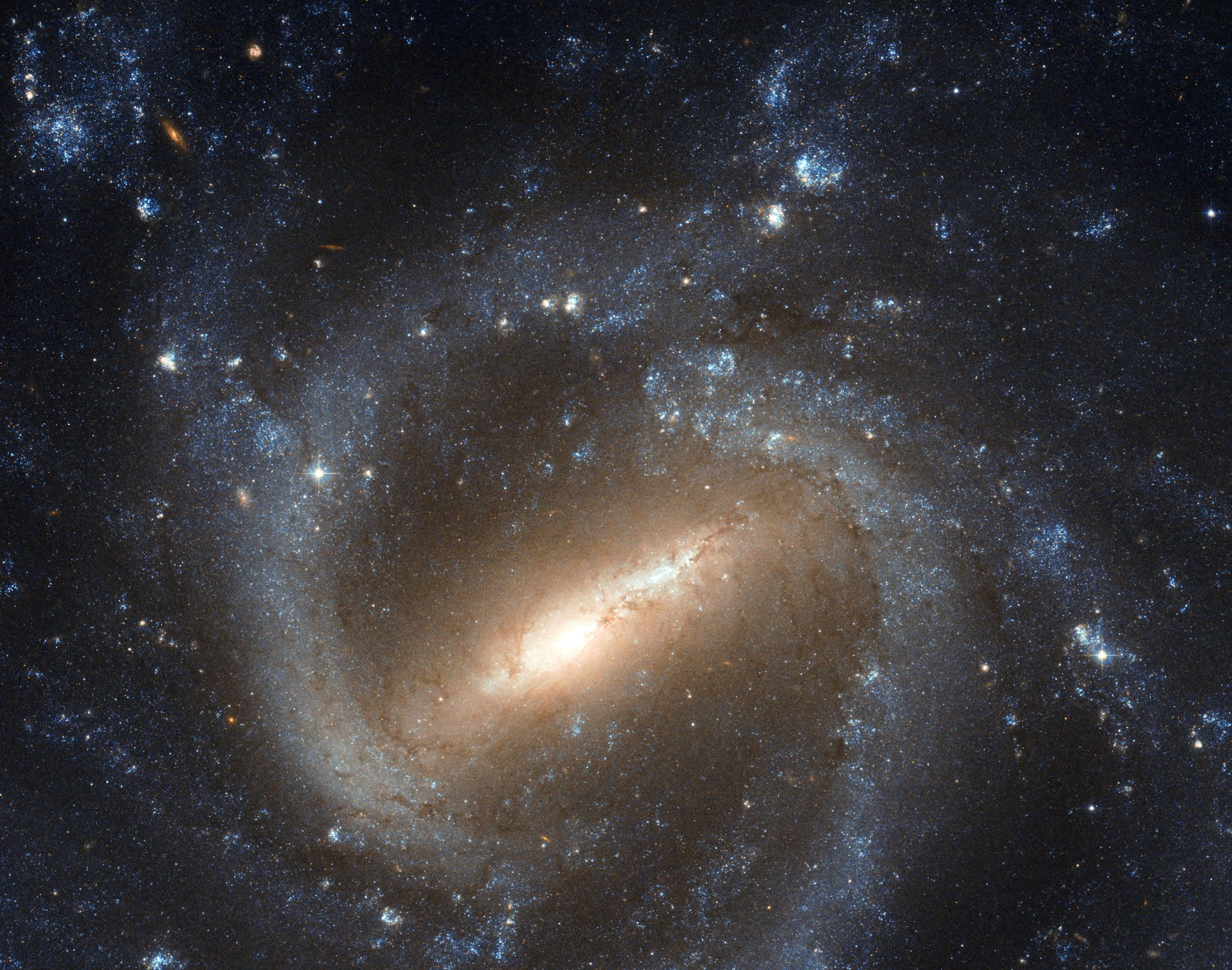
    The Hubble Telescope unveiled an eerie twin galaxy to the Milky Way today. NGC 1073, a barred spiral galaxy like the Milky Way, is located 55 million light-years away in the Cetus constellation.

    Astronomers hope to better understand the Milky Way by observing NGC 1073. The aforementioned bars are made up of dense lines of stars at the center of the galaxies, which are thought to form as gravity causes density waves to push gas inward, supplying raw materials for birthing new stars. The inflow of gas also feeds the giant black holes that are thought to inhabit the center of most galaxies.
    Barred Spiral Galaxy NGC 1073
    The NASA/ESA Hubble Space Telescope has taken a picture of the barred spiral galaxy NGC 1073, which is found in the constellation of Cetus (The Sea Monster). Our own galaxy, the Milky Way, is thought to be a similar barred spiral, and the study of galaxies such as NGC 1073 can help astronomers learn more about our celestial home. Credit: NASA & ESA

    Scientists think that the bars form as spiral galaxies age, which is supported in part because extremely distant galaxies dating from the universe’s early days tend not to have them. Also, bars are linked to galaxies full of older, redder stars and less prevalent in galaxies with bluer, younger stars.
    ngc-1073-landscape

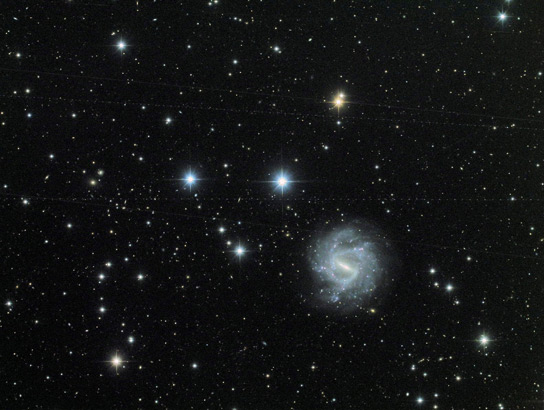
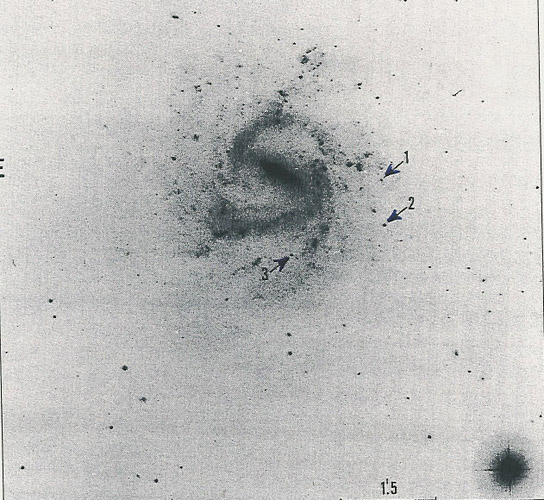
    The image also reveals an odd, rough ring-like structure around the galaxy, that is the result of recent star formation. A bright X-ray source inside the ring is most likely a binary system containing a star and a black hole, locked in orbit around each other.  There are also three quasars in the image, incredibly bright sources of light caused by matter heating up and falling into supermassive black holes in galaxies, literally billions of light-years from us, states a Hubble researcher.
    ngc-1073-three-quasar

    They are in fact some of the most distant objects observable in the universe.

    Never miss a breakthrough: Join the SciTechDaily newsletter.
    Follow us on Google and Google News.

    Astronomy Hubble Space Telescope Milky Way NASA
    Share. Facebook Twitter Pinterest LinkedIn Email Reddit

    Related Articles

    NASA’s Hubble Reveals How the LMC Defied Galactic Destruction

    Hubble Finds Phantom Imprint in Space Revealing Black Hole Roaming Our Milky Way Galaxy

    The Illusion of a Continuous Perseus Arm: Our Milky Way May Be More Fluffy, Less Wiry

    Hubble Shows Us the Future: A Galactic Collision

    Hubble Observes Spectacular Supernova Time-Lapse – “No Earthly Fireworks Display Can Compete”

    Survey of the Stars: Hubble Captures Great Barred Spiral Galaxy in a Fiery Furnace

    Mystery As Hubble Finds Milky Way Raids Intergalactic ‘Bank Accounts’

    Hubble Discovers Two Dwarf Galaxies Moving into the Milky Way

    Astronomers Find Bizarre Alignment of Planetary Nebulae in the Milky Way

    Leave A Reply Cancel Reply

    • Facebook
    • Twitter
    • Pinterest
    • YouTube

    Don't Miss a Discovery

    Subscribe for the Latest in Science & Tech!

    Trending News

    1.4-Million-Year-Old Footprints Reveal a Giant Human Relative

    Astronomers May Have Found the First Moon Beyond Our Solar System

    Underwater Cameras Expose the Secret Lives of Whale Sharks

    Why Dreaming Leaves the Brain Running Low on Energy

    CERN Experiments Detect Signs of the Universe’s Primordial Matter

    Study Finds a Surprising Link Between Gut Microbes and Aging

    Frequent Cannabis Users Wake Up With More “Stress Hormone”

    Scientists Reveal Hidden DNA Traces in the Shroud of Turin

    Follow SciTechDaily
    • Facebook
    • Twitter
    • YouTube
    • Pinterest
    • Newsletter
    • RSS
    SciTech News
    • Biology News
    • Chemistry News
    • Earth News
    • Health News
    • Physics News
    • Science News
    • Space News
    • Technology News
    Recent Posts
    • Humans and Mice May Process Smells in Very Similar Ways
    • These Beautiful Flowers Can Paralyze You, but Their Chemistry Could Save Lives
    • New Stroke Treatment Turns Brain Cavities Into Repair Hubs
    • World’s First Photonic Time Crystal Can Reshape Light in Trillionths of a Second
    • Meteorite That Smashed Through a New Jersey Roof Hid an Ancient Chemical Secret
    Copyright © 1998 - 2026 SciTechDaily. All Rights Reserved.
    • Science News
    • About
    • Contact
    • Editorial Board
    • Privacy Policy
    • Terms of Use

    Type above and press Enter to search. Press Esc to cancel.