

Researchers have identified a small-molecule compound that appears to counteract weight gain and metabolic damage in mice exposed to a long-term Western diet.
A drug candidate developed by researchers at The University of Texas Health Science Center at San Antonio kept mice from becoming obese even after long-term exposure to a sugar-rich, fat-heavy Western diet. The treatment also protected the animals from liver damage linked to poor diet, including fatty buildup and tumor formation.
The work points to an unexpected target: magnesium movement inside mitochondria, the energy-producing structures found in cells.
“When we give this drug to the mice for a short time, they start losing weight. They all become slim,” said Madesh Muniswamy, PhD, a professor of medicine at the Joe R. and Teresa Lozano Long School of Medicine.
The findings were published in Cell Reports. Muniswamy, director of the Center for Mitochondrial Medicine at UT Health San Antonio, was the study’s senior author. The research also included scientists from the University of Pennsylvania and Cornell University.
Why Magnesium Became the Focus
Magnesium is essential for life. It helps regulate blood sugar and blood pressure, supports bone health, and participates in many chemical reactions that keep cells running. It is also the fourth most abundant cation in the body, behind calcium, potassium, and sodium.
But inside mitochondria, the study suggests, too much magnesium may act less like fuel and more like a brake. When magnesium enters mitochondria through a channel controlled by a gene called MRS2, it can slow the cell’s ability to burn sugar and fat efficiently.

“It puts the brake on, it just slows down,” said co-lead author Travis R. Madaris, a doctoral student in Muniswamy’s lab.
To test the idea, researchers removed the MRS2 gene in mice and fed them a Western diet for as long as 52 weeks. Normal mice gained weight and developed signs of metabolic disease. Mice without MRS2 stayed lean, despite eating similar amounts of food, drinking similar amounts of water, and moving about as much as the other animals.
Their metabolism also appeared more active. The mice were better able to use sugar and fat for energy, and their white fat began showing signs of “browning,” a shift toward a more energy-burning type of fat.

Protection Beyond Body Weight
The liver results were especially dramatic. In typical mice, the Western diet led to fatty liver changes, fibrosis, liver enlargement, and frequent liver tumors. Those problems were largely absent in mice lacking MRS2.
Their liver and adipose (fat) tissues showed no evidence of fatty liver disease, a condition closely tied to obesity, type 2 diabetes, and poor diet. The animals also maintained healthier blood glucose levels and avoided several signs of diet-induced metabolic syndrome.
The researchers found that reducing magnesium entry into mitochondria changed how cells handled citrate, a molecule used to make fat. With less mitochondrial magnesium, less citrate appeared to leave the mitochondria for fat production. That shift may help explain why the mice accumulated less fat in the liver and body.
A Drug That Copies the Genetic Effect
The team then tested a compound called CPACC, which blocks magnesium transport through the same mitochondrial pathway. UT Health San Antonio has filed a patent application for the drug.
In experiments, CPACC reduced lipid buildup in liver cells, increased mitochondrial respiration, lowered plasma citrate, and promoted features of beige fat, a more metabolically active form of fat. In mice on a high-fat diet, injections of CPACC every three days for six weeks limited weight gain and improved a marker of liver function.
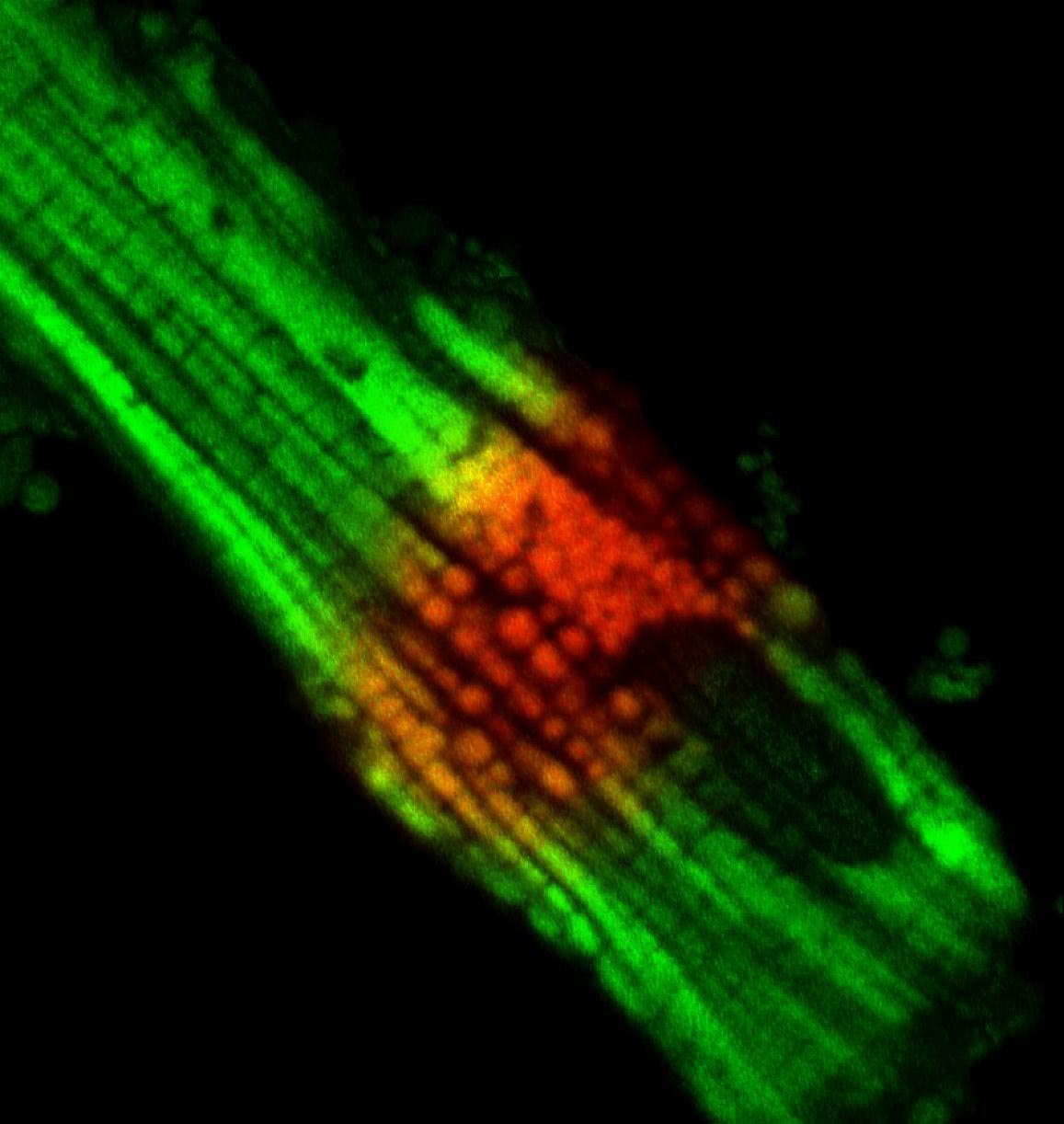
“Lowering the mitochondrial magnesium mitigated the adverse effects of prolonged dietary stress,” said co-lead author Manigandan Venkatesan, PhD, a postdoctoral fellow in the Muniswamy lab.
Madaris said the collaboration was essential to developing the compound. Joseph A. Baur, PhD, of the University of Pennsylvania, and Justin J. Wilson, PhD, of Cornell University, were among the contributors. “We came up with the small molecule and Justin synthesized it,” Madaris said.
What This Could Mean for Future Treatments
The results suggest that mitochondrial magnesium channels may be a promising target for obesity, fatty liver disease, type 2 diabetes, and other cardiometabolic conditions. Still, the findings are early. The main experiments were done in mice, and the study used a global MRS2 knockout, which means the researchers could not isolate the role of the channel in each individual tissue. The authors also note that future work will need safer, more refined MRS2 modulators suitable for human studies.
“These findings are the result of several years of work,” Muniswamy said. “A drug that can reduce the risk of cardiometabolic diseases such as heart attack and stroke, and also reduce the incidence of liver cancer, which can follow fatty liver disease, will make a huge impact. We will continue its development.”
Follow-Up Research
Related studies published after the CPACC work suggest that mitochondrial magnesium transport may matter beyond obesity and fatty liver disease.
In a 2024 Mitochondrion study, researchers showed that lower magnesium levels inside mitochondria increased activity of the mitochondrial calcium uniporter (MCU), which controls calcium uptake into mitochondria. The finding helps explain how mitochondrial magnesium can influence calcium signaling, energy production, and cell stress.
In 2026, a Hypertension study connected Mrs2 to pulmonary arterial hypertension (PAH). In diseased pulmonary artery cells, excess mitochondrial magnesium helped drive metabolic dysfunction, lactate buildup, calcium overload, mitochondrial damage, and abnormal cell growth. Reducing Mrs2 activity improved mitochondrial function and eased vascular remodeling in rats.
References:
“Limiting Mrs2-dependent mitochondrial Mg2+ uptake induces metabolic programming in prolonged dietary stress” by Travis R. Madaris, Manigandan Venkatesan, Soumya Maity, Miriam C. Stein, Neelanjan Vishnu, Mridula K. Venkateswaran, James G. Davis, Karthik Ramachandran, Sukanthathulse Uthayabalan, Cristel Allen, Ayodeji Osidele, Kristen Stanley, Nicholas P. Bigham, Terry M. Bakewell, Melanie Narkunan, Amy Le, Varsha Karanam, Kang Li, Aum Mhapankar, Luke Norton, Jean Ross, M. Imran Aslam, W. Brian Reeves, Brij B. Singh, Jeffrey Caplan, Justin J. Wilson, Peter B. Stathopulos, Joseph A. Baur and Muniswamy Madesh, 27 February 2023, Cell Reports.
DOI: 10.1016/j.celrep.2023.112155
“Mrs2-mediated mitochondrial magnesium uptake is essential for the regulation of MCU-mediated mitochondrial Ca2+ uptake and viability” by Thiruvelselvan Ponnusamy, Prema Velusamy and Santhanam Shanmughapriya, 8 April 2024, Mitochondrion.
DOI: 10.1016/j.mito.2024.101877
“Enhanced Mitochondrial Mrs2-Mg2+ Signaling Drives Mitochondrial Dysfunction in Pulmonary Arterial Hypertension Rats” by Ruo-Nan Chen, Xue-Qin Weng, Yan Yan, Qin-Ye Chen, Yi-Chen Lin, Lan Liu, Xiao-Ling Zhuang, Long-Xin Gui, James S.K. Sham, Mo-Jun Lin and Da-Cen Lin, 16 March 2026, Hypertension.
DOI: 10.1161/HYPERTENSIONAHA.126.25866
Never miss a breakthrough: Join the SciTechDaily newsletter.
Follow us on Google and Google News.
42 Comments
Name of Magnesium
U meant cpacc chloropentaammine cobalt (III) chloride
Wow! According to the image, it gets rid of freckles as well. Amazing!
So are they implying both Magnesium and Citrate are essentially bad for Mitochondrial metabolism?
Am I the only one seeing Magnesium Citrate niw as literal poison? Or is this a different form entirely?
Article should include information on such things like that for stupid laymans like me who will associate the references to Magnesium and Citrate to Magnesium Citrate.
Furthermore, there are tons of articles out there referencing magnesium as good for obesity/fat burning. This would seem to counter that standard.
Magnesium does not help you lose weight because i’ve been taking it per year now and I have not lost so much as an ounce
When it really helps me with my bad league cramps
How much is the drug ?
And can I get it
I noticed that too.
Product name?
The title is misleading. The drug blocks magnesium uptake into the cell. Hope this doesn’t start a craze where people are buying magnesium to lose weight.
Please can share the name of the product and how.much it costs
Thank you
There is no product.
What is the name of magnisium pls I need them thx
I need this. I am willing to participate in any study they have.
Give product details and prise
Asap. I am from South Africa and I would like to try your product
Products name and price please
Please can you share the name of the drug please 🙏
I need this. I am willing to participate in any study they have.
Would love to learn more.
Please tell the type of Magnesium . There are so many. And the foods that naturally contain them.
Thank you
Please tell me the name of the magnesium there are several types.
As a senior lay American male with multiple sub-acute non-IgE-mediated food allergies and a history of medical errors resulting in the at-home discovery of a serious calcium deficiency in 2010 and a very serious phosphorus deficiency in 2021, with a recommended supplement dosing ratio of calcium to magnesium of about 2:1, based on most recent lab tests and current supplementation I’m presently investigating (at-home again) if a blood serum Ca:Mg ratio of 4:1 is indicative of a magnesium deficiency? Regardless, reading the article with cursory reviews of the three reference studies I failed to find any inclusion of my kind of food allergies, the pathological effects of added monosodium glutamate (MSG) and/or any high uric acid/free radical serum levels in the mice caused by the mouse chow “western diet.” What I see is just another waste of valuable time and money trying to treat abnormal disease conditions in mice with drugs and/or genetic manipulations, which would be more appropriately addressed in humans with less adulterated (MSG, minimally; FDA approved food poisoning) and processed human diet.
Title is misleading one could be led to believe magnesium prevents weight gain.
No mention of the juicy bits….. what type of magnesium and what’s the name? Thumbs down from this corner.
I agree! Another tease!
They never said the name,but they are coming out with sOoo many pills on tik tok for it…
Help me please. I weigh 149kg,am 172cm tall. Diabetic T2, high cholesterol,high blood pressure, underactive thyroid. Hormone imbalance. I have already lost 13kg from 152kg on my on. All the chronic diseases I have under control with medication. I am on the following vitamins, magnesium glycinate, magnesium citrate,omega 3, vitamin d³ and k², zinc.
I would think that’s too much magnesium? If not why?
The difference being glycate or citrate and both do kind of actually different jobs.
Kindly advice of any proven candidates who have successfully administered this treatment…Also what is the cost and where is it available. THANKS
Thanks to our government that has poisoned us with all the processed foods that we have been subjected to all of our lives. The FDA is a joke. They allow all these foods that are processed with tons of sodium, seed oils, petroleum products, chemicals, and dyes that they know are detrimental to our health. Lying to us, stating that these highly processed foods are healthy. This is proof that the government uses our food as one form of population control. This is the what all American citizens know but are to afraid to do anything about. A Revelation is what American citizens should be concentrating in and standing our ground against this deceit.
Some responses show that this article badly needed a clear statement that these were pre-clinical studies on mice and require years of clinical studies on humans to determine safety and efficacy.
Thank you. I thought I was the only one…. Lol
I wonder if people who are lean without doing exercises and following a healthy diet have a variant of this mitochondrial protein/ gene that naturally limits the magnesium intake of the mitochondria. Are there any studies on human variants of this gene?
The photos of the women suggest a dramatic change from the first to the second. The article title suggests that magnesium can create such results. The article is based on studies of mice, not humans hence the lack of a specific “product” that many comments are requesting. Look closely at the photos-they are of two different people. So, no miracle is available here.
And lose my boobs? Nah I think I’ll pass….
Thanks to our government that has poisoned us with all the processed foods that we have been subjected to all of our lives. The FDA is a joke. They allow all these foods that are processed with tons of sodium, seed oils, petroleum products, chemicals, and dyes that they know are detrimental to our health. Lying to us, stating that these highly processed foods are healthy. This is proof that the government uses our food as one form of population control. This is the what all American citizens know but are to afraid to do anything about. A Revelation is what American citizens should be concentrating in and standing our ground against this deceit.
They didn’t say Element. They said Cation, or positive ion. Electrolytes
Now, unlike with GLP-1 drugs which were also developed using public funds, public laboratories and equipment, we need to keep this away from the predatory healthcare conglomerates. GLP-1 drugs are not just associated with weight loss. They cure some forms of cancer and prevent others, reverse liver and kidney disease, even prevents dementia. It’s unaffordable for 80% of the population, and virtually everyone who desperately needs it, because we allowed predatory corporations and lawyers to steal 31% of our GDP for third rate healthcare.
I would like to get in this study. How do I get in the study.
Everyone begging for the name of this miraculous-magnesium-wonder-drug, please read this:
The very best wonder drug is your OWN metabolism.
You can most easily train your metabolism, restore your insulin sensitivity, and pull your body back from the brink of fatty liver disease, overweight, and even T2 diabetes, by limiting the number of hours per day during which you are consuming food (aka, “intermittent fasting”).
And you can most easily sustain a daily habit of limiting the number of hours per day during which you are consuming food by limiting the amount and simplicity of the carbohydrates you’re taking in (aka, “low carb”).
Read Jason Fung’s ‘The Obesity Code’, or listen to the audiobook, or find his videos on YouTube. You don’t have to pay him a dime, you don’t have to join any groups or hire any coaches or (most of all) buy any pills.
Start weight: 220lbs (August 2018)
End weight: 142lbs (February 2020)
And I have kept most of it off (other than a brief blip right after the pandemic started, when I reverted to comfort foods and snacking to deal with stress). I *know* I will never be as high as 220lbs again, with a certainty I never had before. Reading Dr Fung’s book was the key and the catalyst.
I was diagnosed with diabetes last summer,i struggled with diabetic neuropathy, which made everyday life very difficult. I tried different treatments and lifestyle changes, including exercise and healthy eating. During my search for additional support, I came across www. madibaherbalcenter. com and decided to try their herbal program.Over time, I noticed significant improvements in my overall health and neuropathy symptoms. I now feel stronger, healthier, and more energetic than before. My experience gave me hope and motivated me to stay committed to managing my health naturally alongside proper herbal care and lifestyle changes.
What’s scary is it’s evident from reading the comments, that the majority of people did not read the article. It did not say that magnesium caused weight loss at all. Go back and read it and see if you find the hidden message.
Taking magnesium has been the most profound impact on body fat loss for me as someone who exercises, eats healthy, avoid bad processed foods and sugar. Why people who claim taking Magnesium doesn’t work is because they dont take enough! Must take atleast 1000 mg a day with Mg oil spread out the day, after workout, then with last two meals of the day and before bed, plus getting enough sun helps bc Mg activates Vit D, a potent fat burner, also Mg aids big time in falling asleep on time, before the hrs before midnight since 10 am – 2 am is where HGH is released the most during the entire day.
Our ancestral ancestors consumed 1500 mg of Mg a day so food for though, that mineral activates so many enzymes in the body for overall health is mindblowing. Cheers!