
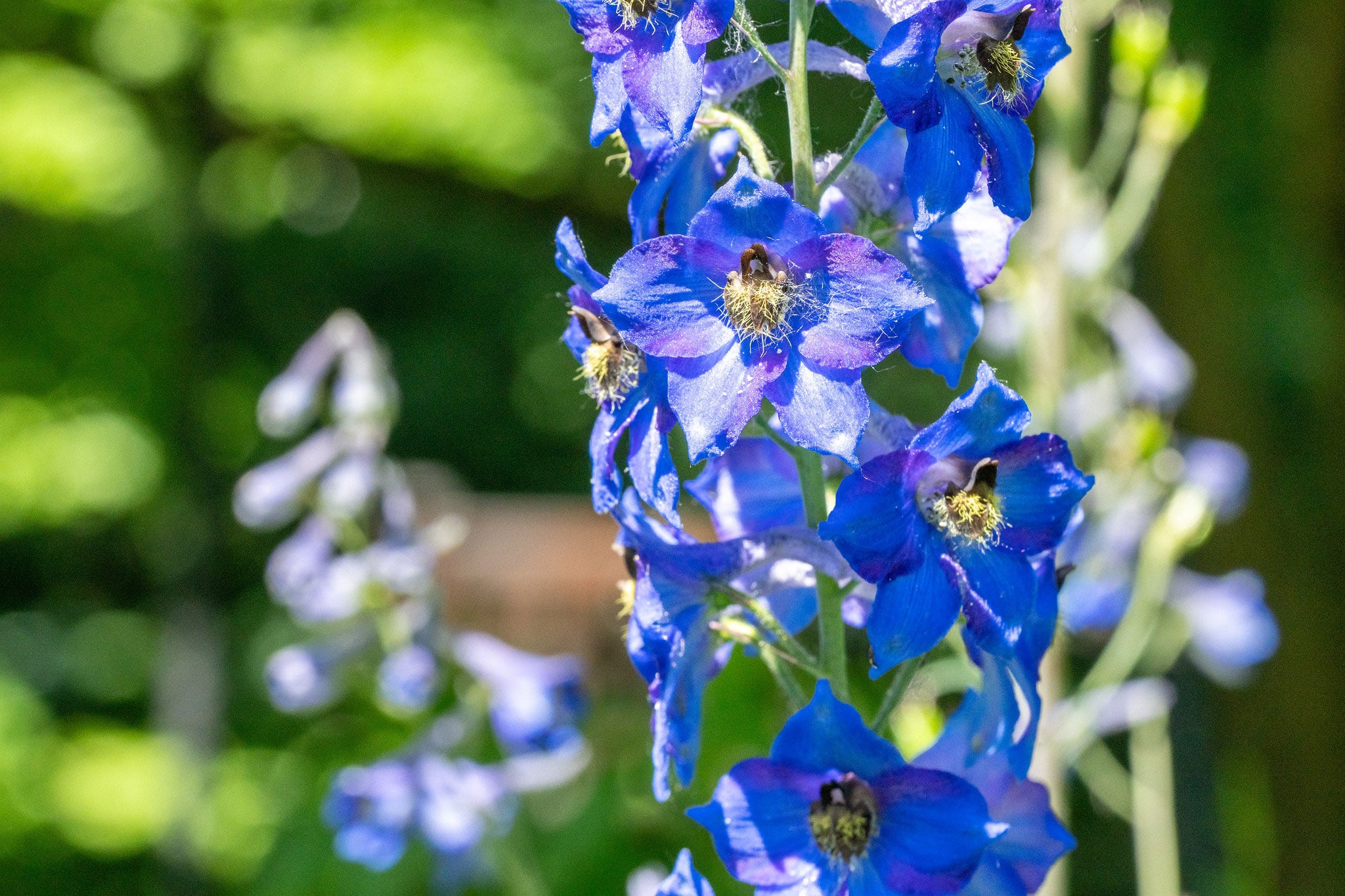
Researchers take the first steps toward recreating powerful chemicals derived from plants in the laboratory.
Wolfsbane and larkspur can cause neurotoxicity and paralysis at extremely low doses, yet their chemistry has also been used against pain, malaria, cancer, and pests. Researchers have now taken the first steps toward recreating some of these powerful plant compounds in the laboratory, opening a potential route to testing and developing naturally derived treatments.
The work brought together scientists at Michigan State University and the Czech Academy of Sciences. Their findings, focused on wolfsbane and larkspur, were published in Molecular Plant.
“These plants have been used in different forms of medicine throughout the world for thousands of years,” said MSU alum Garret Miller, co-first author of the paper and now an assistant professor of biotechnology at the University of Michigan-Flint.
“We know they interact with our bodies in so many ways, and understanding how to create them can help provide totally new routes of testing.”
Nature’s chemistry remains difficult to copy
Even after centuries of scientific progress, reproducing the chemical complexity of plants remains difficult.
“Plants are the best chemists around, upgrading their arsenal of natural compounds over millions of years to help them survive,” said Björn Hamberger, study author and the James K. Billman Endowed Professor in MSU’s Department of Biochemistry and Molecular Biology.
“Humans have found countless uses for these molecules in everyday life,” added Lana Mutabdžija, a graduate student at the Czech Academy of Sciences and co-first author of the latest paper.
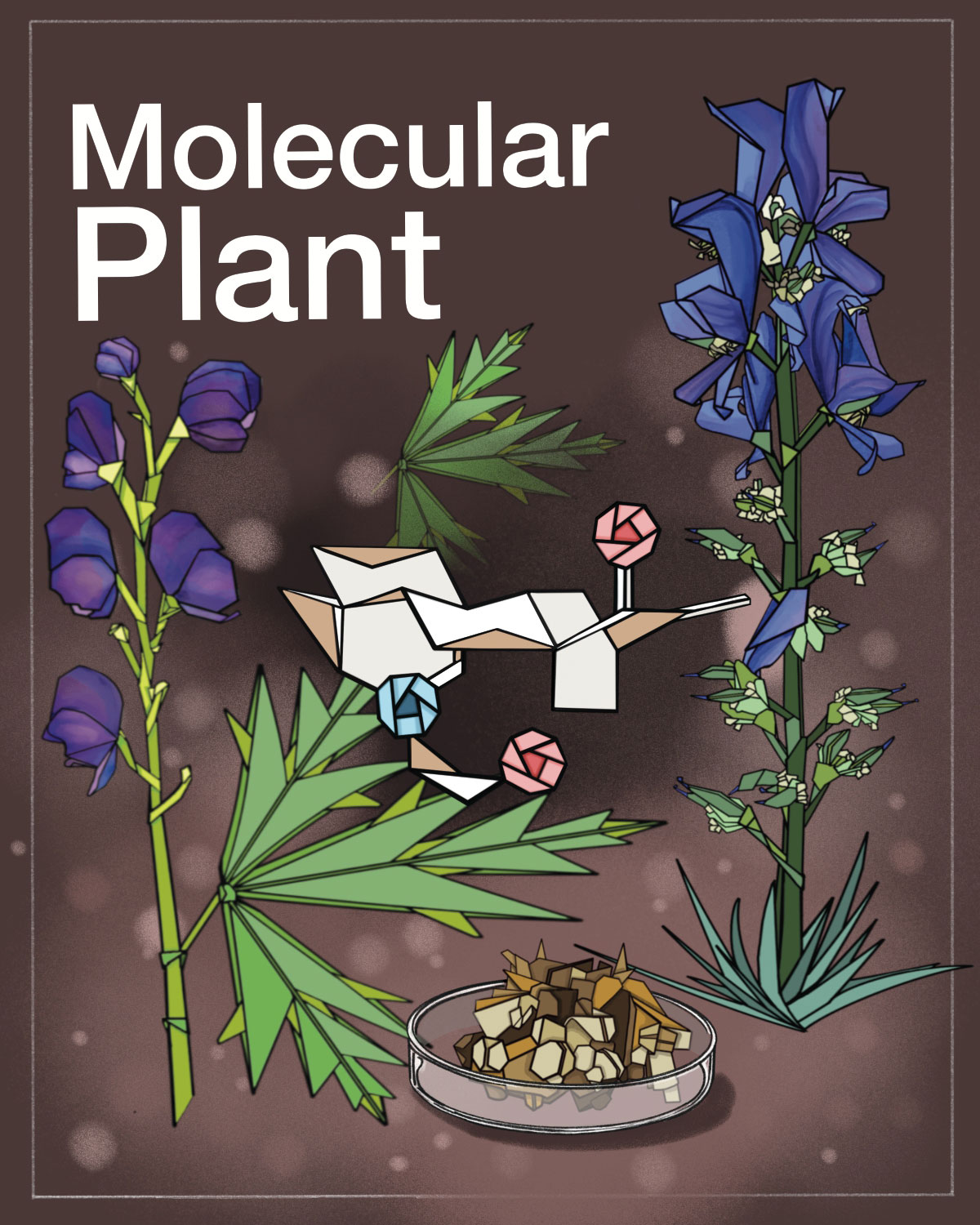
“These include caffeine, capsaicin, menthol, and vanillin, not to mention the fact that many of the medicines we use today either come directly from plants or are inspired by plant chemistry.”
Hamberger’s laboratory at MSU studies these compounds, known as specialized metabolites, and explores how their chemistry might be put to practical use.
In recent years, the researchers turned their attention to larkspur, which is also called delphinium because of its dolphin-shaped flowers. They wanted to determine how the plant produces diterpenoid alkaloids, a group of chemicals that are both highly toxic and medically promising.
The challenge was considerable. Diterpenoid alkaloids combine features from two of the oldest and largest groups of plant chemicals, giving them exceptionally complicated molecular structures.
Aconitine, one of the best-known examples, was isolated almost 200 years ago. Scientists have still not succeeded in synthesizing it in a laboratory.
A chance encounter unites two searches
The project gained momentum through an unexpected meeting.
At a research conference in Barcelona, Hamberger encountered scientists from Tomáš Pluskal’s laboratory at the Czech Academy of Sciences.
Mutabdžija and other members of the Pluskal Group were investigating the same difficult class of compounds in wolfsbane, also known as monkshood, a notoriously poisonous relative of larkspur.

“When this happens, we can either go our own ways, or come together, and it’s joining up that always leads to the best science,” said Hamberger.
Genes reveal the chemical assembly line
After joining forces, the researchers set out to identify the exact biochemical pathway that wolfsbane and larkspur use to make diterpenoid alkaloids.
They compared several species and examined thousands of genes, looking for those that became active in the right plant tissues at the right stage of compound production.
“You can imagine a biosynthetic pathway almost as an assembly line,” said Miller, who earned his Ph.D. in the Hamberger Lab. “If you have ten steps in a row needed to build a finished product, and suddenly one quits, the next steps can’t happen.”
Plants naturally make specialized metabolites in very small quantities and often at a slow rate. Identifying the genes and enzymes behind that process is therefore essential before researchers can attempt to produce the compounds at larger scales.
Once a pathway is understood, its genetic instructions can be transferred into an engineered host organism, such as yeast. The host can then begin manufacturing the target compound in larger amounts for further testing and development.
“In an ideal scenario, this could eventually help create new drugs inspired by these natural products,” said Mutabdžija.
Tobacco plants recreate the first compound
After narrowing the search to a promising collection of genes from wolfsbane and larkspur, the researchers inserted those instructions into tobacco plants and used them as biological factories.
Chemical analysis of the modified tobacco revealed the assembly line they had been seeking. Six distinct enzymes worked together to produce atisinium, a diterpenoid alkaloid.
The enzymes guided the molecule into its complex final structure and helped add a vital source of nitrogen that the researchers had not expected.
Identifying these early biochemical steps gives scientists a starting point for investigating the broader diterpenoid alkaloid family and its potentially useful medicinal properties.
“Our vision is to provide green, sustainable tools that will allow us to harness these plants’ natural power,” Hamberger said.
Reference: “Characterization of the entry steps in diterpenoid alkaloid biosynthesis” by Garret P. Miller, Lana Mutabdžija-Nedelcheva, Trine B. Andersen, Imani Pascoe, Kathryn Van Winkle, Maryam Sabbaghan, Alexandre Bouillé, Tomáš Iliaš, Andrej Tekel, Tomáš Pluskal and Björn Hamberger, 2 June 2026, Molecular Plant.
DOI: 10.1016/j.molp.2026.05.022
Never miss a breakthrough: Join the SciTechDaily newsletter.
Follow us on Google and Google News.
1 Comment
Oh crap!! I have purple rocket larkspur growing in a pot in my backyard right now! It’s going in the trash as soon as I post this comment. Holy moly, I had no idea how dangerous it is. I’m so glad my dog hasn’t eaten any of it.
Getting my latex gloves right now…