
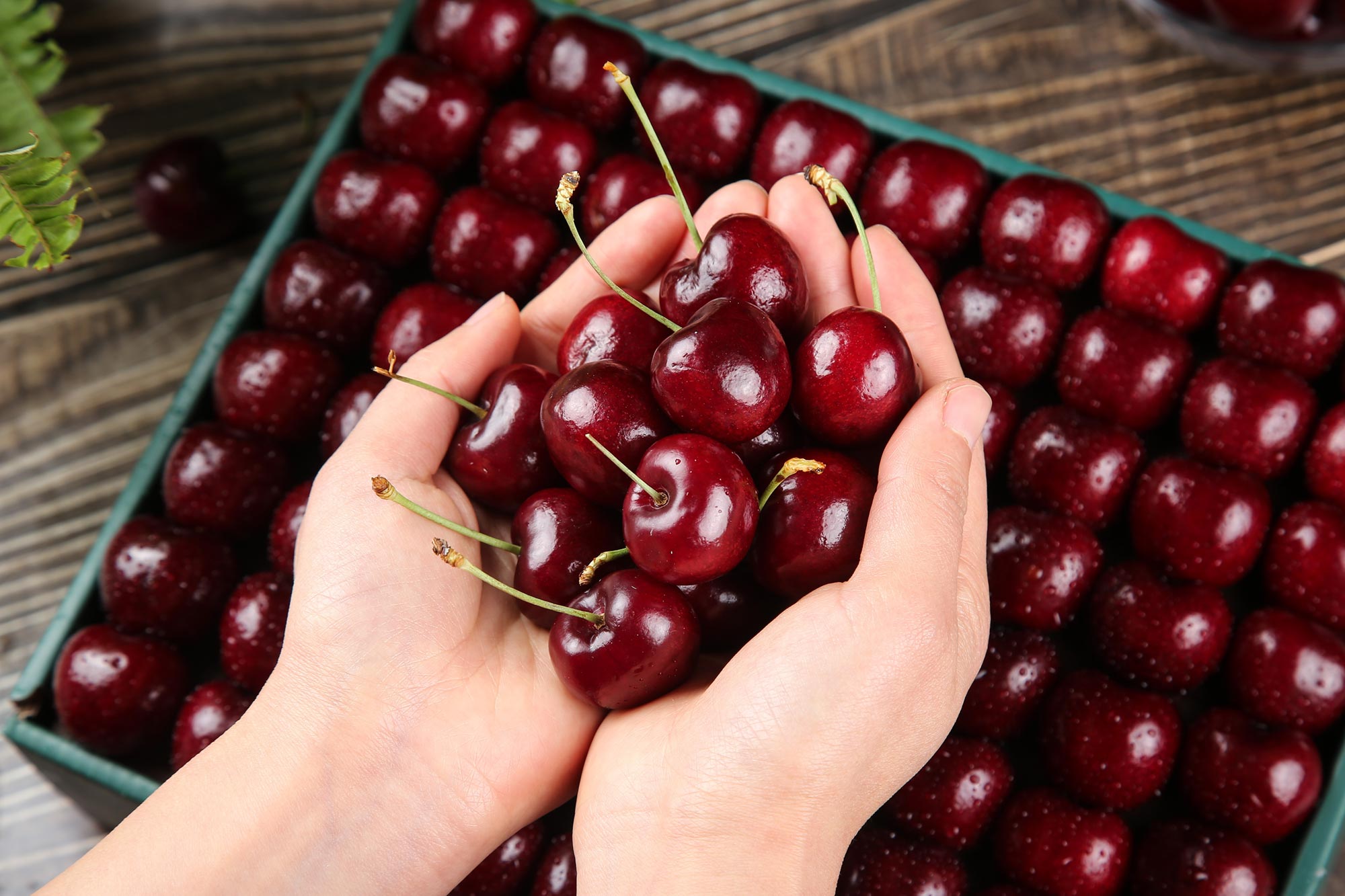
Researchers found that natural compounds in dark sweet cherries could reduce tumor growth, metastasis, and treatment resistance in triple-negative breast cancer.
Natural pigments that give dark sweet cherries their deep red color may also affect how an aggressive form of breast cancer grows and spreads. In a mouse study from Texas A&M University, researchers found that these compounds were associated with slower tumor growth, less metastasis, and changes in gene activity tied to treatment resistance.
The researchers focused on anthocyanins, plant pigments responsible for the color of fruits such as dark sweet cherries, and their effects on triple-negative breast cancer, which has relatively few treatment options and a high risk of spreading to other parts of the body.
Researchers from the Texas A&M University College of Agriculture and Life Sciences, Texas A&M AgriLife Research, and College of Veterinary Medicine and Biomedical Sciences (VMBS) found that anthocyanin treatment slowed tumor growth, reduced cancer spread to several organs, and changed the activity of genes involved in metastasis and therapy resistance.
“Triple-negative breast cancer is considered ‘the worst’ because it is more aggressive, higher grade, and has a higher mitotic index, meaning the cancer cells divide quickly,” said Dr. Giuliana Noratto, AgriLife Research associate research scientist in the College of Agriculture and Life Sciences’ Department of Food Science and Technology. “All these characteristics make it more likely to spread to distant organs and recur compared to other breast cancer types.”
Triple-negative breast cancer differs from other forms of the disease because its cells lack estrogen receptors, progesterone receptors, and expression of HER2, a growth-promoting protein involved in regulating cell growth and multiplication.
Without those molecular targets, fewer treatment options are available, and the cancer is more likely to metastasize, particularly to the lungs and brain, according to Noratto.
Metastasis drove the study design
Instead of measuring only the size of primary tumors, the researchers also tracked metastatic spread because metastasis is the leading cause of cancer-related deaths.
“This is important because cancer lethality is primarily due to metastasis,” Noratto said. “A large primary tumor that does not metastasize may be more manageable, even curable if removed.”
To examine whether anthocyanins could affect both processes, the researchers divided mice into four groups. One received no treatment, another received anthocyanins before tumors were implanted, a third received the chemotherapy drug doxorubicin after tumors formed, and a fourth received both anthocyanins and chemotherapy.
This setup allowed the researchers to investigate anthocyanins as a preventive approach while also testing whether the compounds might improve the effects of chemotherapy.
Anthocyanins slowed growth and spread
Mice given anthocyanin-rich dark sweet cherry extracts before tumor implantation developed tumors more slowly and showed no noticeable side effects. They also continued gaining weight during the study.
By comparison, some mice receiving chemotherapy alone lost weight, and their tumor growth did not slow until later. In mice receiving both anthocyanins and chemotherapy, tumor growth slowed sooner, while body weight was maintained.
The researchers also analyzed gene expression within the tumors. Gene expression refers to which genes are switched “on” or “off,” providing clues about the cellular processes affected by dark sweet cherry anthocyanins, according to Noratto.
Whether given alone or with chemotherapy, anthocyanins reduced the activity of genes associated with metastasis and therapy resistance, the process through which cancer cells adapt and continue surviving despite treatment.
Anthocyanin treatment also reduced cancer spread to the lungs compared with both untreated mice and those given chemotherapy alone. The likelihood of metastasis to the liver, heart, kidneys, and spleen was also lower, although the number and size of tumors differed between individual animals.
Tumor tissue revealed deeper changes
To connect these molecular findings with physical changes in the cancer, Dr. Lauren Stranahan, a VMBS veterinary pathologist, used histology—the microscopic examination of tissue samples.
Stranahan assessed how quickly cancer cells were dividing—known as the mitotic index—along with the extent to which metastatic cells had invaded different organs and whether that damage could impair organ function.
“Some tumors had a higher mitotic rate, so they were dividing faster,” she said.
Some tumors also contained areas of necrosis, or tissue death, which can develop when a rapidly growing tumor outpaces its available blood supply.
Stranahan also studied the presence of immune cells within tumors, including T lymphocytes, which help the immune system identify and destroy abnormal cells, including cancer cells.
“When we’re evaluating how aggressive a cancer is, we can also evaluate, ‘is that cancer able to reduce the number of T-cells that are coming after it?’” she said.
Cancer treatment may require combinations
The findings also fit with a broader shift in cancer research toward combining multiple approaches rather than depending on a single therapy.
“What we’re understanding about cancer now is that no single treatment is going to be effective against a cancer,” Stranahan said. “You’re going to have to employ a number of different treatments.”
Noratto said diet-derived compounds could fit within that broader strategy by acting on cancer-related processes that standard treatments do not completely address, giving researchers additional biological pathways to investigate.
Stranahan also emphasized the value of combining expertise from different scientific fields when studying a disease as complex as cancer.
“The more people you have with different skill sets coming together, the better you can evaluate a study from different angles, from unique perspectives, and the stronger the study is going to be,” Stranahan said.
She added that veterinary pathologists can contribute to many types of biomedical research, extending well beyond studies focused specifically on animal health.
“We do a lot of diagnostic work here for patients in the (Texas A&M) Veterinary Medical Teaching Hospital, but we can also provide a lot of research support,” Stranahan said.
The results remain preliminary, and further research will be needed to clarify how anthocyanins affect tumor behavior, including questions about their safety, absorption, and possible use alongside established cancer treatments.
The publication also acknowledges the broader community that supported the work.
“This publication is dedicated to the memory of Burdette Jerome ‘BJ’ Thurlby, late president of the Washington State Fruit Commission, whose enthusiasm for scientific discovery and support of cherry research have left a lasting impact on cherry research and the scientific community,” Noratto said.
Reference: “Dark Sweet Cherry Anthocyanins Suppressed Triple-Negative Breast Cancer Pulmonary Metastasis and Downregulated Genes Associated with Metastasis and Therapy Resistance In Vivo” by Ana Nava-Ochoa, Lauren W Stranahan, Rodrigo San-Cristobal, Susanne U Mertens-Talcott and Giuliana D Noratto, 25 July 2025, International journal of molecular sciences.
DOI: 10.3390/ijms26157225
Never miss a breakthrough: Join the SciTechDaily newsletter.
Follow us on Google and Google News.
2 Comments
This is good to know. Unfortunately, cherries are only available about 3 months of the year. What do we do in the other 9 months?
Buy frozen or buy fresh & freeze