
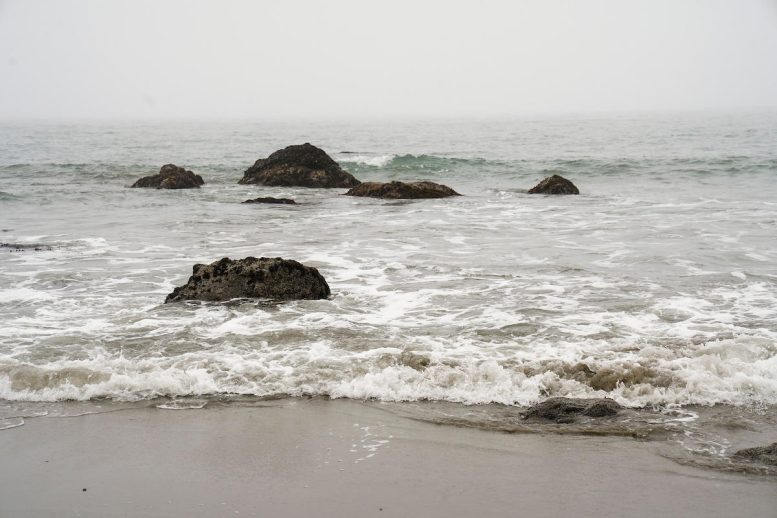
The climate that is commonly perceived as being characteristic of the West Coast is a relatively recent phenomenon, existing for only a few thousand years.
It is often said that cities such as Phoenix are always dry, Seattle is always wet, and San Francisco is always foggy. However, the use of the word “always” is a strong word.
Recent research conducted by the University of California, Davis, analyzed the climate patterns in the Western United States during the Holocene Era, which spans from the current time to the past 11,000 years. The study sheds light on the ancient climate of the “Old West” and reveals that the defining features of California’s climate, such as the coastal fogs that facilitated the growth of towering redwoods, the ocean currents that created rich fishing grounds, and the warm summers and mild winters, emerged around 4,000 years ago.
It also reveals a time when the Pacific Northwest was warm and dry and the Southwest was warm and wet.
An Understudied Era: The Current One
Published in Climate of the Past, a journal of the European Geosciences Union, the study provides a baseline against which modern climate change in the region can be considered. It also sheds light on a lesser-studied geological epoch — the current one, the Holocene.
“We kept looking for this paper, and it didn’t exist,” said lead author Hannah Palmer, who recently earned her Ph.D. from the UC Davis Department of Earth and Planetary Sciences. “There are many records of past climate for a single location, but no one had put it all together to understand the big picture. So we decided to write it.”
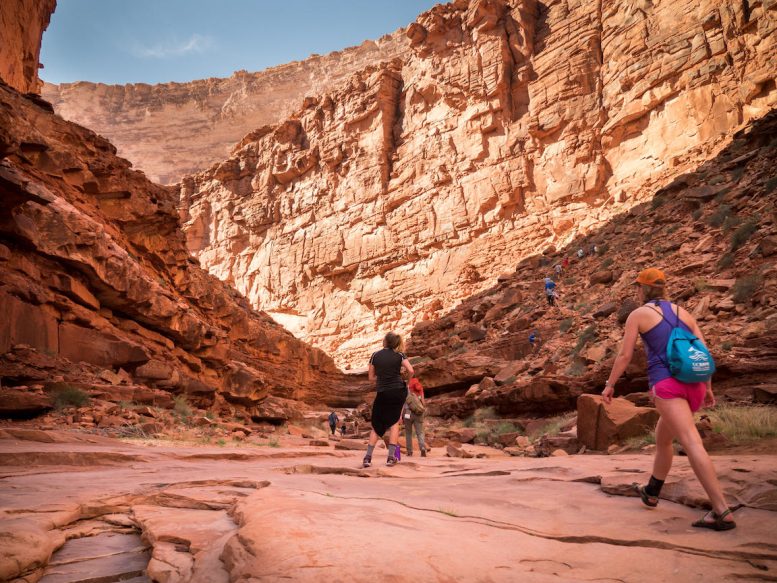
The authors analyzed more than 40 published studies, examining the interplay among land and sea temperature, hydroclimate, and fire activity across three distinct phases.
The study found:
- Compared to pre-Holocene conditions (the last Glacial period), the Early Holocene (11,700-8,200 years ago) was a time of warm seas, a warm and dry Pacific Northwest, a warm and wet Southwest, and fairly low fire activity.
- By the Middle Holocene (8,200-4,200 years ago), that pattern reversed: The ocean’s surface cooled, the Pacific Northwest became cool and wet, and the Southwest became drier.
- The Late Holocene (4,200 years ago-present) is the most climatically variable period. It marks a period when the “modern” climate and temperature patterns are established. The study noted a defined interval of fire activity over the past two centuries that is linked to human activity.
Unprecedented Interval
The study also considered the impact of humans on environmental changes at the time, noting that the Era of Colonization (1850-present) represents an unprecedented environmental interval in the climate records.
“Humans have been living here throughout the entire Holocene,” Palmer said. “The climate impacted them, and they impacted the climate, especially in recent centuries. This paper shows how that push and pull has changed over the past 11,000 years.”
Different Responses
“Sometimes people point to recent rain or cold snaps as evidence against climate change,” said co-author Veronica Padilla Vriesman, a recent Ph.D. graduate from UC Davis Department of Earth and Planetary Sciences. “This study illustrates how different regions respond differently to global climate changes. That long-term perspective helps us understand the historical climate of the western U.S. and how it may respond moving forward.”
The study stemmed from a graduate seminar about the Holocene period led by Tessa Hill, a professor in the Department of Earth and Planetary Sciences and associate vice provost of Public Scholarship and Engagement. Additional co-authors include Caitlin Livsey and Carina Fish. All authors were part of Hill’s Ocean Climate Lab at the UC Davis Bodega Marine Laboratory in the Department of Earth and Planetary Sciences.
“Climate records from the Holocene provide a valuable window into the context of human-caused climate change,” said Hill. “They provide an opportunity for us to understand places that may be more or less resilient to change in the future.”
Reference: “Holocene climate and oceanography of the coastal Western United States and California Current System” by Hannah M. Palmer, Veronica Padilla Vriesman, Caitlin M. Livsey, Carina R. Fish and Tessa M. Hill, 24 January 2023, Climate of the Past.
DOI: 10.5194/cp-19-199-2023
The study was funded by the National Science Foundation.
Never miss a breakthrough: Join the SciTechDaily newsletter.
Follow us on Google and Google News.
5 Comments
When the heading said ‘West Coast’ I assumed it meant Cornwall or the coast of Wales.
It should have made it clearer that it meant ‘West Coast of USA’. You can’t assume that all your readers are USA based!
This website IS based in the USA; specifically in the state of California.
You can’t assume that all websites are UK based!
“However, the use of the word ‘always’ is a strong word.”
More importantly, “always” is a generalization that is rarely justified.
“…, and fairly low fire activity.”
Besides the natural fires, it appears that the Native Americans routinely set fires to keep the forests open to travel and to improve browse for deer and elk. Some authors have suggested that it was that practice that set the stage for the dominance of coastal redwoods because they were relatively immune to the frequent, low-intensity fires.
“… the Early Holocene (11,700-8,200 years ago) was a time of warm seas, a warm and dry Pacific Northwest, …”
How is that possible when the CO2 levels were much lower than today?