
Close Menu
    Facebook X (Twitter) Instagram
    SciTechDaily
    • Biology
    • Chemistry
    • Earth
    • Health
    • Physics
    • Science
    • Space
    • Technology
    Facebook X (Twitter) Pinterest YouTube RSS
    SciTechDaily
    Home»Science»Ancient Observatory or Something Else? Groundbreaking Study Challenges Famous “Wheel of Ghosts” Purpose
    Science

    Ancient Observatory or Something Else? Groundbreaking Study Challenges Famous “Wheel of Ghosts” Purpose

    By Tel-Aviv UniversityJanuary 5, 20252 Comments4 Mins Read
    Facebook Twitter Pinterest Telegram LinkedIn WhatsApp Email Reddit
    Share
    Facebook Twitter LinkedIn Pinterest Telegram Email Reddit
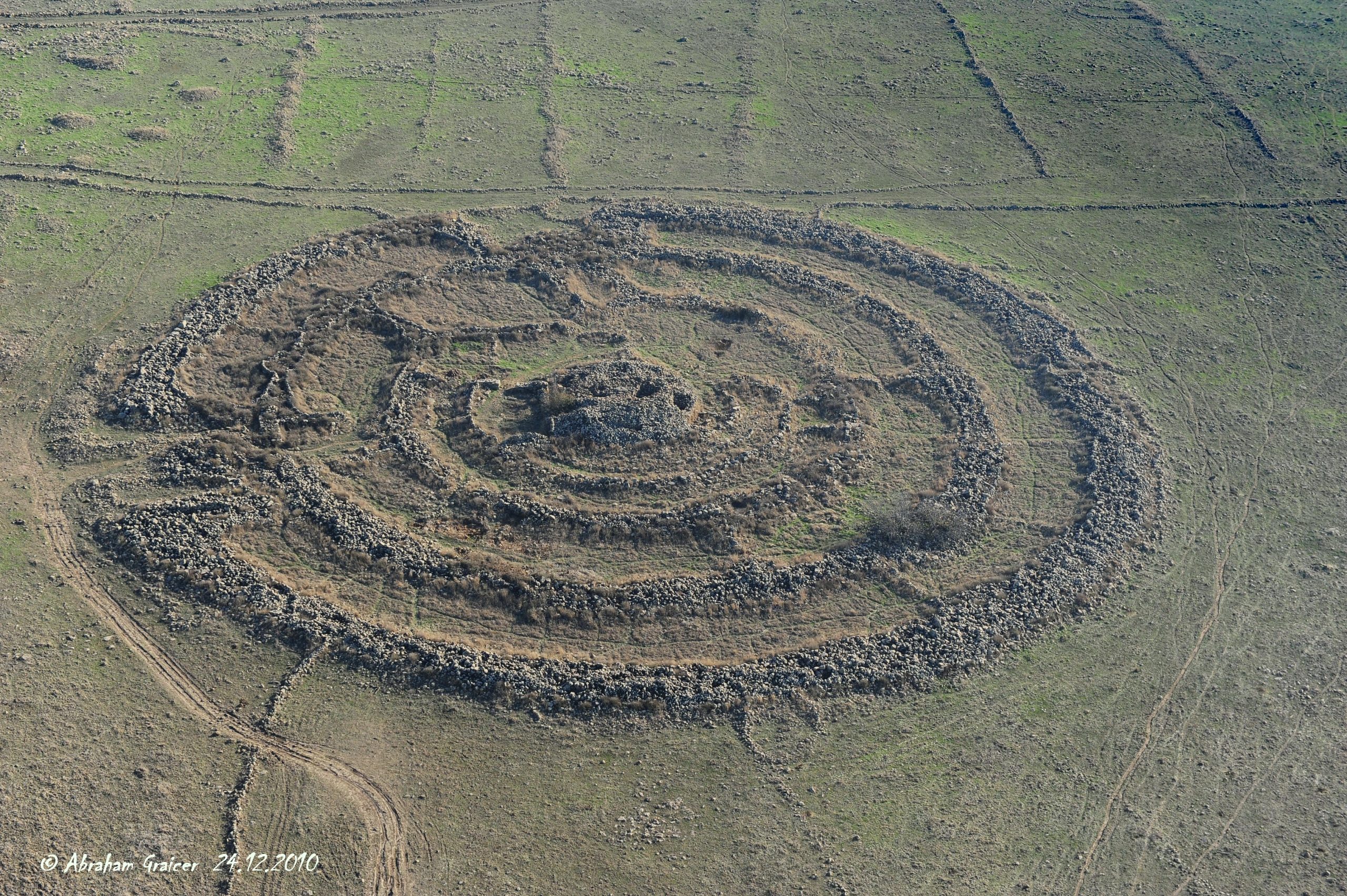
    Rujm el Hiri Wheel of Ghosts
    A new study by researchers from Tel Aviv University and Ben-Gurion University reveals that geodynamic shifts over millions of years reoriented the ancient Rujm el-Hiri site, challenging its long-held identification as an astronomical observatory. Using advanced geophysical methods and remote sensing, the team uncovered the site’s original alignment and provided new insights into its potential purpose and the surrounding archaeological landscape. Credit: Abraham Graicer, Wikimedia Commons. CC 4.0

    A scientific discovery challenges the common perception of Rujm el-Hiri in the Golan Heights.

    A new study by Tel Aviv University and Ben-Gurion University of the Negev has unveiled groundbreaking insights into the Rujm el-Hiri site, also known as the “Wheel of Ghosts,” located in the Golan Heights. Using geomagnetic analysis and tectonic reconstruction, researchers have determined that geodynamic movements over the past 150 million years, occurring at an average rate of 8–15 mm per year, caused significant shifts in the ground. These movements gradually rotated and reoriented the site’s structure over millennia.

    This discovery casts doubt on the prevailing theory that the structure served as an astronomical observatory. The researchers found that the original alignment of the site’s walls and entrances does not align with celestial patterns, contradicting earlier hypotheses about its purpose.

    The study was conducted by a research team led by Dr. Olga Khabarova and Prof. Lev Eppelbaum of the Department of Geophysics at Tel Aviv University’s Porter School of the Environment and Earth Sciences, in collaboration with Dr. Michal Birkenfeld of Ben-Gurion University’s Department of Archaeology. The findings were published in the journal Remote Sensing.
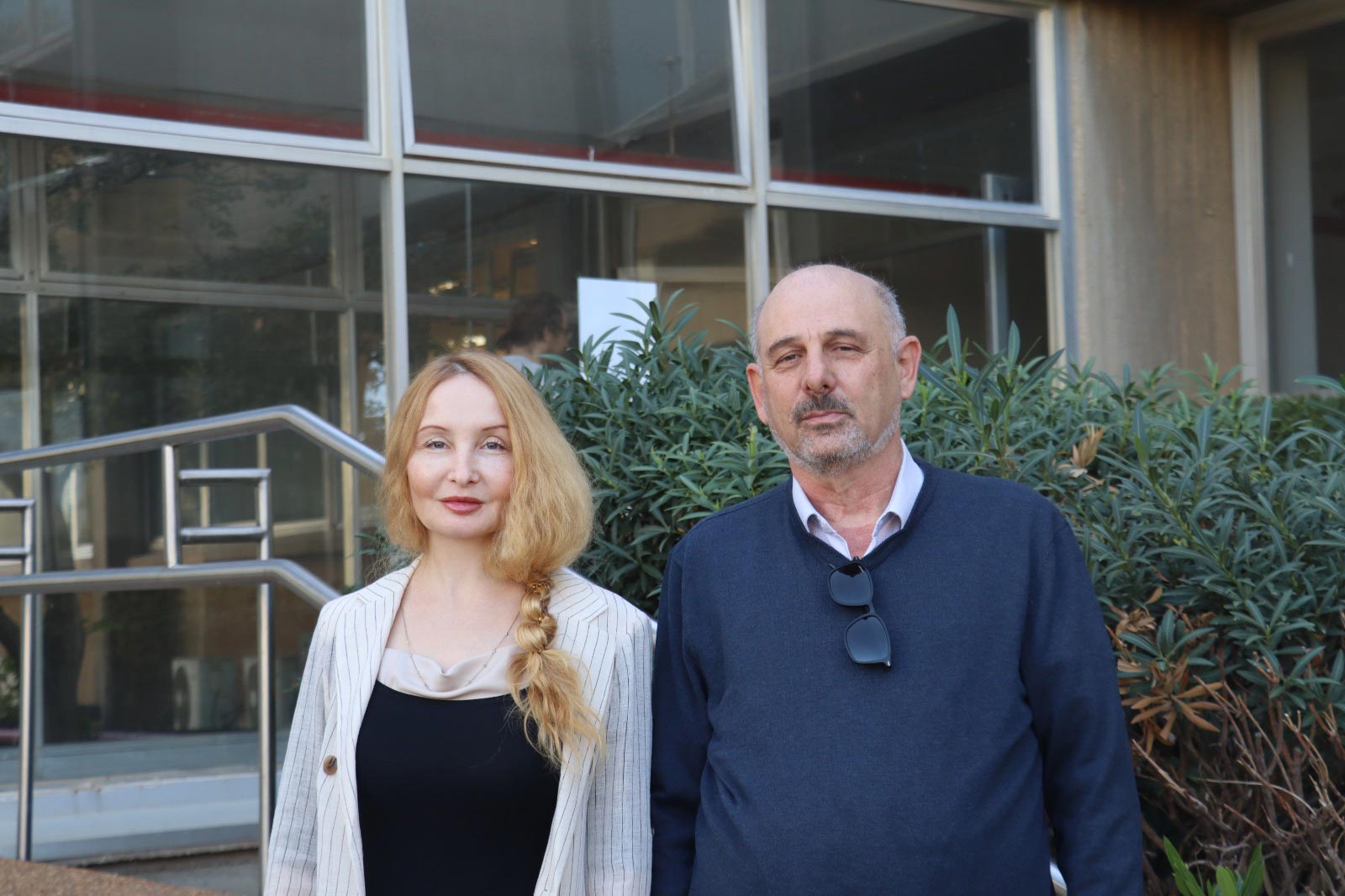
    Dr. Olga Khabarova and Prof. Lev Eppelbaum
    (Left to right): Dr. Olga Khabarova & Prof. Lev Eppelbaum. Credit: Tel Aviv University

    The researchers employed geophysical methods and remote sensing techniques to demonstrate that Rujm el-Hiri’s current orientation differs from its original position due to thousands of years of geodynamic shifts. This discovery raises new questions regarding the site’s possible identification as an observatory. The team conducted initial mapping and documentation of the archaeological landscape within 30 kilometers around the Sea of Galilee. It visually analyzed the region to identify typical landscape features associated with historical human activity and the reconstruction of archaeological objects.

    Reassessment of Rujm el-Hiri’s Alignment

    According to the research team, “The study was based on calculations of the sky map and aligning the directions of the solstices, equinoxes, and other celestial bodies as they appeared between 2500–3500 BCE, coordinated with the symmetry and entrances of Rujm el-Hiri in its current position. The findings show that the entrances and radial walls during that historical period were entirely different, reopening the question of the site’s purpose.”

    The research team explains: “Due to geodynamic movement lasting approximately 150 million years, at an average speed of 8–15 mm per year, the ground in the area has undergone significant shifts. The orientation of the walls and entrances in their original positions does not align with celestial observations, as previously believed.”

    Rujm el Hiri
    Rujm el-Hiri. (a) Geographic location, (32°54′30.87″N, 35°48′3.89″E); (b) Aerial view, adapted from [21]; (c) Distance-height profile of the surrounding area relative to the northernmost point of the Sea of Galilee (vertical axis—altitude below/above sea level, in m; horizontal axis—the distance in km). The vertical line indicates the location of Rujm el-Hiri. Credit: Remote Sensing, 10.3390/rs16224239
    The study also provides the first comprehensive mapping of the archaeological landscape surrounding Rujm El-Hiri, using advanced satellite technology. Unique landscape features were identified, including circular structures with 40–90 meters diameters, thick walls, and round enclosures approximately 20 meters in diameter, which appeared to serve agricultural or herding purposes. Dozens of burial mounds (tumuli) were documented in the area, some of which were likely used as storage facilities, shelters, or dwellings, in addition to their traditional role as burial sites.

    The researchers conclude: “This new study not only opens a window to understanding Rujm el-Hiri but also enriches our knowledge of ancient life in the Golan Heights and the connections between various archaeological findings in the area.”

    Reference: “Discussion Points of the Remote Sensing Study and Integrated Analysis of the Archaeological Landscape of Rujm el-Hiri” by Olga Khabarova, Michal Birkenfeld and Lev V. Eppelbaum, 13 November 2024, Remote Sensing.
    DOI: 10.3390/rs16224239

    Never miss a breakthrough: Join the SciTechDaily newsletter.
    Follow us on Google and Google News.

    Archaeology Astronomy Geophysics Popular Tel-Aviv University
    Share. Facebook Twitter Pinterest LinkedIn Email Reddit

    Related Articles

    Scientists Solve 2,700-Year-Old Eclipse Mystery – and Uncover Evidence About the Sun’s Activity

    What Really Killed the Mammoths? New Evidence Points to Exploding Comet 13,000 Years Ago

    The World’s First Human Hybrid? Ancient Fossil Stuns Scientists

    Rewriting History: King Solomon’s Mines Proven Clean by Modern Science

    Humans Were Apex Predators for Two Million Years – Our Stone Age Ancestors Mostly Ate Meat

    New Evolutionary Theory: The Human Brain Grew as a Result of the Extinction of Large Animals

    A Glimpse Into the Royal Purple Wardrobe of King David and King Solomon – 3000 Years Ago

    Mysteriously Complex Geometric Architecture Discovered in Neolithic Temple – Built 6,000 Years Before Stonehenge

    Ancient Murals in Guatemala Offer Glimpse of Mayan Astronomy

    2 Comments

    1. Boba on January 7, 2025 5:44 pm

      How about returning the land to the Syrians?

      Reply
      • Joey joey on January 10, 2025 1:40 am

        How about removing all of em and allowing the Jewish settlements\ settlers to inhabit the whole area,much better for security 🤔🤞🙏🤣

        Reply
    Leave A Reply Cancel Reply

    • Facebook
    • Twitter
    • Pinterest
    • YouTube

    Don't Miss a Discovery

    Subscribe for the Latest in Science & Tech!

    Trending News

    Largest-Ever Study Finds Medicinal Cannabis Ineffective for Anxiety, Depression, PTSD

    250-Million-Year-Old Egg Solves One of Evolution’s Biggest Mysteries

    Living With Roommates Might Be Changing Your Gut Microbiome Without You Knowing

    Century-Old Cleaning Chemical Linked to 500% Increased Risk of Parkinson’s Disease

    What if Your Memories Never Happened? Physicists Take a New Look at the Boltzmann Brain Paradox

    One of the Universe’s Largest Stars May Be Getting Ready To Explode

    Scientists Discover Enzyme That Could Supercharge Ozempic-Like Weight Loss Drugs

    Popular Sweetener Linked to DNA Damage – “It’s Something You Should Not Be Eating”

    Follow SciTechDaily
    • Facebook
    • Twitter
    • YouTube
    • Pinterest
    • Newsletter
    • RSS
    SciTech News
    • Biology News
    • Chemistry News
    • Earth News
    • Health News
    • Physics News
    • Science News
    • Space News
    • Technology News
    Recent Posts
    • Scientists Say This Overlooked Organ Could Hold the Key to Longer Life
    • Want Less Stress? Landmark Study Points to a Simple Habit
    • Scientists Reveal Eating Fruits and Vegetables May Increase Your Risk of Lung Cancer
    • AI Reveals Explosive Growth of Floating Algae Across the World’s Oceans
    • 5.5 Million Bees Discovered Living Beneath a New York Cemetery
    Copyright © 1998 - 2026 SciTechDaily. All Rights Reserved.
    • Science News
    • About
    • Contact
    • Editorial Board
    • Privacy Policy
    • Terms of Use

    Type above and press Enter to search. Press Esc to cancel.