
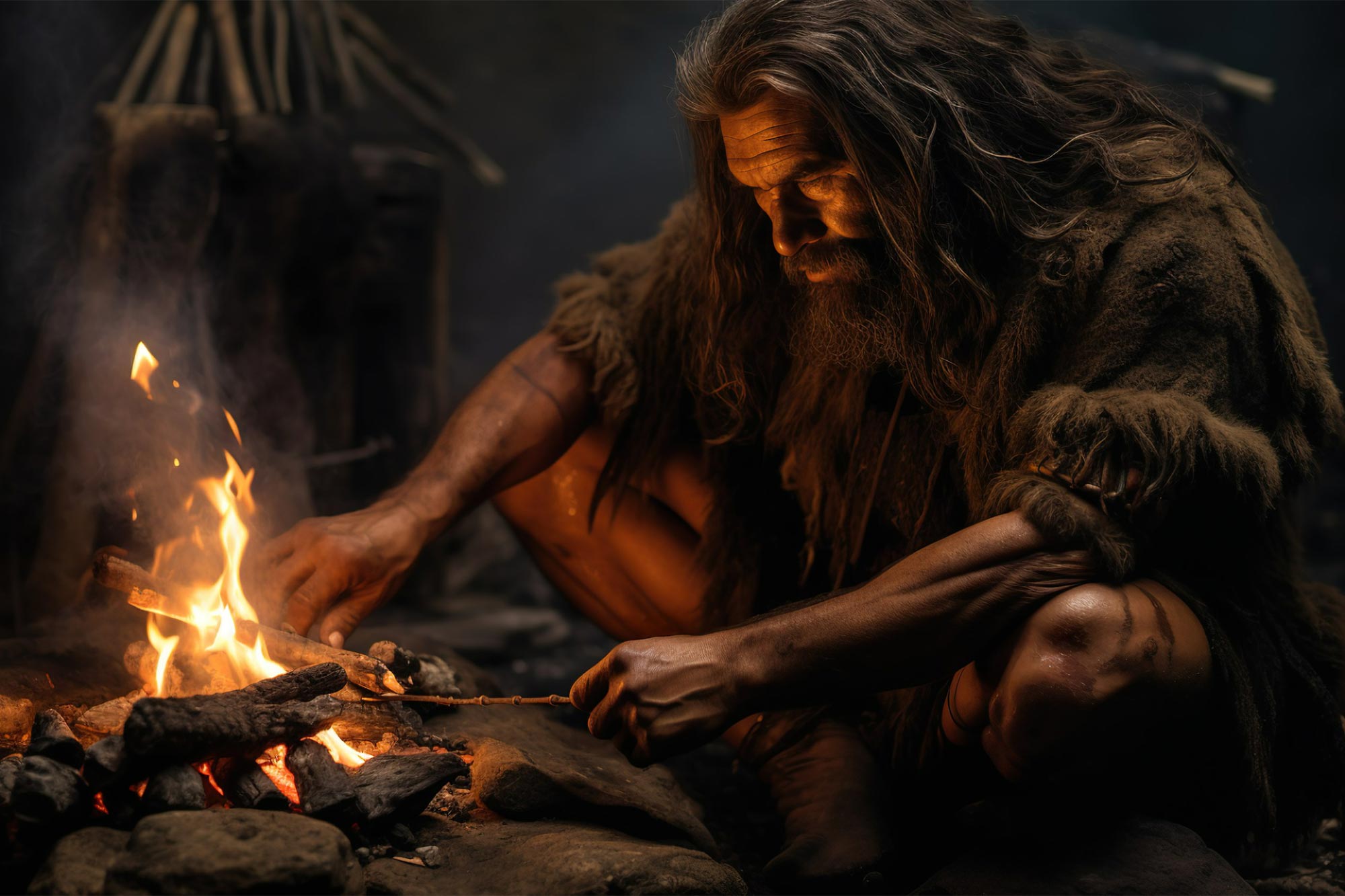
Neanderthals extracted resin with advanced techniques, as shown by a 60,000-year-old pit in Vanguard Cave, Gibraltar, reflecting their cognitive sophistication.
Throughout history, even the most primitive cultures have utilized glues, resins, and pitches derived from plants for both mechanical and medicinal purposes. Neanderthals were no exception.
They frequently used birch pitch as an adhesive to bind lithic tools and as a chewing agent, potentially for medicinal purposes. However, the method by which they produced this pitch has remained a mystery until now.
Theoretical work distinguished two methods of obtaining pitch: a simple, not very productive one, by open-air combustion of birch bark, and a more complex one requiring anoxic heating of birch chips. That is, using buried pieces of wood heated with a fire so that they exuded the resin while they could not burn because they were insulated from oxygen.
Whether they used one method or the other has major implications for rating their cognitive ability. The more complex method requires a significant degree of organization and practice.
Caves that are a reflection of the past
A scientific study, involving the University of Seville, has for the first time described a structure compatible with theoretical studies of anoxic heating. The structure looks like a simple pit, and this simplicity may be why this structure has not been identified.
Only through a multitude of analyses and the collaboration of a multidisciplinary team has it been possible to demonstrate its use as an anoxic heating chamber.
The discovery was made in Vanguard Cave (Gibraltar, UK), part of the ‘Gorham’s Caves Complex,’ which has been recognized as a UNESCO World Heritage Site since 2016.
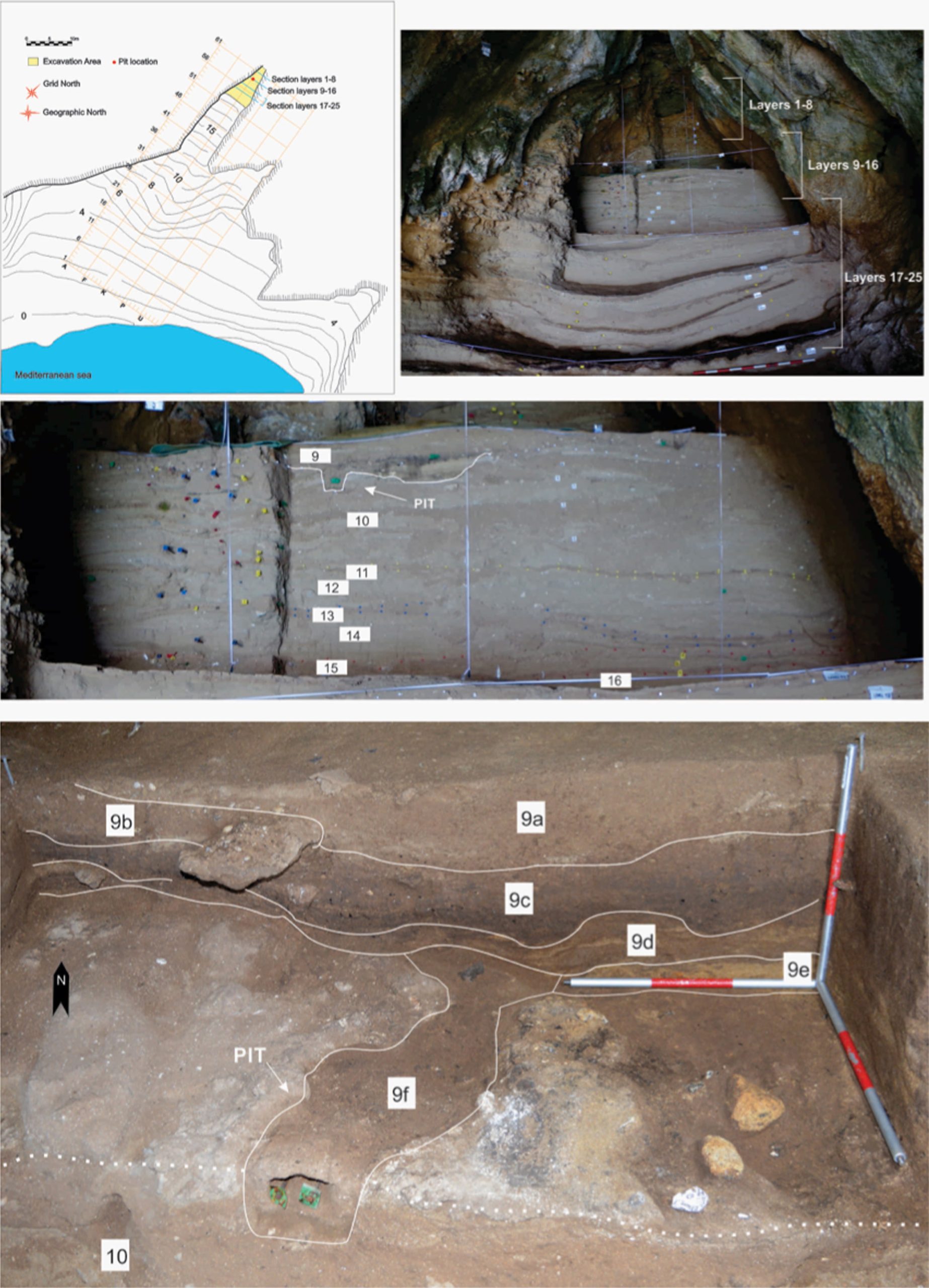
This complex has once again proved its ability to preserve authentic snapshots of past human activities due to the rapid advance of a dune that has sealed its remains.
To reach the conclusion that this structure could only have been made by Neanderthals some 60,000 years ago, 31 researchers from more than 5 countries, specialists in 15 different disciplines, worked together.
Its branches of knowledge include paleobotanics, archaeology, ichnology, geochemistry, and mineralogy.
“They were not the brutes of the popular imagination”
Fernando Muñiz, a lecturer in the Department of Crystallography, Mineralogy, and Agricultural Chemistry at the University of Seville, explains that “our extinct cousins were not the brutalized humans of popular imagination.”
This human species has been shown to have cognitive abilities, as reflected in research showing mastery of industrial processes for making resin as an adhesive to attach stone points to spear handles.
On the other hand, excavation manager Clive Finlayson explains that: “Neanderthals had to go through a series of thought processes, choosing which plants to select and figuring out how to extract resin without burning them.”
To demonstrate that the structure created by Neanderthals is viable, methodologies have been developed and an experimental archaeology exercise has even been completed.
The geochemical and fossil pollen evidence suggests that the resin was obtained from prickly rockrose (cistus ladanifer) rather than birch, a rarer tree in Mediterranean latitudes at the time.
It is known that until the 20th century oil of labdanum was obtained from rockroses to be used as perfume, cough syrup and as an antiseptic in a method very similar to the one described in this study.
This project, led by the Museum of Gibraltar, the University of Murcia, and the Andalusian Institute of Earth Sciences (CSIC), with the participation of the University of Seville, sets a precedent in understanding the technological and organizational capacity of Neanderthals, while also opening up new opportunities to identify and analyze similar structures at other sites.
Signs of primitive art
In 2012, Finlayson’s team found a strange hashtag-like mark on a piece of limestone, which has interpreted by some experts as a sign of primitive art.
They collected feathers, but only black ones, from a wide variety of birds, possibly for aesthetic or ceremonial purposes.
“They used medicinal plants, buried their dead, made jewelry and specialist tools, as well as ochre and other pigments, perhaps to paint their faces or bodies.
Their tracheal anatomy suggests that they could speak and probably had high-pitched, hoarse voices,” Muñiz says.
Reference: “A Neanderthal’s specialised burning structure compatible with tar obtention” by Juan Ochando, Francisco J. Jiménez-Espejo, Francisco Giles-Guzmán, Carlos Neto de Carvalho, Jose S. Carrión, Fernando Muñiz, Juan Manuel Rubiales, Pedro Cura, João Belo, Stewart Finlayson, Belen Martrat, Barend L. van Drooge, Gonzalo Jiménez-Moreno, Antonio García-Alix, Jose Antonio Lozano Rodríguez, Rosa María Albert, Naohiko Ohkouchi, Nanako Ogawa, Hisami Suga, Jon Camuera and Clive Finlayson, 12 November 2024, Quaternary Science Reviews.
DOI: 10.1016/j.quascirev.2024.109025
Never miss a breakthrough: Join the SciTechDaily newsletter.
Follow us on Google and Google News.
1 Comment
paleobonatics – a brush with misprint.