
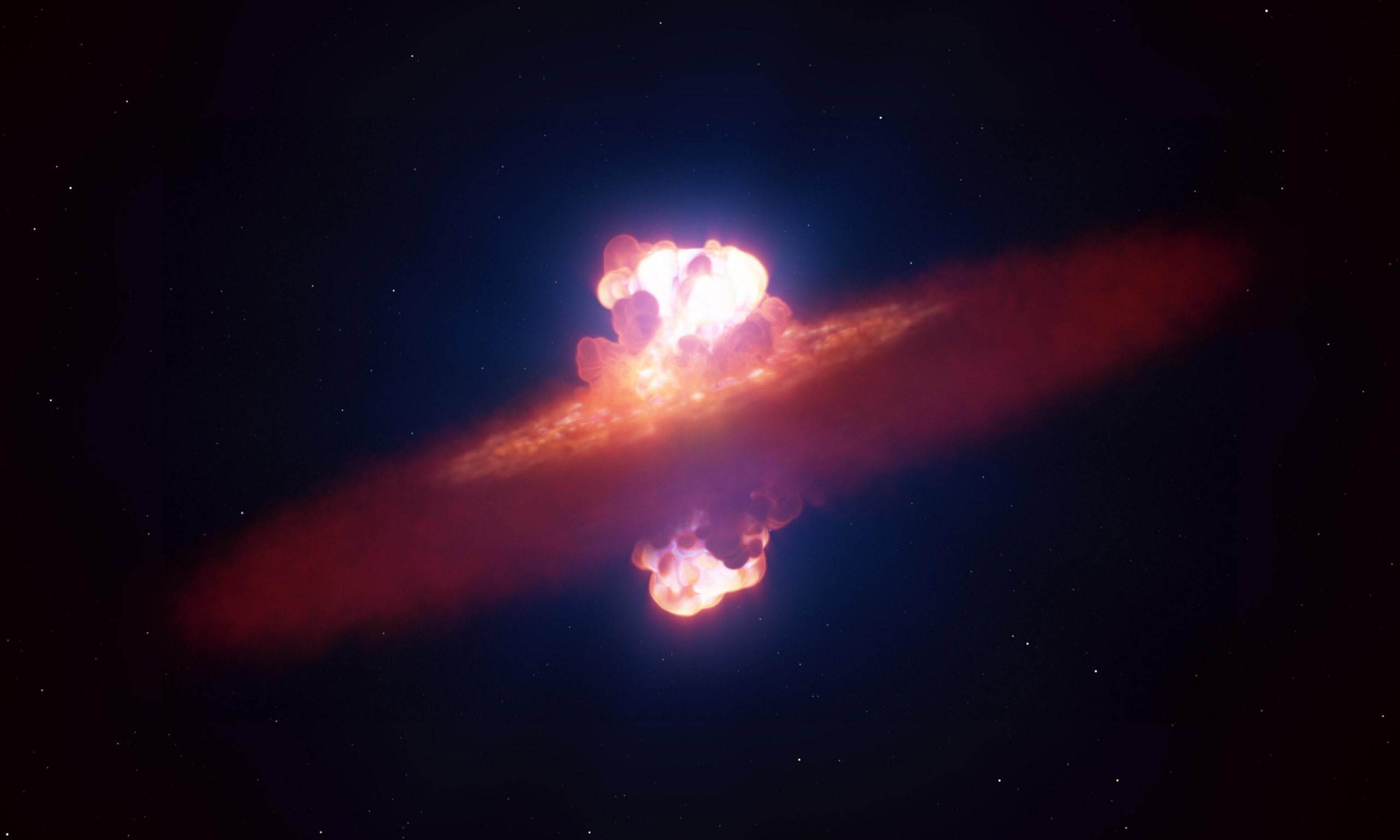
In a groundbreaking observation, astronomers using ESO’s Very Large Telescope captured a massive star’s explosion at the exact moment it burst through its surface — a first in cosmic history.
Acting within hours of discovery, scientists used spectropolarimetry to unveil the explosion’s olive-like shape, revealing new clues about the physics behind supernovae and reshaping our understanding of how massive stars die.
A Rare Glimpse Into a Star’s Final Moments
Swift observations with the European Southern Observatory’s Very Large Telescope (ESO’s VLT) have captured the explosive death of a massive star just as the blast was breaking through its surface. For the first time, astronomers were able to reveal the shape of a supernova at this fleeting, earliest moment. This brief phase would have vanished from view within a day, yet it holds key clues about how giant stars end their lives in powerful explosions.
Racing Against Time to Capture the Cosmic Blast
When the supernova named SN 2024ggi was detected on the night of 10 April 2024 local time, Yi Yang, an assistant professor at Tsinghua University in Beijing, China, and lead author of the study, had just arrived in San Francisco after a long international flight. Realizing the importance of the event, he moved quickly. Within 12 hours, he submitted a proposal to the European Southern Observatory. After rapid approval, ESO turned its VLT telescope in Chile toward the newly found supernova on April 11, only 26 hours after the initial detection.
A Nearby Supernova and a Golden Opportunity
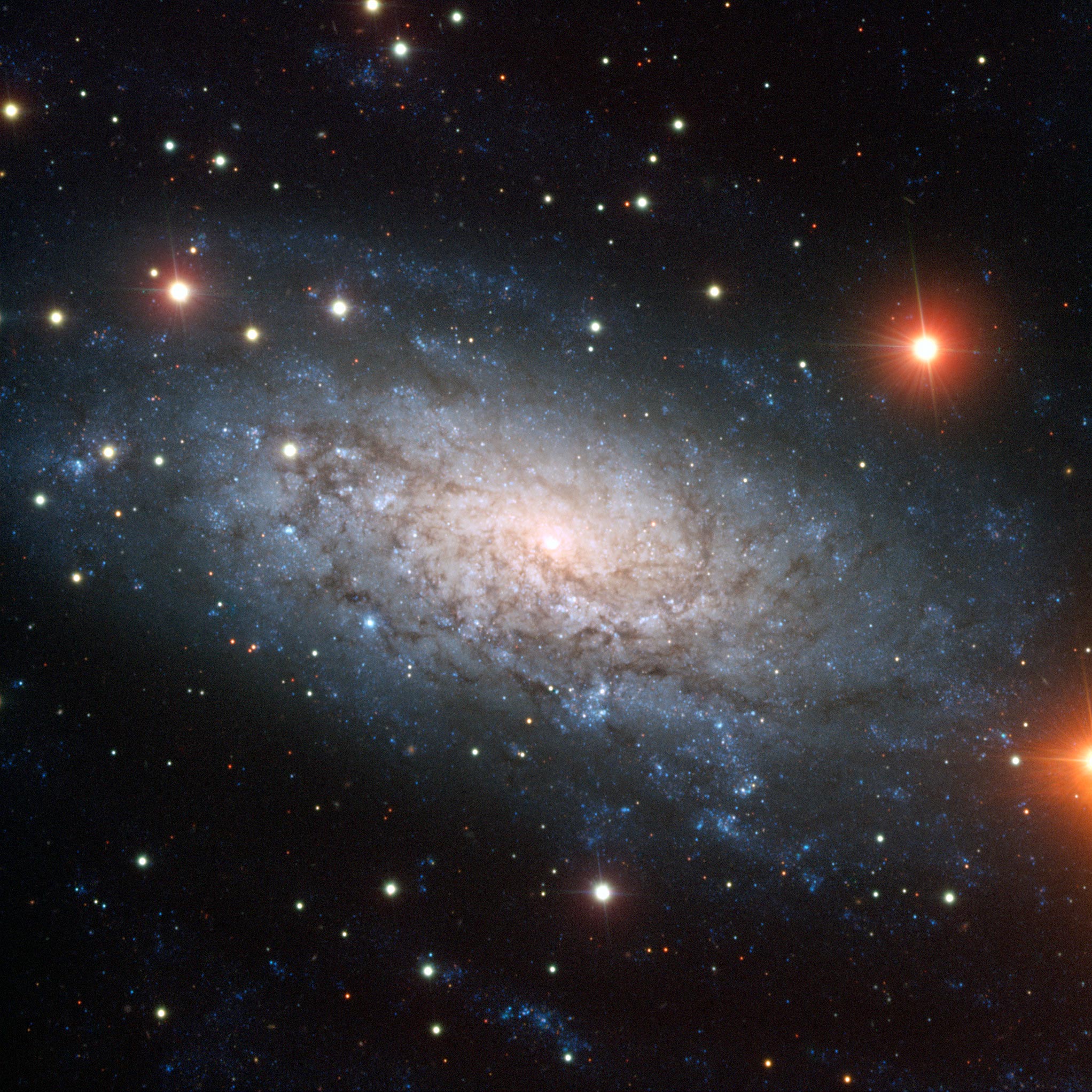
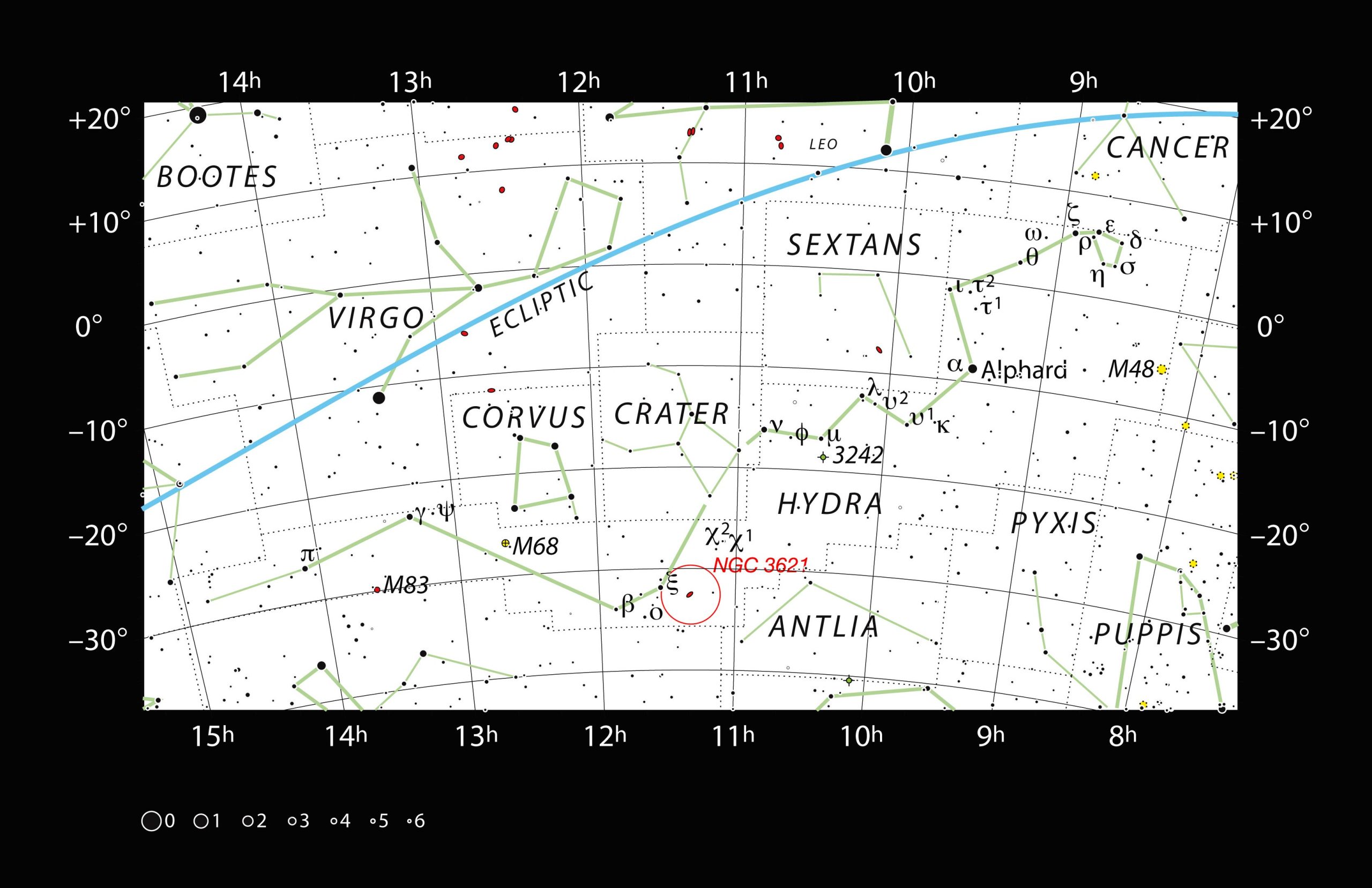
SN 2024ggi lies in the galaxy NGC 3621, located in the constellation Hydra, about 22 million light-years away—a relatively short distance in cosmic terms. With the right equipment and timing, the international team knew they had a rare chance to capture the explosion’s structure as it unfolded.
“The first VLT observations captured the phase during which matter accelerated by the explosion near the center of the star shot through the star’s surface. For a few hours, the geometry of the star and its explosion could be, and were, observed together,” says Dietrich Baade, an ESO astronomer in Germany, and co-author of the study published today (November 12) in Science Advances.
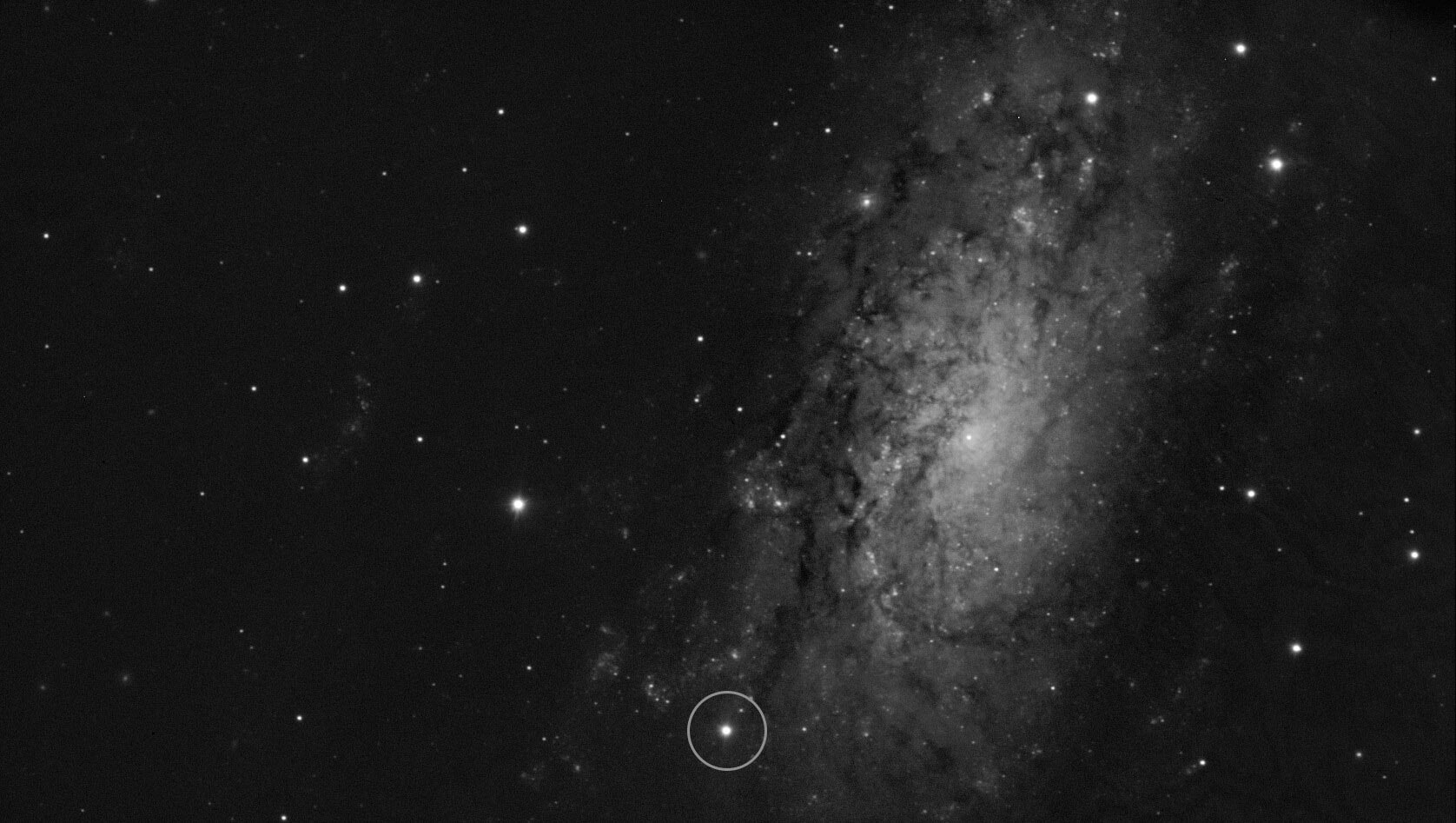
Peering Into the Geometry of a Stellar Explosion
“The geometry of a supernova explosion provides fundamental information on stellar evolution and the physical processes leading to these cosmic fireworks,” Yang explains. The exact process behind these explosions, which occur in stars more than eight times the mass of the Sun, remains one of astronomy’s great unsolved questions. The star that gave rise to SN 2024ggi was a red supergiant, roughly 12 to 15 times the Sun’s mass and 500 times its radius, making it a classic case of a massive star’s final moments.
How Massive Stars Die: Collapse, Shock, and Rebirth
Throughout its life, a star maintains a near-perfect balance between gravity pulling inward and the pressure from nuclear fusion pushing outward. When the fuel at its core runs out, that balance collapses. The star’s center gives way under its own weight, while the surrounding layers crash down, rebound, and send a powerful shock wave racing outward, tearing the star apart.
When this shock reaches the surface, it releases an enormous burst of energy. The star brightens dramatically, becoming visible as a supernova. For a short period, astronomers can study the initial breakout shape of the explosion before it interacts with the surrounding material.
Unlocking Secrets with Spectropolarimetry
Using ESO’s VLT, astronomers achieved this observation for the first time through a technique called ‘spectropolarimetry’. “Spectropolarimetry delivers information about the geometry of the explosion that other types of observation cannot provide because the angular scales are too tiny,” says Lifan Wang, co-author and professor at the Texas A&M University in the US, who was a student at ESO at the start of his astronomy career.
Although the exploding star appears as a single point of light, its polarization patterns reveal hidden details about its shape, which the team successfully decoded.[1]
An Olive-Shaped Blast
The FORS2 instrument on the VLT is the only facility in the southern hemisphere capable of measuring a supernova’s shape in this way. Data from FORS2 showed that the initial burst of material formed an olive-like shape. As the explosion expanded outward (see video below) and collided with the surrounding matter, the form became flatter, but its central axis of symmetry remained unchanged.
“These findings suggest a common physical mechanism that drives the explosion of many massive stars, which manifests a well-defined axial symmetry and acts on large scales,” according to Yang.
This artist’s animation shows a star going supernova. About 22 million light-years away the supernova, SN 2024ggi, exploded in the galaxy NGC 3621. Credit: ESO/L. Calçada
Rewriting Stellar Physics Through Global Collaboration
These results already allow astronomers to rule out some existing supernova models while refining others, offering new insight into how massive stars end their lives.
“This discovery not only reshapes our understanding of stellar explosions, but also demonstrates what can be achieved when science transcends borders,” says co-author and ESO astronomer Ferdinando Patat. “It’s a powerful reminder that curiosity, collaboration, and swift action can unlock profound insights into the physics shaping our Universe.”
Notes
- Light particles (photons) have a property called polarization. In a sphere, the shape of most stars, the polarization of the individual photons cancels out so that the net polarization of the object is zero. When astronomers measure a non-zero net polarization, they can use that measurement to infer the shape of the object — a star or a supernova — emitting the observed light.
Reference: “An axisymmetric shock breakout indicated by prompt polarized emission from the type II supernova 2024ggi” by Yi Yang, Xudong Wen, Lifan Wang, Dietrich Baade, J. Craig Wheeler, Alexei V. Filippenko, Avishay Gal-Yam, Justyn Maund, Steve Schulze, Xiaofeng Wang, Chris Ashall, Mattia Bulla, Aleksandar Cikota, He Gao, Peter Hoeflich, Gaici Li, Divya Mishra, Ferdinando Patat, Kishore C. Patra, Sergiy S. Vasylyev and Shengyu Yan, 12 November 2025, Science Advances.
DOI: 10.1126/sciadv.adx2925
The research team includes Y. Yang (Department of Physics, Tsinghua University, China), X. Wen (School of Physics and Astronomy, Beijing Normal University, China, and Tsinghua University), L. Wang (Department of Physics and Astronomy, Texas A&M University, USA, and the George P. and Cynthia Woods Mitchell Institute for Fundamental Physics & Astronomy, Texas A&M University), D. Baade (European Organisation for Astronomical Research in the Southern Hemisphere, Germany), J. C. Wheeler (University of Texas at Austin, USA), A. V. Filippenko (Department of Astronomy, University of California, Berkeley, USA, and Hagler Institute for Advanced Study, Texas A&M University, USA), A. Gal-Yam (Department of Particle Physics and Astrophysics, Weizmann Institute of Science, Israel), J. Maund (Department of Physics, Royal Holloway, University of London, United Kingdom), S. Schulze (Center for Interdisciplinary Exploration and Research in Astrophysics, Northwestern University, USA), X. Wang (Tsinghua University), C. Ashall (Department of Physics, Virginia Tech, USA, and Institute for Astronomy, University of Hawai‘i at Mānoa, USA), M. Bulla (Department of Physics and Earth Science, University of Ferrara, Italy; INFN Sezione di Ferrara, Italy; and INAF Osservatorio Astronomico d’Abruzzo, Italy), A. Cikota (Gemini Observatory / NSF NOIRLab, Chile), H. Gao (Beijing Normal University and Institute for Frontier in Astronomy and Astrophysics, Beijing Normal University, China), P. Hoeflich (Department of Physics, Florida State University, USA), G. Li (Tsinghua University), D. Mishra (Texas A&M University and IFPA Texas A&M University), F. Patat (ESO), K. C. Patra (Department of Astronomy and Astrophysics, University of California, Santa Cruz, USA), S. S. Vasylyev (UC Berkeley), and S. Yan (Tsinghua University).
Never miss a breakthrough: Join the SciTechDaily newsletter.
Follow us on Google and Google News.
4 Comments
These people (along with evolutionary biologists are pulling numbers out of their butts and they probably go back in their office just laughing their asses off much like Julian Schnabel throws a bunch of paint on a canvas sells it for hundreds of millions of dollars and then has been witnessed going back to his office and laughing till tears came down his face!!!)
I peed n pooped laughing at that last comment. Next year it will be completely different numbers or we will see another one that shows us our math was wrong 😮. It was!?! No way!! It hasent been correct in about 70 years 😂
From Astronomers captured a supernova to an artist’s impression is without a doubt a long way.
Stupid click bait, you should be sued for feeding false information.
So astronomers captured an artists rendition of and exploding star?