
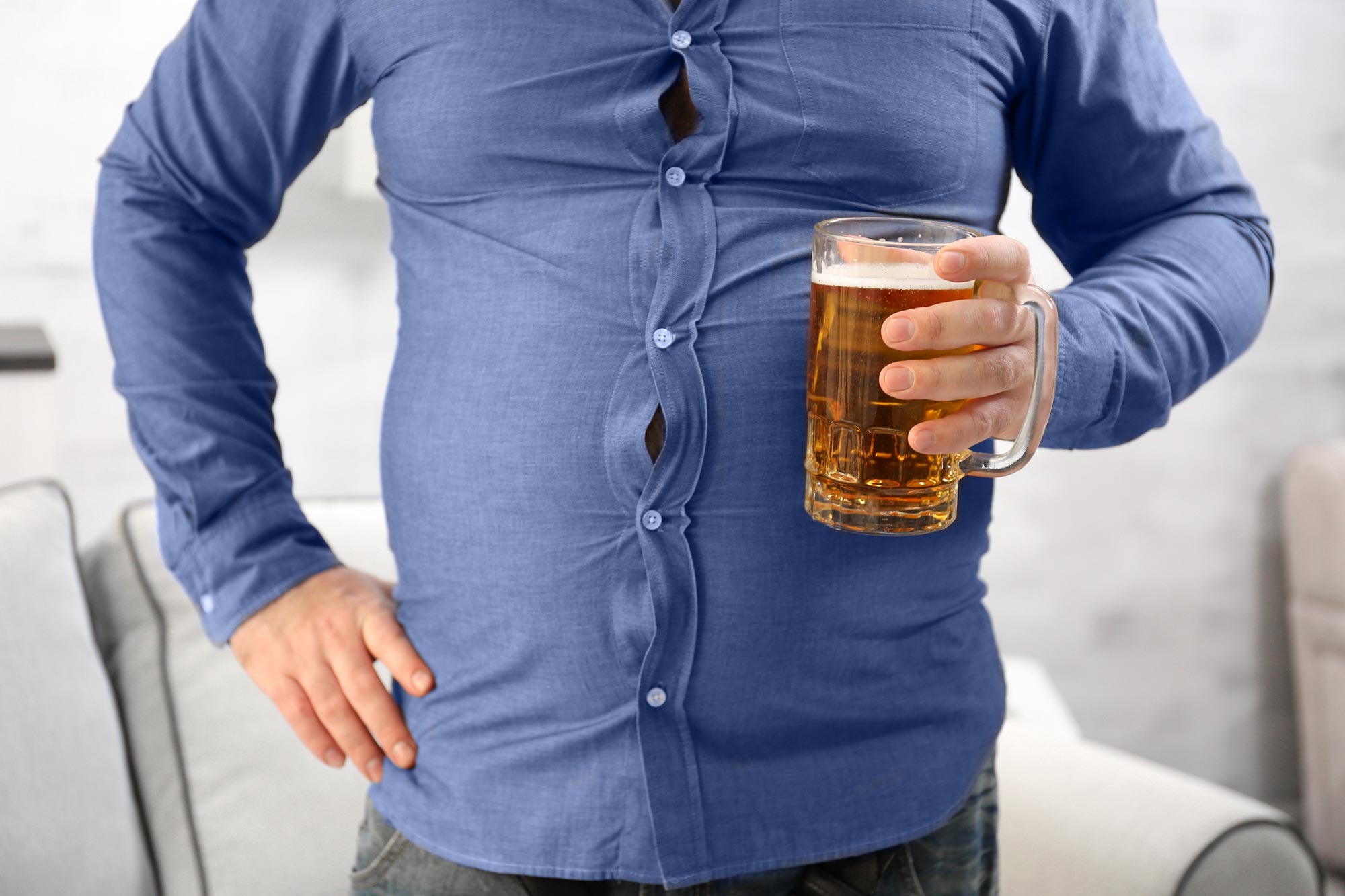
As the prevalence of obesity, alcohol use, and liver disease increases, physicians should take note of patients’ lifestyle habits.
According to new research presented at The Liver Meeting, held by the American Association for the Study of Liver Diseases, beer drinkers tend to have lower-quality diets, engage in less physical activity, and are more likely to smoke cigarettes compared to those who consume wine, liquor, or a combination of alcoholic beverages.
“Alcohol overuse is the leading cause of cirrhosis in the U.S., and metabolic dysfunction-associated steatotic liver disease (MASLD) is rapidly increasing,” said Madeline Novack, chief resident at Tulane School of Medicine’s internal medicine residency program and lead author of the study. “Both types of liver disease often coexist, and lifestyle changes are key to managing and preventing these conditions, starting with understanding the link between alcohol use and poor nutrition.”
Alcohol Type and Diet Quality
Using a survey of a nationally representative sample of more than 1,900 U.S. adults who reported current alcohol use, researchers compared the diet quality among people who consume beer only (38.9%), wine only (21.8%), liquor only (18.2%), or a combination of alcohol types (21%), measuring self-reported eating habits against the Healthy Eating Index, a validated standardized tool based on dietary guidelines.
None of the alcohol-using groups came close to achieving the 80-point score that is considered an adequate diet on the 100-point Healthy Eating Index, Novack said, but the beer drinkers scored lowest at 49. Wine drinkers scored 55, and both liquor-only drinkers and combination drinkers scored nearly 53.
Beer-only drinkers, who were more likely to be male, younger, smokers, and low income, also reported the highest total daily caloric intake, adjusting for body weight, and the lowest level of physical activity. Previous studies have found that dietary quality declines with increasing alcohol consumption of any type, but little has been reported on the influence of specific alcoholic beverage type.
Contextual Factors Affecting Alcohol and Diet Choices
Novack said the differences in diet quality among drinkers could be attributed to the context in which food and alcohol are consumed together. In the U.S., beer is often chosen in settings where the available foods tend to be low in fiber and high in carbohydrates and processed meats. On the other hand, wine — particularly red wine — is often paired with meals complete with meat, vegetables, and dairy.
Another possibility is the inverse, where dietary choices influence the choice of alcohol consumed, Novack said. For example, fried or salty foods create thirst that may also lead to beer-only consumption.
For prevention of liver disease and other health issues, physicians should ask about the type of alcohol consumed to guide discussion of healthy behaviors, Novack said. For example, the findings of this study can be applied to patients who identify as beer-only drinkers and physicians could suggest increasing fruit and vegetable intake, as well as physical activity.
Reference: “Convergence of Alcohol Consumption and Dietary Quality in US Adults Who Currently Drink Alcohol: An Analysis of Two Core Risk Factors of Liver Disease” by Peng-Sheng Ting, Wei-Ting Lin, Suthat Liangpunsakul, Madeline Novack, Chiung-Kuei Huang, Hui-Yi Lin, Tung-Sung Tseng and Po-Hung Chen, 12 November 2024, Nutrients.
DOI: 10.3390/nu16223866
Never miss a breakthrough: Join the SciTechDaily newsletter.
Follow us on Google and Google News.
22 Comments
Perhaps beer consumption is culturally correlated with bad habits in America, but correlation is not causation, and the headline is wrong. Beer is nutritious. It is non-fat, cholesterol-free, low-sodium, low sugar. It is also high in B vitamins, has a complete protein profile with 18 amino acids, can be high in flavones especially with extra hops, and is a source of minerals like potassium and selenium. It has been called liquid bread, as historically it has been the fuel of nations, and is safe to drink worldwide when the local water still usually isn’t.
I looked it up. One 12 oz can of beer usually contains 1 gram or less protein. It can contain anywhere from 6 to 11 grams of carbs, but usually closer to 11. It often contains corn syrup which is sugar. Beer is mostly a high carb drink and is not a health drink.
I’m glad you looked it up! Beer isn’t a high protein drink, but it contains brewers yeast, a popular supplement which has a complete protein with all the right amino acids. Carbs are not bad, they are an energy source, but if you are trying to lose weight, you probably need less energy or to burn off the excess with athletics, so anything with calories would be counterproductive.
If the beers you looked up have corn syrup in them, I’m not sure I’d call that beer. It sounds more like a soft drink? Fermentation usually consumes the sugar converting to alcohol, making beer a very low-sugar drink. And less than a gram of protein is weirdly low, so I’d guess it was filtered out or watered down? You might have hit the nail on the head JC; this study relies on an American definition of beer. If the beer is clear and sweetened, it might be more of a laboratory-concocted junkfood, matching what the researchers found with their “Healthy Eating Index”. I had meant it to reflect the headline, but maybe there actually are scientists sabotaging your beer.
Real beer does not contain corn syrup.
“Beer-only drinkers, who were more likely to be male, younger, smokers, and low income, also reported the highest total daily caloric intake, adjusting for body weight, and the lowest level of physical activity.”
Where are the group that exercises almost every day and knock down a beer or two after a workout because they’re thirsty.
Add them to the study then get back to us.
The beer is clearly the problem, and not anything or everything else they mentioned.
In the 1970’s and 1980’s, beer marketing tried to associate the product with an active healthy lifestyle, particularly on beaches. In the 1990’s, and 2000’s, they focused more on low-carbohydrate “light beer”, which I assume would have less nutrition. Now, I don’t know, but I’ve heard it’s something about non-traditional genders? Reorienting the marketing back toward athletics alone might reverse the correlation the researchers think they’ve found.
Someone actually spent money on this obvious study? how ridiculous and what a waste of money….
I want to know if Beer is a nutritionist beverage for me?
I don’t see where is the nutritional comparison to non-drinkers, so how do researches say one drink is already bad?
Drink stouts like Guinness better than those light non tasting Pilsner styles
Beer should be made with water ,hops (an antioxidant and to flavour the barley ) barley and yeast Only !
Not adjuncts to speed up fermentation
Look up CAMRA beer act of 1816 from Germany
Stouts are a good tonic when you are low in iron in your blood less calories than you think
Medically speaking drink a stout over a lager any day
Saliente Mahr
So what you’re saying is this isn’t a scientific study and there is no actual evidence to support this theory. It’s just a questionnaire. Association does not prove causation.
Huh? You mean there isn’t a cost difference between beer which is why younger, low-income people (who can afford to eat healthy all the time) drink it?
Causation is backwards, it’s a symptom of income disparity!
SMH
Huh? You mean there isn’t a cost difference between beer and wine which is why younger, low-income people (who can afford to eat healthy all the time) drink it?
Causation is backwards, it’s a symptom of income disparity!
SMH
Absolutely. It depends a lot on the types of beer being consumed. For the beer swilling Bud, Miller, Corona drinkers the article maybe correct. For us beer snobs who enjoy one or two craft beers, and exercise a lot, this is a silly article that is a waste of time reading.
Yes I agree,
I play on a hockey league with a bunch of guys who like to drink beer afterwards..
Now before the game I don’t consume any alcohol. Afterwards I enjoy a couple of beers with the guys and reminisce about actually being a hockey player.
I’ve been doing this for about 4 years now and I recently went to my cardiologist and he told me my heart was strong and keep on doing whatever it is I am doing!!
Oh I forgot to mention I’m 66 years Young and don’t take any medication!
So Archie Bunker was wrong? Beer is not just cereal?
⁹This “study” is a classic example if the reversed scientific method: First draw a conclusion then find facts to support it. We all know that obesity is a serious problem in the USA. Here are some stats from The Global Obesity Observatory, taken from their list of all the countries in the world in order of percentage of per capita obesity, comparing the US to three serious beer drinking countries:
#19 USA 42.74%
#58 Australia 31.02%
#77 UK 27.63%
#84 Canada 26.73%.
In our country ‘Kenya ‘ that’s Africa,we use Guinness,tusker lagger,lite and many more. I don’t see obesity encroach our lives as mentioned in USA n the case study above. Does it mean we’re provided with substandard beers coz pple hear grow healthy thin when they consume it. My looord
I would say that eating crap, processed foods, fuels the obesity problem in the USA..and now in Europe…Drinking copious amounts of beer probably adds to the problem ?
Mark Twain once said you don’t live any longer for being a teetotaler, it just seems longer.
Scitechdaily never fails to present the worst case scenario as the only scenario.
This is very much a cultural thing. Craft beer drinkers are their own subculture which is significantly different. It’s not uncommon to find a parking lot filled with vehicles carrying bicycles (seemingly mostly my bikes), sponsoring run clubs or hosting yoga several days per week. And to the beer itself – I’m not calling it healthy by any means – but craft beers don’t contain the garbage mass production beers do.