
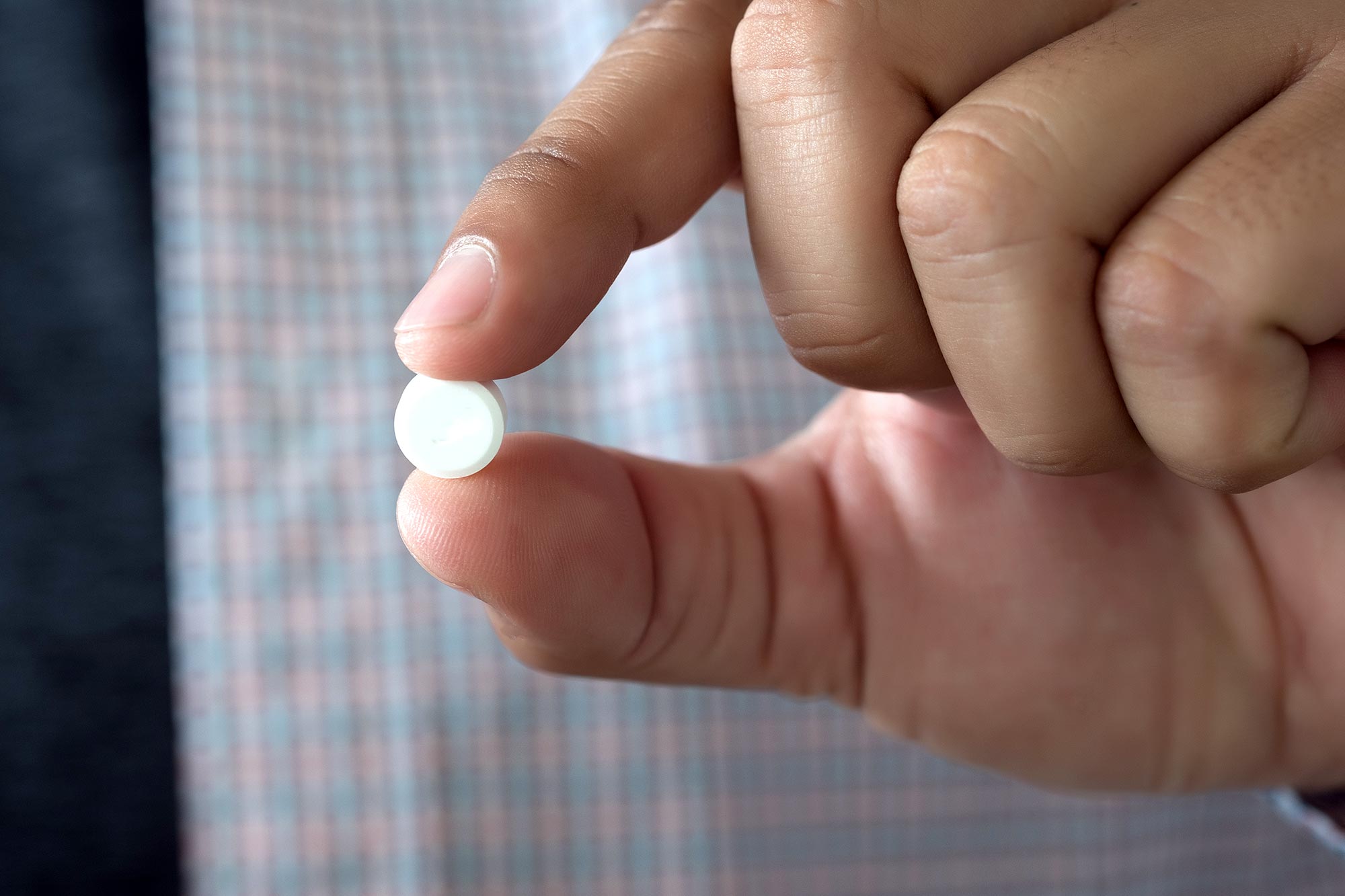
Research reveals that low-dose aspirin reduces inflammation caused by lack of sleep.
New research has found that low doses of acetylsalicylic acid, commonly known as aspirin, can reduce inflammatory reactions caused by restricted sleep.
The findings indicate that, when compared to a placebo, taking a low dose of aspirin preemptively during periods of sleep deprivation mitigates inflammatory responses. Notably, aspirin decreased the expression of interleukin-6 and the presence of COX-1/COX-2 double-positive cells in lipopolysaccharide-stimulated monocytes, and also lowered the levels of C-reactive protein in the serum.
“The novelty of this study is that it investigated whether we can pharmacologically reduce the inflammatory consequences of sleep restriction,” said lead author Larissa Engert, who has a doctorate in behavioral physiology and is a postdoctoral fellow in the department of neurology at Beth Israel Deaconess Medical Center and the division of sleep medicine at Harvard Medical School in Boston. “We used a non-steroidal, anti-inflammatory drug because it has been shown to affect specific inflammatory pathways, which were previously shown to be dysregulated by experimental sleep restriction or sleep disturbances.”
Detailed Study Protocols
The researchers collected data from 46 healthy adults in a randomized placebo-controlled crossover trial with three protocols – sleep restriction/aspirin, sleep restriction/placebo, and control sleep/placebo – each consisting of a 14-day at-home phase followed by an 11-day in-hospital stay. In the sleep restriction/aspirin condition, participants took low-dose aspirin during the at-home phase and in-hospital stay. Each in-hospital stay started with two nights of an eight-hour sleep opportunity. Then, under the sleep restriction conditions, participants were exposed to five nights of a four-hour sleep opportunity, followed by three nights of recovery sleep. The control sleep condition provided an eight-hour sleep opportunity throughout the in-hospital stay. Sleep and immunologic measures were assessed at baseline and various points throughout the study.
The data also reveal that the aspirin-induced reduction of inflammatory pathway activity in sleep-restricted participants was paralleled by decreased wake after sleep onset and increased sleep efficiency during recovery sleep, Engert noted.
“These findings show that it is possible to blunt inflammatory pathways activated by sleep restriction through preemptive administration of low-dose aspirin. This may foster the development of new therapeutics that specifically target those pathways, and do not exhibit the undesirable side effects associated with aspirin, such as bleeding and stroke. Such therapeutics could complement behavioral sleep improvement therapies to better prevent or control inflammation and its consequences in those experiencing periods of sleep deficiency,” Engert said.
Reference: “Using Low-Dose Acetylsalicylic Acid to Target Inflammation in Response to Experimental Sleep Restriction in Humans” by Larissa Engert, Carola Ledderose, Careen Biniamin, Paola Birriel, Olivia Buraks, Bryan Chatterton, Rammy Dang, Surya Daniel, Annika Eske, Taylor Reed, Ava Tang, Suzanne Bertisch, Janet Mullington, Wolfgang Junger and Monika Haack, 20 April 2024, Sleep.
DOI: 10.1093/sleep/zsae067.0174
This study was supported by grants from the National Institutes of Health, German Research Foundation, and Sleep Research Society Foundation. The research abstract was published recently in an online supplement of the journal Sleep and was presented on Monday, June 3, and Wednesday, June 5, during SLEEP 2024 in Houston. SLEEP is the annual meeting of the Associated Professional Sleep Societies, a joint venture of the American Academy of Sleep Medicine and the Sleep Research Society.
Never miss a breakthrough: Join the SciTechDaily newsletter.
Follow us on Google and Google News.