
Close Menu
    Facebook X (Twitter) Instagram
    SciTechDaily
    • Biology
    • Chemistry
    • Earth
    • Health
    • Physics
    • Science
    • Space
    • Technology
    Facebook X (Twitter) Pinterest YouTube RSS
    SciTechDaily
    Home»Science»Breakthrough Camera Technology Unlocks “Animal Vision”
    Science

    Breakthrough Camera Technology Unlocks “Animal Vision”

    By PLOSJanuary 30, 2024No Comments3 Mins Read
    Facebook Twitter Pinterest Telegram LinkedIn WhatsApp Email Reddit
    Share
    Facebook Twitter LinkedIn Pinterest Telegram Email Reddit
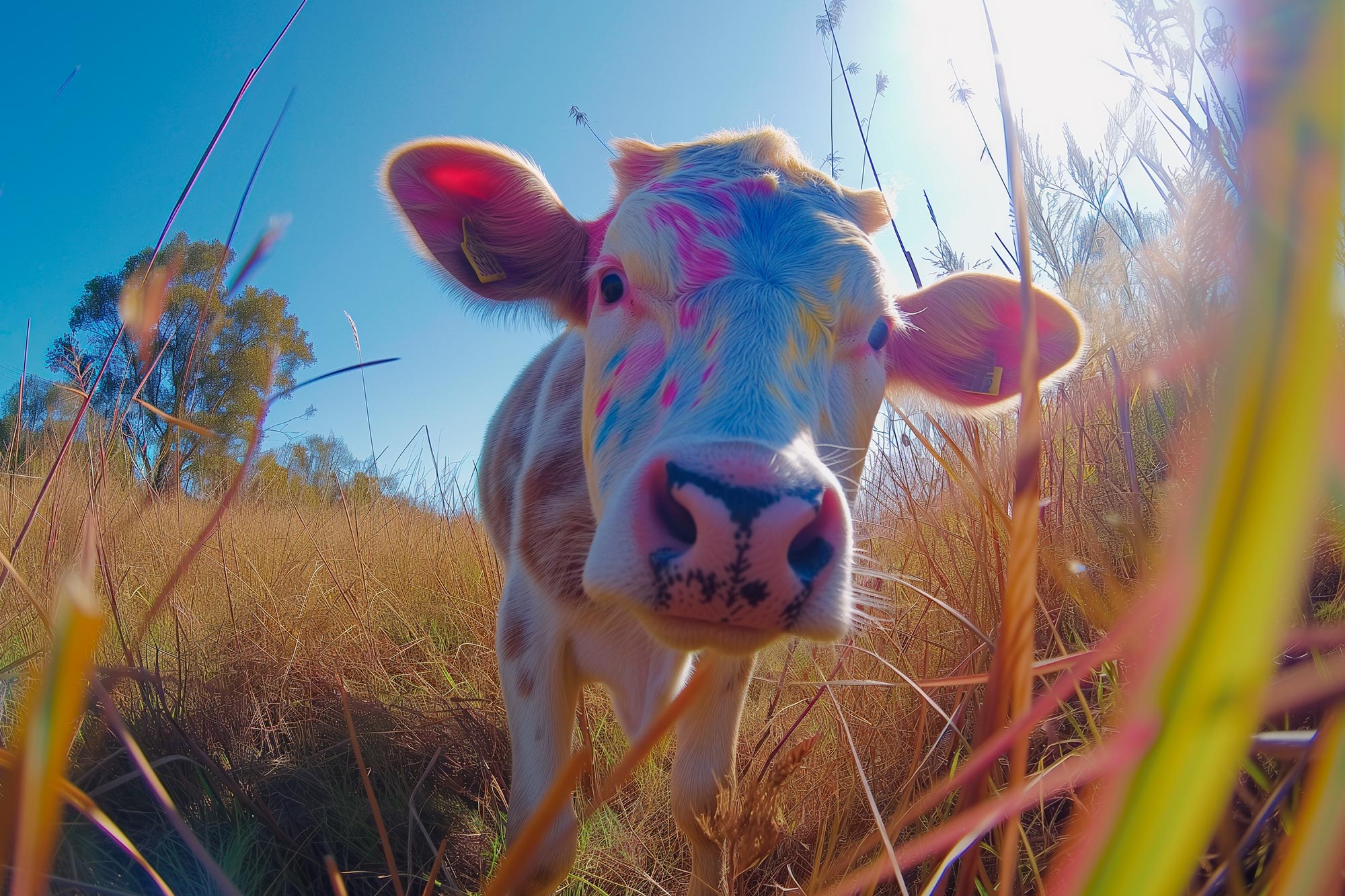
    Animal View of Cow
    A new camera system, capable of replicating how various animals perceive colors, has been developed by researchers. This system overcomes the limitations of traditional methods like spectrophotometry by using a multi-channel approach to accurately capture and display animal-perceived colors under natural conditions. (Artist’s concept.) Credit: SciTechDaily.com

    Open-source camera and software system records natural animal-view videos with over 90% accuracy.

    A new camera system allows ecologists and filmmakers to produce videos that accurately replicate the colors that different animals see in natural settings, Vera Vasas at the University of Sussex, UK, and colleagues from the Hanley Color Lab at George Mason University, US, report on January 23 in the open access journal PLOS Biology.

    Understanding Animal Perception

    Different animals perceive the world differently because of the capabilities of the photoreceptors in their eyes. For example, animals like honeybees and some birds can see UV light, which are outside the range of human perception. Reconstructing the colors that animals actually see can help scientists better understand how they communicate and navigate the world around them. False color images give us a glimpse into this dynamic world, but traditional methods such as spectrophotometry are often time-consuming, require specific lighting conditions, and cannot capture moving images.
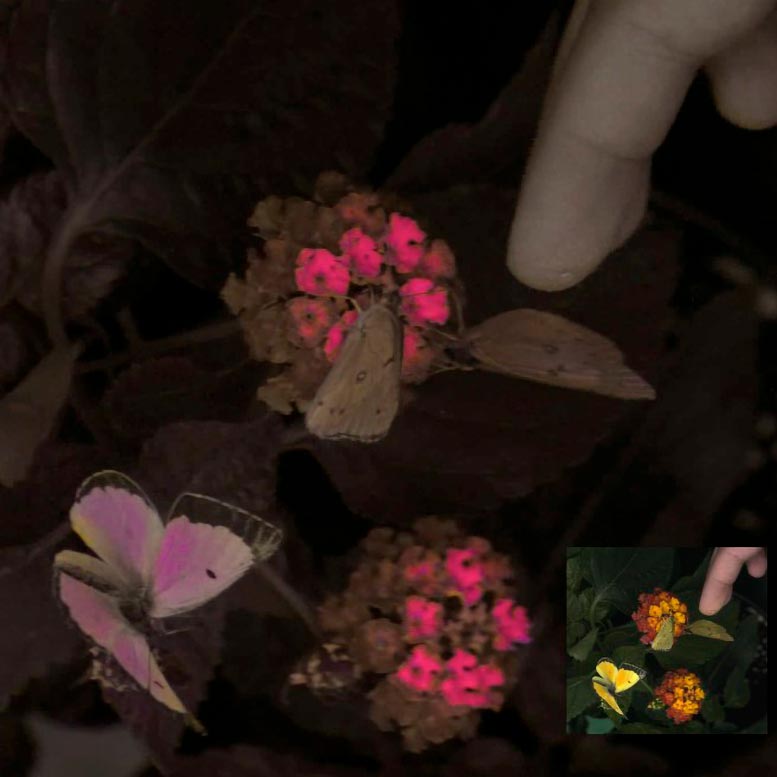
    Animal-View Camera
    Vasas et al. (2024) unveil a new camera system and software package that allows both researchers and filmmakers to capture and display animal-view videos. This image of three male orange sulfurs Colias eurytheme is an example of one such depiction. Credit: Daniel Hanley (CC BY 4.0)

    Technological Breakthrough in Animal-View Imaging

    To address these limitations, researchers developed a novel camera and software system that captures animal-view videos of moving objects under natural lighting conditions. The camera simultaneously records video in four color channels: blue, green, red, and UV. This data can be processed into “perceptual units” to produce an accurate video of how those colors are perceived by animals, based on existing knowledge of the photoreceptors in their eyes. The team tested the system against a traditional method that uses spectrophotometry and found that the new system predicted perceived colors with an accuracy of over 92%.

    Impact and Accessibility of the New System

    This novel camera system will open new avenues of research for scientists, and allow filmmakers to produce dynamic, accurate depictions of how animals see the world around them, the authors say. The system is built from commercially available cameras, housed in a modular, 3D-printed casing, and the software is available open-source, allowing other researchers to use and build on the technology in the future.

    Senior author Daniel Hanley adds, “We’ve long been fascinated by how animals see the world. Modern techniques in sensory ecology allow us to infer how static scenes might appear to an animal; however, animals often make crucial decisions on moving targets (e.g., detecting food items, evaluating a potential mate’s display, etc.) Here, we introduce hardware and software tools for ecologists and filmmakers that can capture and display animal-perceived colors in motion.”

    Reference: “Recording animal-view videos of the natural world using a novel camera system and software package” by Vera Vasas, Mark C. Lowell, Juliana Villa, Quentin D. Jamison, Anna G. Siegle, Pavan Kumar Reddy Katta, Pushyami Bhagavathula, Peter G. Kevan, Drew Fulton, Neil Losin, David Kepplinger, Michael K. Yetzbacher, Shakiba Salehian, Rebecca E. Forkner and Daniel Hanley, 23 January 2024, PLOS Biology.
    DOI: 10.1371/journal.pbio.3002444

    Never miss a breakthrough: Join the SciTechDaily newsletter.
    Follow us on Google and Google News.

    Camera Ecology PLOS Popular
    Share. Facebook Twitter Pinterest LinkedIn Email Reddit

    Related Articles

    Ancient Hawk-Sized Birds With Raptor-Like Feet Discovered in Montana

    Wild Animals Lose Fear of Predators Quickly After They Start Encountering Humans

    Dutch Students Develop a “Living Coffin”

    Why Flat-Faced Dogs, Like Pugs and Bulldogs, Remain Popular Despite Substantial Health Risks

    Natural Pest Control: Biological Control of Insect Pests Is Saving Farmers Billions of Dollars

    Laser-Etched Metal Purifies Contaminated Water Using Sunlight With Greater Than 100% Efficiency

    Jurassic Dinosaurs Turned to Scavenging – Maybe Even Cannibalism – In Stressed Ecosystems

    Neandertals Dove Underwater to Collect Clam Shells to Use as Tools

    New Study Shows Fear of Spiders and Snakes is Deeply Embedded in Humans

    Leave A Reply Cancel Reply

    • Facebook
    • Twitter
    • Pinterest
    • YouTube

    Don't Miss a Discovery

    Subscribe for the Latest in Science & Tech!

    Trending News

    Largest-Ever Study Finds Medicinal Cannabis Ineffective for Anxiety, Depression, PTSD

    250-Million-Year-Old Egg Solves One of Evolution’s Biggest Mysteries

    Living With Roommates Might Be Changing Your Gut Microbiome Without You Knowing

    Century-Old Cleaning Chemical Linked to 500% Increased Risk of Parkinson’s Disease

    What if Your Memories Never Happened? Physicists Take a New Look at the Boltzmann Brain Paradox

    One of the Universe’s Largest Stars May Be Getting Ready To Explode

    Scientists Discover Enzyme That Could Supercharge Ozempic-Like Weight Loss Drugs

    Popular Sweetener Linked to DNA Damage – “It’s Something You Should Not Be Eating”

    Follow SciTechDaily
    • Facebook
    • Twitter
    • YouTube
    • Pinterest
    • Newsletter
    • RSS
    SciTech News
    • Biology News
    • Chemistry News
    • Earth News
    • Health News
    • Physics News
    • Science News
    • Space News
    • Technology News
    Recent Posts
    • Scientists Uncover Hidden Trigger Behind Stem Cell Aging
    • Scientists Discover Coral Reefs Are Teeming With Previously Unknown Life
    • Scientists Find Way to Reverse Fatty Liver Disease Without Changing Diet
    • Could Humans Regrow Limbs? New Study Reveals Promising Genetic Pathway
    • Black Hole Jets Pack Power of 10,000 Suns, Stunning New Study Reveals
    Copyright © 1998 - 2026 SciTechDaily. All Rights Reserved.
    • Science News
    • About
    • Contact
    • Editorial Board
    • Privacy Policy
    • Terms of Use

    Type above and press Enter to search. Press Esc to cancel.