
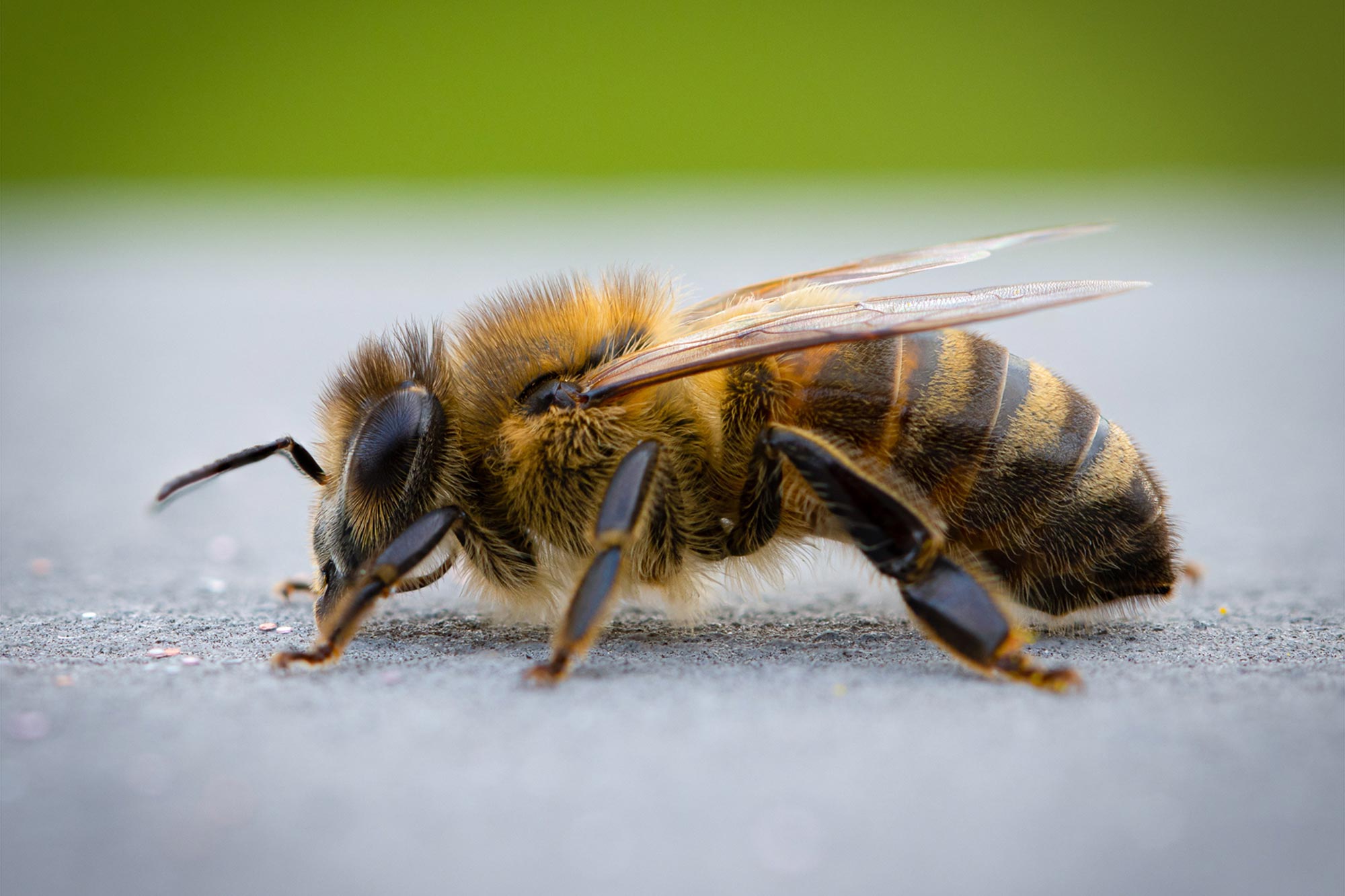
Researchers at UC San Diego discovered that artificial light significantly disrupts the circadian rhythms of honey bees, which affects their health and essential pollination activities.
Honey bees, key to ecosystem stability and global food security, experience reduced sleep and impaired behaviors under constant light. This study highlights the broader implications of light pollution on pollinator health and the urgency to develop protective strategies.
Digital Devices and Sleep Disruption
Sleep experts warn that using screens in bed can interfere with our sleep, as light from phones and other devices disrupts our natural sleep patterns. This finding is part of a broader understanding of how light affects our circadian biology and the crucial balance of our sleep-wake cycles.
Researchers at the University of California San Diego have discovered that light disruption affects more than just human health. In a new study led by PhD candidate Ashley Kim and Professor James Nieh, artificial light was found to disrupt the circadian rhythms of honey bees, posing a significant threat to their role as vital pollinators.

Impact of Light on Honey Bee Health
“Our research shows just how sensitive honey bees are to changes in their environment, particularly to something as seemingly benign as artificial light,” said Kim of the study, published today (November 12) in Scientific Reports. “By disrupting their circadian rhythms, we see clear evidence of reduced sleep periods. This raises significant concerns, not only for bee health but also for the health of ecosystems that depend on them for pollination.”
Honey bees play a crucial role as pollinators of wild plants and important crops, providing services that support ecosystem stability and global food security. Without pollination, crops worth tens of millions of dollars would be at risk.
Honey bees generally prefer to nest in dark environments, although a small amount of light can enter from the hive entrance. Sleeping bees typically remain immobile but exhibit subtle movements if disturbed by nestmates. However, bees sleep outside when they swarm or when they form “bee beards” outside the nest on hot evenings, which are increasing under climate change. While the prevalence of artificial light at night (ALAN), or light pollution, on sleeping honey bees varies from region to region, modern urban environments are increasingly exposed to artificial light conditions, especially as temperatures rise. Because there has been a resurgence of urban beekeeping in many areas to support bees and their critical pollination services, bees that experience hotter weather are now potentially more exposed to ALAN.

Bee Behavior Under Artificial Light
Like us, when bees experience a poor night’s sleep and disrupted circadian patterns, problems in behavior and function emerge. Sleep is crucial for the health and fitness of honey bee colonies since they depend on an intricate system of communication known as the “waggle dance” that informs hive mates about the location of food sources in the environment. Bees dance more poorly and therefore do not communicate as well if they do not get enough sleep.
Through a series of experiments spanning several years, the UC San Diego researchers compared groups of bees that underwent normal sleep in the dark with others that were subjected to continuous artificial light. The results clearly showed that prolonged exposure to light significantly disrupted the circadian rhythms of honey bees, leading to impaired behaviors. Since the bees were video recorded 24 hours a day during the experiments, Kim could immediately see the effects of disrupted sleep.

Addressing Light Pollution and Pollinator Health
“Even without analyzing the data you can tell that there was something going on… the bees that were under constant light slept less,” said Kim. “The effects of light pollution on biological systems is fairly unknown and something people normally don’t think about, which is why it’s a rapidly evolving field.”
Among the details described in the paper: Bees exposed to continuous light slept less and were more frequently disturbed by their peers compared to those kept in normal darkness. Also, bees under continuous light exhibited a preference for darker areas within their experimental cages.
“Understanding the factors that affect bee health, such as light pollution, is essential for developing strategies to protect pollinator populations,” said Nieh. “Light pollution is a growing issue, with artificial light now covering a quarter of the Earth’s surface, and this research sheds new light on how such disturbances may be harming pollinators.”
Two coauthors of the study, Aura Velazquez (Universidad La Salle México) and Belen Saavedra (Berea College), are undergraduate students who participated in the research as part of UC San Diego’s ENLACE initiative, a binational summer program in which students conduct research during a seven-week project.
“I am pleased that the ENLACE summer research program was pivotal in providing research experiences for the student authors of this study,” said Olivia Graeve, the director of the ENLACE Program at UC San Diego and a professor in the Department of Mechanical and Aerospace Engineering, Jacobs School of Engineering. “By fostering collaboration between students from Latin America and the United States, we help young researchers gain valuable hands-on experience, building skills and friendships that extend across borders. This project exemplifies the impact of ENLACE, as it brings together diverse perspectives to address global challenges like pollinator health and environmental sustainability.”
Nieh and study coauthor Benjamin Smarr, a faculty member in the Shu Chien-Gene Lay Department of Bioengineering, Jacobs School of Engineering, and Halıcıoğlu Data Science Institute, were recently awarded a related grant — which extends to human impacts — from the new Chancellor’s Interdisciplinary Team Catalyst Fund. “Harmonizing the Pulse of Life: Pioneering Circadian Insights for Human and Ecosystem Health at UC San Diego” furthers research on circadian biology and ecosystem health. The Nieh and Smarr labs will collaborate to examine circadian rhythms across scales, from individual bees to entire ecosystems.
“The Catalyst Grant allows us to connect research on honey bee circadian rhythms to larger questions about biological synchronization across ecosystems and human health,” said Nieh. “This program fosters interdisciplinary collaboration, bringing together experts in biology, data science and medicine to address pressing issues like light pollution and its impact on pollinator health. Our work with the Catalyst Grant strengthens UC San Diego’s role in advancing solutions for both environmental sustainability and human well-being.”
Reference: “Exposure to constant artificial light alters honey bee sleep rhythms and disrupts sleep” by Ashley Y. Kim, Aura Velazquez, Belen Saavedra, Benjamin Smarr and James C. Nieh, 12 November 2024, Scientific Reports.
DOI: 10.1038/s41598-024-73378-9
Never miss a breakthrough: Join the SciTechDaily newsletter.
Follow us on Google and Google News.