
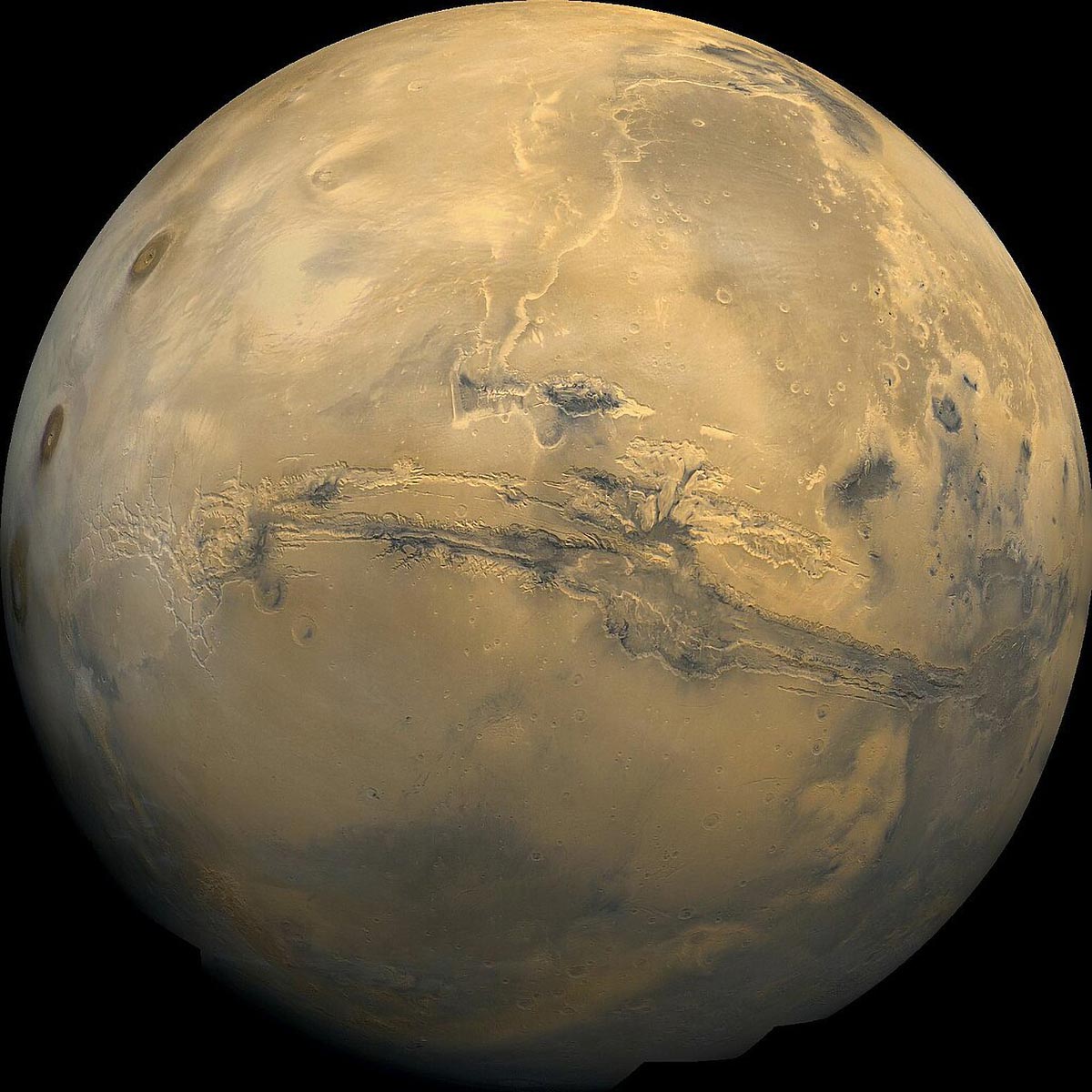
Advances in technology have reopened the debate over terraforming Mars, shifting it from an impossible dream to a long-term scientific and ethical question.
Terraforming refers to a theoretical approach for altering a planet or moon so it could support humans and other Earth-like life. The idea centers on changing key environmental features, including the atmosphere, surface temperature, and overall climate, to make conditions more similar to those on Earth.
This could involve increasing oxygen levels, allowing liquid water to exist on the surface, and stabilizing long-term climate patterns. Mars is the planet most often discussed in these proposals, with ideas ranging from releasing heat-trapping gases to raise temperatures to introducing microorganisms that might slowly generate oxygen over thousands of years.
Terraforming shifts from fiction to research
For decades, turning Mars into a habitable world was largely the domain of science fiction. The vision of reshaping a cold, lifeless planet into one capable of supporting life has long fascinated the public, yet most scientists viewed it as far beyond reach. That view is now being reconsidered.
A group of researchers led by Dr Erika DeBenedictis of Pioneer Labs argues that terraforming deserves serious attention as a scientific research program, not as an immediate goal, but as a subject worth systematic study given recent advances.
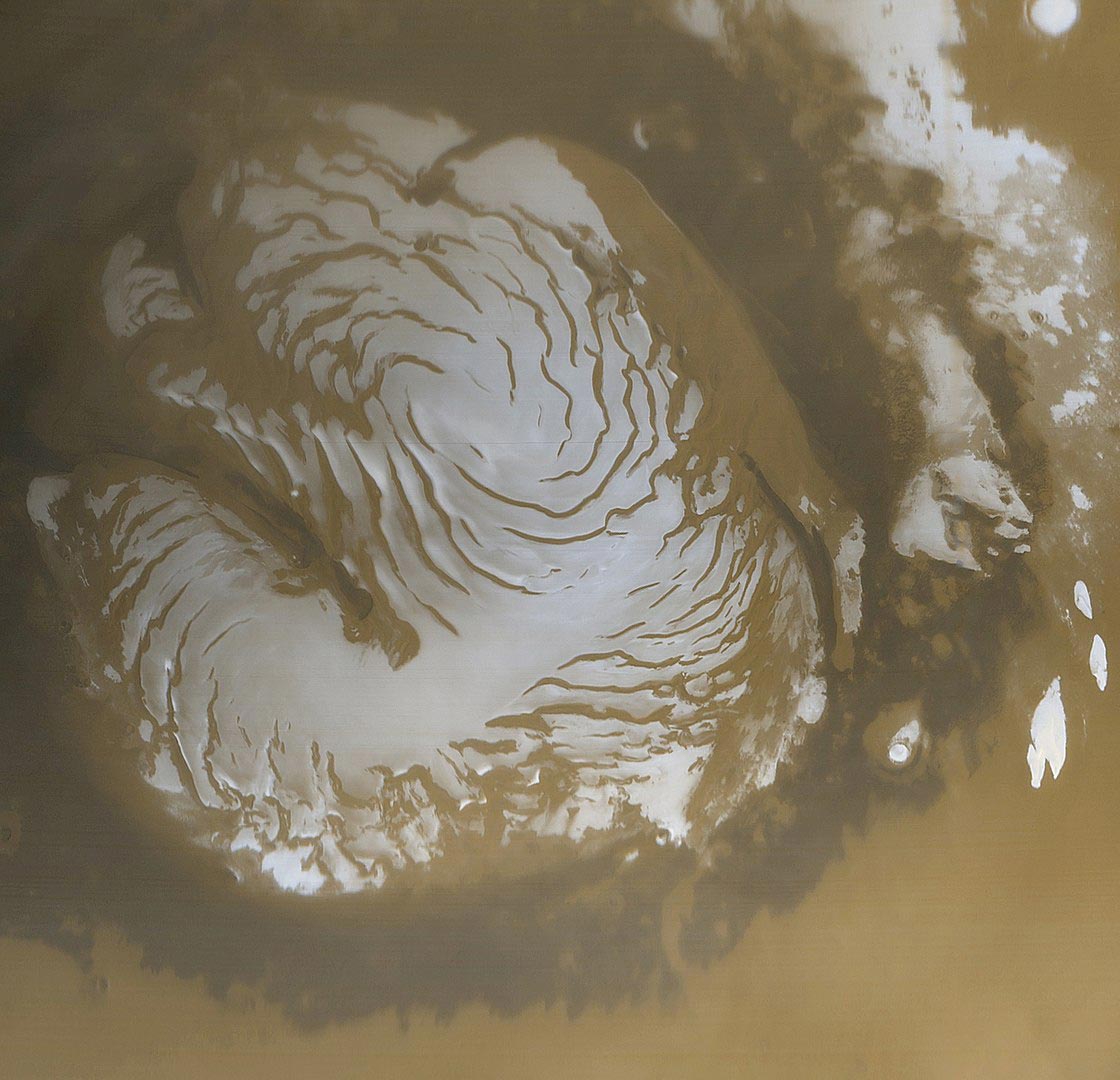
Dr DeBenedictis, the CEO of Pioneer Labs, outlined this argument in a workshop summary prepared for the 2025 Green Mars Workshop. She notes that three decades ago, terraforming Mars was not simply difficult, but effectively impossible. Since then, a combination of technological progress has reshaped what might be achievable. Potential reductions in launch costs driven by SpaceX’s Starship, alongside developments in synthetic biology and climate modelling, have altered the landscape. As a result, the discussion has shifted away from whether terraforming violates the laws of physics and toward deeper questions about whether it should be pursued at all, and what a realistic path forward might look like.
A phased pathway to a living planet
The workshop summary tells a story that starts with where a transformed Mars might end up and then works backward to outline how it could get there. The idea is organized into stages. The first stage focuses on warming the planet. Scientists suggest that Mars’s average temperature could be raised by several tens of degrees within a few decades by releasing specially designed aerosols or greenhouse gases.
Studies indicate that Mars contains enough water ice to create an ocean nearly four million square kilometers in size, with an average depth of about 300 meters. If global temperatures rose by roughly 30 degrees Celsius, this ice could begin to melt, allowing liquid water to persist on the surface.
The next stage centers on introducing life, starting at the microscopic level. Synthetic biology plays a key role in this proposal. Researchers envision creating extremophiles, microorganisms adapted to extreme environments, by combining abilities such as heat tolerance, resistance to radiation, and the capacity to survive with little regard for atmospheric pressure. Once released, these resilient microbes could spread across Mars in algae-like growth within a few decades. Through photosynthesis, they would gradually begin altering the planet’s atmosphere, marking an early step toward a more Earth-like environment.
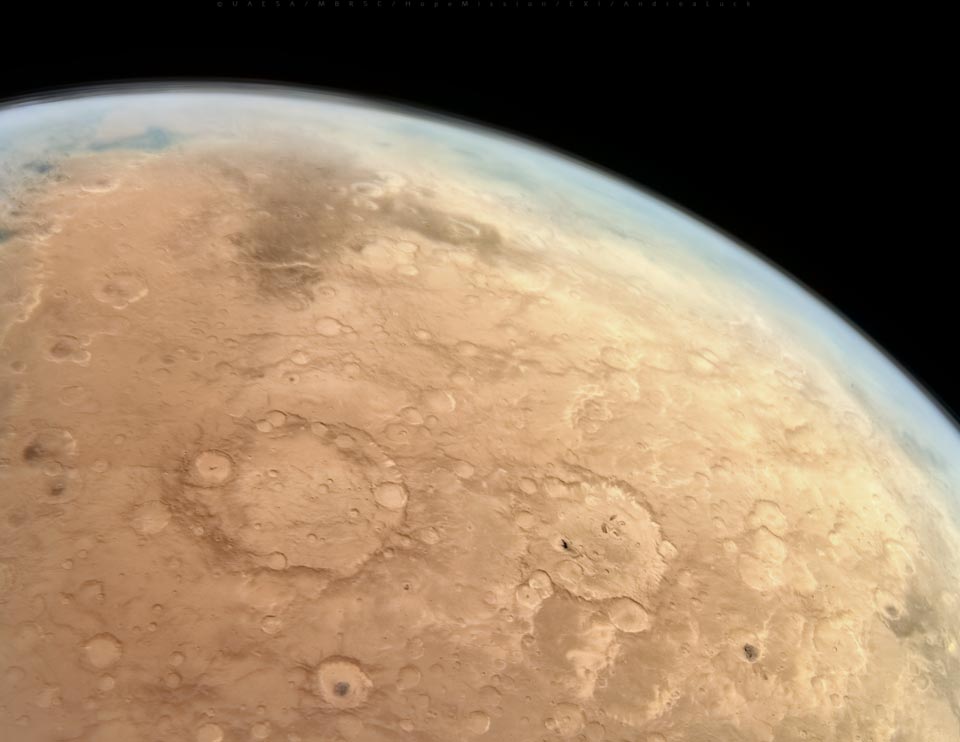
The final phase stretches across centuries or even millennia, building an oxygen-rich atmosphere thick enough to support complex life. The team suggests starting within enormous domed habitats, 100 meters tall, where photosynthesis or water electrolysis could generate breathable air. Beyond these structures, spreading plant life would gradually contribute oxygen to the broader atmosphere, though this natural process alone would take a thousand years. Eventually, though, human explorers could leave the protective domes and live on the planet’s surface.
Unknowns and ethical limits loom large
The research also highlights critical unknowns that must be addressed. What lies beneath the extensive ice sheets on Mars? How would dust storms behave in a warmer, wetter atmosphere? Are materials needed for large-scale water electrolysis, are they abundant enough on Mars, or would they require expensive importation from Earth?
Beyond the technical challenges lie the ethical questions. If we decide to terraform Mars, we will change it in ways that may not be reversible. Mars has its own planetary history, and terraforming would effectively end our opportunity to study that pristine record. If indigenous Martian life exists, even in microbial form, our interventions could destroy it. The researchers argue that studying terraforming has immediate practical benefits for Earth. Technologies developed for Mars habitation, from desiccation-resistant crops to sustainable closed-loop systems, could directly benefit our home planet. Developing green technologies for space might offer a pathway to maturing them for terrestrial use.
I have to confess, as a not-so-closet space enthusiast, there’s something compelling about approaching planetary engineering not as immediate action but as rigorous research. The workshop summary doesn’t advocate launching terraforming missions tomorrow. Instead, it calls for careful laboratory studies, detailed climate modelling, and perhaps small-scale experiments on future Mars missions to test localized warming strategies. But, and it’s a big but, before we consider transforming an entire world, we must thoroughly understand what we’re working with and what we might be risking. The conversation has shifted from “could we?” to “should we, and if so, how?” and that represents genuine, considered progress.
Reference: “An Introduction to Mars Terraforming, 2025 Workshop Summary” by Devon Stork and Erika DeBenedictis, 7 October 2025, arXiv.
DOI: 10.48550/arXiv.2510.07344
Adapted from an article originally published in Universe Today.
Never miss a breakthrough: Join the SciTechDaily newsletter.
Follow us on Google and Google News.
12 Comments
every attempt to create an atmosphere will be blown away from solar winds, unless you can create a magnetic field, and we may be af 1000 generations of scientist away from being able to do such a feat.
Evolution is a slow process happening through generations, and in highly complex life, it leads to some unique adaptations which are suitable only for for the existing environment. So for humans with a gap of twenty years between generations, colonizing Mars is something impossible. However, microbes with their extremely short lifespan, can adapt to the conditions of Mars more effectively.
In my opinion,the idea of heating up the atmosphere of Mars by introducing green house gases is fundamentally wrong. It arises from the wrong concept that present global warming of Earth is due to green house gases. Global warming is cosmological, and it is the global warming that causes a higher retention of carbondioxide in the atmosphere.
Gravity has a crucial role in deciding the atmospheric temperature. This role of gravity is not considered now, and that has led to a wrong climate science.
Wouldn’t Mars not having a magnetic field mean that the solar wind would just blow away any atmosphere that we added?
That stripping process would take millions of years
Why not invest that time and effort into earth and make this place wonderful. Just saying.
Thoughtful. Respect and responsiblity
Yes the place needs an adjusted magnetic field. With enough infra-structure, the moving of enough material, it may be possible. In some future I will not see.
The main thing ‘people’ need to do is have a conversation about the protocols that must be engaged and agreed upon by all space faring entities. An agreement that may not be allowed to be abridged in the future.
The wrong set of of pollutants and certainly self-supporting live forms will alter the environment of any planet – for instance, if “an alien” were to deposit any of a range of life-like molecules into our environment, DNA or RNA – or any aspect of our supporting protein structures could simply eat themselves – spreading to all forms of life, trees, grass, spiders, sea kelp, (continue long boring list of all life on earth), etc. A conflagration. – Few, it seems, have even thought of this.
Every planet is a relatively closed system, a balanced system – and outsiders are very likely, wholly so.
So we need protocols in order to know what is appropriate when we come upon another world. Every other world.
This is as big a pipe dream, as Elon Musk claiming he will build a city that will house a million people. Humans are no where near technologically advanced to do anything like what needs to be done, for Mars to support life.
Humans have not earned the right to inhabit other planets yet. We are destroying Earth and do not have the right to infest another planet just to keep ourselves alive. Until we learn to control our population size and live in harmony with our planet, I say NO. Leave Mars to do what Mars will do naturally and don’t interfere. Humans be damned.
Going there, and planting a flag. That is all that will ever be accomplished with Mars. NO MAGNETIC FIELD. End of discussion.
Going there, and planting a flag. That is all that will ever be accomplished with Mars. NO MAGNETIC FIELD. End of discussion.
I agree.
But I do we can generate a magnetic field but these will be some big machines to maintain at first.