
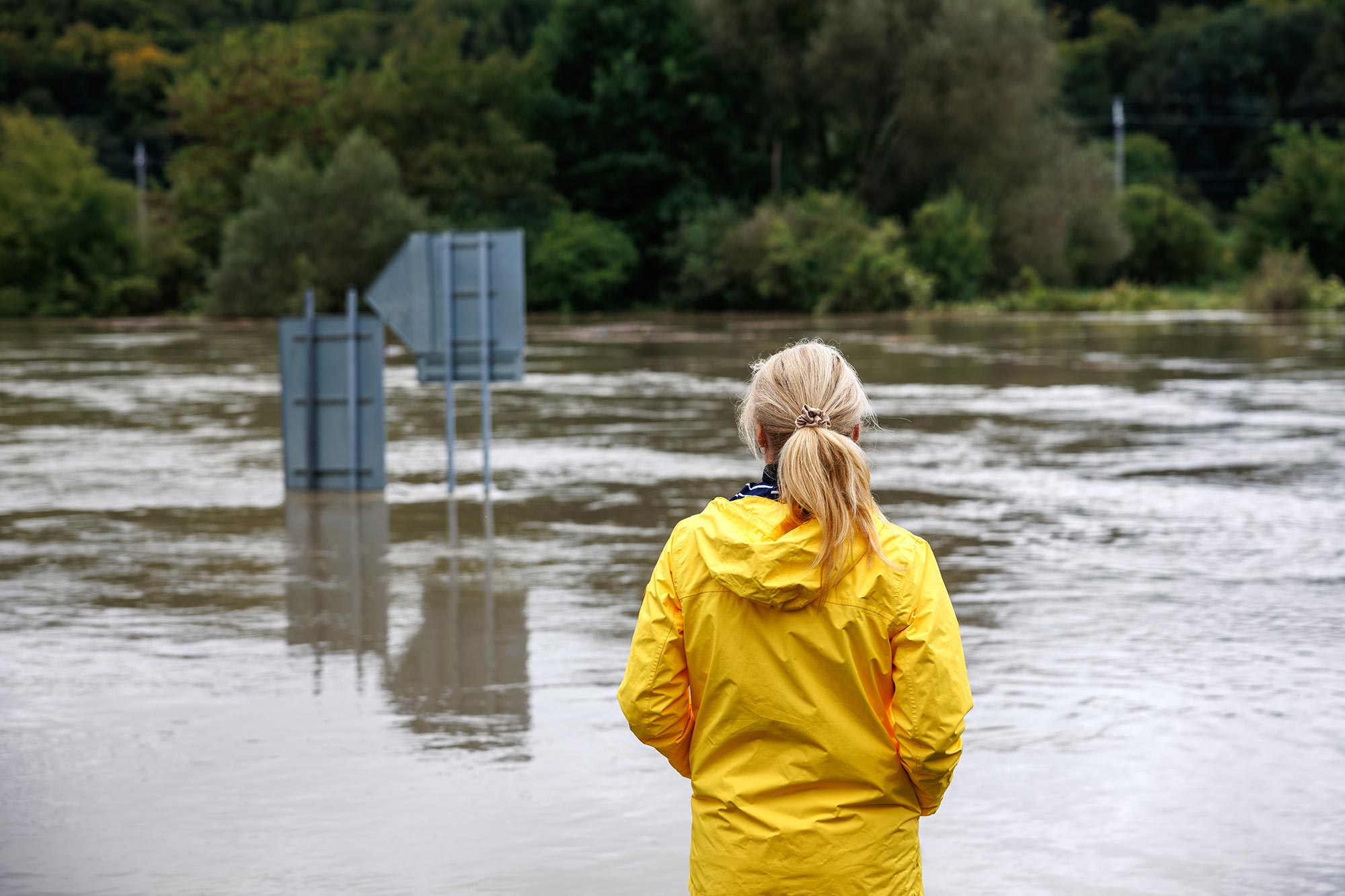
A decades-long UBC study reveals that clear-cutting doesn’t just increase flooding — it can multiply extreme events up to 18 times and make them more than twice as large.
In some watersheds, a once-in-70-year flood now strikes every nine years, with the impacts persisting for over 40 years.
Clear-Cutting Linked to Surge in Catastrophic Floods
Clear-cutting can dramatically intensify flood risks, making the most severe events up to 18 times more frequent and leaving impacts that last more than four decades, according to new research from the University of British Columbia.
In one watershed, the scale of these extreme floods more than doubled, turning what was once a rare, once-in-70-years event into something that now occurs roughly every nine years.
“This research challenges conventional thinking about forest management’s impact on flooding,” said senior author Dr. Younes Alila, a hydrologist in the UBC faculty of forestry. “We hope the industry and policymakers will take note of the findings, which show that it matters not only how much forest you remove but also where, how and under what conditions.”
Groundbreaking Long-Term Forest Study
The study, published in the Journal of Hydrology, draws on decades of data from one of the world’s longest-running forest experiments at the Coweeta Hydrologic Laboratory in North Carolina. Researchers compared two neighboring watersheds, one facing north and the other south, both clear-cut in the late 1950s.
“We found seemingly minor landscape factors—like the direction a slope faces—can make or break a watershed’s response to treatment,” said first author Henry Pham, a doctoral student in the faculty of forestry.
In the north-facing watershed, which receives less direct sunlight and holds more moisture, floods became between four and 18 times more frequent. Average flood sizes rose by 47 percent compared to pre-treatment conditions, and the largest floods swelled by as much as 105 percent.
By contrast, the south-facing watershed experienced virtually no change in flood patterns after the same treatment.
Standard Models Miss the Mark
Most conventional flood models employ simplified assumptions: cut X percent of trees, expect Y percent more water runoff. But this study found that such models fail to account for extreme and erratic flood patterns that emerge after landscape disturbances.
“This experimental evidence validates our longstanding call for better analysis methods,” said Dr. Alila. “When we apply proper probabilistic tools to long-term data, we find much stronger and more variable impacts than older models suggest.”
In short, he adds, forest treatments don’t just raise average flood levels—they can fundamentally reshape a watershed’s entire flood regime, making rare and catastrophic events much more common.
The most concerning finding was that flood effects in the north-facing watershed persisted for over 40 years, confirming that forestry treatments can lead to long-term changes in a watershed’s flood response, especially as climate change brings more extreme weather, putting downstream communities at greater risk.
Urgent Policy Relevance in a Warming World
The findings have immediate relevance for forest management practices, particularly in B.C. where there are similar terrain types and forestry operations in the form of clear-cut logging.
Dr. Alila noted that the model used in this study can be used to predict which parts of B.C. are currently more at risk of extreme flooding. It can also be used to investigate how much of the severity of Sumas Prairie floods in 2021 and the more recent Texas floods can be attributed to global warming and/or land use and forest cover changes.
“Our findings highlight how multiple landscape factors interact in complex ways. As climate conditions shift, understanding those dynamics is becoming increasingly important for forest and water management.”
Reference: “Stochastic framework reveals the controls of forest treatment – peakflow causal relations in rain environment” by Henry C. Pham, Younes Alila and Peter V. Caldwell, 15 June 2025, Journal of Hydrology.
DOI: 10.1016/j.jhydrol.2025.133704
Never miss a breakthrough: Join the SciTechDaily newsletter.
Follow us on Google and Google News.
4 Comments
This – finally is and important aspect for the environment. The whole streams forest basin, the fish, the trees, the water – all become stable together or destabilized by dumb-bell humans.
That’s the real problem: dumb-bells. Dumb enough to do what they do.
“…, especially as climate change brings more extreme weather, …”
This is an assertion for which the facts are not in evidence. Storms are driven by temperature/pressure differentials. It is claimed that the Arctic is warming 2-4X faster than the global average. That means that the temperature differences between high and low latitudes is decreasing. Therefore, one should expect that storms should become less powerful and less frequent; that is, less extreme. The one possible exception to that is hurricanes, which appear to be fueled by the actual water temperature. Good scientists stick to the facts and don’t promote ‘urban myths’ to advance their hypotheses.
Speaking of hurricanes, something that doesn’t get much attention is that Sahara Desert dust plays an important role in suppressing the formation of North Atlantic hurricanes. It has been doing exactly that this hurricane season, as it often does, and may impede tropical storm Irwin from turning into a full-fledged hurricane. We will just have to wait a few days to see what happens. However, considering that Earth is apparently warming, it will increase evaporation and dry out the Earth, at least where the rainfall doesn’t increase. Might that be a consideration in future suppression of Atlantic hurricanes? Has anyone explored that? If not, why not?
That should have been tropical storm Erin.