
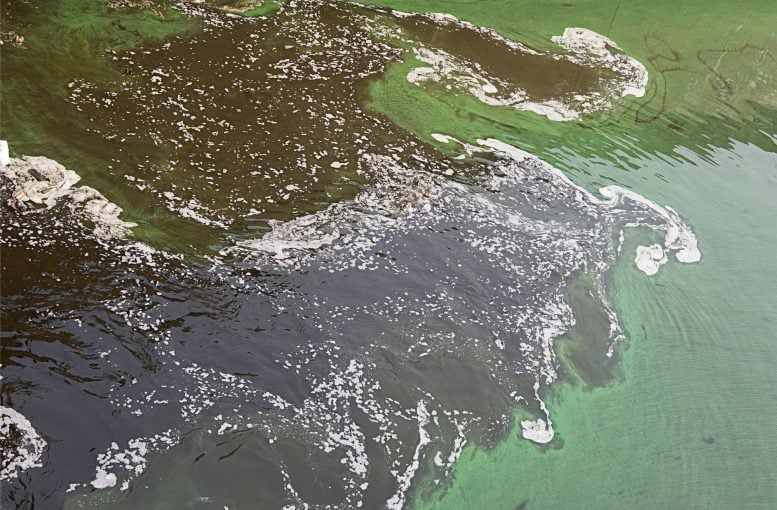
As global temperatures increase, blue lakes in North America and Europe are projected to become green-brown.
According to recent research that provides the first global inventory of lake color, blue lakes all over the globe run the danger of becoming green-brown if global warming continues. Changes in lake water color can signal a decline in ecological health.
The current study shows that, in addition to factors like algae and sediments, air temperature, precipitation, lake depth, and elevation all have a significant role in determining a lake’s most common watercolor.
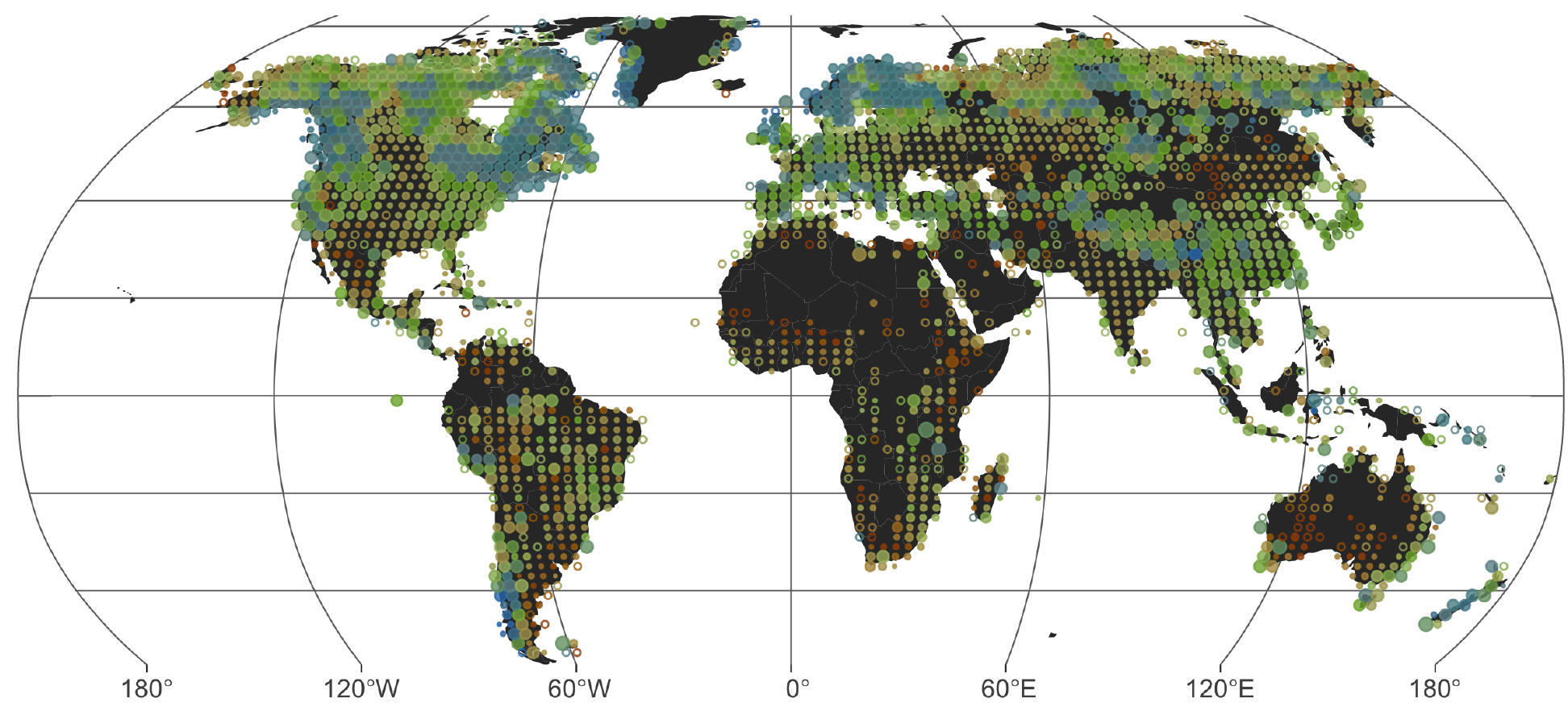
Less than one-third of the world’s lakes are blue, and they are often deeper and located in cool, high-latitude areas with plenty of precipitation and winter ice cover. According to the research, green-brown lakes, which make up 69% of all lakes, are more common and may be found in drier areas, continental interiors, and along coasts.
The findings were recently published in Geophysical Research Letters, a journal of the American Geophysical Union.
To identify the most common watercolor of 85,360 lakes and reservoirs worldwide from 2013 to 2020, the researchers used 5.14 million satellite images.
“No one has ever studied the color of lakes at a global scale,” said Xiao Yang, remote sensing hydrologist at Southern Methodist University and author of the study. “There were past studies of maybe 200 lakes across the globe, but the scale we’re attempting here is much, much larger in terms of the number of lakes and also the coverage of small lakes. Even though we’re not studying every single lake on Earth, we’re trying to cover a large and representative sample of the lakes we have.”
A lake’s color can change seasonally, in part, due to changes in algal growth, so the authors characterized lake color by assessing the most frequent lake color over seven years. The results can be explored through an interactive map the authors developed.
Climate Change’s Impact on Lake Colors
Additionally, the new study explored how different degrees of warming could affect water color if climate change persists. The study finds climate change may decrease the percentage of blue lakes, many of which are found in the Rocky Mountains, northeastern Canada, northern Europe, and New Zealand.
“Warmer water, which produces more algal blooms, will tend to shift lakes towards green colors,” said Catherine O’Reilly, an aquatic ecologist at Illinois State University and author of the new study. “There are lots of examples of where people have actually seen this happen when they studied one individual lake.”
For example, O’Reilly said that the North American Great Lakes are experiencing increased algal blooms and are among the fastest-warming lakes. Previous research has also shown remote Arctic regions have lakes with “intensifying greenness,” said Yang.
While prior studies have used more complex and finer scale metrics to understand overall lake ecosystem health, watercolor is a simple yet viable metric for water quality that can be viewed from satellites at a global scale, the authors said. This approach provides a way to study how remote lakes are changing with climate.
Ecosystem Services and Human Activity
“If you’re using lakes for fisheries or sustenance or water drinking water, changes in water quality that are likely happening when lakes become greener are probably going to mean it’s going to be more expensive to treat that water,” said O’Reilly. “There might be periods where the water isn’t usable, and fish species might no longer be present, so we’re not going to get the same ecosystem services essentially from those lakes when they shift from being blue to being green.”
Additionally, changes to watercolor may have recreational and cultural implications in locations such as Sweden and Finland where lakes are culturally prevalent, O’Reilly said. As warming continues, lakes in northern Europe will likely lose their winter ice cover, which could affect winter and cultural activities.
“Nobody wants to go swim in a green lake,” said O’Reilly, “so aesthetically, some of the lakes that we might have always thought of as a refuge or spiritual places, those places might be disappearing as the color changes.”
Reference: “The Color of Earth’s Lakes” by Xiao Yang, Catherine M. O’Reilly, John R. Gardner, Matthew R. V. Ross, Simon N. Topp, Jida Wang and Tamlin M. Pavelsky, 22 September 2022, Geophysical Research Letters.
DOI: 10.1029/2022GL098925
Never miss a breakthrough: Join the SciTechDaily newsletter.
Follow us on Google and Google News.
1 Comment
“The study finds climate change MAY decrease the percentage of blue lakes, …”
The atmosphere has warmed by about 1/2 deg C over the last 50 years; there has been no statistically significant warming over the last 8 years. Water, because of its high specific heat capacity, warms more slowly than air, soil, rocks, and vegetation. Also, when water does warm at the surface, it increases the rate of evaporation, and the water cools. The effect of warming pales compared to the effect of fertilizer runoff and untreated waste water entering lakes. This appears to be more fear mongering that is uncritically accepted as good science — when it isn’t.