
Close Menu
    Facebook X (Twitter) Instagram
    SciTechDaily
    • Biology
    • Chemistry
    • Earth
    • Health
    • Physics
    • Science
    • Space
    • Technology
    Facebook X (Twitter) Pinterest YouTube RSS
    SciTechDaily
    Home»Space»Could These Nearby Stars Harbor Another Earth?
    Space

    Could These Nearby Stars Harbor Another Earth?

    By Chandra X-ray ObservatoryAugust 10, 20241 Comment4 Mins Read
    Facebook Twitter Pinterest Telegram LinkedIn WhatsApp Email Reddit
    Share
    Facebook Twitter LinkedIn Pinterest Telegram Email Reddit
    Chandra Checks Habitability of Exoplanets
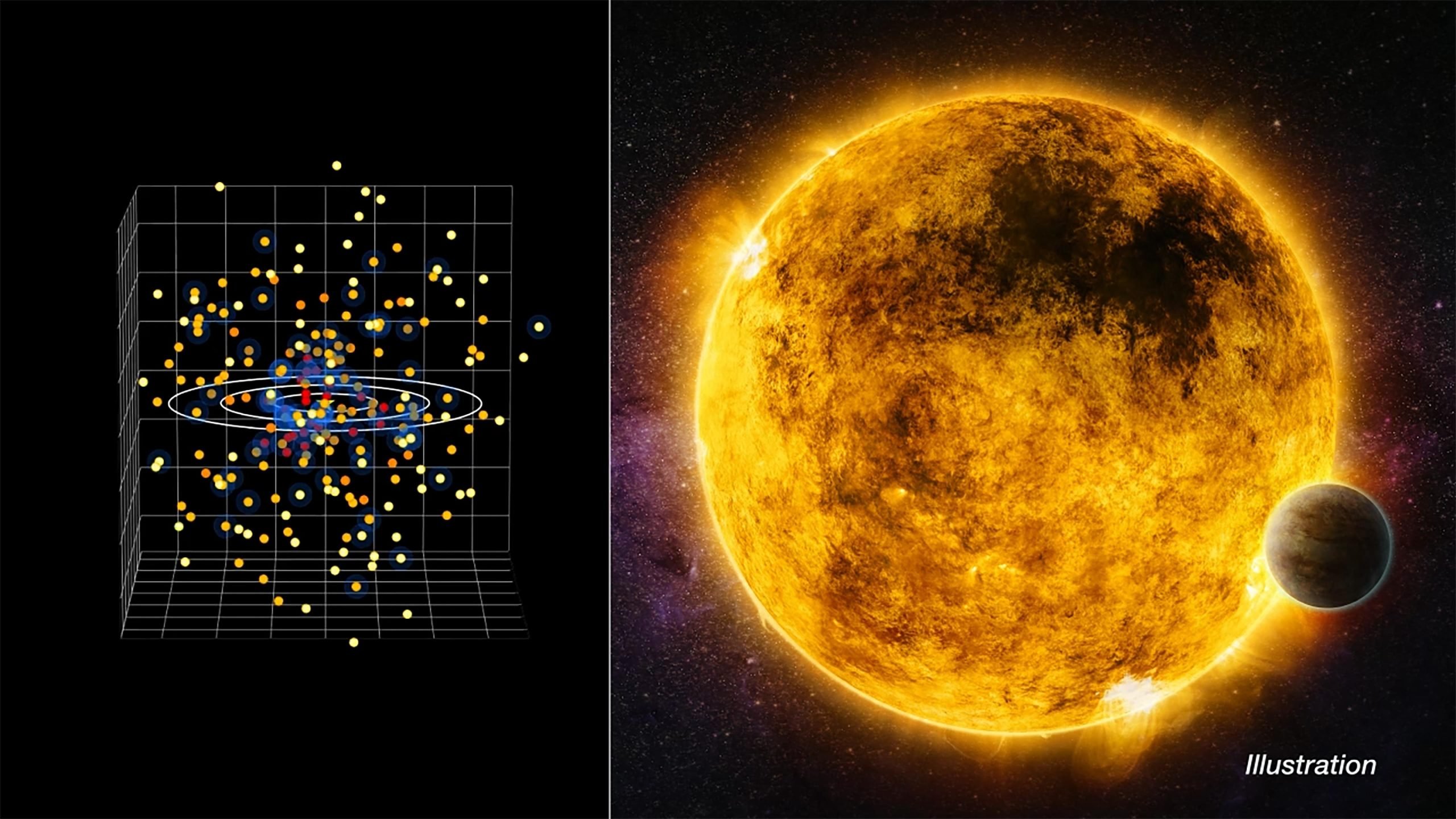
    A three-dimensional map of stars near the Sun that are close enough to Earth for planets in their habitable zones to be directly imaged using future telescopes, along with an artist’s illustration of such a system. New research used X-ray data to evaluate the habitability of exoplanets by studying radiation levels, which could affect their atmospheres. Such data is crucial for directing future telescopes that aim to image Earth-like planets. Credit: Cal Poly Pomona/B. Binder; NASA/CXC/M.Weiss

    Through a 3D star map, researchers analyze how nearby stars might impact their planets’ atmospheres with X-rays, helping guide the search for habitable exoplanets by future telescopes.

    • X-ray observations of nearby stars are helping astronomers identify the best targets to search for exoplanets with conditions suitable for life.
    • Such planets could be directly imaged in searches with a future generation of telescopes.
    • Harmful radiation from a star in the form of X-rays and ultraviolet could damage or even destroy a planet’s atmosphere.
    • Researchers used NASA’s Chandra X-ray Observatory and ESA’s XMM-Newton to look at 57 exoplanets.

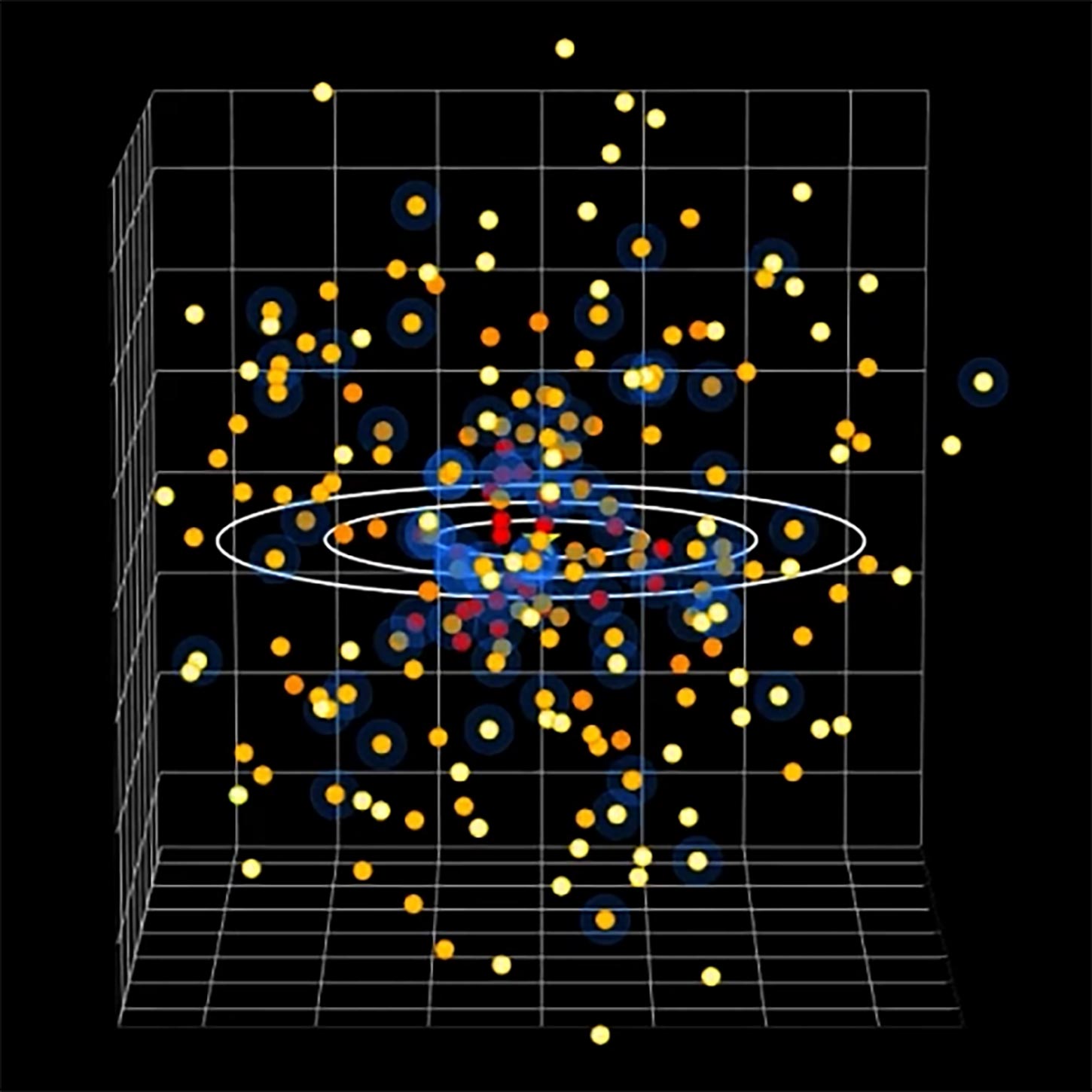
    On the left of the image above, a graphic shows a three-dimensional map of stars near the Sun. (See detailed view below.) These stars are close enough that they could be prime targets for direct imaging searches for planets using future telescopes. The blue haloes represent stars that have been observed with NASA’s Chandra X-ray Observatory and ESA’s XMM-Newton. The yellow star at the center of this diagram represents the position of the Sun. The concentric rings show distances of 5, 10, and 15 parsecs (one parsec is equivalent to roughly 3.2 light-years).

    Astronomers are using these X-ray data to determine how habitable exoplanets may be based on whether they receive lethal radiation from the stars they orbit. This type of research will help guide observations with the next generation of telescopes aiming to make the first images of planets like Earth.

    Researchers examined stars that are close enough to Earth that telescopes set to begin operating in the next decade or two — including the Habitable Worlds Observatory in space and Extremely Large Telescopes on the ground — could take images of planets in the stars’ so-called habitable zones. This term defines orbits where the planets could have liquid water on their surfaces.
    Star and Exoplanet Illustration
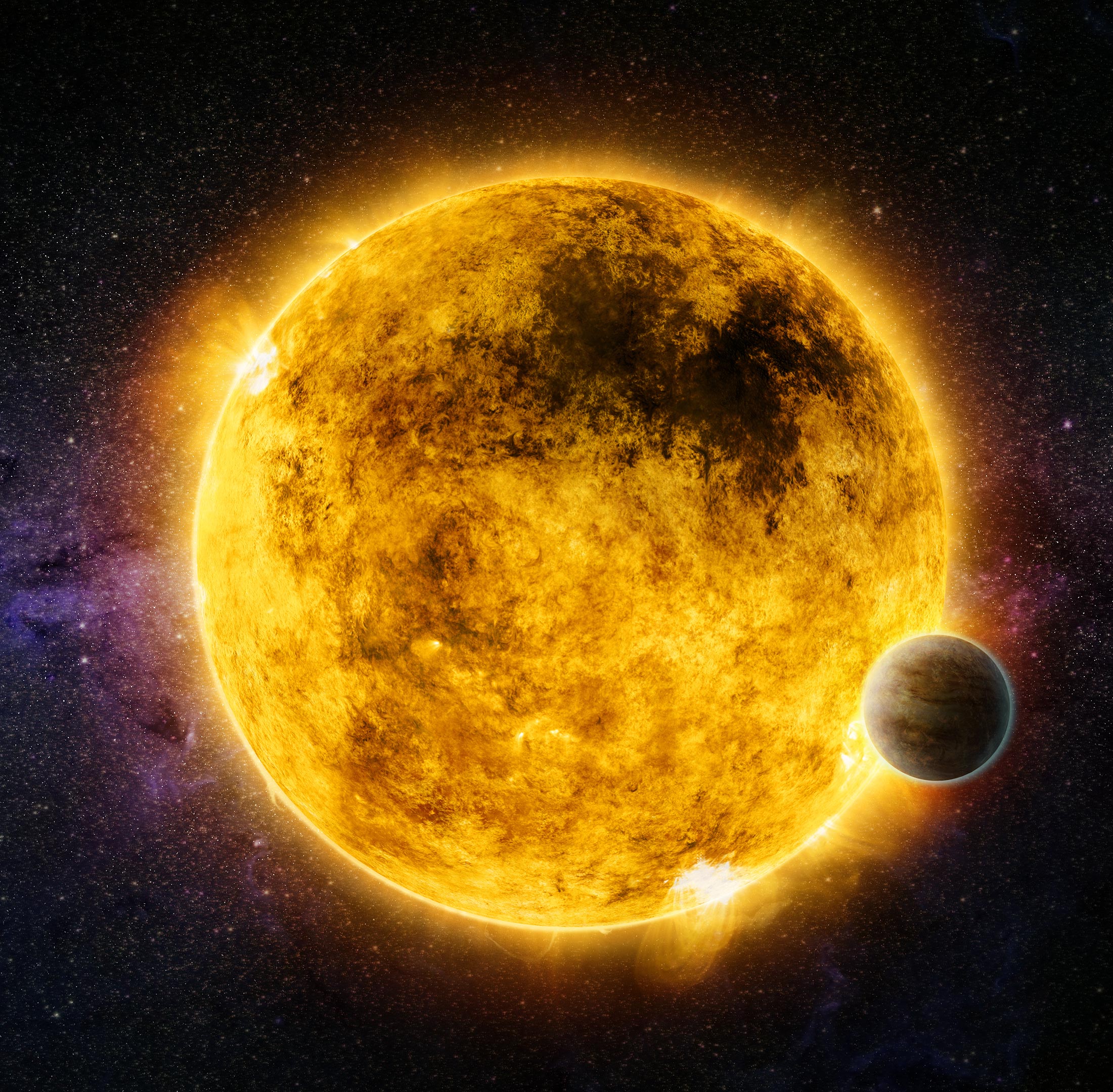
    An artist’s illustration of a planet in the habitable zone of a star. Planets in their stars’ habitable zones likely have liquid water on their surfaces. Credit: Cal Poly Pomona/B. Binder

    There are several factors influencing what could make a planet suitable for life as we know it. One of those factors is the amount of harmful X-rays and ultraviolet light they receive, which can damage or even strip away the planet’s atmosphere.

    Based on X-ray observations of some of these stars using data from Chandra and XMM-Newton, the research team examined which stars could have hospitable conditions on orbiting planets for life to form and prosper. They studied how bright the stars are in X-rays, how energetic the X-rays are, and how much and how quickly they change in X-ray output, for example, due to flares. Brighter and more energetic X-rays can cause more damage to the atmospheres of orbiting planets.

    The researchers used almost 10 days of Chandra observations and about 26 days of XMM observations, available in archives, to examine the X-ray behavior of 57 nearby stars, some of them with known planets. Most of these are giant planets like Jupiter, Saturn, or Neptune, while only a handful of planets or planet candidates could be less than about twice as massive as Earth.
    Map of Stars Near Sun
    A three-dimensional map of stars near the Sun that are close enough to Earth for planets in their habitable zones to be directly imaged using future telescopes. Planets in their stars’ habitable zones likely have liquid water on their surfaces. A study with Chandra and XMM-Newton of some of these stars (shown in blue haloes) indicates those that would most likely have habitable exoplanets around them based on a second condition — whether they receive lethal radiation from the stars they orbit. Credit: Cal Poly Pomona/B. Binder; NASA/CXC/M.Weiss

    These results were presented at the 244th meeting of the American Astronomical Society meeting in Madison, Wisconsin, by Breanna Binder (California State Polytechnic University in Pomona).

    NASA’s Marshall Space Flight Center manages the Chandra program. The Smithsonian Astrophysical Observatory’s Chandra X-ray Center controls science from Cambridge, Massachusetts and flight operations from Burlington, Massachusetts.

    Never miss a breakthrough: Join the SciTechDaily newsletter.
    Follow us on Google and Google News.

    Astrobiology Astronomy Astrophysics Chandra X-ray Observatory Exoplanet Popular
    Share. Facebook Twitter Pinterest LinkedIn Email Reddit

    Related Articles

    Unlocking the Habitable Universe: How X-Rays Reveal Safe Havens for Life

    A Big Step Forward in the Search for Alien Life: New Class of Exoplanet Very Different to Our Own

    Habitable Planets With Earth-Like Biospheres May Be Much Rarer Than Thought

    Alien Life in These Star-Systems Could Have Spotted Earth After Human Civilization Blossomed

    How Habitable Are Planets That Orbit Red Dwarfs – The Most Common Type of Stars in the Galaxy?

    Planetary Scientists Discover There May Be Many Planets With Water-Rich Atmospheres

    On the Quest for Other Earths in the Search for Extraterrestrial Life

    Earth Has a Hot New Neighbor – And It Could Change How We Look for Life in the Universe

    NASA Planet-Hunter Data Reveals That 50% of Sun-Like Stars Could Host Potentially Habitable Planets

    1 Comment

    1. david w. ferrin on August 10, 2024 5:49 pm

      So, as always, I find this info useless because the paper gives NO info about which perticular Stars have high x-rays…

      Reply
    Leave A Reply Cancel Reply

    • Facebook
    • Twitter
    • Pinterest
    • YouTube

    Don't Miss a Discovery

    Subscribe for the Latest in Science & Tech!

    Trending News

    Millions Take These IBS Drugs, But a New Study Finds Serious Risks

    Scientists Unlock Hidden Secrets of 2,300-Year-Old Mummies Using Cutting-Edge CT Scanner

    Bread Might Be Making You Gain Weight Even Without Eating More Calories

    Scientists Discover Massive Magma Reservoir Beneath Tuscany

    Europe’s Most Active Volcano Just Got Stranger – Here’s Why Scientists Are Rethinking It

    Alzheimer’s Symptoms May Start Outside the Brain, Study Finds

    Millions Take This Popular Supplement – Scientists Discover a Concerning Link to Heart Failure

    The Universe Is Expanding Too Fast and Scientists Can’t Explain Why

    Follow SciTechDaily
    • Facebook
    • Twitter
    • YouTube
    • Pinterest
    • Newsletter
    • RSS
    SciTech News
    • Biology News
    • Chemistry News
    • Earth News
    • Health News
    • Physics News
    • Science News
    • Space News
    • Technology News
    Recent Posts
    • Simple Blood Test May Predict Alzheimer’s Years Before Brain Scans Show Signs
    • Scientists Say Adding This Unusual Seafood to Your Diet Could Reverse Signs of Aging
    • U.S. Waste Holds $5.7 Billion Worth of Crop Nutrients
    • Scientists Say a Hidden Structure May Exist Inside Earth’s Core
    • Doctors Surprised by the Power of a Simple Drug Against Colon Cancer
    Copyright © 1998 - 2026 SciTechDaily. All Rights Reserved.
    • Science News
    • About
    • Contact
    • Editorial Board
    • Privacy Policy
    • Terms of Use

    Type above and press Enter to search. Press Esc to cancel.