
Close Menu
    Facebook X (Twitter) Instagram
    SciTechDaily
    • Biology
    • Chemistry
    • Earth
    • Health
    • Physics
    • Science
    • Space
    • Technology
    Facebook X (Twitter) Pinterest YouTube RSS
    SciTechDaily
    Home»Biology»Crabs Can Solve a Complex Maze and Remember Their Route Weeks Later [Video]
    Biology

    Crabs Can Solve a Complex Maze and Remember Their Route Weeks Later [Video]

    By Swansea UniversityOctober 23, 2019No Comments3 Mins Read
    Facebook Twitter Pinterest Telegram LinkedIn WhatsApp Email Reddit
    Share
    Facebook Twitter LinkedIn Pinterest Telegram Email Reddit
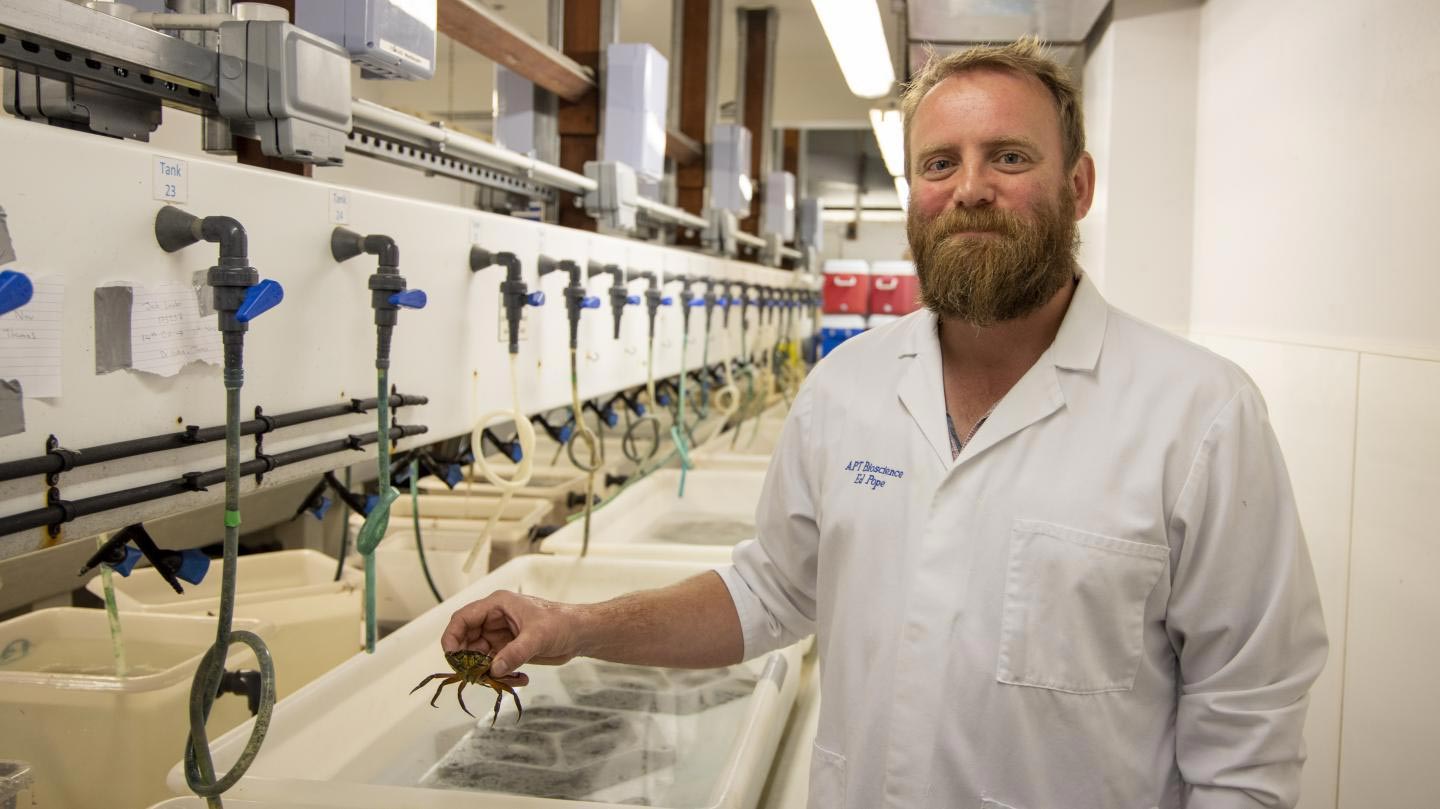
    Ed Pope, Swansea University
    This is Dr. Ed Pope holding a shore crab. Credit: Swansea University

    Unique study shows how crabs can work their way through a complex maze in order to find food, and can even remember it two weeks later.

    A new Swansea University study has revealed how common shore crabs can navigate their way around a complex maze and can even remember the route in order to find food.

    The team of scientists, led by marine biologist Dr. Ed Pope and master’s student Ross Davies, wanted to see if common shore crabs could learn the path of a specially-designed maze in order to gain a better understanding of spatial learning in crustaceans.

    Dr. Pope said: “Learning your way around, what scientists call ‘spatial learning’, is an important ability in animals. We understand this ability quite well in many animals, but less so in marine creatures such as crabs as it’s pretty difficult to follow them around! Spatial learning is quite complicated, so figuring out how it works in crustaceans gives us a better understanding of how widespread this ability, and learning in general, is in the animal kingdom.”

    The researchers tested 12 crabs over four weeks, placing food at the end of the maze each time. The route to the end of the maze required five changes in direction, and included three dead ends.

    Over the four-week period, the team saw the crabs show a steady improvement in both the time taken to find the food at the end of the maze and, crucially, in the number of wrong turns taken.

    Even more surprisingly, when returned to the maze two weeks later but without any food on offer at the end, they all reached the end of the maze in under eight minutes – a clear sign that they had remembered the route.

    New crabs which had had not been in the maze before took far longer to reach the end, and some did not make it to the end of the maze at all during the one-hour study period.
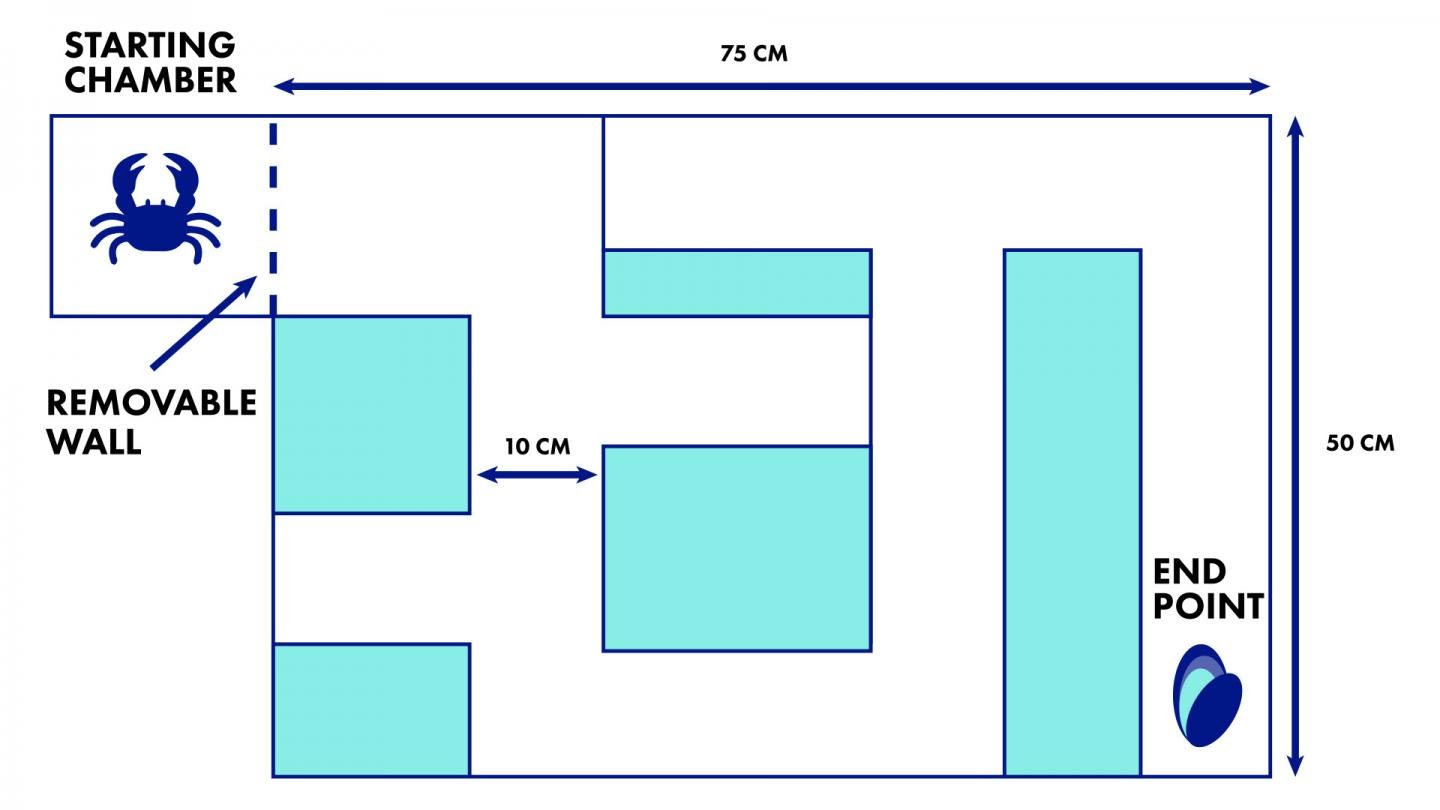
    Crab Maze
    This is a scale of the experimental maze showing an individual shore crab in the starting chamber and a single, crushed mussel at the endpoint. Credit: Swansea University

    Commenting on the findings of the study, which was published today (October 23, 2019) in Biology Letters, Dr. Pope said: “This study is important because we know that insects, especially ants and bees, have some impressive mental abilities but we haven’t really looked for them in their aquatic counterparts. The fact that crabs show a similar ability to insects is, in some ways, not that surprising but it is great to be able to show it so clearly. This work opens the door to more sophisticated experiments looking at how changing ocean conditions might affect crabs’ ability to learn and adapt to find food in the future.”

    Co-author and climate change expert Professor Mary Gagen added: “We know so much is changing in our oceans due to human-caused climate change. Gaining a baseline understanding of the lives of the animals that are going to actually be impacted by the changes in our future oceans is really important. That doesn’t just mean the big charismatic animals, it means things like crabs that are so important for the food chain.”

    Reference: “Maze learning and memory in a decapod crustacean” by Ross Davies, Mary H. Gagen, James C. Bull and Edward C. Pope, 23 October 2019, Biology Letters.
    DOI: 10.1098/rsbl.2019.0407

    Never miss a breakthrough: Join the SciTechDaily newsletter.
    Follow us on Google and Google News.

    Marine Biology Popular Swansea University
    Share. Facebook Twitter Pinterest LinkedIn Email Reddit

    Related Articles

    Scientists Discover a New Species of Venomous Snake in Australia

    European Catfish Learn to Catch Pigeons

    At Least a Third of All Marine Species Are Still Unknown

    Great White Shark Have a More Varied Diet Than Previously Thought

    Adult White Killer Whale Spotted in the Wild for the First Time

    Relationships of Male Dolphins from Shark Bay Determined by Slow Swimming

    Black Band Disease Puts Great Barrier Reef at Risk

    Researchers Discover ‘Supergiant’ Amphipods in the Kermadec Trench

    Mesodinium Chamaeleon Is A Unique Life Form That is Half Plant Half Animal

    Leave A Reply Cancel Reply

    • Facebook
    • Twitter
    • Pinterest
    • YouTube

    Don't Miss a Discovery

    Subscribe for the Latest in Science & Tech!

    Trending News

    New Research Shows Vitamin B12 May Hold the Key to Healthy Aging

    These Simple Daily Habits Can Quickly Improve Blood Pressure and Heart Risk Factors

    A Common Nutrient May Play a Surprising Role in Anxiety

    Doing This After 9 p.m. Could Double Your Risk of Gut Issues

    Scientists Discover How Coffee Impacts Memory, Mood, and Gut Health

    Why Did the Neanderthals Disappear? Scientists Reveal Humans Had a Hidden Advantage

    Physicists Propose Strange Experiment Where Time Goes Quantum

    Magnesium Magic: New Drug Melts Fat Even on a High-Fat, High-Sugar Diet

    Follow SciTechDaily
    • Facebook
    • Twitter
    • YouTube
    • Pinterest
    • Newsletter
    • RSS
    SciTech News
    • Biology News
    • Chemistry News
    • Earth News
    • Health News
    • Physics News
    • Science News
    • Space News
    • Technology News
    Recent Posts
    • This New Memory Technology Could Make Devices Last Months on One Charge
    • Scientists Turn Cancer’s Own Bacteria Against It in Breakthrough Therapy
    • Cannabis Can Make You Remember Things That Never Happened
    • Doctors Are Surprised by What This Vaccine Is Doing to the Heart
    • Quantum Breakthrough Turns Simple Forces Into Powerful New Interactions
    Copyright © 1998 - 2026 SciTechDaily. All Rights Reserved.
    • Science News
    • About
    • Contact
    • Editorial Board
    • Privacy Policy
    • Terms of Use

    Type above and press Enter to search. Press Esc to cancel.