

Chinese scientists have found abiotic organic compounds in the ocean crust, shedding light on deep-sea carbon cycles and life’s origins, with implications for finding life on other planets.
A Chinese research team has discovered abiotic organic compounds in the oceanic crust of the Southwest Indian Ridge and proposed a molecular mechanism for organic condensation.
This discovery builds on their earlier identification of nanoscale abiotic organic matter in mantle rocks from the Yap Trench in 2021. It marks a significant advancement in our understanding of deep-sea carbon cycling and the origins of life, shedding light on key pathways for abiotic organic synthesis in nature.
The team’s findings were published in the Proceedings of the National Academy of Sciences (PNAS). Dr. Nan Jingbo from the Nanjing Institute of Geology and Palaeontology of the Chinese Academy of Sciences (NIGPAS) is the first author of the paper, with Dr. Peng Xiaotong from the Institute of Deep-Sea Science and Engineering of the Chinese Academy of Sciences serving as the corresponding author.
Emergence of Life and Deep-Sea Hydrothermal Systems
The origin of life is one of science’s most challenging questions. Deep-sea hydrothermal systems are considered potential sites for the emergence of life and a key focus in the search for extraterrestrial life. These systems provided ideal material and energy conditions for prebiotic chemical reactions on early Earth, driving the formation of small organic molecules under non-enzymatic catalysis.
Building on this, mineral-catalyzed organic polymerization reactions laid the foundation for the production of more complex organic compounds, facilitating the evolution from simple organic compounds to intricate functional structures and eventually leading to the emergence of life forms.
Research Methods and Findings
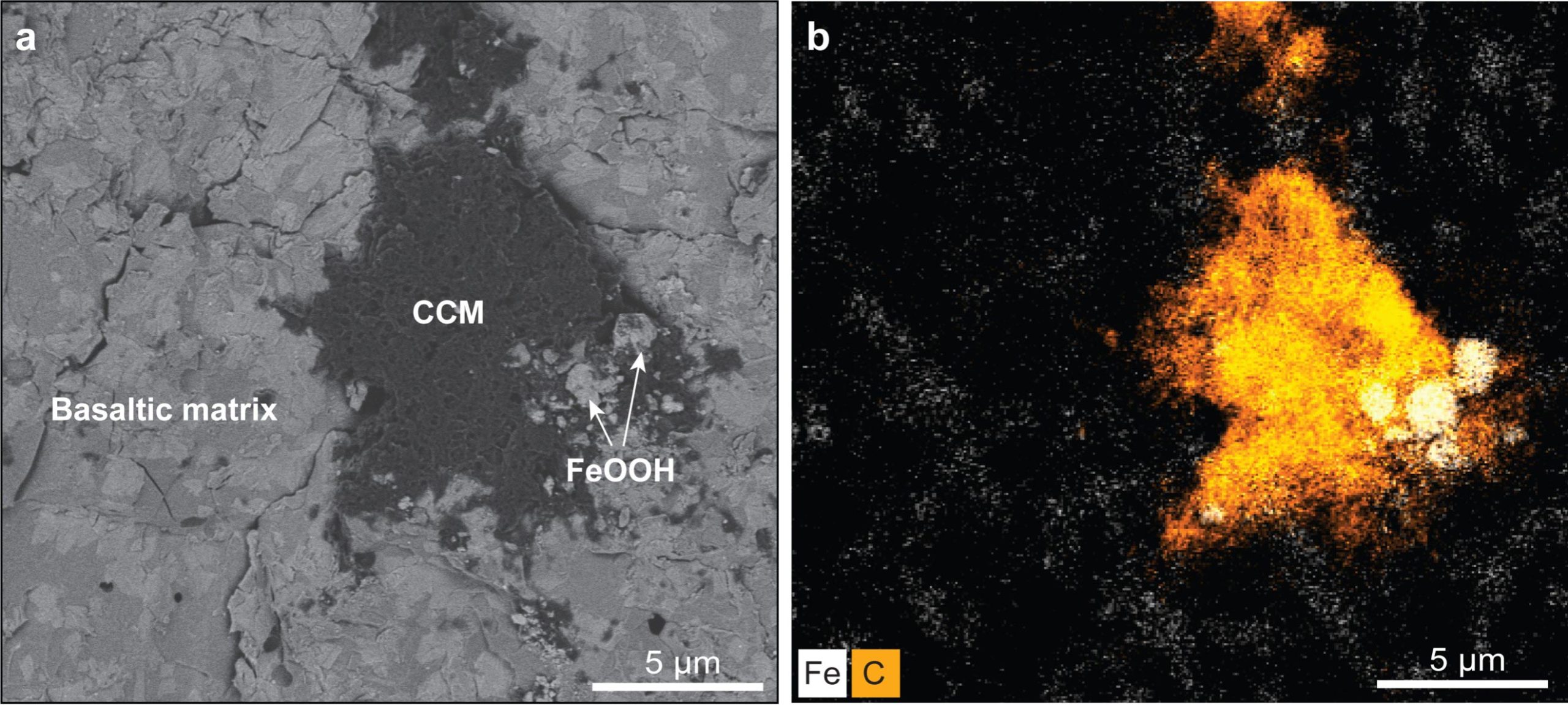
Through analysis of basalt samples obtained by the human-occupied vehicle (HOV) Shen Hai Yong Shi (TS-10 expedition), Nan and his colleagues have reported, for the first time, the presence of abiotic carbonaceous matter at the micron scale in the upper oceanic crust of the Southwest Indian Ridge.
They also discovered a close spatial correlation between this organic matter and the products of water-rock interactions, such as goethite (Fig. 2).
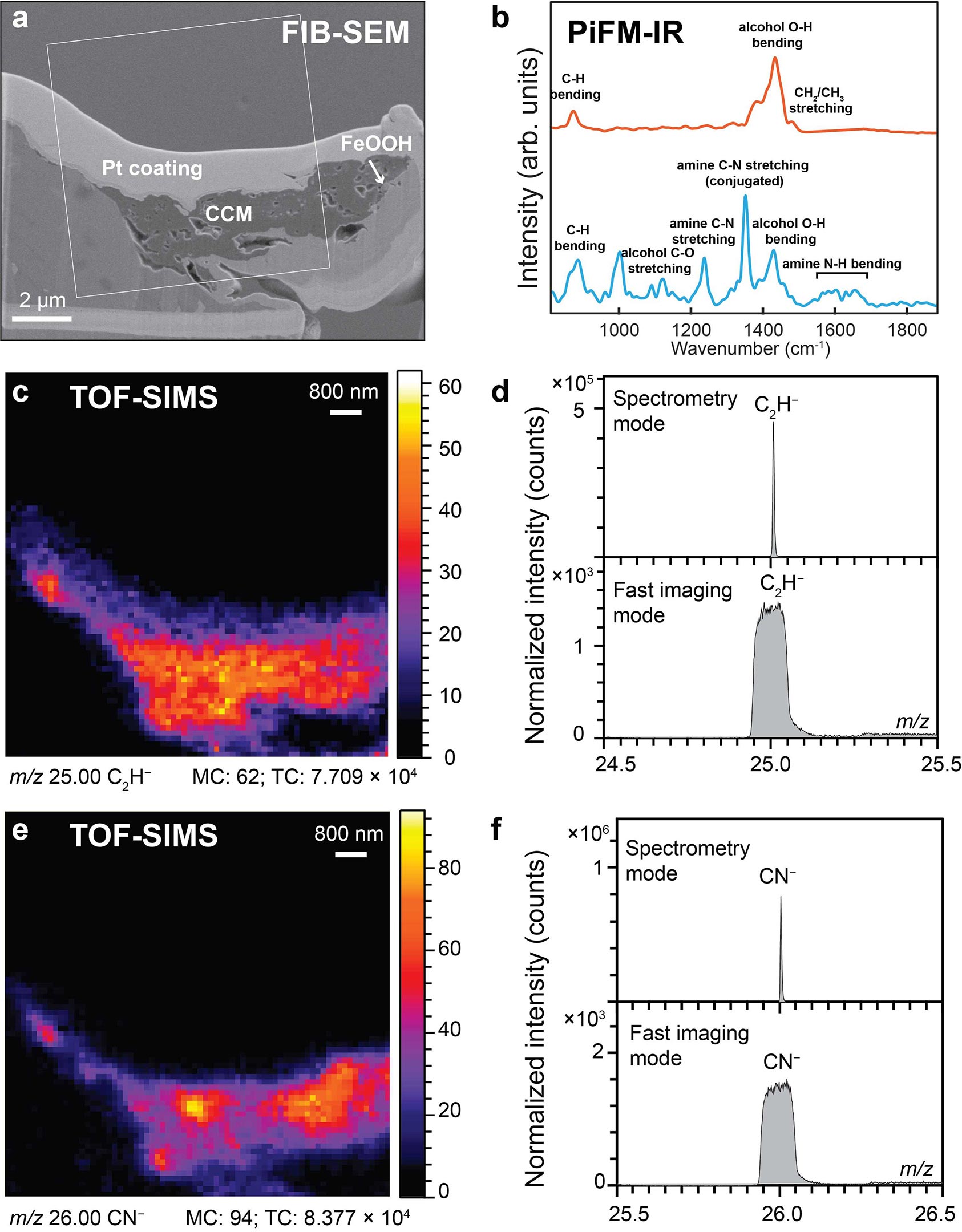
By using multimodal in situ microanalysis techniques, including electron microscopy, time-of-flight secondary ion mass spectrometry, and photo-induced force microscopy coupled with nano-infrared spectroscopy, the researchers comprehensively confirmed the absence of characteristic biomolecular functional groups in the carbonaceous matter (Fig. 3), thereby revealing its abiotic origin.
Theoretical Insights and Broader Implications
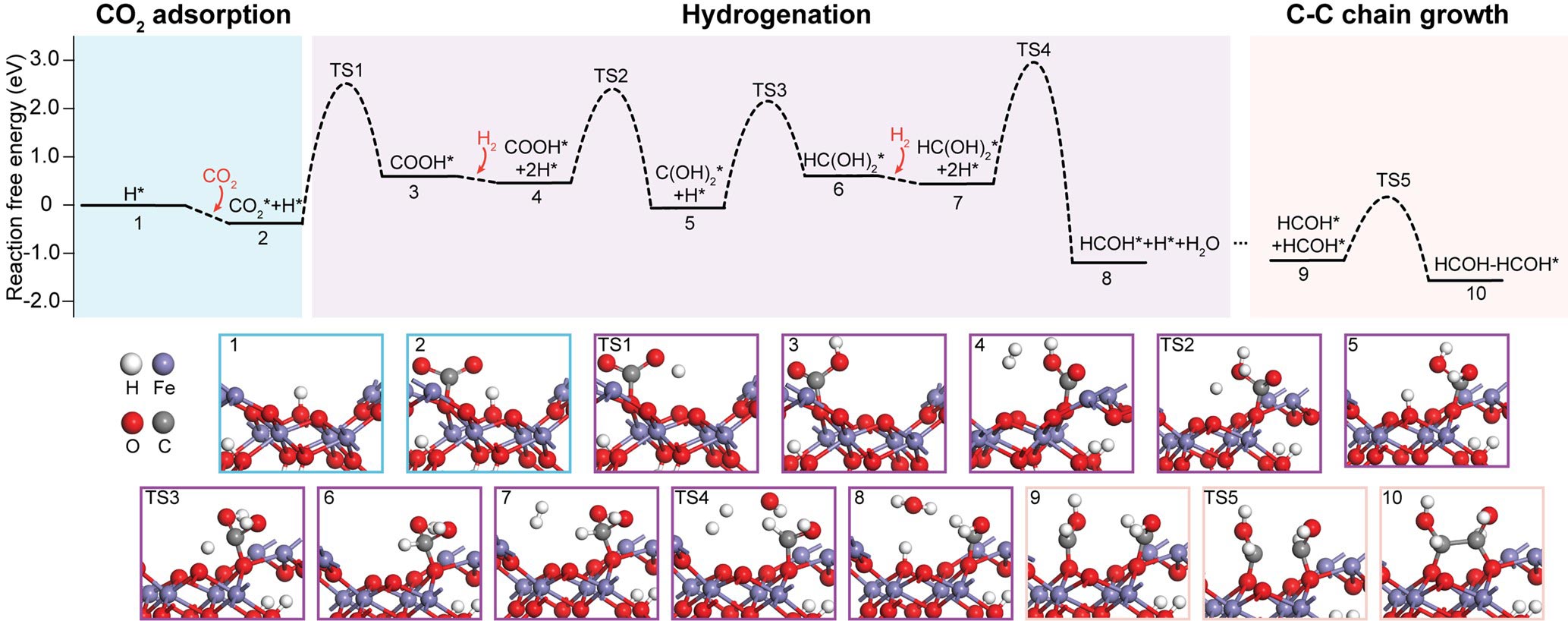
Based on this, the research team employed density functional theory (DFT) calculations to propose the crucial role of goethite in the molecular-scale catalytic synthesis of abiotic carbonaceous matter (Fig. 4).
In this process, hydrogen from hydrothermal fluids participates in a catalytic cycle on the surface of goethite, playing a key role in the initial activation of carbon dioxide and carbon chain (C-C) growth during organic condensation.
This pioneering study integrates multimodal in situ microanalysis with DFT calculations to explore natural abiotic organic synthesis, providing a deep understanding of the formation mechanisms of abiotic carbonaceous matter in mid-ocean ridges, which serve as critical natural laboratories.
This research not only establishes a foundation for understanding mineral-mediated natural organic catalytic reactions but also provides an important reference for identifying abiotic organic matter in hydrothermal systems on other rocky planets.
Reference: “Unraveling abiotic organic synthesis pathways in the mafic crust of mid-ocean ridges” by Jingbo Nan, Xiaotong Peng, Oliver Plümper, Iris C. ten Have, Jing-Guang Lu, Qian-Bao Liu, Shao-Lin Li, Yingjie Hu, Yu Liu, Zhen Shen, Weiqi Yao, Renbiao Tao, Martina Preiner and Yongxiang Luo, 10 October 2024, Proceedings of the National Academy of Sciences.
DOI: 10.1073/pnas.2308684121
Never miss a breakthrough: Join the SciTechDaily newsletter.
Follow us on Google and Google News.
2 Comments
For life to evolve from abiotic organic compounds, proteins and nucleic acids need to form from amino acids through peptide and nucleotide bonds. These bonds require the input of energy with the release of water. That process cannot take place underwater.
Wouldn’t the fact that they studied it mean that it’s biology?