
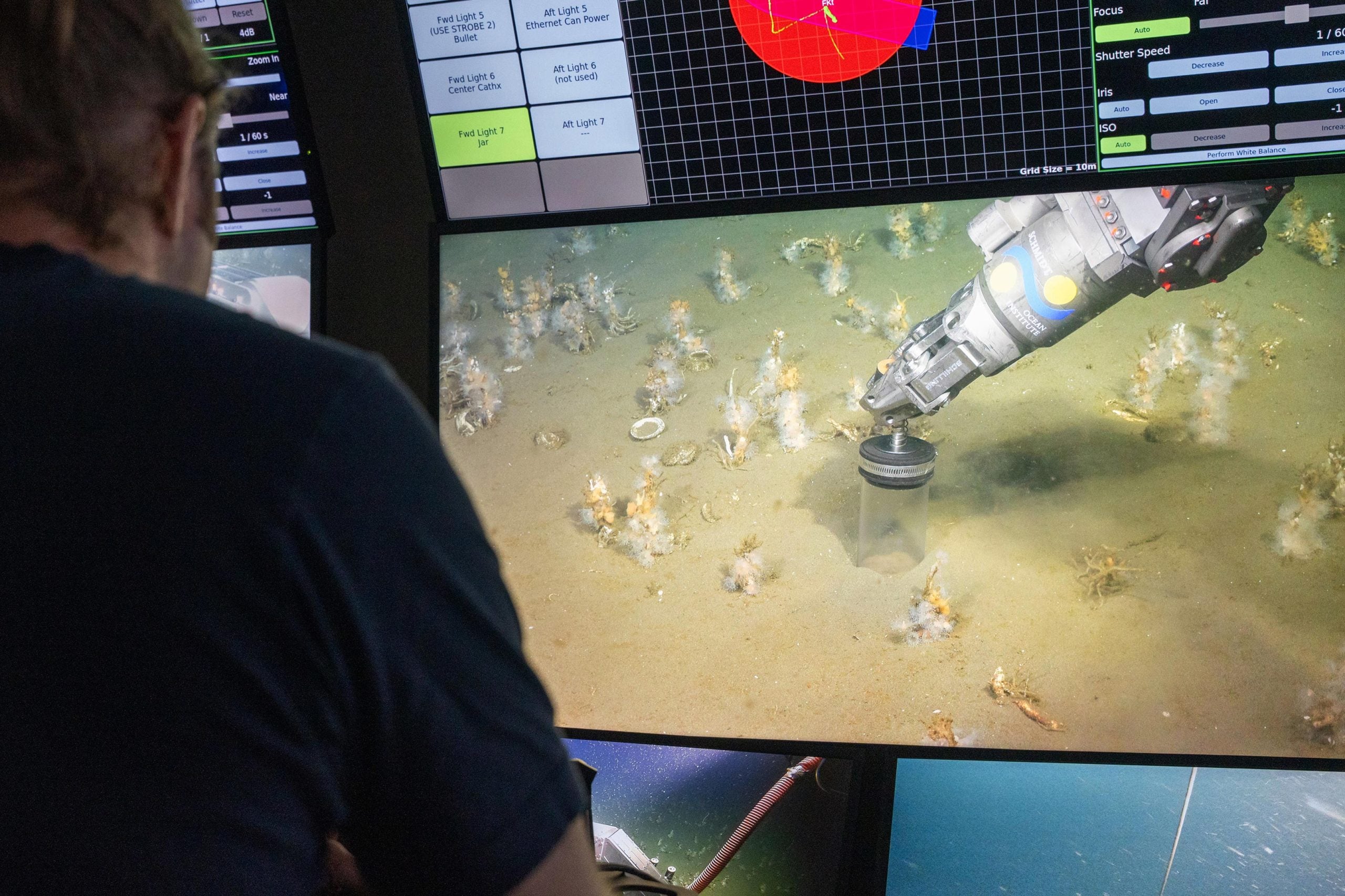
A surge of oxygen on ancient Earth may have ignited the rise of complex life.
For years, scientists have agreed on a broad explanation for how complex life first appeared on Earth, yet one critical question remained unanswered. Plants, animals, and fungi, collectively known as eukaryotes, are thought to have emerged when two very different microbes joined forces. One depended on oxygen to survive, while the other was believed to live only in oxygen-free environments. What puzzled researchers was how these two organisms could have encountered each other in the first place.
A new study from The University of Texas at Austin, published today (February 18) in the journal Nature, offers a compelling answer. Researchers focused on a group of microbes called Asgard archaea, widely considered close relatives of the ancestors of complex life. Although most known Asgard archaea inhabit deep-sea, oxygen-free settings, the team discovered that some members of this group can tolerate or even use oxygen. This finding strengthens the theory that complex life evolved in oxygen-rich conditions.
“Most Asgards alive today have been found in environments without oxygen,” explained Brett Baker an associate professor of marine science and integrative biology at UT. “But it turns out that the ones most closely related to eukaryotes live in places with oxygen, such as shallow coastal sediments and floating in the water column, and they have a lot of metabolic pathways that use oxygen. That suggests that our eukaryotic ancestor likely had these processes, too.”
Oxygen and the Great Oxidation Event
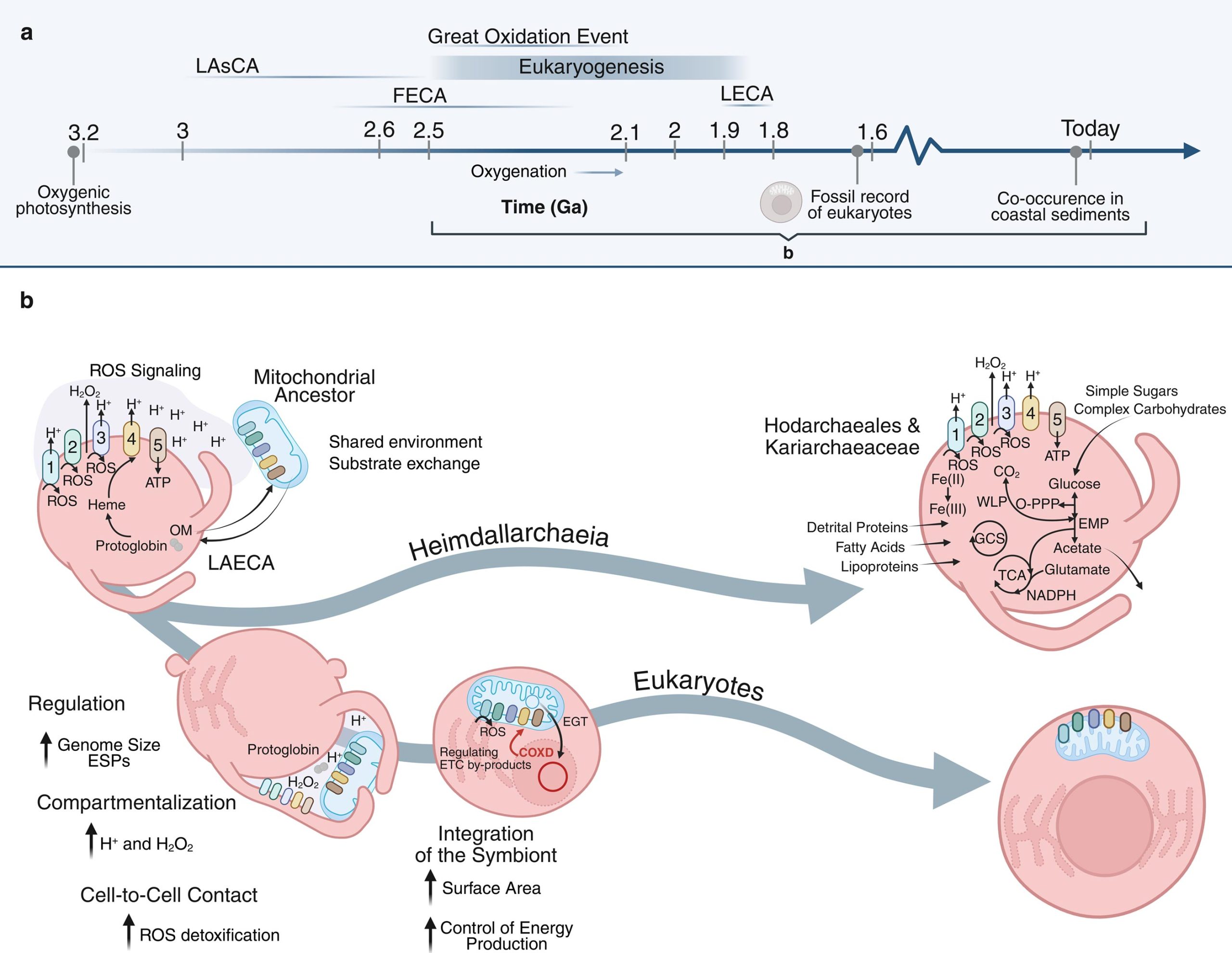
Baker and his colleagues study the genomes of Asgard archaea to identify new branches of the group and better understand how they generate energy. Their latest findings align with geological evidence about Earth’s distant past. More than 1.7 billion years ago, the planet’s atmosphere contained very little oxygen. Then oxygen levels rose dramatically during what is known as the Great Oxidation Event, reaching levels closer to those we experience today.
Shortly after this shift, the earliest fossil evidence of eukaryotes appears in the record. The timing suggests that rising oxygen levels may have played a key role in enabling more complex cells to evolve.
“The fact that some of the Asgards, which are our ancestors, were able to use oxygen fits in with this very well,” Baker said. “Oxygen appeared in the environment, and Asgards adapted to that. They found an energetic advantage to using oxygen, and then they evolved into eukaryotes.”
The Symbiosis That Created Complex Cells
Scientists propose that eukaryotes formed when an Asgard archaeon entered into a close partnership with an alphaproteobacterium. Over time, the two organisms became permanently linked. The alphaproteobacterium eventually evolved into the mitochondria, the structure inside modern cells that produces energy.
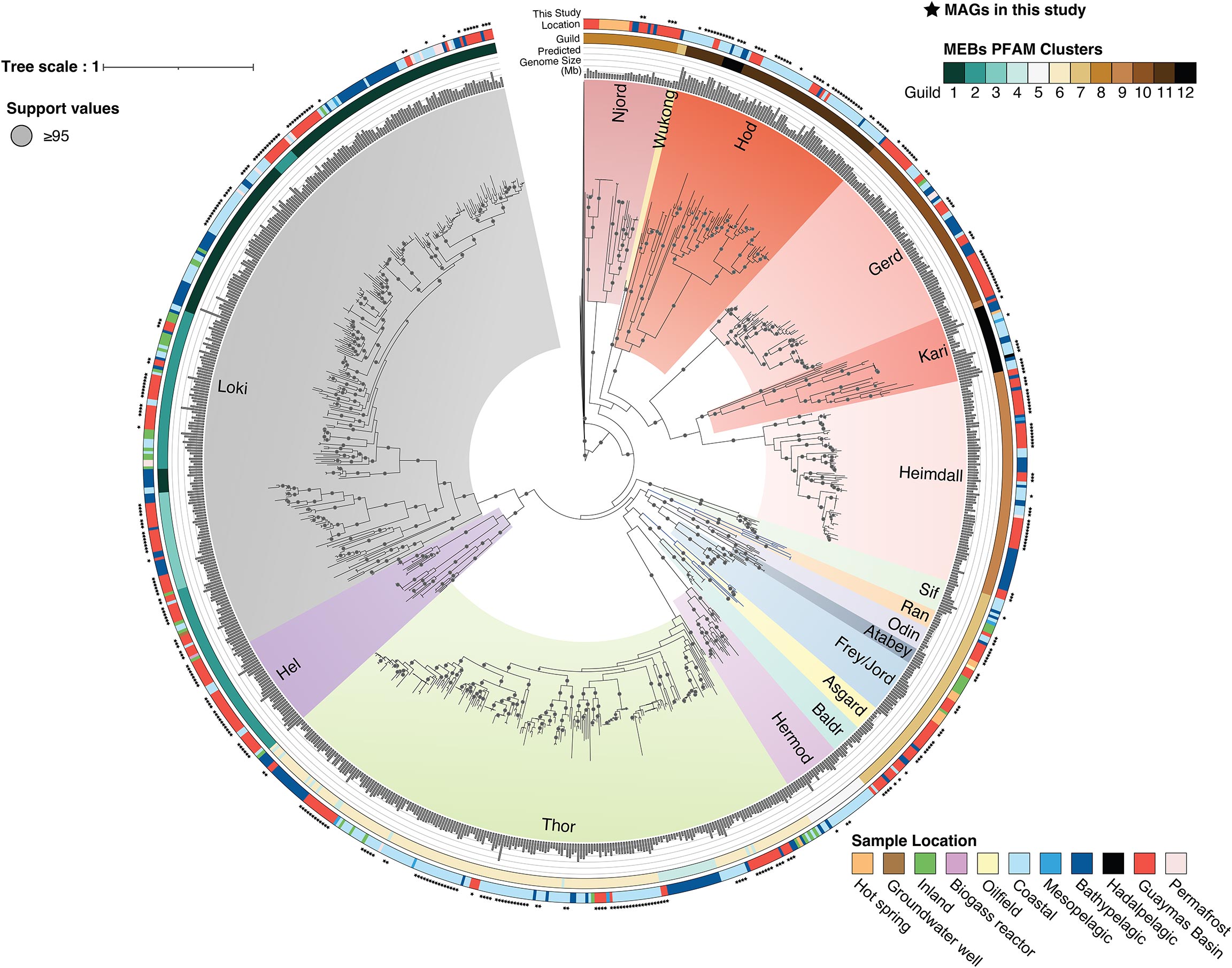
In this new research, the team dramatically increased the number of known Asgard archaea genomes. They identified specific lineages, including Heimdallarchaeia, that appear especially closely related to eukaryotes, even though they are relatively rare today.
“These Asgard archaea are often missed by low-coverage sequencing,” said co-author Kathryn Appler, a postdoctoral researcher at the Institut Pasteur in Paris, France. “The massive sequencing effort and layering of sequence and structural methods enabled us to see patterns that were not visible prior to this genomic expansion.”
Massive DNA Sequencing Effort
The project began with Appler’s Ph.D. research at The University of Texas Marine Science Institute in 2019, when she extracted DNA from marine sediments. The UT team and collaborators ultimately assembled more than 13,000 new microbial genomes. The work combined data from multiple marine expeditions and required analyzing about 15 terabytes of environmental DNA.
From this enormous dataset, researchers recovered hundreds of new Asgard genomes, nearly doubling the known genetic diversity of the group. By comparing similarities and differences in their DNA, the scientists built a more detailed Asgard archaea tree of life. They also identified previously unknown categories of proteins, effectively doubling the number of recognized enzymatic classes within these microbes.
AI Reveals Oxygen-Based Metabolism
The researchers then focused on Heimdallarchaeia, examining the proteins they produce and comparing them to proteins in eukaryotes that are involved in oxygen use and energy production. Using an artificial intelligence system called AlphaFold2, they predicted the three-dimensional shapes of these proteins, since a protein’s structure determines how it functions.
The analysis showed that several Heimdallarchaeia proteins closely resemble those used by eukaryotic cells for oxygen-driven, energy-efficient metabolism. This structural similarity provides further evidence that the ancestors of complex life were already equipped to take advantage of oxygen.
Reference: “Oxygen metabolism in descendants of the archaeal-eukaryotic ancestor” by Kathryn E. Appler, James P. Lingford, Xianzhe Gong, Kassiani Panagiotou, Pedro Leão, Marguerite V. Langwig, Chris Greening, Thijs J. G. Ettema, Valerie De Anda and Brett J. Baker, 18 February 2026, Nature.
DOI: 10.1038/s41586-026-10128-z
The study included contributions from former UT researchers Xianzhe Gong (currently at Shandong University in China), Pedro Leão (now at Radboud University in the Netherlands), Marguerite Langwig (now at the University of Wisconsin-Madison) and Valerie De Anda (currently at the University of Vienna). Additional collaborators included James Lingford and Chris Greening at Monash University in Australia and Kassiani Panagiotou and Thijs Ettema at Wageningen University in the Netherlands.
Funding for the research was provided in part by the Gordon and Betty Moore and Simons Foundations, the National Natural Science Foundation of China and the National Health and Medical Research Council of Australia.
Never miss a breakthrough: Join the SciTechDaily newsletter.
Follow us on Google and Google News.
2 Comments
fassinando
Not a bad article, but Zimmer adds some movies on ‘amoeba’ analog crawling by Asgards. https://www.nytimes.com/2026/02/18/science/evolution-cells-asgard.html?unlocked_article_code=1.NFA.G6Ca.Ki3E-AwIcyPn