
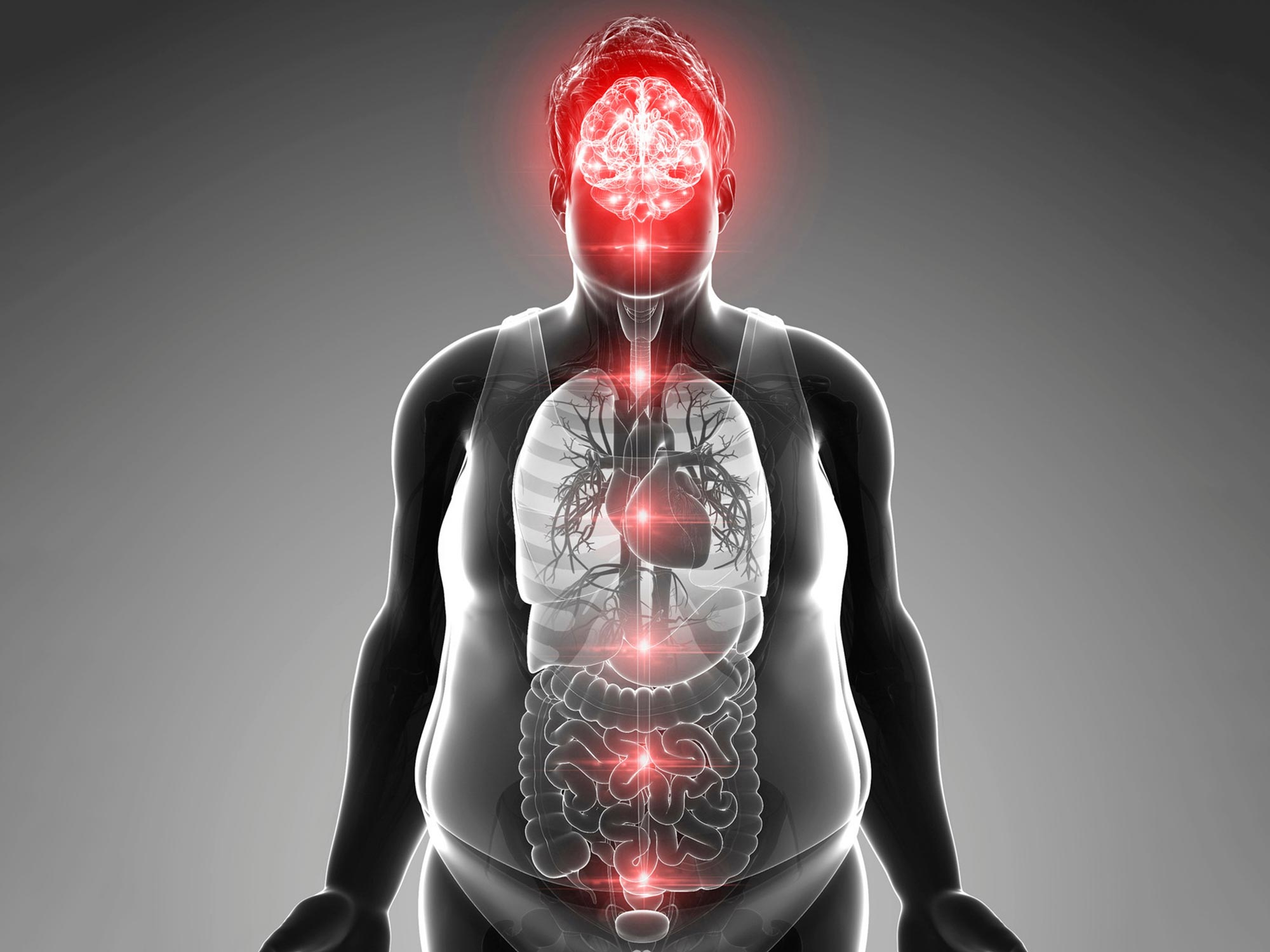
Scientists discovered that high body fat, particularly in the belly and arms, increases the risk of neurodegenerative diseases such as Alzheimer’s and Parkinson’s, while strong muscle strength reduces this risk.
The research, involving over 400,000 participants followed for nine years, underscores the importance of body composition in disease prevention, suggesting targeted interventions might offer protective benefits.
Impact of Body Composition on Neurodegenerative Diseases
People with high levels of body fat stored in their belly or arms may be more likely to develop diseases like Alzheimer’s and Parkinson’s than people with low levels of fat in these areas, according to a study published in the July 24, 2024, online issue of Neurology, the medical journal of the American Academy of Neurology. The study also found that people with a high level of muscle strength were less likely to develop these diseases than people with low muscle strength.
“These neurodegenerative diseases like Alzheimer’s and Parkinson’s affect over 60 million people worldwide, and that number is expected to grow as the population ages, so it’s crucial that we identify ways to modify risk factors to develop some preventive tools,” said study author Huan Song, MD, PhD, of Sichuan University in Chengdu, China. “This study highlights the potential to lessen people’s risk of developing these diseases by improving their body composition. Targeted interventions to reduce trunk and arm fat while promoting healthy muscle development may be more effective for protection against these diseases than general weight control.”
Study Methodology and Initial Findings
The study involved 412,691 people with an average age of 56 who were followed for an average of nine years. At the beginning of the study, measurements were taken for body composition, such as waist and hip measurements, grip strength, bone density, and fat and lean mass.
During the study, 8,224 people developed neurodegenerative diseases—mainly Alzheimer’s disease, other forms of dementia, and Parkinson’s disease.
Body Composition and Disease Risk Analysis
Male participants with high levels of body fat in their bellies developed the neurodegenerative diseases at a rate of 3.38 per 1,000 person-years, compared to 1.82 cases per 1,000 person-years for those with low levels of body fat in their bellies. For female participants, the rates were 2.55 for high levels and 1.39 for low levels. Person-years represent both the number of people in the study and the amount of time each person spends in the study.
After adjusting for other factors that could affect the rate of disease, such as high blood pressure, smoking and drinking status and diabetes, researchers found that overall people with high levels of belly fat were 13% more likely to develop these diseases than people with low levels of belly fat.
Conclusions and Recommendations for Disease Prevention
People with high levels of arm fat were 18% more likely to develop the diseases than those with low levels of arm fat.
Those with high muscle strength were 26% less likely to develop the diseases than those with low levels of strength.
The relationship between these body compositions and the neurodegenerative diseases was partly explained by the occurrence after the start of the study of cardiovascular diseases such as heart disease and stroke.
“This underscores the importance of managing these cardiovascular diseases right away to help prevent or delay the development of Alzheimer’s, Parkinson’s, or other degenerative diseases,” Song said.
Reference: “Association Between Body Composition Patterns, Cardiovascular Disease, and Risk of Neurodegenerative Disease in the UK Biobank” by Shishi Xu, Shu Wen, Yao Yang, Junhui He, Huazhen Yang, Yuanyuan Qu, Yu Zeng, Jianwei Zhu, Fang Fang and Huan Song, 24 July 2024, Neurology.
DOI: 10.1212/WNL.0000000000209659
A limitation of the study is that participants were mainly white people from the United Kingdom of Great Britain and Northern Ireland, so the results may not apply to other populations.
The study was supported by Sichuan University, Sichuan Provincial Science and Technology Department and the Swedish Research Council.
Never miss a breakthrough: Join the SciTechDaily newsletter.
Follow us on Google and Google News.