
Close Menu
    Facebook X (Twitter) Instagram
    SciTechDaily
    • Biology
    • Chemistry
    • Earth
    • Health
    • Physics
    • Science
    • Space
    • Technology
    Facebook X (Twitter) Pinterest YouTube RSS
    SciTechDaily
    Home»Space»ELVIS Leaves Earth: 3D Holograms in Orbit Could Reveal Life on Icy Moons
    Space

    ELVIS Leaves Earth: 3D Holograms in Orbit Could Reveal Life on Icy Moons

    By International Space Station U.S. National LaboratoryApril 21, 2025No Comments3 Mins Read
    Facebook Twitter Pinterest Telegram LinkedIn WhatsApp Email Reddit
    Share
    Facebook Twitter LinkedIn Pinterest Telegram Email Reddit
    Space Microorganisms Art Concept
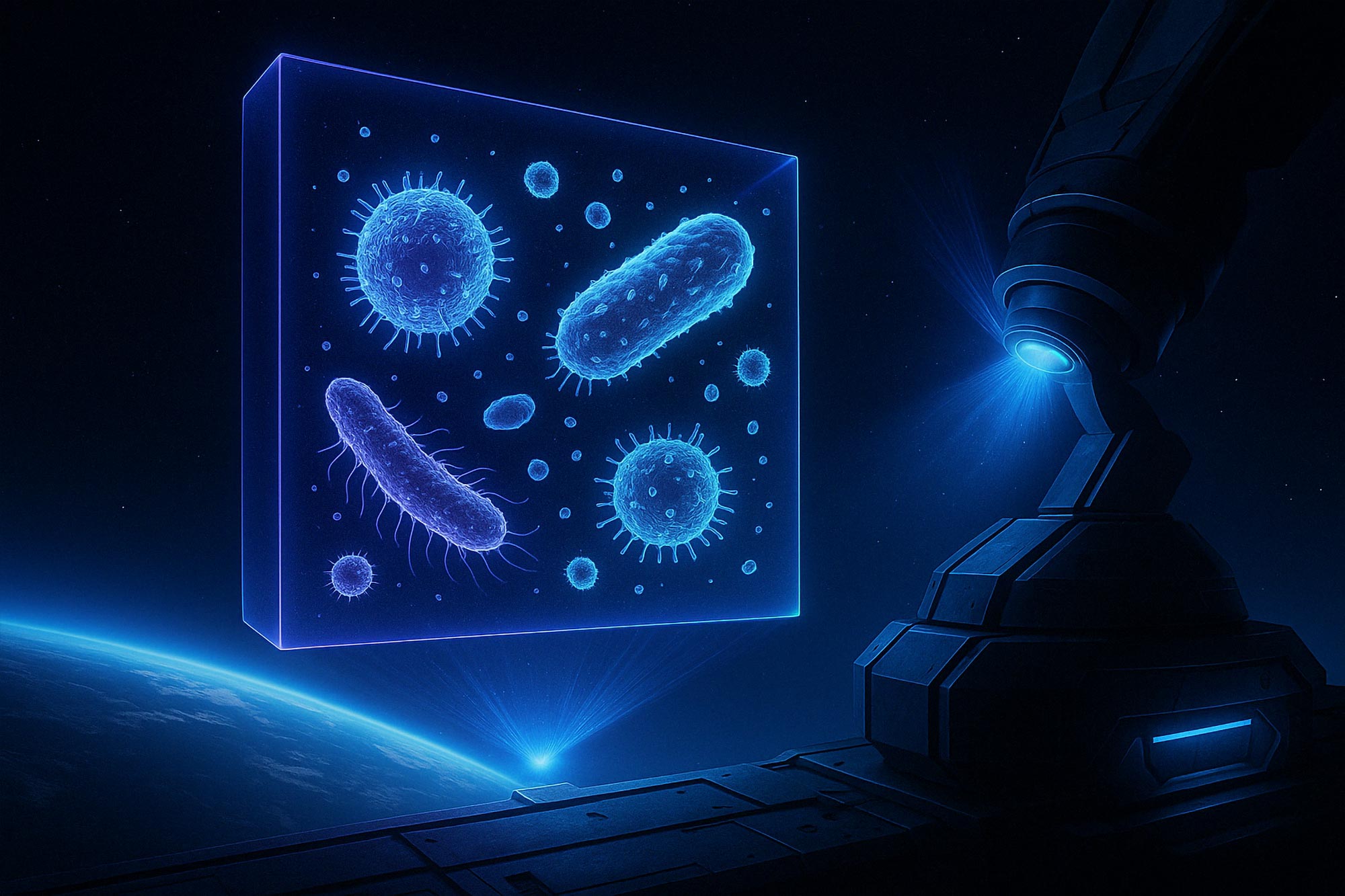
    ELVIS, a holographic microscope bound for the International Space Station, will study how resilient Earth microbes adapt to space, opening doors to finding life beyond our planet. Credit: SciTechDaily.com

    A new kind of microscope called ELVIS is heading to the International Space Station to change how we study life in space.

    By creating stunning 3D holograms of cells, it allows scientists to observe how organisms adapt to microgravity and other extreme conditions. This could help us understand whether life can exist on icy moons like Europa or Enceladus, and even enhance biomedical research back on Earth.

    3D Holograms in Space: Meet ELVIS

    Onboard the International Space Station (ISS), a new technology called the Extant Life Volumetric Imaging System — nicknamed ELVIS — is set to advance space biology in a big way. While it shares a name with a music icon, this ELVIS is focused on scientific discovery. Using holographic imaging to create detailed 3D views of cells and microbes, the system allows researchers to explore how life adapts and survives under extreme conditions. The insights gained could help scientists understand whether life might exist on distant planets or icy moons.

    Unlike traditional flat, two-dimensional microscopes, ELVIS captures the full structure and environmental interactions of microorganisms in three dimensions. This added depth enables more precise biological analysis, offering new clues about how life could function in the harshest parts of space.
    Extant Life Volumetric Imaging System (ELVIS)
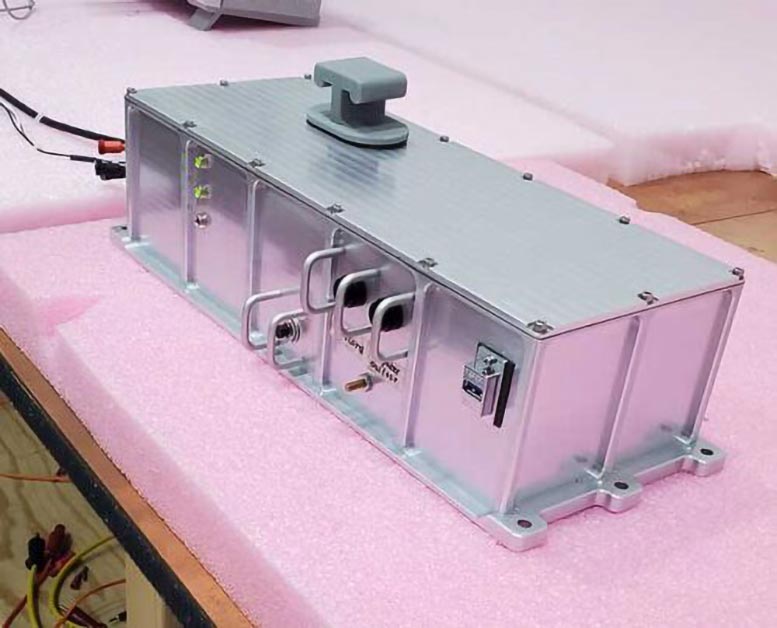
    Portland State University’s Extant Life Volumetric Imaging System (ELVIS) is shown during testing. Credit: Jay Nadeau

    Groundbreaking Collaboration Behind ELVIS

    The ELVIS project is being led by Portland State University (PSU) in partnership with NASA’s Jet Propulsion Laboratory (JPL). It’s scheduled to launch aboard SpaceX’s 32nd Commercial Resupply Services (CRS) mission to the ISS. Sponsored by the ISS National Laboratory, the project brings together expertise in biology, physics, and advanced imaging technology, according to principal investigator and PSU physics professor Jay Nadeau.

    “We are thrilled to leverage the ISS National Lab to prepare ELVIS for its future roles in space exploration missions,” says Nadeau. She added, “The successful operation of ELVIS in the demanding conditions of space not only paves the way for its use in off-Earth environments but also holds implications for enhancing biomedical and microbiological research on our planet.”

    Nikki Johnston
    Nikki Johnston, a Ph.D. student at Portland State University, stands next to the Extant Life Volumetric Imaging System (ELVIS). This innovative system aims to advance how we study cellular processes in space. Credit: Jay Nadeau

    Testing Life’s Limits in Microgravity

    During its tenure in space, ELVIS will focus its analysis on two resilient types of Earth-based life forms: Euglena gracilis, a microalga lauded for its adaptability, and Colwellia psychrerythraea, a bacterium that thrives in frigid ocean waters. This study goes beyond merely observing organisms; it tests their observable and genetic adaptations to microgravity. The insights gained could illuminate how life might survive beneath the icy shells of distant moons like Europa and Enceladus.

    Built to endure the rigors of space, ELVIS incorporates durable, low-maintenance components and features automation that minimizes astronaut involvement, ensuring experiments can run continuously without disruption. As ELVIS gears up for launch, the team looks forward to testing its full potential to explore the resilience and adaptability of life under extreme conditions, Nadeau noted.

    Experiments focused on vision-based navigation, spacecraft air quality, materials for drug and product manufacturing, and advancing plant growth with less reliance on photosynthesis are bound for the International Space Station via the NASA and SpaceX 32nd commercial resupply services mission. Credit: NASA

    Never miss a breakthrough: Join the SciTechDaily newsletter.
    Follow us on Google and Google News.

    Astrobiology International Space Station Microbes Microbiology Microscopy
    Share. Facebook Twitter Pinterest LinkedIn Email Reddit

    Related Articles

    Scientists Say This Fungus Could Survive the Trip to Mars

    Asteroid Impacts Could Launch Living Microbes From Mars

    Could Life Thrive Beneath Icy Moons? NASA’s Revolutionary Software Is Finding Out

    Space Biosecurity: Scientists Warn That Alien Organisms on Earth May Become a Reality Stranger Than Fiction

    We Asked a NASA Scientist: Could Microbes Survive a Trip to Mars? [Video]

    New Species of Bacteria Discovered on Space Station – May Possess “Biotechnologically Useful Genetic Determinants” for Growing Crops

    Microbial Life of a Pure Martian Design

    Best Region for Life on Mars Was Miles Below Surface

    Scientists Rank Most Livable Alien Worlds

    Leave A Reply Cancel Reply

    • Facebook
    • Twitter
    • Pinterest
    • YouTube

    Don't Miss a Discovery

    Subscribe for the Latest in Science & Tech!

    Trending News

    First-of-Its-Kind Discovery: Homer’s Iliad Found Embedded in a 1,600-Year-Old Egyptian Mummy

    Beyond Inflammation: Scientists Uncover New Cause of Persistent Rheumatoid Arthritis

    A Simple Molecule Could Unlock Safer, Easier Weight Loss

    Scientists Just Built a Quantum Battery That Charges Almost Instantly

    Researchers Unveil Groundbreaking Sustainable Solution to Vitamin B12 Deficiency

    Millions of People Have Osteopenia Without Realizing It – Here’s What You Need To Know

    Researchers Discover Boosting a Single Protein Helps the Brain Fight Alzheimer’s

    World-First Study Reveals Human Hearts Can Regenerate After a Heart Attack

    Follow SciTechDaily
    • Facebook
    • Twitter
    • YouTube
    • Pinterest
    • Newsletter
    • RSS
    SciTech News
    • Biology News
    • Chemistry News
    • Earth News
    • Health News
    • Physics News
    • Science News
    • Space News
    • Technology News
    Recent Posts
    • After Decades, MIT Researchers Capture the First 3D Atomic View of a Mysterious Material
    • Your Favorite Fishing Spot Is Turning Brown – and the Fish Are Changing
    • 380-Million-Year-Old Fish Fossil Reveals Secrets of Life’s First Steps Onto Land
    • Mezcal “Worm” in a Bottle Mystery: DNA Testing Reveals a Surprise
    • Scientists Turn Red Lettuce Green, Unlocking Hidden Nutrients
    Copyright © 1998 - 2026 SciTechDaily. All Rights Reserved.
    • Science News
    • About
    • Contact
    • Editorial Board
    • Privacy Policy
    • Terms of Use

    Type above and press Enter to search. Press Esc to cancel.