
Close Menu
    Facebook X (Twitter) Instagram
    SciTechDaily
    • Biology
    • Chemistry
    • Earth
    • Health
    • Physics
    • Science
    • Space
    • Technology
    Facebook X (Twitter) Pinterest YouTube RSS
    SciTechDaily
    Home»Space»“End of an Era” – NASA Shuts Down Mineral Mapping Instrument on Mars Reconnaissance Orbiter
    Space

    “End of an Era” – NASA Shuts Down Mineral Mapping Instrument on Mars Reconnaissance Orbiter

    By Jet Propulsion LaboratoryMay 22, 2023No Comments4 Mins Read
    Facebook Twitter Pinterest Telegram LinkedIn WhatsApp Email Reddit
    Share
    Facebook Twitter LinkedIn Pinterest Telegram Email Reddit
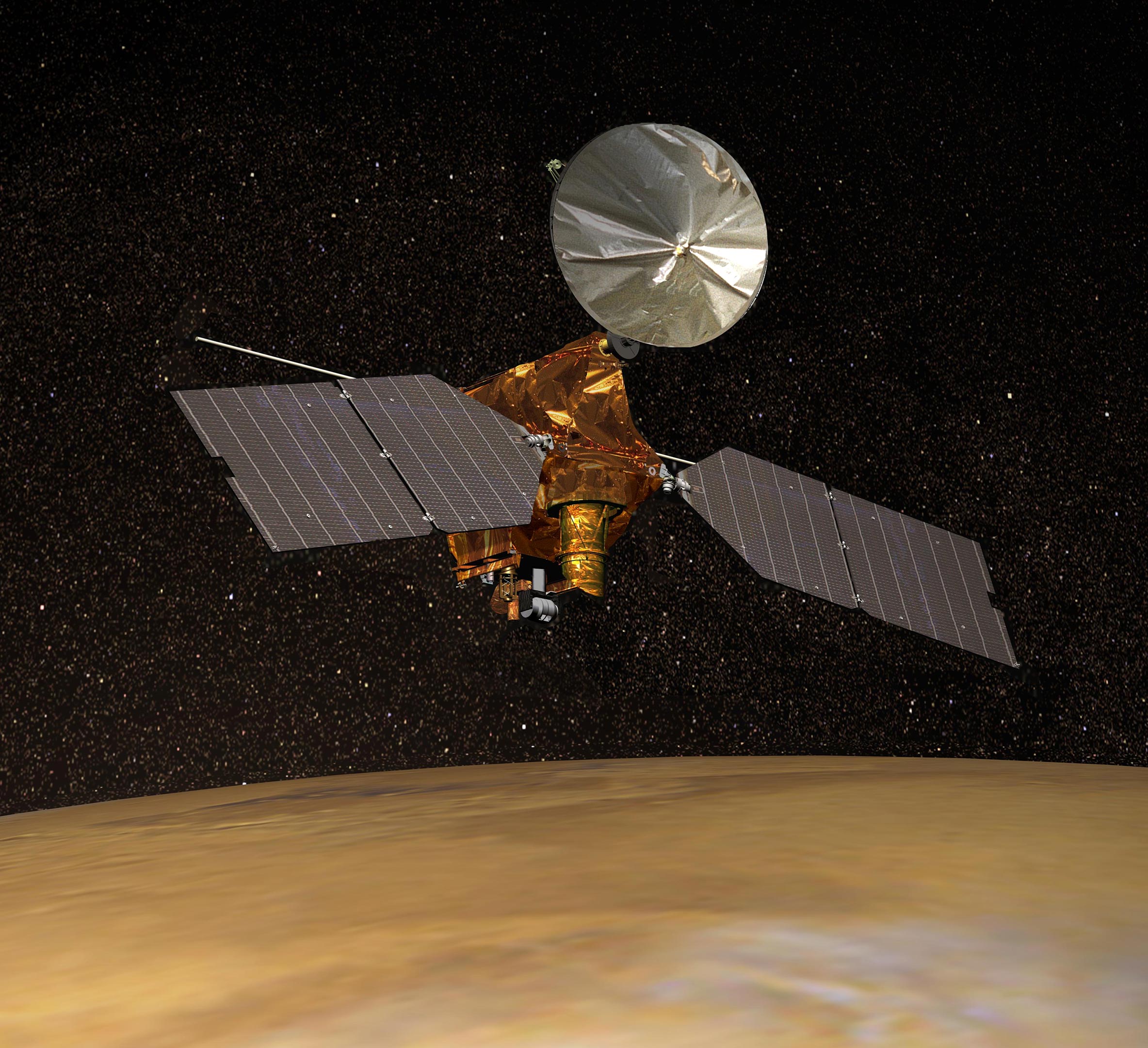
    Mars Reconnaissance Orbiter (MRO) Spacecraft
    Artist Concept of Mars Reconnaissance Orbiter. NASA has retired the 17-year-old CRISM instrument on the Mars Reconnaissance Orbiter. The device, which helped generate high-resolution mineral maps of Mars and guided the selection of landing sites, used visible and infrared light to identify water-related minerals. Despite the end of its active service, the data CRISM collected will continue to be used in future Mars research. Credit: JPL/NASA

    One of six instruments aboard the agency’s Mars Reconnaissance Orbiter, CRISM produced global maps of minerals on the Red Planet’s surface.

    After 17 years of service, NASA has decommissioned CRISM, the Compact Reconnaissance Imaging Spectrometer for Mars, which was aboard the Mars Reconnaissance Orbiter. The instrument, managed by Johns Hopkins University’s Applied Physics Laboratory, has been vital in creating high-resolution mineral maps of Mars, helping scientists understand the planet’s ancient hydrological history by detecting clays, hematite, and sulfates. Its two detectors could see in visible and infrared light, allowing it to identify the chemical fingerprints of minerals formed in the presence of water. It has also guided NASA in selecting scientifically significant landing sites.

    NASA switched off one of its oldest instruments studying Mars on April 3, a step that’s been planned since last year. Riding aboard NASA’s Mars Reconnaissance Orbiter, CRISM, or the Compact Reconnaissance Imaging Spectrometer for Mars, revealed minerals such as clays, hematite (otherwise known as iron oxide), and sulfates across the Red Planet’s surface for 17 years.
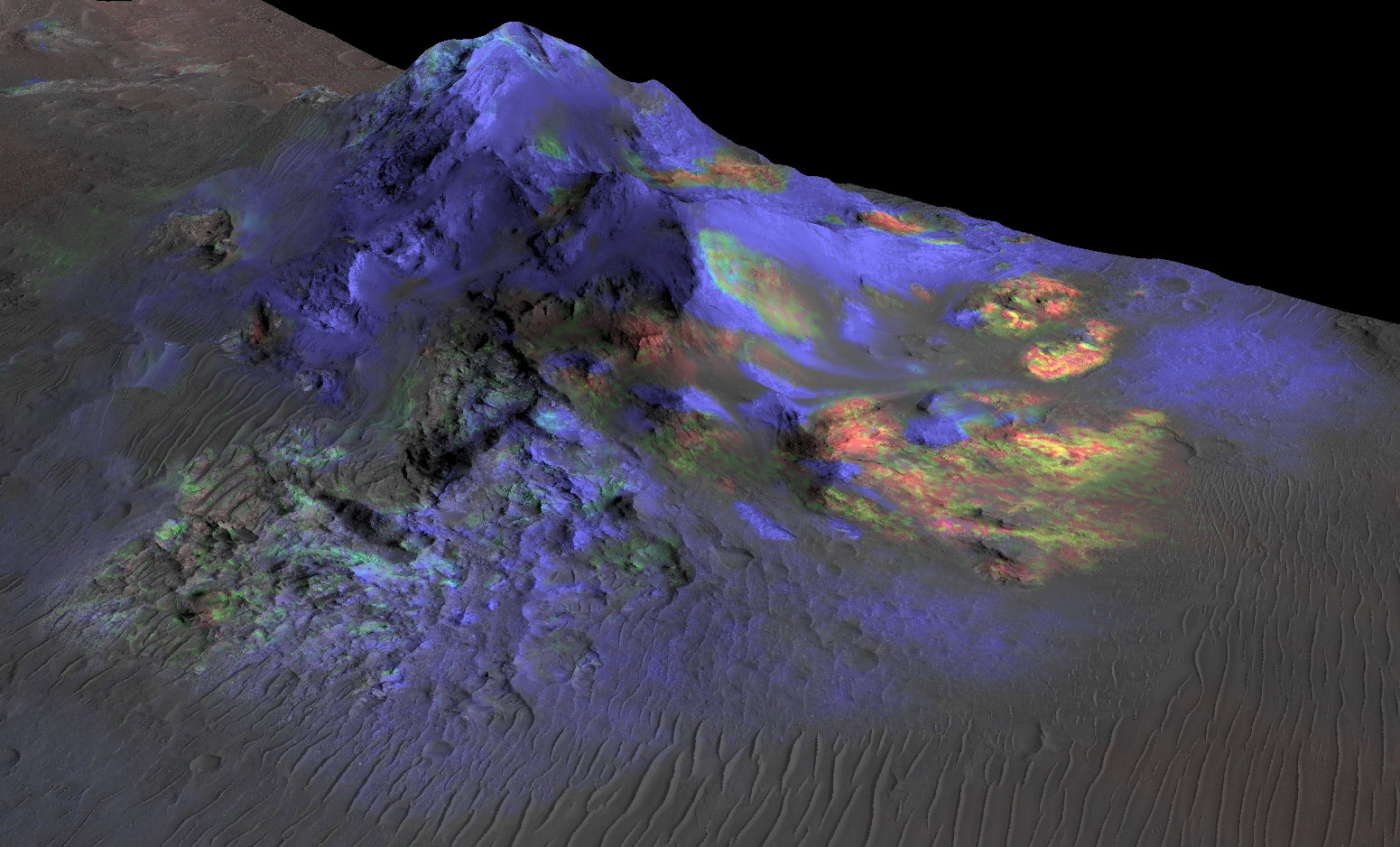
    NASA Detects Impact Glass on Surface of Mars
    CRISM data was superimposed onto an image of Mars’ Alga Crater captured by another MRO instrument, HiRISE. Each color represents a different material: blue for pyroxene, red for olivine, and green for impact glass, which forms in the heat of a violent impact that excavates a crater. Credit: NASA/JPL-Caltech/JHUAPL/Univ. of Arizona

    Led by Johns Hopkins University’s Applied Physics Laboratory (APL) in Laurel, Maryland, CRISM produced high-resolution mineral maps crucial in helping scientists understand how lakes, streams, and groundwater shaped the planet billions of years ago. The instrument’s two detectors saw in visible and infrared light, spotting the chemical fingerprints, or spectra, of minerals that form in the presence of water.

    “Shutting down CRISM marks the end of an era for us,” said Rich Zurek, MRO’s project scientist at NASA’s Jet Propulsion Laboratory, which manages the mission. “It’s revealed where and how water transformed ancient Mars. The CRISM data products will be mined by scientists for years to come.”
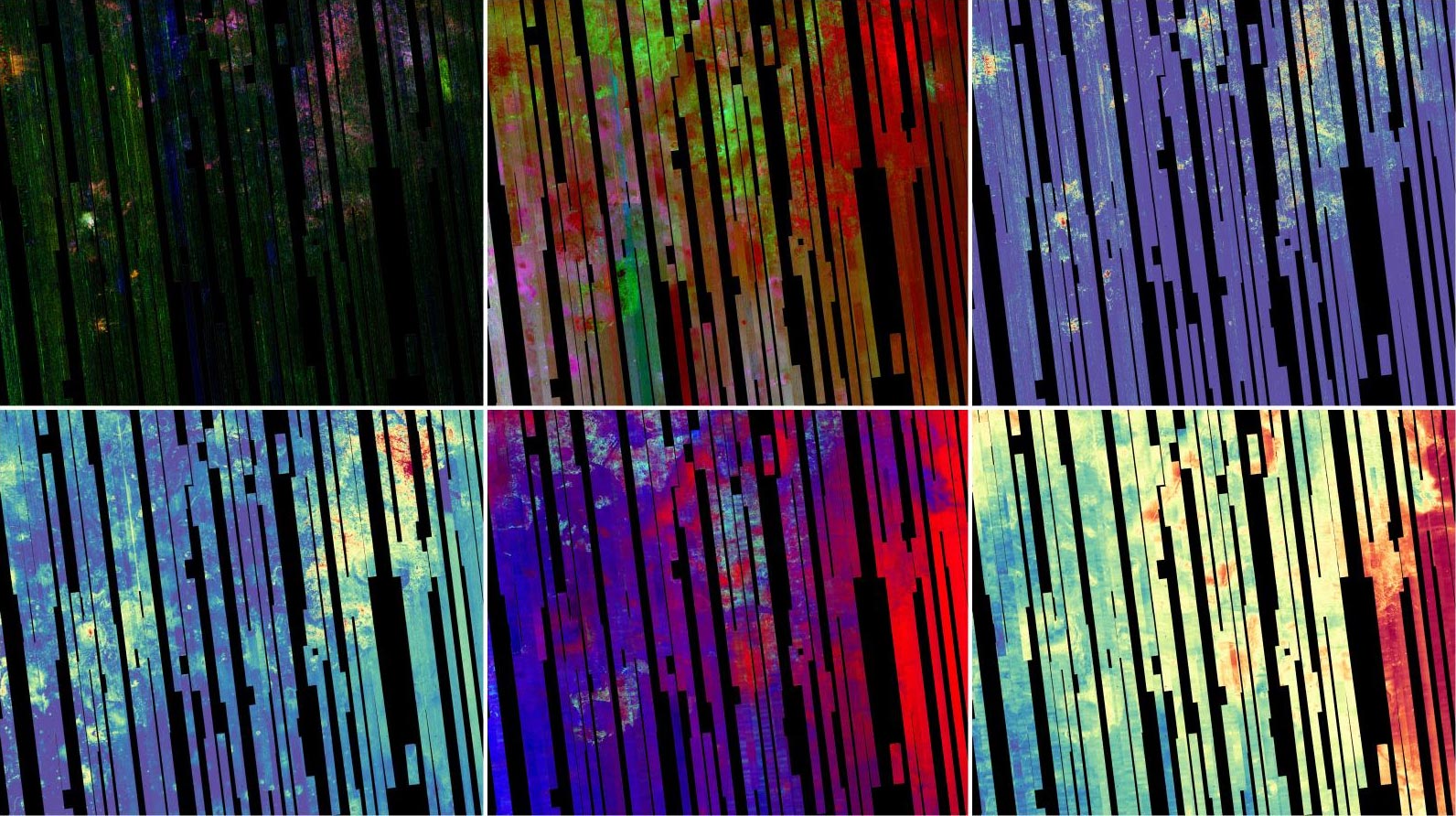
    Nili Fossae region of Mars
    This image shows six views of the Nili Fossae region of Mars captured by the Compact Reconnaissance Imaging Spectrometer for Mars (CRISM), one of the instruments aboard NASA’s Mars Reconnaissance Orbiter. The varying colors represent minerals on the Martian surface seen in different wavelengths of light. Credit: NASA/JPL-Caltech/JHU-APL

    NASA has also relied on CRISM maps to figure out where the most scientifically interesting landing sites are, as with Gale Crater, which Curiosity has been exploring since 2012, and Jezero Crater, where NASA’s Perseverance rover recently collected its 19th sample.

    In order to study infrared light, which is radiated by warm objects and is invisible to the human eye, CRISM relied on cryocoolers to isolate one of its spectrometers from the warmth of the spacecraft. Three cryocoolers were used in succession, and the last completed its lifecycle in 2017.

    Impact Crater Syrtis Major Mars
    This impact crater in south Syrtis Major was captured by the HiRISE instrument on NASA’s MRO. Afterward, CRISM data was layered on top to reveal which minerals were present. Credit: NASA/JPL-Caltech/JHU-APL/University of Arizona

    The CRISM team then looked for ways to continue producing data without the use of cryocoolers, deciding to create two new, nearly global maps. The first of these relied on data previously collected by the infrared spectrometer and by the second spectrometer on the instrument, which viewed a more limited range of minerals in visible and near-infrared light. This first map of water-related minerals, containing 5.6 gigapixels, has a spatial resolution of 600 feet (180 meters) per pixel and covers 86% of Mars. Scientists began releasing it in sections last year.

    For the second map, CRISM’s remaining spectrometer gathered data at an even higher spatial resolution (300 feet, or 90 meters per pixel). This map is slated for release in September.

    “With these new maps, researchers can easily tie mineral deposits observed in high-resolution images to regional scale trends, landscape features, and geology,” said Kim Seelos, CRISM’s deputy principal investigator at APL. “Even though the CRISM investigation is formally coming to a close, I hope and expect to see many future scientists taking advantage of CRISM data for their research.”

    NASA’s JPL, a division of Caltech in Pasadena, California, manages MRO for NASA’s Science Mission Directorate in Washington.

    Never miss a breakthrough: Join the SciTechDaily newsletter.
    Follow us on Google and Google News.

    Johns Hopkins APL JPL Mars Mars Reconnaissance Orbiter NASA Planets
    Share. Facebook Twitter Pinterest LinkedIn Email Reddit

    Related Articles

    NASA Flips a Mars Orbiter Upside Down – And Discovers a Hidden World

    What Left This Long, Winding Trail Across Mars? NASA’s Orbiter Has the Answer

    Mars Awakens for the New Year: Explosive Springs and Wandering Dunes

    Welcome to Mars! Caltech’s Jaw-Dropping, 5.7 Terapixel Virtual Expedition Across the Red Planet

    NASA Mars Reconnaissance Orbiter Releasing Spectacular 5.6-Gigapixel Map of the Red Planet

    Data Indicates Temperatures Rise and Fall Twice a Day on Mars

    Mars Orbiter Shows McLaughlin Crater May Have Once Held a Groundwater-Fed Lake

    Image of Twister in Action on the Surface of Mars

    HiRISE Images Show Old NASA Mars Lander

    Leave A Reply Cancel Reply

    • Facebook
    • Twitter
    • Pinterest
    • YouTube

    Don't Miss a Discovery

    Subscribe for the Latest in Science & Tech!

    Trending News

    Scientists Uncover Potential Brain Risks of Popular Fish Oil Supplements

    Scientists Discover a Surprising Way To Make Bread Healthier and More Nutritious

    After 60 Years, Scientists Uncover Unexpected Brain Effects of Popular Diabetes Drug Metformin

    New Research Uncovers Hidden Side Effects of Popular Weight-Loss Drugs

    Scientists Rethink Extreme Warming After Surprising Ocean Discovery

    Landmark Study Links Never Marrying to Significantly Higher Cancer Risk

    Researchers Discover Unknown Beetle Species Just Steps From Their Lab

    Largest-Ever Study Finds Medicinal Cannabis Ineffective for Anxiety, Depression, PTSD

    Follow SciTechDaily
    • Facebook
    • Twitter
    • YouTube
    • Pinterest
    • Newsletter
    • RSS
    SciTech News
    • Biology News
    • Chemistry News
    • Earth News
    • Health News
    • Physics News
    • Science News
    • Space News
    • Technology News
    Recent Posts
    • Scientists Discover Hidden Pathway Inside Catalysts That Defies Decades of Assumptions
    • Scientists Finally Crack Decades-Old Mystery of “Breathing” Lasers
    • “Like Liquid Metal”: Scientists Create Strange Shape-Shifting Material
    • Early Warning Signals of Esophageal Cancer May Be Hiding in Plain Sight
    • Researchers Have Discovered a THC-Free Cannabis Compound That May Replace Opioids
    Copyright © 1998 - 2026 SciTechDaily. All Rights Reserved.
    • Science News
    • About
    • Contact
    • Editorial Board
    • Privacy Policy
    • Terms of Use

    Type above and press Enter to search. Press Esc to cancel.