

Firefly’s Blue Ghost Mission 1 set a new benchmark for commercial lunar exploration, lasting longer than any previous private mission and delivering 10 NASA instruments to the Moon.
The mission achieved several firsts, including the deepest robotic thermal probe on another planetary body and the first-ever GPS tracking on the Moon. The data gathered will play a crucial role in advancing future Artemis missions and deep-space exploration.
Historic Landing and Mission Success
Firefly Aerospace’s Blue Ghost Mission 1 landed on the Moon on March 2, carrying NASA science and technology demonstrations. The mission concluded on March 16, but analysis of the data sent back to Earth is ongoing, providing valuable insights for future lunar exploration.
As part of NASA’s Commercial Lunar Payload Services (CLPS) initiative and the Artemis program, the Blue Ghost lunar lander successfully delivered 10 NASA science and technology instruments to the Mare Crisium basin on the Moon’s near side. During its 14-day mission, the length of a full lunar day, the lander captured images and videos of a total solar eclipse and a lunar sunset. It continued transmitting data for several hours into the lunar night before its operations ended.
Witness the sunset from the Moon – Firefly’s final gift from Blue Ghost Mission 1!
Breaking Records and Pushing Limits
“Firefly’s Blue Ghost Mission 1 marks the longest surface duration commercial mission on the Moon to date, collecting extraordinary science data that will benefit humanity for decades to come,” said Nicky Fox, associate administrator, Science Mission Directorate at NASA Headquarters in Washington. “With NASA’s CLPS initiative, American companies are now at the forefront of an emerging lunar economy that lights the way for the agency’s exploration goals on the Moon and beyond.”
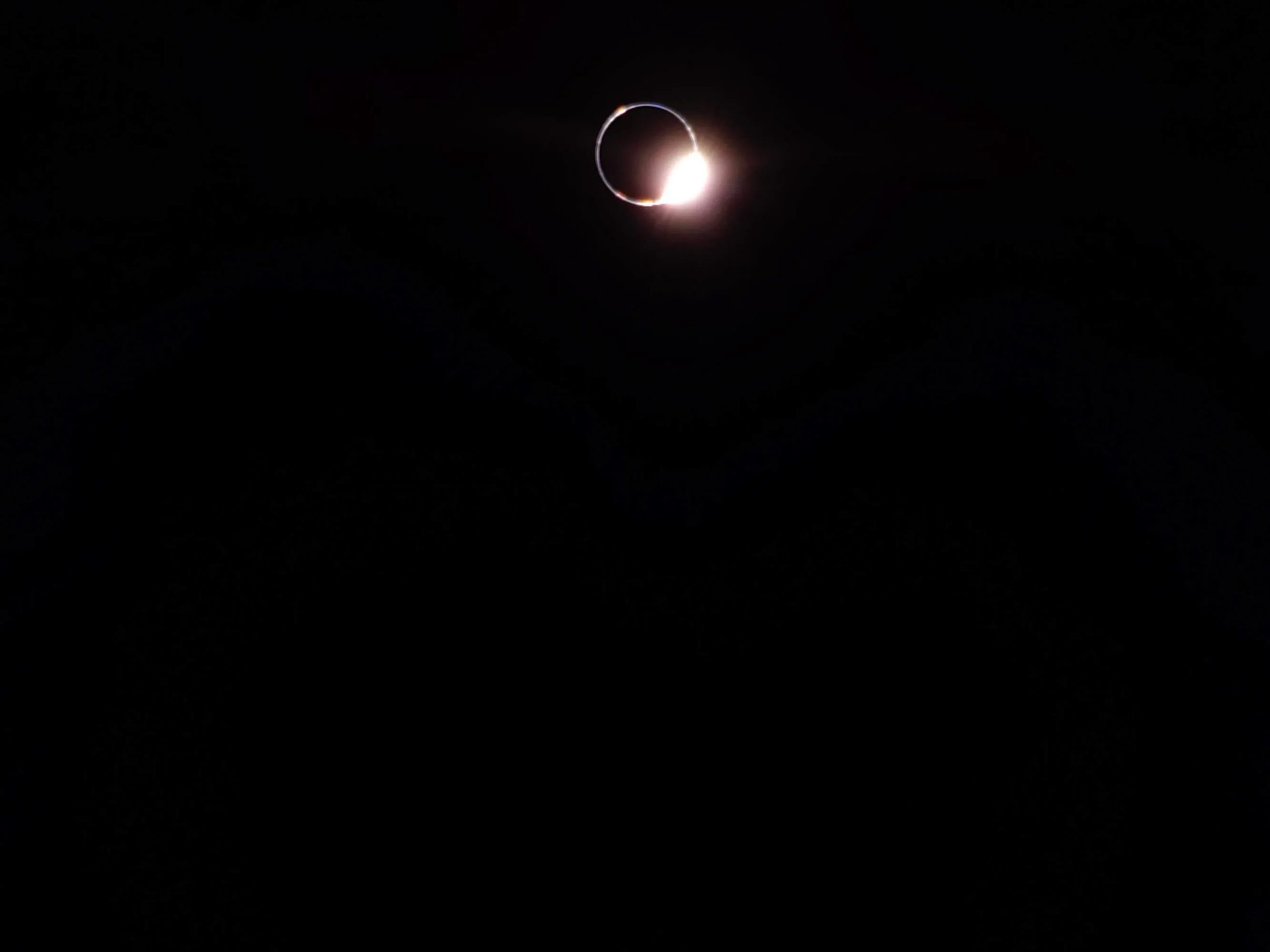
All 10 NASA payloads successfully activated, collected data, and performed operations on the Moon. Throughout the mission, Blue Ghost transmitted 119 gigabytes of data back to Earth, including 51 gigabytes of science and technology data. In addition, all payloads were afforded additional opportunities to conduct science and gather more data for analysis, including during the eclipse and lunar sunset.

“Operating on the Moon is complex; carrying 10 payloads, more than has ever flown on a CLPS delivery before, makes the mission that much more impressive,” said Joel Kearns, deputy associate administrator for exploration, Science Mission Directorate, NASA Headquarters. “Teams are eagerly analyzing their data, and we are extremely excited for the expected scientific findings that will be gained from this mission.”

Unprecedented Technological Milestones
Among other achievements, many of the NASA instruments performed first-of-their-kind science and technology demonstrations, including:
- The Lunar Instrumentation for Subsurface Thermal Exploration with Rapidity is now the deepest robotic planetary subsurface thermal probe, drilling up to 3 feet and providing a first-of-its kind demonstration of robotic thermal measurements at varying depths.
- The Lunar GNSS Receiver Experiment acquired and tracked Global Navigation Satellite Systems (GNSS) signals, from satellite networks such as GPS and Galileo, for the first time enroute to and on the Moon’s surface. The LuGRE payload’s record-breaking success indicates that GNSS signals could complement other navigation methods and be used to support future Artemis missions. It also acts as a stepping stone to future navigation systems on Mars.
- The Radiation Tolerant Computer successfully operated in transit through Earth’s Van Allen belts, as well as on the lunar surface into the lunar night, verifying solutions to mitigate radiation effects on computers that could make future missions safer for equipment and more cost effective.
- The Electrodynamic Dust Shield successfully lifted and removed lunar soil, or regolith, from surfaces using electrodynamic forces, demonstrating a promising solution for dust mitigation on future lunar and interplanetary surface operations.
- The Lunar Magnetotelluric Sounder successfully deployed five sensors to study the Moon’s interior by measuring electric and magnetic fields. The instrument allows scientists to characterize the interior of the Moon to depths up to 700 miles, or more than half the distance to the Moon’s center.
- The Lunar Environment heliospheric X-ray Imager captured a series of X-ray images to study the interaction of the solar wind and Earth’s magnetic field, providing insights into how space weather and other cosmic forces surrounding Earth affect the planet.
- The Next Generation Lunar Retroreflector successfully reflected and returned laser light from two Lunar Laser Ranging Observatories, returning measurements allowing scientists to precisely measure the Moon’s shape and distance from Earth, expanding our understanding of the Moon’s inner structure.
- The Stereo Cameras for Lunar Plume-Surface Studies instrument captured about 9,000 images during the spacecraft’s lunar descent and touchdown on the Moon, providing insights into the effects engine plumes have on the surface. The payload also operated during the lunar sunset and into the lunar night.
- The Lunar PlanetVac was deployed on the lander’s surface access arm and successfully collected, transferred, and sorted lunar soil using pressurized nitrogen gas, demonstrating a low-cost, low-mass solution for future robotic sample collection.
- The Regolith Adherence Characterization instrument examined how lunar regolith sticks to a range of materials exposed to the Moon’s environment, which can help test, improve, and protect spacecraft, spacesuits, and habitats from abrasive lunar dust or regolith.

Laying the Groundwork for Future Moon Missions
The data captured will benefit humanity in many ways, providing insights into how space weather and other cosmic forces may impact Earth. Establishing an improved awareness of the lunar environment ahead of future crewed missions will help plan for long-duration surface operations under Artemis.
To date, five vendors have been awarded 11 lunar deliveries under CLPS and are sending more than 50 instruments to various locations on the Moon, including the lunar South Pole and far side.
Never miss a breakthrough: Join the SciTechDaily newsletter.
Follow us on Google and Google News.
6 Comments
Awesome, much to see and the clarity is great❤️💖❤️
The “Wide earth” shot, appears as though sunlight shines on approximately 80% of earth at sunset. Kind of physically impossible. Is the aberration caused from lenses? Or is this fake image?
The Earth is a sphere (or mostly spherical) your 80% estimation is thinking that it’s a circle. Hold your thumb out at arms length. Are you seeing 100% of it? No, at best you’re seeing half. The half that is facing your face.
Well, that’s not actually right. A Sphere is round… but the earth is actually an Oblate Spheroid. That means it is more flat it’s poles and building slightly at the equater. This photo perfectly aligns with that too. Just, fyi, the most perfect natural sphere is the sun!
From Ranger 1 to Blue Ghost – “we’ve” come a long way!
“Bulging”… not building. Typos are the bain of my existence.