
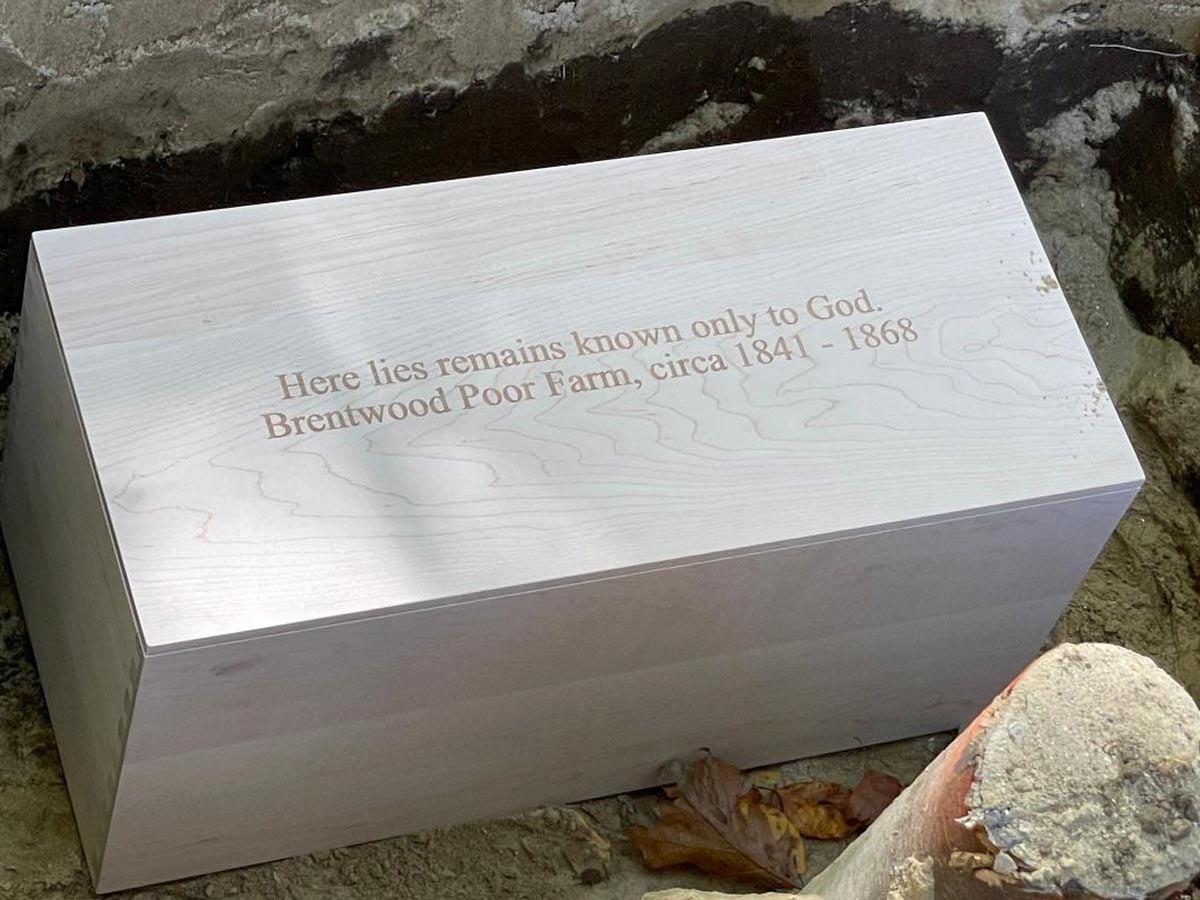
Skeletal remains from a 19th-century poor farm in Brentwood were reburied in a ceremony that marked the end of a detailed investigation by forensic researchers.
This investigation highlighted the difficult lives of the farm’s residents, with plans for a future exhibit to educate on the site’s historical significance.
Reburial of Historical Remains
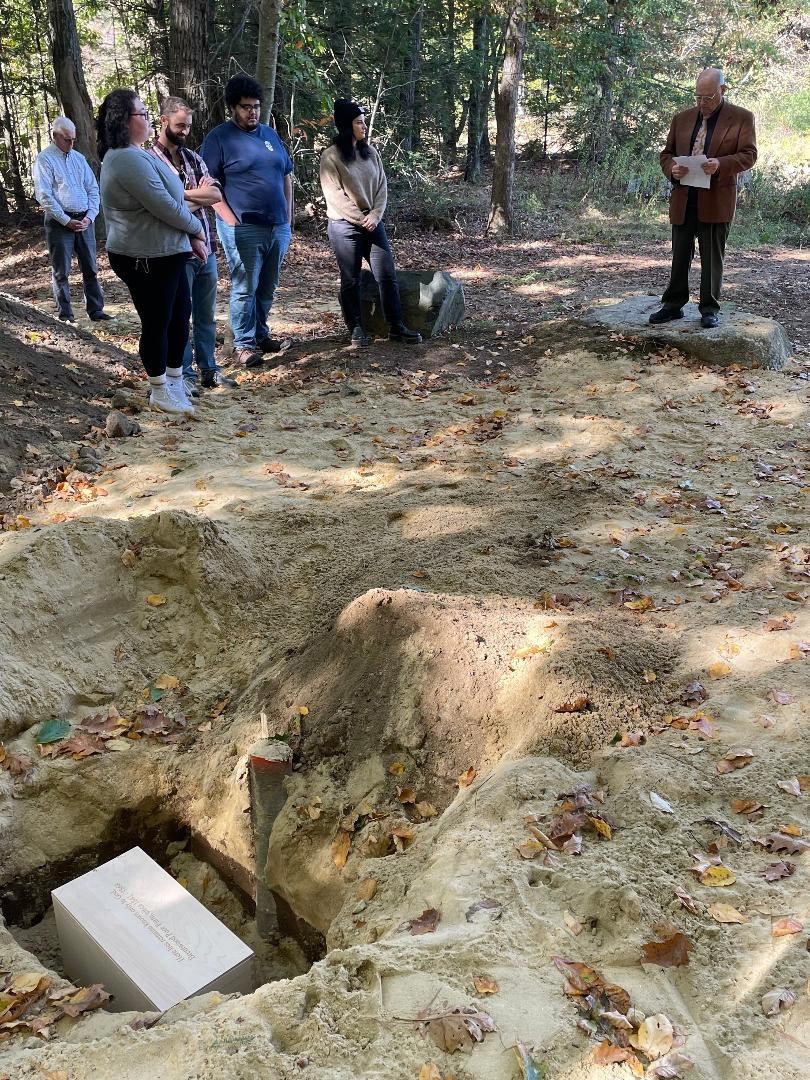
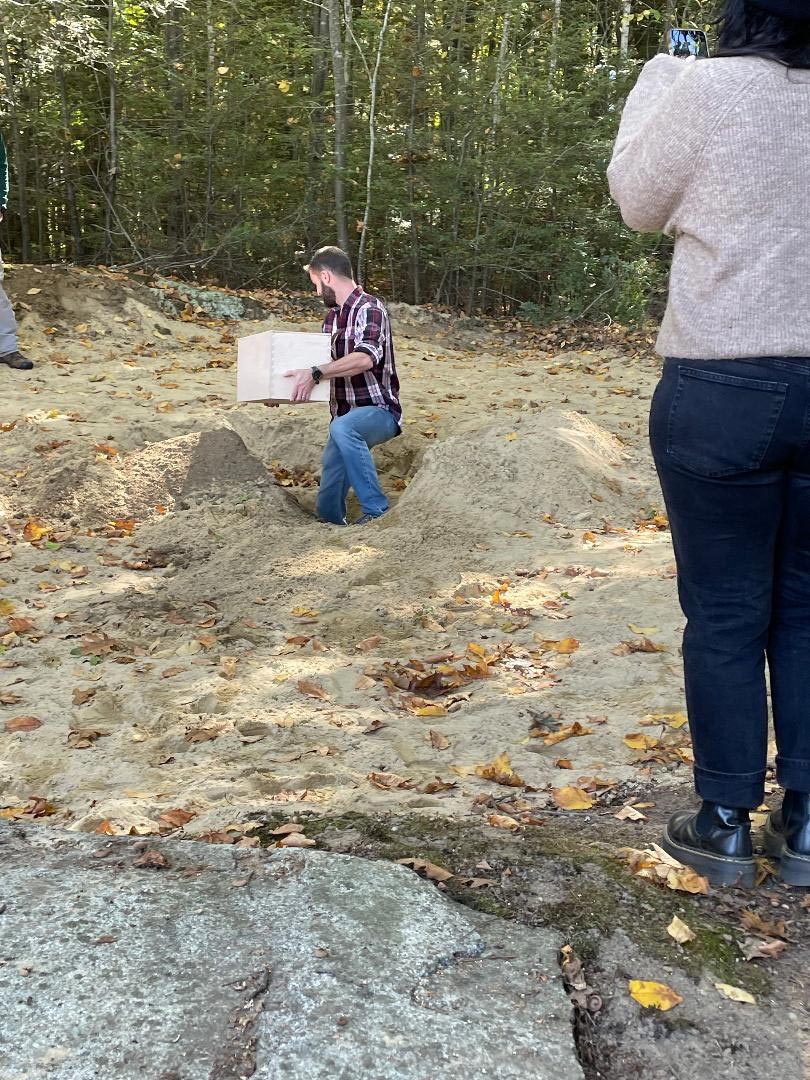
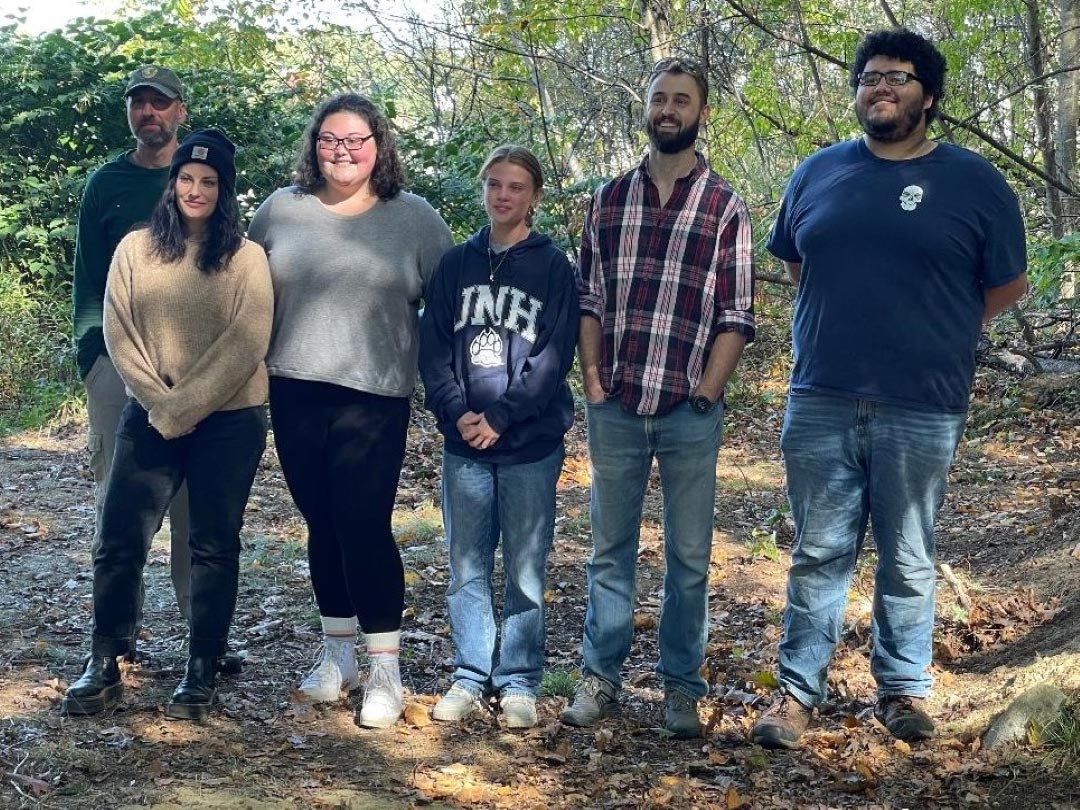
On a bright autumn afternoon, a plain wooden box crafted by a local cabinet shop—containing skeletal remains—was laid to rest during a simple reburial ceremony in Brentwood. Researchers and students from the University of New Hampshire’s Forensic Anthropology Identification and Recovery (F.A.I.R.) Lab collaborated for two years with town officials and the New Hampshire state archaeologist to investigate and document these remains. Unearthed more than 20 years ago during construction, the remains were identified as originating from a mid-1800s poor farm, a facility designed to house paupers.
Forensic Investigation and Discovery
“We analyzed the skeletal remains to determine their age and condition and help solve the mystery of why they were buried in the remote area in an unmarked grave,” said Alex Garcia-Putnam, co-director of UNH’s F.A.I.R. Lab. “After several years of documenting the skeletal remains, we were honored to not only provide valuable information about their lives but to also have the rare opportunity to be present at the reburial— to put these individuals at peace and offer all interested parties some sense of closure.”
Historical Context and Analysis
The remains of the farm workers were mistakenly uncovered during excavation on private property in 1999. The New Hampshire state archaeologist was called to the site and determined that the remains were historic due to their age and condition and they were transferred to the New Hampshire Medical Examiner’s office for storage, where they remained for 23 years. In 2022, the remains were transferred to UNH where researchers went to work on skeletal analysis.
UNH’s F.A.I.R. Lab works with law enforcement and the state’s medical examiner’s office to help identify remains. In this case, the work was more historical in nature and the team evaluated the bones to date them and determine the health of the individuals as well as sift through town records and maps to learn more about the historical significance of the area where the remains were found. According to their research, which is chronicled in a paper in the journal American Antiquity, the remains showed signs of hardship, such as poverty and hard labor and left signs of several health issues like osteoarthritis, dental disease and other signs of physiological stress. The remains were originally found in a grave without any markers—another indication of poverty—on land that was thought to formerly be the Brentwood Poor Farm from 1841 to 1868.
Legacy of Poor Farms
Poor farms were institutions set up as a type of welfare in rural counties in the United States during the 19th and early 20th centuries to provide support for the poor and other groups of dependent residents. The farms were set up to offer room and board in exchange for labor but the treatment of residents was often exploitive and violent. It is said that poor farms were started to keep marginalized individuals—including a mix of poverty, race, ethnicity and mental or physical illness—out of view of the middle and upper classes.
The town of Brentwood worked closely with the current landowners to set up a reinterment in the precise location of the original grave. The paupers at the farm were most likely buried in hasty unmarked graves and their final resting place was forgotten over time as the poor farm model for social welfare was dissolved in the 1930s and 1940s and the land passed into private ownership.
Reflecting on Community Values and Closure
“All individuals deserve a respectful final burial and we hope that this event shows that Brentwood cares about its residents,” said Joyce Keegal, superintendent of cemeteries in Brentwood. “We are so thankful for the work done by UNH to not only help shed light on the lives of these individuals but to also help us advocate for them.”
“This has been an amazing community collaboration by the town of Brentwood, the state, the homeowners and UNH to not only provide answers and connect the threads but also bring closure and meaningful resolutions for all involved,” said Amy Michael, co-director of UNH’s F.A.I.R. lab. “We work on all kinds of investigations—criminal to cold cases—and it is so fulfilling to move someone from a shelf in a medical examiner’s office humanizing them by giving them a dignified burial. Today was a good day.”
The burial site is on private property in an undisclosed area. Plans are in place by Brentwood town officials and historical society for a future exhibit about the Brentwood Poor Farm.
Reference: “Embodied Poverty: Bioarchaeology of the Brentwood Poor Farm, Brentwood, New Hampshire (1841–1868)” by Alex Garcia-Putnam, Amy R. Michael, Grace Duff, Ashanti Maronie, Samantha M. McCrane and Michaela Morrill, 24 September 2024, American Antiquity.
DOI: 10.1017/aaq.2024.35
Never miss a breakthrough: Join the SciTechDaily newsletter.
Follow us on Google and Google News.
3 Comments
Was curious if DNA was collected with today’s technology it would be interesting to see if at some point descendents might show up and thereby maybe giving names to these poor souls!
Also is there such a thing as a national database that geniology sites could access for potential matches?
My thoughts exactly.
FYI-In the caption for the first picture, the date of the ending of the PR farm is incorrect. Should read “1841-1868” instead of 1841-1968.