
For a brief moment, asteroid 2024 YR4 had scientists on edge, with its impact probability climbing as high as 2.8%—enough to capture global attention.
But thanks to rapid observations and advanced tracking techniques, astronomers have now ruled out almost all potential collision courses, reducing the risk to a minuscule 0.001%. Even though 2024 YR4 no longer poses a risk, its close approach in 2032 remains a valuable opportunity for future asteroid-tracking technology.
Asteroid 2024 YR4: Risk Significantly Reduced
The European Space Agency (ESA) has significantly reduced the estimated probability of asteroid 2024 YR4 impacting Earth in 2032, bringing it down to just 0.001%.
- Asteroid 2024 YR4 is expected to pass close to Earth on December 22, 2032.
- Over the past two months, its estimated impact probability initially climbed as high as 2.8%.
- Recent telescopic observations have provided more precise data, lowering the risk to nearly zero.
- This fluctuation in impact probability follows a well-known pattern in asteroid tracking.
How It Was Discovered
The asteroid was first discovered on December 27, 2024, by the Asteroid Terrestrial-impact Last Alert System (ATLAS) telescope in Río Hurtado, Chile. Automated warning systems, including ESA’s ‘Aegis,’ quickly flagged it as a potential, though unlikely, impact risk in 2032.
Measuring between 40 and 90 meters in diameter, 2024 YR4 is large enough to cause significant local damage if it were to collide with Earth. Its detection drew the attention of the global planetary defense community, prompting coordinated international tracking and assessment efforts.
Over the following two months, ESA’s Near-Earth Object Coordination Centre and other observatories conducted additional observations to refine the asteroid’s trajectory and assess its potential threat. Initially, as astronomers gathered more data, the projected impact probability increased, with some possible orbital paths indicating a collision on December 22, 2032.

Peak Threat Level: The February 18 Spike
On February 18, the impact probability reached its peak, with ESA’s assessment reaching as high as 2.8%. However, just the next day, observations made using the European Southern Observatory’s Very Large Telescope cut the impact probability in half.
Over recent days, new observations have been used to rule out almost all of the remaining orbits that could have led to an Earth impact.
Officially Off the Risk List
Asteroid 2024 YR4 has now fallen from Level 3 to Level 0 on the Torino Impact Hazard Scale and no longer requires significant attention. The asteroid is no longer at the top of ESA’s risk list, and the International Asteroid Warning Network has concluded its related activities.
The rise and fall of this object’s impact risk has followed a well understood pattern. An asteroid’s impact probability often rises at first before rapidly dropping to zero as the uncertainty region representing all of its possible orbits shrinks and moves away from Earth.
The evolution of 2024 YR4’s impact probability can be seen in the GIF above. It closely matches the typical scenario described in ESA’s explanatory video on the topic, seen below.
Future Observations and Planetary Defense
Planned observations of 2024 YR4 using the James Webb Space Telescope will go ahead in the coming months to test the telescope’s ability to improve our estimate of the asteroid’s size.
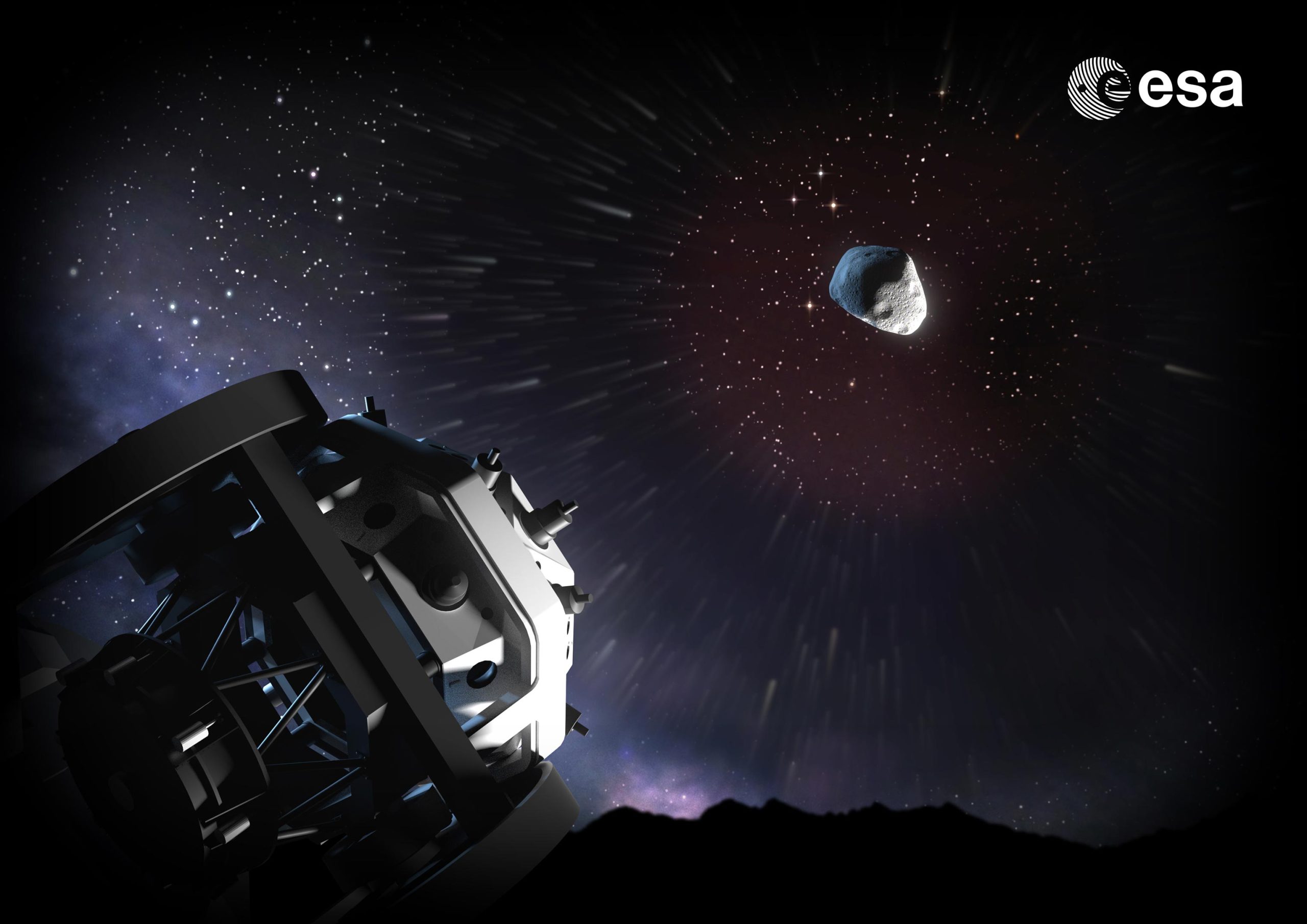
With the deployment of new asteroid survey technologies, such as ESA’s Flyeye telescopes (pictured at the top of this article), we are likely to detect an increasing number of similar objects passing close to Earth that we would have missed in the past.
Understanding the effectiveness of tools such as Webb will assist the planning of the planetary defense response to future hazards.
Explore Further:
- NASA Drops Impact Risk to Near Zero, But There’s One Small Catch
- This Asteroid Had a 3% Chance of Hitting Earth and Now It’s Zero
Never miss a breakthrough: Join the SciTechDaily newsletter.
Follow us on Google and Google News.