
An enormous meteor spelled doom for most dinosaurs 65 million years ago. But not all. In the aftermath of the extinction event, birds — technically dinosaurs themselves — flourished.
Scientists have spent centuries trying to organize and sort some 10,000 species of birds into one clear family tree to understand how the last surviving dinosaurs filled the skies. Cheap DNA sequencing should have made this simple, as it has for countless other species.
But birds were prepared to deceive us.
In a pair of new research papers released today, April 1, scientists reveal that another event 65 million years ago misled them about the true family history of birds. They discovered that a section of one chromosome spent millions of years frozen in time, and it refused to mix together with nearby DNA as it should have.
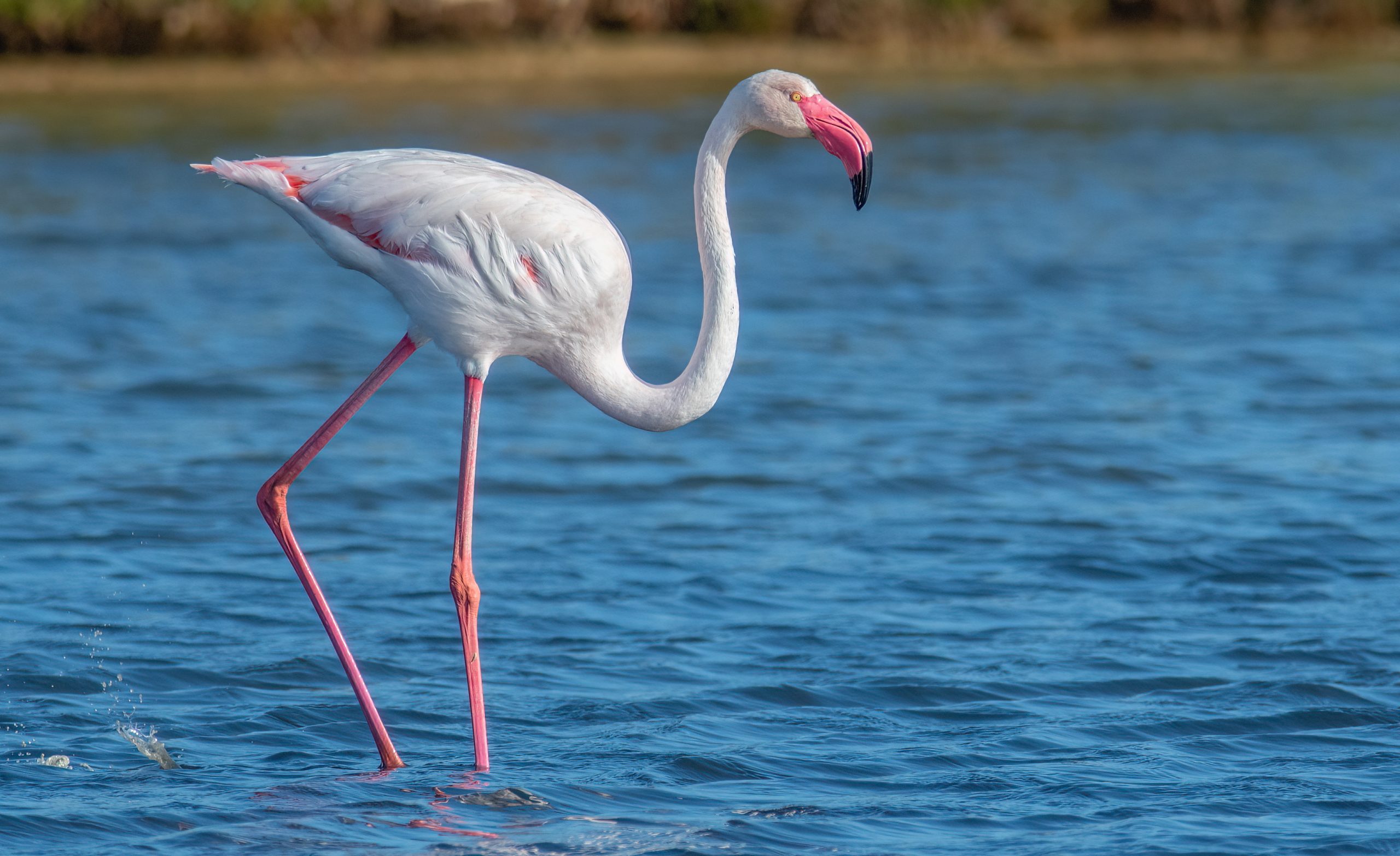
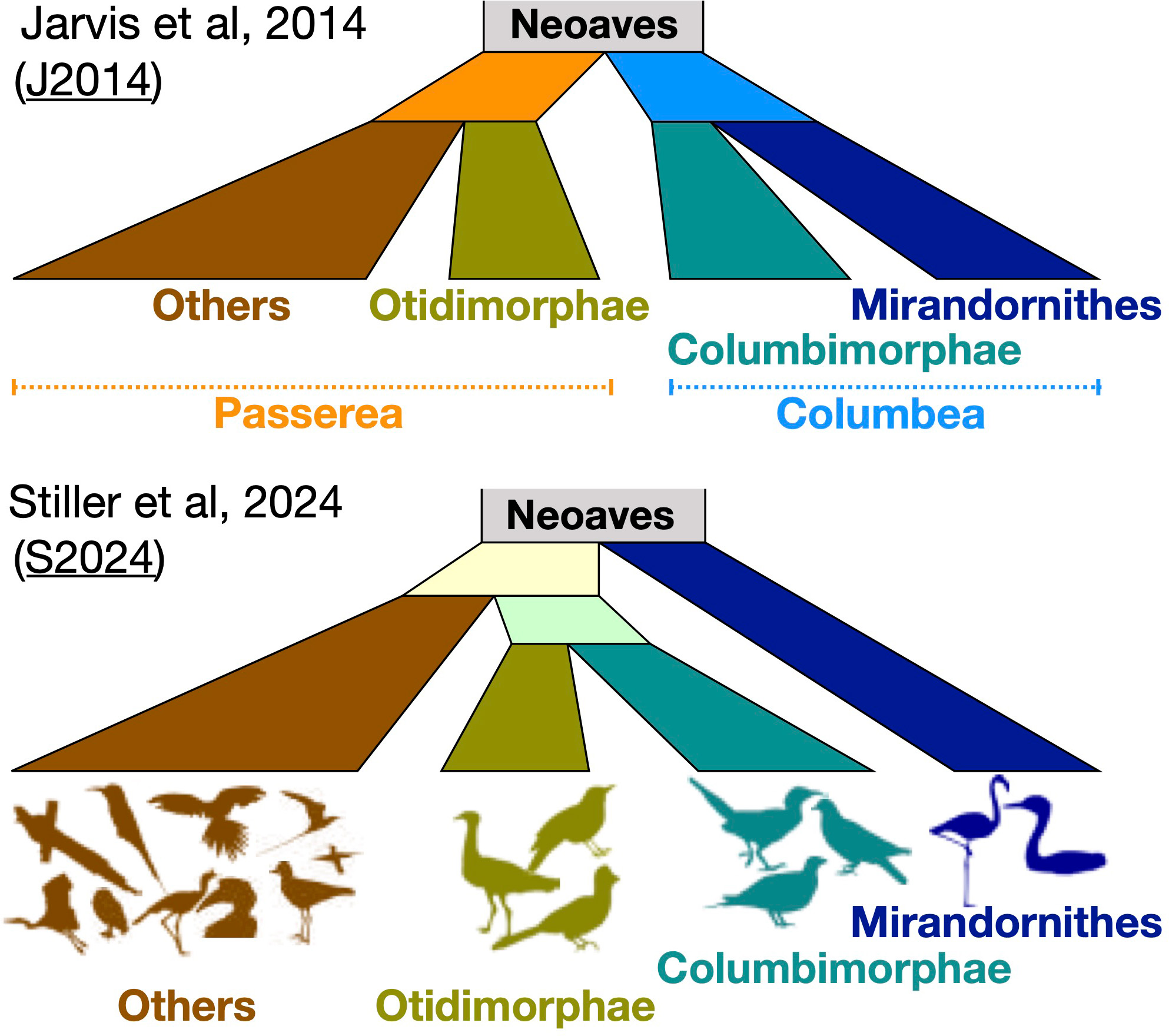
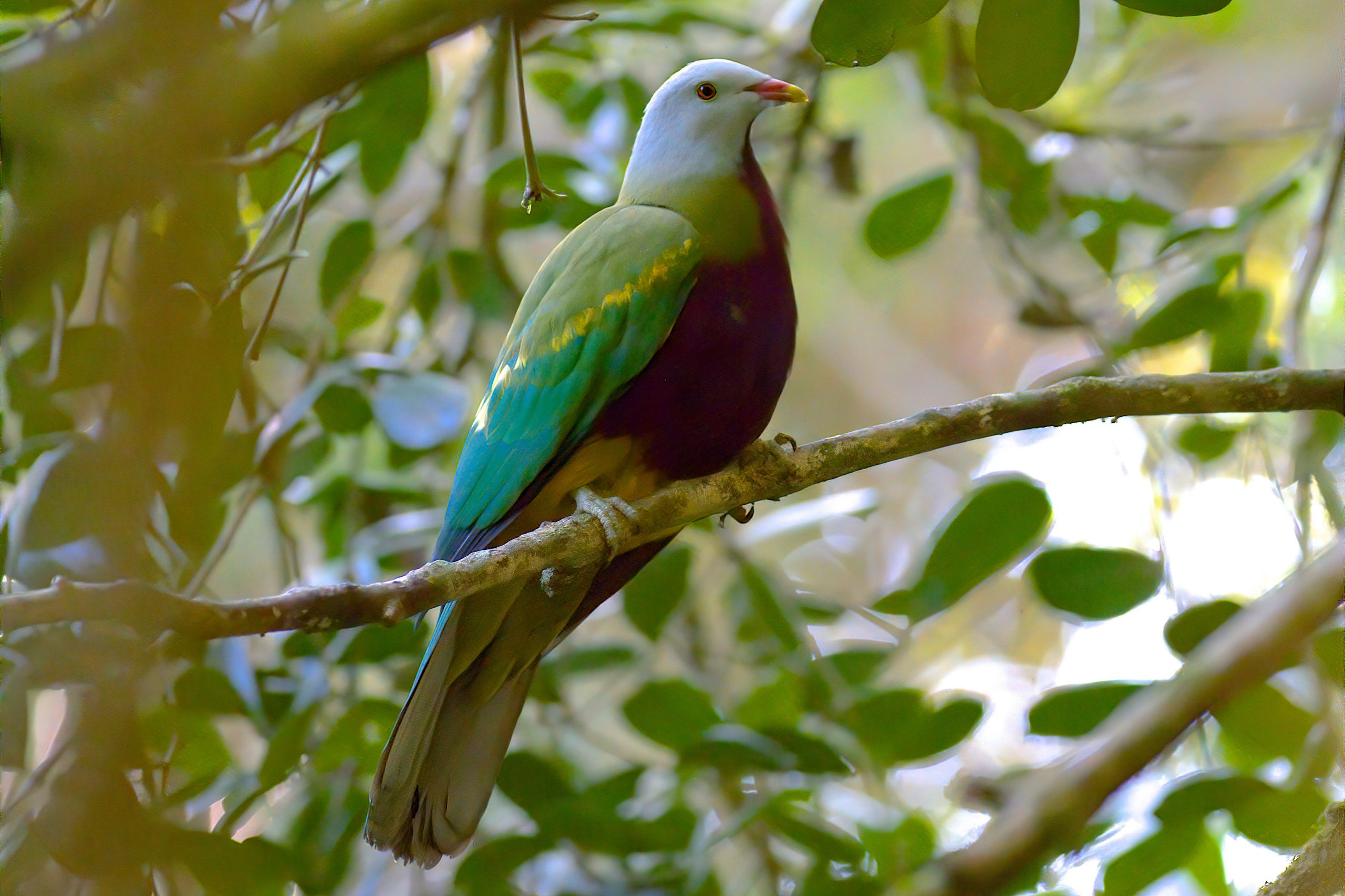
This section, just two percent of the bird genome, convinced scientists that most birds could be grouped into two major categories, with flamingos and doves as evolutionary cousins. The more accurate family tree, which accounts for the misleading section of the genome, identifies four main groups and identifies flamingos and doves as more distantly related.
Breakthrough in Bird Evolution Research
“My lab has been chipping away at this problem of bird evolution for longer than I want to think about,” said Edward Braun, Ph.D., the senior author of the paper published in the Proceedings of the National Academy of Sciences and a professor of biology at the University of Florida. “We had no idea there would be a big chunk of the genome that behaved unusually. We kind of stumbled onto it.”
Braun supervised an international team of collaborators led by Siavash Mirarab, a professor of computer engineering at the University of California San Diego, to publish their evidence that this sticky chunk of DNA muddied the true history of bird evolution. Mirarab and Braun also contributed to a companion paper published in Nature that outlines the updated bird family tree, which was led by Josefin Stiller at the University of Copenhagen.
Both papers are part of the B10K avian genomics project led by Guojie Zhang of Zhejiang University, Erich Jarvis of Rockefeller University, and Tom Gilbert of the University of Copenhagen.
Genetic Anomalies and Evolutionary Insights
Ten years ago, Braun and his collaborators pieced together a family tree for the Neoaves, a group that includes the vast majority of bird species. Based on the genomes of 48 species, they split the Neoaves into two big categories: doves and flamingos in one group, all the rest in the other. When repeating a similar analysis this year using 363 species, a different family tree emerged that split up doves and flamingos into two distinct groups.
With two mutually exclusive family trees in hand, the scientists went hunting for explanations that could tell them which tree was correct.
“When we looked at the individual genes and what tree they supported, all of a sudden it popped out that all the genes that support the older tree, they’re all in one spot. That’s what started the whole thing,” Braun said.
Investigating this spot, Braun’s team noticed it was not as mixed together as it should have been over millions of years of sexual reproduction. Like humans, birds combine genes from a father and a mother into the next generation. But birds and humans alike first mix the genes they inherited from their parents when creating sperm and eggs. This process is called recombination, and it maximizes a species’ genetic diversity by making sure no two siblings are quite the same.
Braun’s team found evidence that one section of one bird chromosome had suppressed this recombination process for a few million years around the time the dinosaurs disappeared. Whether the extinction event and the genomic anomalies are related is unclear.
The result was that the flamingos and doves looked similar to one another in this chunk of frozen DNA. But taking into account the full genome, it became clear that the two groups are more distantly related.
“What’s surprising is that this period of suppressed recombination could mislead the analysis,” Braun said. “And because it could mislead the analysis, it was actually detectable more than 60 million years in the future. That’s the cool part.”
Such a mystery could be lurking in the genomes of other organisms as well.
“We discovered this misleading region in birds because we put a lot of energy into sequencing birds’ genomes,” Braun said. “I think there are cases like this out there for other species that are just not known right now.”
References:
“Complexity of avian evolution revealed by family-level genomes” by Josefin Stiller, Shaohong Feng, Al-Aabid Chowdhury, Iker Rivas-González, David A. Duchêne, Qi Fang, Yuan Deng, Alexey Kozlov, Alexandros Stamatakis, Santiago Claramunt, Jacqueline M. T. Nguyen, Simon Y. W. Ho, Brant C. Faircloth, Julia Haag, Peter Houde, Joel Cracraft, Metin Balaban, Uyen Mai, Guangji Chen, Rongsheng Gao, Chengran Zhou, Yulong Xie, Zijian Huang, Zhen Cao, Zhi Yan, Huw A. Ogilvie, Luay Nakhleh, Bent Lindow, Benoit Morel, Jon Fjeldså, Peter A. Hosner, Rute R. da Fonseca, Bent Petersen, Joseph A. Tobias, Tamás Székely, Jonathan David Kennedy, Andrew Hart Reeve, Andras Liker, Martin Stervander, Agostinho Antunes, Dieter Thomas Tietze, Mads Bertelsen, Fumin Lei, Carsten Rahbek, Gary R. Graves, Mikkel H. Schierup, Tandy Warnow, Edward L. Braun, M. Thomas P. Gilbert, Erich D. Jarvis, Siavash Mirarab and Guojie Zhang, 1 April 2024, Nature.
DOI: 10.1038/s41586-024-07323-1
“A region of suppressed recombination misleads neoavian phylogenomics” by Siavash Mirarab, Iker Rivas-González, Shaohong Feng, Josefin Stiller, Qi Fang, Uyen Mai, Glenn Hickey, Guangji Chen, Nadolina Brajuka, Olivier Fedrigo, Giulio Formenti, Jochen B. W. Wolf, Kerstin Howe, Agostinho Antunes, Mikkel H. Schierup, Benedict Paten, Erich D. Jarvis, Guojie Zhang and Edward L. Braun, 1 April 2024, Proceedings of the National Academy of Sciences.
DOI: 10.1073/pnas.2319506121
This work was supported in part by the National Science Foundation.
Never miss a breakthrough: Join the SciTechDaily newsletter.
Follow us on Google and Google News.
2 Comments
New Birds Aren’t Real just dropped. Yeah!
I very much enjoyed reading about the avian gene anomaly
I makes me wonder if there could be a feline anomaly gene
Because I can understand my cats thoughts!
Yours sincerely
Lucky age 8