
Ancient fossil beans the size of modern limes may provide new insight into the evolution of today’s diverse Southeast Asian and Australian rainforests, according to Penn State researchers who identified the plants.
The researchers determined that the fossils, which are among the largest seeds in the fossil record, represent a now-extinct legume genus that lived in Southeast Asia and was closely related to modern Castanospermum, known as the black bean tree. This tree is only found today in the coastal rainforests of northern Australia and neighboring islands.
The study, conducted in collaboration with paleontologists from Indonesia, Canada, the United Kingdom, and elsewhere in the United States, was recently published in the International Journal of Plant Sciences.
Insights from Eocene-Era Fossils
The fossils, discovered in Indonesian Borneo, date back to the Eocene period approximately 34 to 40 million years ago. They suggest that the ancestors of the black bean tree migrated from Asia into Australia during the tectonic-plate collision that brought the land masses together and allowed for an exchange of plants and animals between the continents. The collision of the Southeast Asian and Australian tectonic plates, which began about 20 million years ago and continues today, led to a large exchange of plant and animal species between the landmasses, the scientists said.
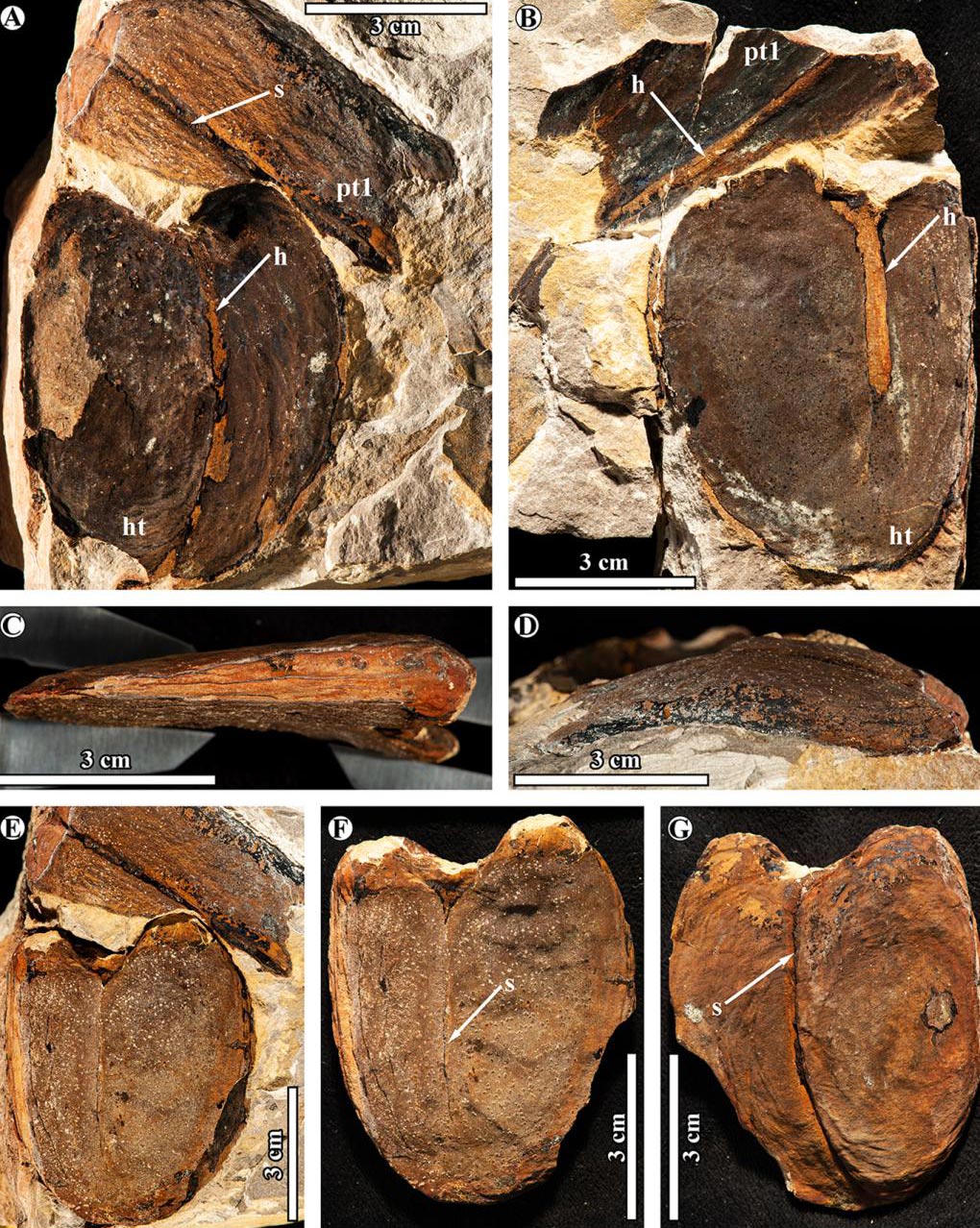
The findings provide the first macrofossil evidence of a plant lineage moving from Asia into Australia after the Asia-Australia tectonic collision, the researchers said. The fossils are also the oldest definite fossil legumes — the bean family — from the Malay Archipelago and the first fossil record anywhere of plants related to the black bean tree.
“These fossil seeds suggest that the ancient relatives of Castanospermum migrated into Australia from Southeast Asia during the tectonic collision event and later went extinct in Asia,” said Edward Spagnuolo, a doctoral student in the Department of Geosciences at Penn State and lead author of the study.
Overcoming Challenges in Fossil Collection
These findings challenge most of the existing direct macrofossil evidence for plant migrations, which represents lineages that moved from Australia into Asia. According to the scientists, the lack of direct evidence for movement from Asia to Australia is at least partially due to a poor plant fossil record in the Malay Archipelago, which includes the Philippines, Indonesia, East Timor, Papua New Guinea, and parts of Malaysia.
“It’s really hard to collect fossils in this part of the world,” Spagnuolo said. “Most surface rocks are destroyed by the heavy tropical rainfall or covered by vegetation, agriculture and buildings, so there are few places to look for fossils other than mine and quarry exposures. There is also very little paleontological infrastructure. We’re fortunate to have a partnership with Indonesian paleontologists at Institut Teknologi Bandung in Java, who make this work possible.”
Field Discoveries and Fossil Analysis
An international research team, including Peter Wilf, professor of geosciences at Penn State, collected the fossils in 2014 from the seams of a coal mine in South Kalimantan, Indonesian Borneo. The collection included three large beans, pollen samples, and about 40 leaves. Along with plants, the team also discovered diverse fossilized bird tracks, burrowing traces of marine invertebrates and fossil turtle remains, among other fossils recently published or under continued study.
The seeds are some of the largest in the fossil record, excluding coconuts and some other palms. They would have grown in a pod that most likely reached up to 3 feet long, or the length of a baseball bat, and fit up to five seeds, the scientists said.
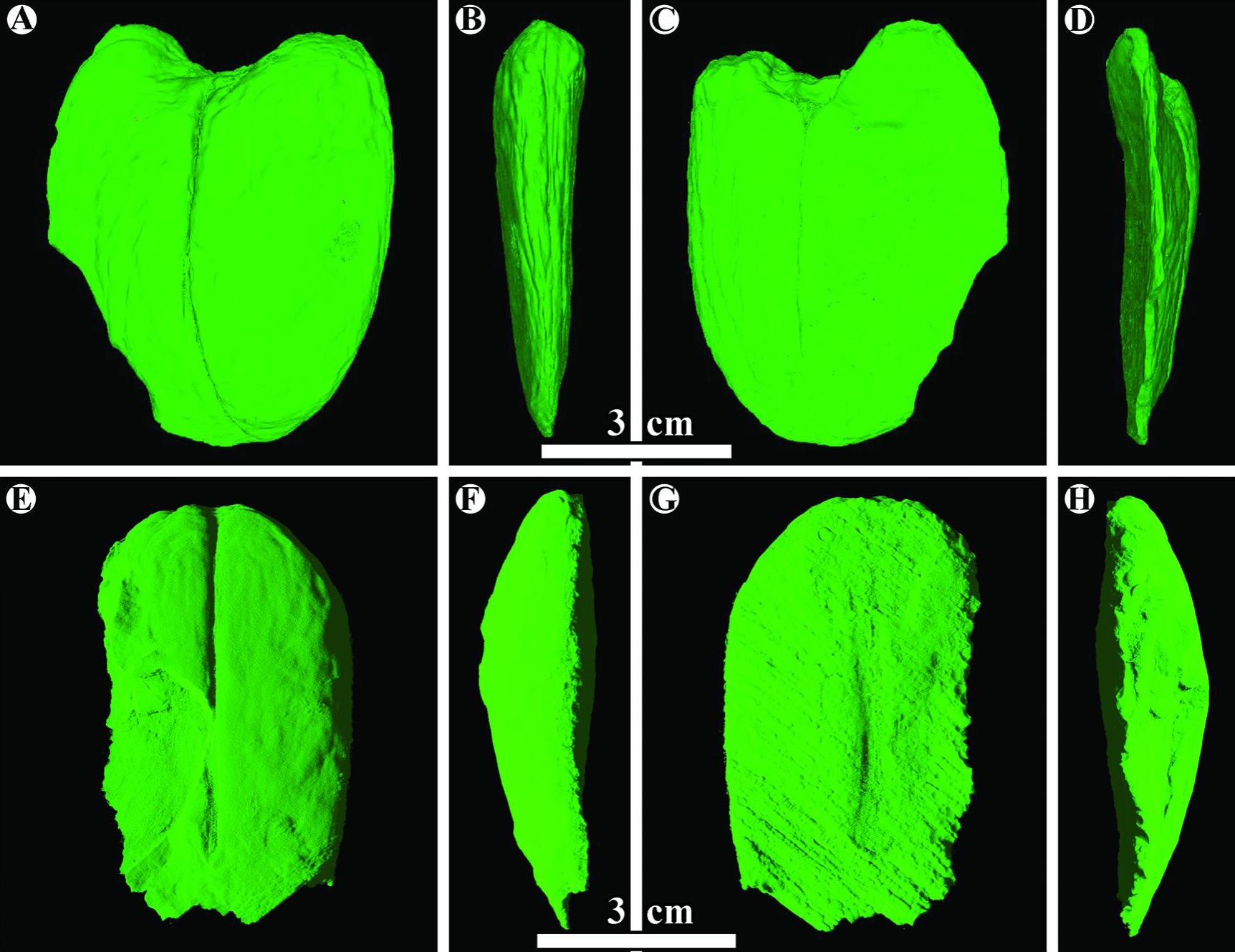
After fieldwork, the fossils were loaned to Penn State, where the seeds underwent CT scan imaging. Spagnuolo and Wilf analyzed the fossil beans taxonomically, describing anatomical characters useful for identification, and found they most closely resembled modern Castanospermum, which has no previous fossil representatives.
“Although some of the characteristics of these fossils are common across legumes, there is no fossil or living legume group besides Castanospermum that has a combination of features closely matching the fossils,” Spagnuolo said. “That makes us confident with our identification.”
The fossil seeds were named Jantungspermum gunnellii. The genus name refers to the heart shape of the fossil — jantung means heart in Indonesian and spermum means seed in Latin. The species name honors the late Gregg Gunnell, a vertebrate paleontologist formerly of the Duke University Lemur Center, who led the field trip.
Legumes are a diverse family of flowering plants, with about 20,000 species alive today that include many large tropical trees, the scientists said. But despite their abundance and diversity in modern ecosystems, these seeds are the only definite legume fossils from before the Neogene period, the interval between 2.6 million and 23 million years ago, in the Southeast Asian wet tropics.
“The tropics are the most diverse biome on Earth,” Wilf said. “We know very little from the fossil record about how tropical ecosystems evolved, especially in Asia, even as extinction risks are rising quickly, and we lose vast areas every year to deforestation. The Penn State paleobotany group is working on this problem in the field with colleagues in several Asian countries, and the new giant fossil beans from Borneo are a fantastic example of the discovery potential.”
These findings confirm legumes’ presence in Southeast Asia and fill a critical hole in the fossil record, the scientists said.
“We have a great legume fossil record for much of the world but not Southeast Asia,” Spagnuolo said. “Our work highlights the neglected paleobotanical potential of this region and the need for more fossil sampling in the Malay Archipelago.”
Reference: “Giant Seeds of an Extant Australasian Legume Lineage Discovered in Eocene Borneo (South Kalimantan, Indonesia)” by Edward J. Spagnuolo, Peter Wilf, John-Paul Zonneveld, David Shaw, Aswan, Yan Rizal, Yahdi Zaim, Jonathan I. Bloch and Russell L. Ciochon, 25 July 2024, International Journal of Plant Sciences.
DOI: 10.1086/730538
The National Geographic Society, the U.S. National Science Foundation, and Penn State supported researchers involved in this work.
Never miss a breakthrough: Join the SciTechDaily newsletter.
Follow us on Google and Google News.