
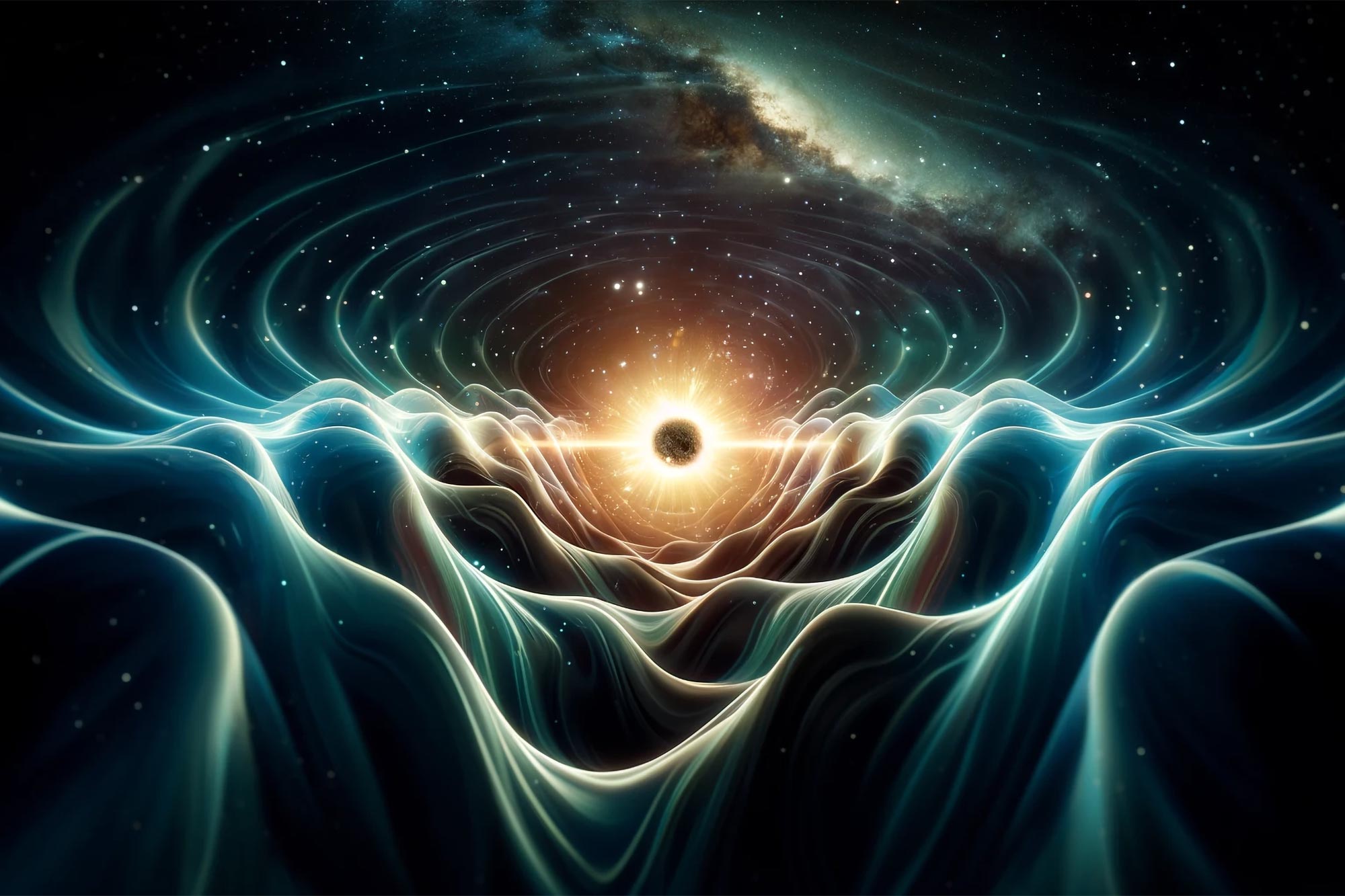
A new study reveals how tidal forces within binary neutron star systems can provide deep insights into the universe’s workings and the internal dynamics of these stars through gravitational wave analysis.
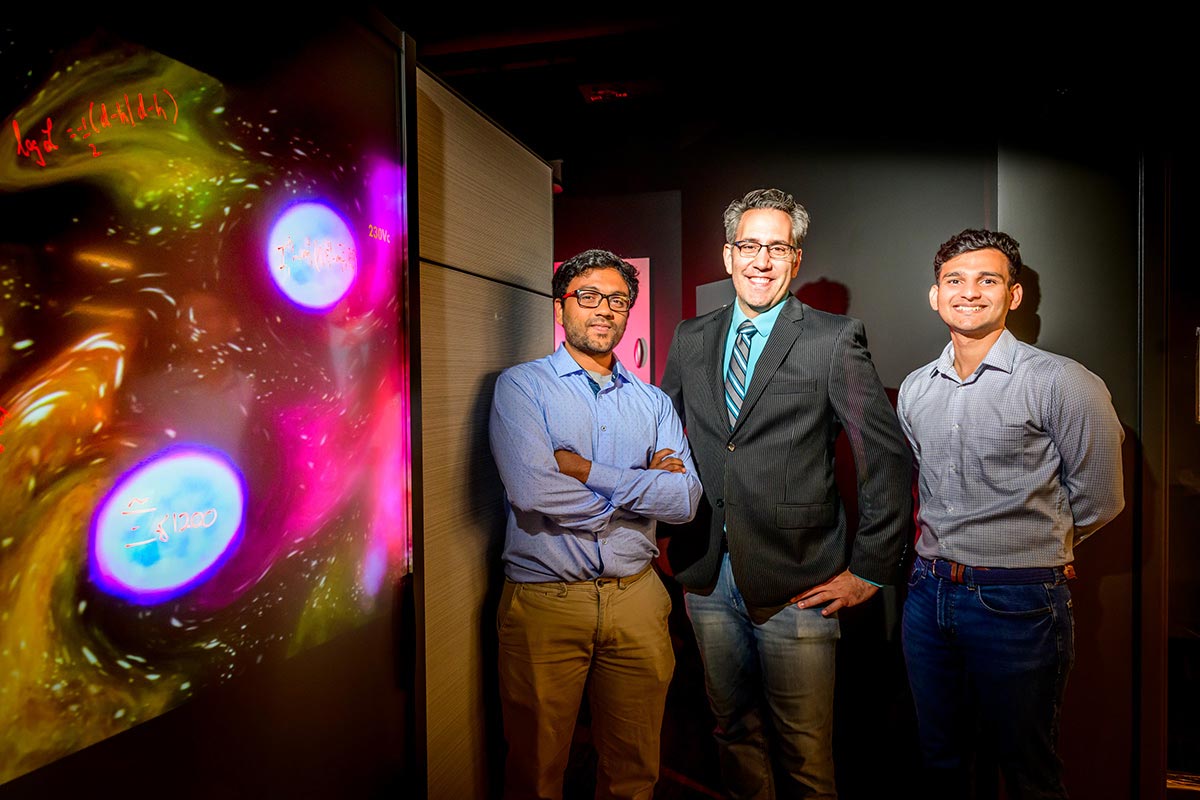
A better understanding of the inner workings of neutron stars will lead to a greater knowledge of the dynamics that underpin the workings of the universe and also could help drive future technology, said University of Illinois Urbana-Champaign physics professor Nicolas Yunes. A new study led by Yunes details how new insights into how dissipative tidal forces within double — or binary — neutron star systems will inform our understanding of the universe.
Insights From Neutron Star Properties
“Neutron stars are the collapsed cores of stars and densest stable material objects in the universe, much denser and colder than conditions that particle colliders can even create,” said Yunes, who also is the founding director of the Illinois Center for Advanced Studies of the Universe. “The mere existence of neutron stars tells us that there are unseen properties related to astrophysics, gravitational physics, and nuclear physics that play a critical role in the inner workings of our universe.”
However, many of these previously unseen properties became observable with the discovery of gravitational waves.
Gravitational Waves and Neutron Star Analysis
“The properties of neutron stars imprint onto the gravitational waves they emit. These waves then travel millions of light-years through space to detectors on Earth, like the advanced European Laser Interferometer Gravitational-Wave Observatory and the Virgo Collaboration,” Yunes said. “By detecting and analyzing the waves, we can infer the properties of neutron stars and learn about their internal composition and the physics at play in their extreme environments.”
As a gravitational physicist, Yunes was interested in determining how gravitational waves encode information about the tidal forces that distort the shape of neutron stars and affect their orbital motion. This information also could tell physicists more about the dynamic material properties of the stars, such as internal friction or viscosity, “which might give us insight into out-of-equilibrium physical processes that result in the net transfer of energy into or out of a system,” Yunes said.
Advancements in Neutron Star Viscosity Research
Using data from the gravitational wave event identified as GW170817, Yunes, along with Illinois researchers Justin Ripley, Abhishek Hegade, and Rohit Chandramouli, used computer simulations, analytical models, and sophisticated data analysis algorithms to verify that out-of-equilibrium tidal forces within binary neutron star systems are detectable via gravitational waves. The GW170817 event was not loud enough to yield a direct measurement of viscosity, but Yunes’ team was able to place the first observational constraints on how large viscosity can be inside neutron stars.
The study findings are published in the journal Nature Astronomy.
Legacy and Future of Neutron Star Research
“This is an important advance, particularly for ICASU and the U. of I.,” Yunes said. “In the ’70s, ’80s, and ’90s, Illinois pioneered many of the leading theories behind nuclear physics, particularly those connected to neutron stars. This legacy can continue with access to data from the advanced LIGO and Virgo detectors, the collaborations made possible through ICASU and the decades of nuclear physics expertise already in place here.”
Reference: “A constraint on the dissipative tidal deformability of neutron stars” by Justin L. Ripley, Abhishek Hegade K R, Rohit S. Chandramouli and Nicolás Yunes, 19 July 2024, Nature Astronomy.
DOI: 10.1038/s41550-024-02323-7
The University of Illinois Graduate College Dissertation Completion Fellowship and the National Science Foundation supported this study.
Never miss a breakthrough: Join the SciTechDaily newsletter.
Follow us on Google and Google News.
7 Comments
After LIGO announced their first alleged detection of a gravity wave I wrote to inform them a volcano erupted on a Japanese island concurrent with their alleged detection, with no reply that I recall. In my model of the universe gravity waves are not even possible, due to externally induced radiating fields of gravity being subject to the inverse square law of attraction. That doesn’t mean LIGO, VIRGO, etc. aren’t detecting something, just not gravity waves. Discovering what I believe to be the true nature of gravity in 2009, with a first video to demonstrate my lay finding uploaded in 2012 (“1Gravity:” https://odysee.com/@charlesgshaver:d/1Gravity:8), I think demonstrating the interaction of a rotating wheel with earth’s ambient field of gravity is magnitudes more reliable than computer simulations based on what I still believe to be the impossibility of gravity waves, at least at interstellar distances. One proof of that which I can imagine would be the loss of directional control of a spacecraft well outside the Kuiper Belt while the craft still has fuel and the controls are still working; no gravity-no propulsion, just straight line trajectory. Any info on that, anyone?
Earthquakes have a different frequency and mainly travel at the speed of light. Ligo and Virgo and others synchronize signals to them at the speed of light.
Yes, though LIGO and similar observatories, who all see gravitational waves, are susceptible to earthquakes and are closed down during such events.
“A remarkable level of isolation from the ground is required for Advanced gravitational-wave detectors such as the Laser Interferometer Gravitational-Wave Observatory LIGO) to function at peak performance. These ground based detectors are susceptible to high magnitude teleseismic events such as earthquakes, which can disrupt proper functioning, operation and significantly reduce their duty cycle. As a result, data is lost and it can take several hours for a detector to stabilize and return to the proper state for scientific observations. With advanced warning of impeding tremors, the impact can be suppressed in the isolation system and the down time can be reduced at the expense of increased instrumental noise. An earthquake early- warning system has been developed relying on near real-time earthquake alerts provided by the U.S. Geological Survey (USGS) and the National Oceanic and Atmospheric Administration (NOAA). The alerts can be used to estimate arrival times and ground velocities at the gravitational- wave detectors. By using machine learning algorithms, a prediction model and control strategy is developed to reduce LIGO downtime by ~30\%.” [LIGO Document P1800130-v2]
I think you mean that seismic waves, which are mainly acoustic energy after the localized and heat generating shock waves are damped down, travel with the speed of sound. Having at least two observatories were essential to detect the first gravitational waves. Now with known signatures for mergers they sometime can get sufficient significance (though no directionality) with just one, I believe (templated detection).
Checked again, the earth is very active seismically, with forty to fifty continuously active volcanoes and perhaps twenty eruptions on any given day. Even if I believed in gravity waves, I’d find it very difficult to believe any earthbound sensors could separate all of the “noise” from any real “signals.” And, again, having had my own “insight” in 2009, I don’t believe in gravity waves, at least those I’m not personally causing.
There is no “finding” here, just your personal opinion that goes contrary to known facts of observed gravitational waves.
For instance, you apparently ignorantly claim that gravity waves which are fluid medium buoyancy mediated waves that we observe e.g. as ocean surface waves have anything to do with gravitational waves of the gravity field. That you have no peer reviewed ‘model’ to show underscores the fact that this is not about LIGO observations.
You are right, Professor Larsson, this is “…not about LIGO observations.” I uploaded my ‘first’ video of my lay findings on gravity about three years prior to LIGO’s first ‘alleged’ gravity wave findings. And, with it taking me three years from my ‘insight’ to making my first video, if I had any peers they’d be replicating my experiments for a decade by now and trying to find a better explanation for the very ‘real’ effects I’ve freely shared since.
thanks for info.