
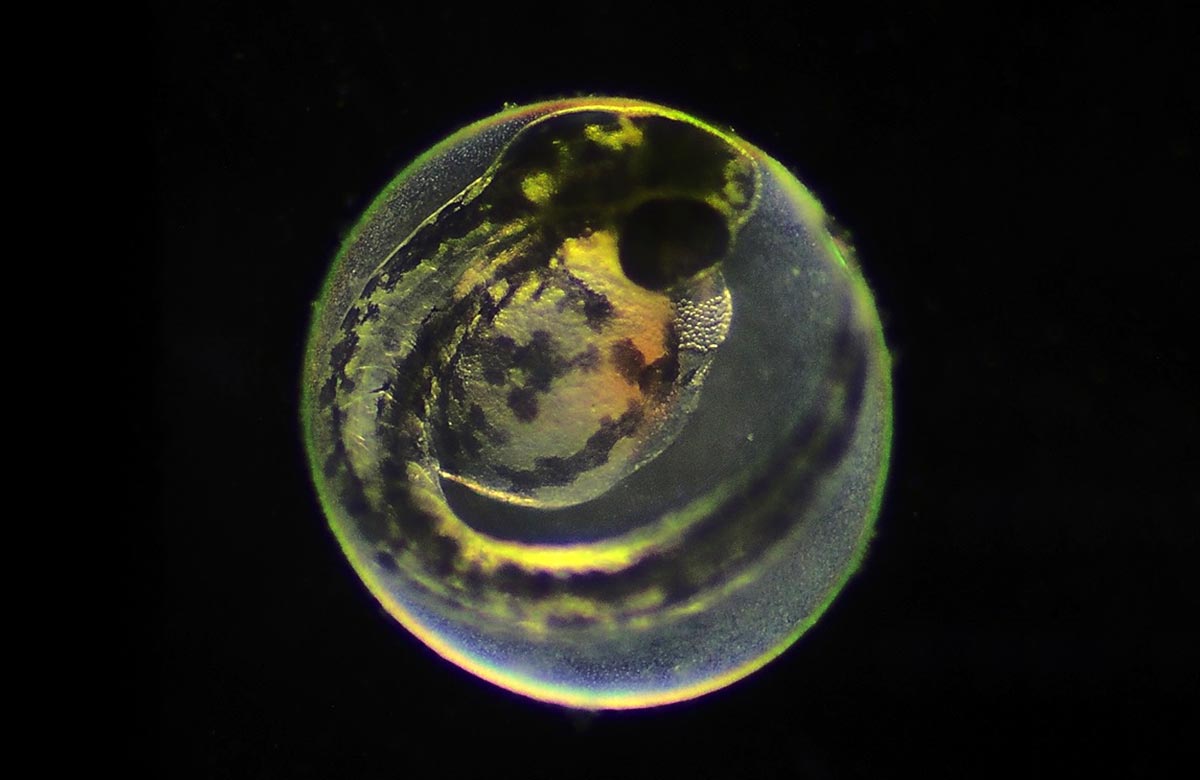
New research has shown that fish embryos actively control the timing of their hatching using a neurohormone called Thyrotropin-Releasing Hormone (TRH).
This hormone triggers the release of enzymes that break down the egg wall, allowing the embryo to hatch at the right moment. This discovery reveals a previously unknown neural mechanism that regulates this crucial life-stage transition. Far from being passive, embryos play an active role in making life-or-death decisions. The findings carry significant evolutionary implications, offering fresh insights into neurobiology, survival strategies, and how vertebrates adapt to their environments.
Groundbreaking Discovery in Embryo Research
Dr. Matan Golan from the Hebrew University of Jerusalem and the Agricultural Research Organization – Volcani Institute led a research team that uncovered how fish embryos determine the precise moment to hatch. Published today (December 5) in Science, their groundbreaking study reveals an active biological mechanism that allows embryos to control this crucial life-or-death decision, shedding new light on fundamental processes in biology and evolution.
Hatching is a critical milestone for all egg-laying species. Emerging too early or too late can be fatal, leaving a newborn unprepared to face challenges like breathing or escaping predators. Survival depends on perfect timing, and remarkably, this timing is actively controlled by the embryo itself—a process whose underlying mechanism had remained a mystery until now.
Neural Mechanism Behind Hatching
The researchers discovered that fish embryos initiate hatching through a signal from their brain: a neurohormone called Thyrotropin-Releasing Hormone (TRH). TRH travels via the bloodstream to a specialized gland, triggering the release of enzymes that dissolve the egg wall, allowing the embryo to break free. This critical neural circuit for hatching forms just before the event and disappears shortly thereafter. Without TRH, embryos are unable to release the enzymes, resulting in their death inside the egg.
Evolutionary and Biological Insights
This discovery uncovers a previously hidden neural circuit that governs one of the most crucial life-stage transitions and demonstrates how fish embryos, far from being passive, possess the ability to actively control their own hatching process, a key to their survival.
The findings have significant evolutionary implications, as they reveal the long-sought neuronal mechanism controlling hatching in the largest group of living vertebrates. Looking ahead, the researchers plan to explore how TRH and other neuroendocrine factors influence hatching in other species.
Future Research Directions and Implications
In addition to its evolutionary insights, this research underscores the remarkable ability of embryos to make decisions that directly affect their survival, offering a deeper understanding of the intricate interplay between neurobiology and environmental adaptation.
Reference: “A transient neurohormonal circuit controls hatching in fish” by Deodatta S. Gajbhiye, Genevieve L. Fernandes, Itay Oz, Yuni Nahmias and Matan Golan, 5 December 2024, Science.
DOI: 10.1126/science.ado8929
Never miss a breakthrough: Join the SciTechDaily newsletter.
Follow us on Google and Google News.