

Close Menu
    Facebook X (Twitter) Instagram
    SciTechDaily
    • Biology
    • Chemistry
    • Earth
    • Health
    • Physics
    • Science
    • Space
    • Technology
    Facebook X (Twitter) Pinterest YouTube RSS
    SciTechDaily
    Home»Biology»How Meerkats Communicate: Decoding the Sounds of Survival
    Biology

    How Meerkats Communicate: Decoding the Sounds of Survival

    By University of KonstanzJune 7, 2024No Comments5 Mins Read
    Facebook Twitter Pinterest Telegram LinkedIn WhatsApp Email Reddit
    Share
    Facebook Twitter LinkedIn Pinterest Telegram Email Reddit
    Baby Meerkats
    Researchers have discovered that meerkats use two distinct types of vocalizations to communicate: ‘close calls’ for interactive exchanges and ‘short notes’ for broadcasting their presence without expecting a response. These findings, derived from synchronized audio and GPS data, highlight the importance of vocal communication in maintaining group cohesion and safety among meerkats. Credit: Vlad Demartsev

    Meerkats use two distinct types of vocal interactions to maintain communication with their group mates. Sometimes their calls simply convey information, while other times, meerkats engage in a call exchange with their neighbors. This behavior was detailed in a recent study conducted by researchers from the Centre for the Advanced Study of Collective Behaviour at the University of Konstanz and the Max Planck Institute of Animal Behavior.

    Their findings were published recently in the biological sciences. journal Philosophical Transactions of the Royal Society B.
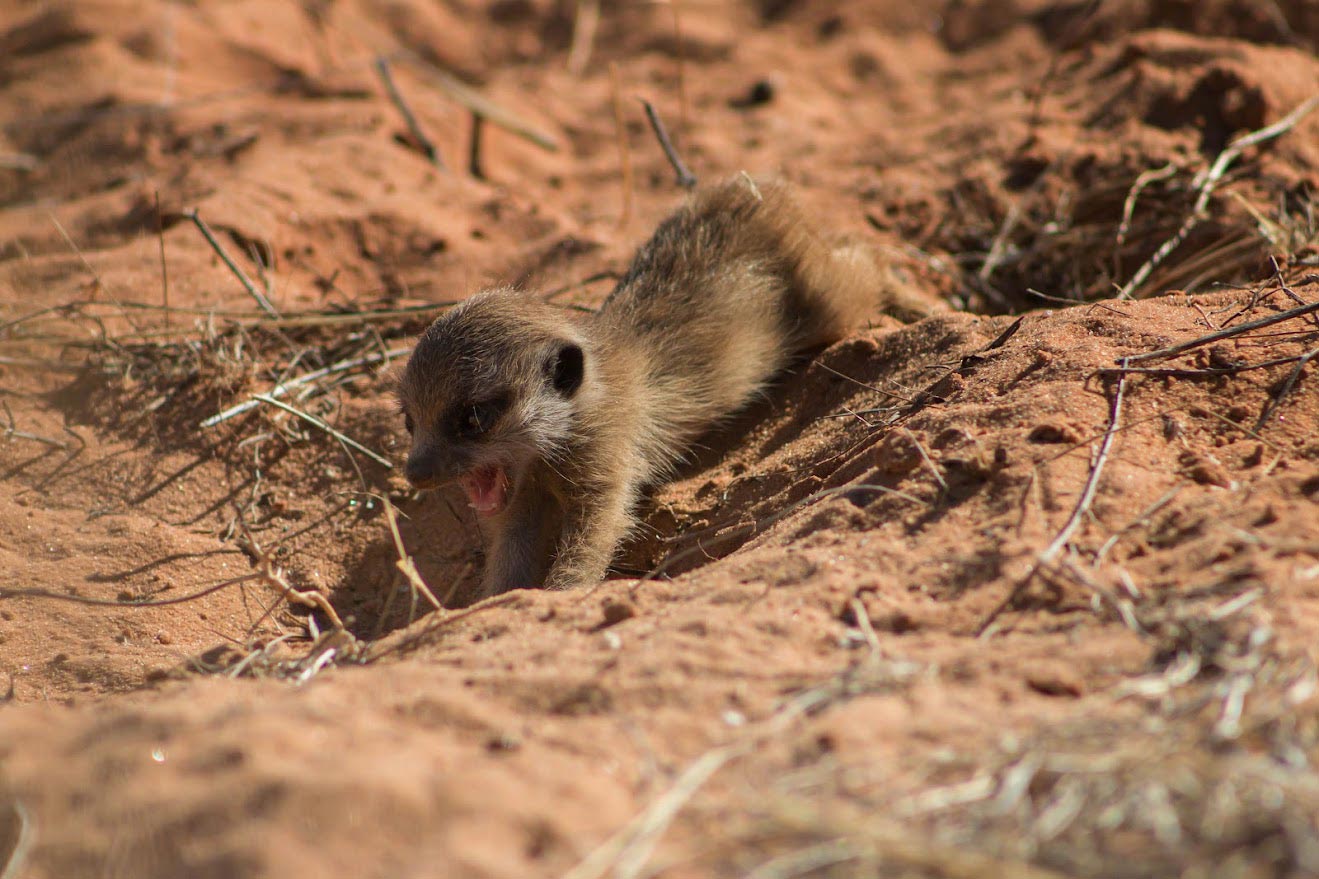
    Baby Meerkat Calling Group
    Vocal interactions play a critical role in maintaining group cohesion, which is essential for survival as meerkats are more vulnerable when isolated. Credit: Vlad Demartsev

    Continuous Communication

    Meerkats, which are group-living animals, are almost constantly on the move throughout the day. As they are walking or running, they make a continuous series of noises. Researchers have decoded how wild meerkats utilize two of these sounds.

    “The first sound, a ‘close call’, is like a call-and-response exchange between the animals. When one meerkat calls, a neighbor is likely to reply,” explains Vlad Demartsev, a postdoctoral researcher from the Cluster of Excellence Collective Behaviour. “Whereas the second call, named a ‘short note’, announces ‘I am here’ but doesn’t necessarily get a direct reply from communication partners.”
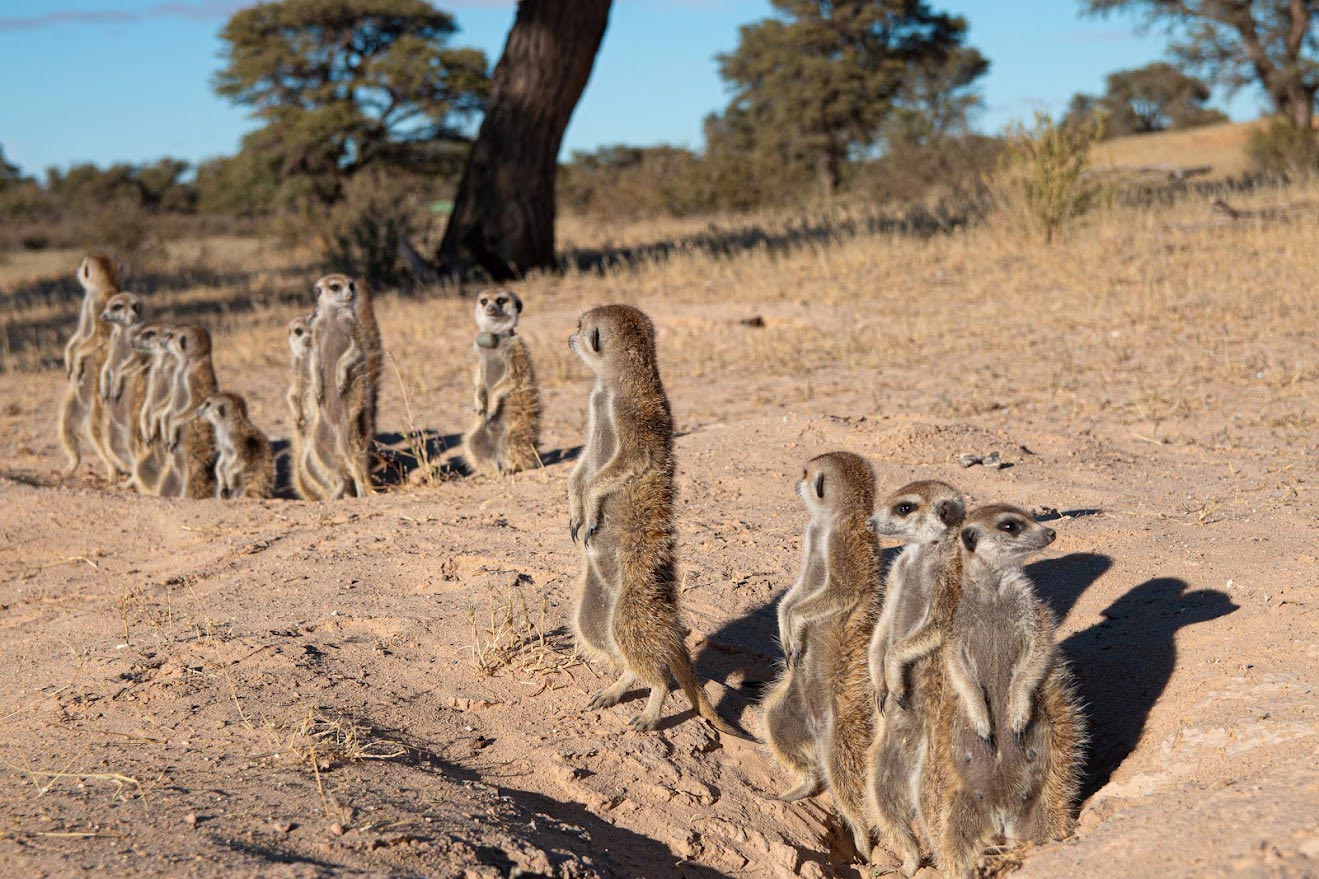
    Group of Meerkats Standing
    Meerkats are highly social animals and live in groups of up to 50 members. Credit: Vlad Demartsev

    Quiz question: Listen to the two calls. Which call do you think will get a reply from a neighbor?

    “When one meerkat calls, a neighbor is likely to reply.” What kind of sound are we talking about?

    The first call. The second call, known as the ‘short note’, announces ‘I am here’, but does not necessarily receive a direct response from the communication partners.

    Meerkat Walking
    As they forage and explore, meerkats emit a continuous series of calls, ensuring that no member becomes separated from the group. Credit: Vlad Demartsev

    Vocal Interactions: Exchange vs. Broadcast

    Consider an announcement in front of a large crowd where the flow of information is mostly one-way, with no real exchange between the speaker and the audience. “It is impossible to hold a conversation with 20 people, so we normally talk to one partner at a time,” explains Demartsev. Close calls are such an exchange between communication partners and short notes are more like a broadcast or an announcement aimed at the whole group.

    Meerkat With a Collar
    The ‘short note’ is used by meerkats to announce their presence but doesn’t necessarily elicit a direct reply from others. Credit: Vlad Demartsev

    Research Methodology

    Demartsev, along with Ariana Strandburg-Peshkin and collaborators from the University of Zurich, equipped several groups of meerkats with collars at the Kalahari Research Centre in South Africa. The collars recorded continuous audio data and GPS positions were sampled every second. Using these collars, the researchers got a synchronized recording and could see which animal produced which sound at which time and where.
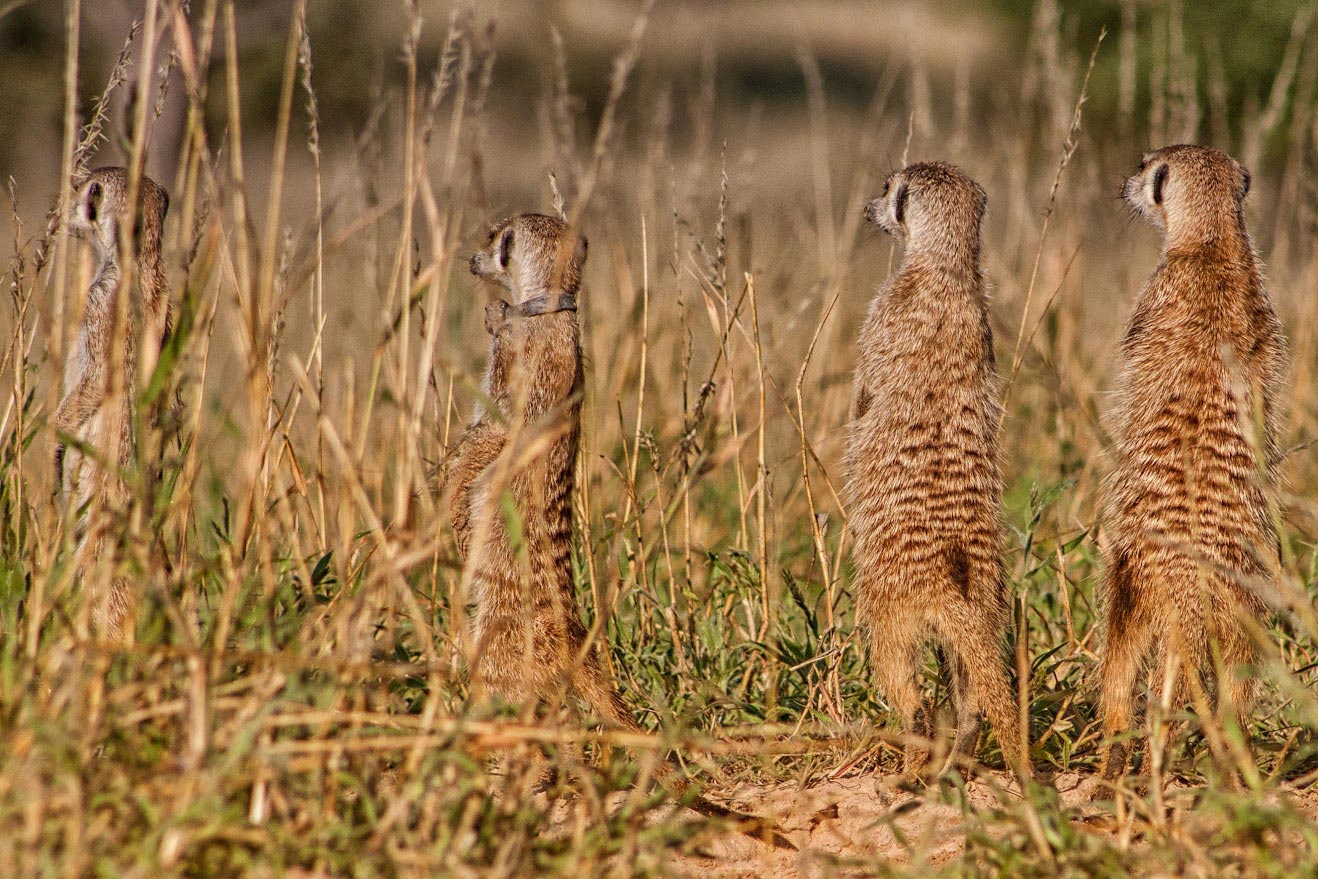
    Meerkats Standing
    Researchers used collars that recorded audio and GPS data to track the origin of each sound, identifying the specific meerkat making the call, their location, and the timing of the sound. Credit: Vlad Demartsev

    Analysis of Vocal Interactions

    The researchers prepared a vocal timeline for the entire group and analyzed the data. “We saw that when a close call is given, there is a very high probability that within less than half a second a nearby neighbor will respond. But when we have a short note, we do not have this pattern. All of them are calling nearly at the same time and there is no structure,” says Demartsev.

    Strandburg-Peshkin adds, “Ultimately, calls are not just single isolated events, but a continuous stream of communication between group members. So, looking at the temporal structure of the interactions can help us to better understand how calls are used and what their function is.”

    Meerkat Adult and Baby
    Group cohesion is critical for meerkats because isolation increases their risk of predation or harassment by other groups, highlighting the importance of their communication system. Credit: Vlad Demartsev

    The Importance of Group Cohesion

    Staying in a group is crucial for meerkats and they use multiple mechanisms that evolved to avoid getting separated. “When meerkats are by themselves there is a higher chance of predation or harassment by other groups. Generally, meerkats therefore try very, very hard to stay together,” says Demartsev.

    Reference: “Mapping vocal interactions in space and time differentiates signal broadcast versus signal exchange in meerkat groups” by Vlad Demartsev, Baptiste Averly, Lily Johnson-Ulrich, Vivek H. Sridhar, Leonardos Leonardos, Alexander Q. Vining, Mara Thomas, Marta B. Manser and Ariana Strandburg-Peshkin, 1 May 2024, Philosophical Transactions B.
    DOI: 10.1098/rstb.2023.0188

    Never miss a breakthrough: Join the SciTechDaily newsletter.
    Follow us on Google and Google News.

    Animal Sciences Language Popular University of Konstanz
    Share. Facebook Twitter Pinterest LinkedIn Email Reddit

    Related Articles

    Bonobos Speak in Phrases: New Study Challenges Uniqueness of Human Language

    Physicists Confirm 50-Year-Old Hypothesis About Selfish Behavior

    Researchers Discover Cryptic Cat Species on Mount Everest

    What Would Darwin Discover Today?

    Over 60 Feet Long – Scientists Discover the New World’s Largest Omnivore

    Genetic Mystery of the Seadragon Solved

    Babbling Baby Bats Sound Strikingly Similar to Human Infants

    Deception and Lies: Wild Siberian Jays Use Social Knowledge to Avoid Being Tricked

    New Research Shows Neanderthals Had the Capacity to Perceive and Produce Human Speech

    Leave A Reply Cancel Reply

    • Facebook
    • Twitter
    • Pinterest
    • YouTube

    Don't Miss a Discovery

    Subscribe for the Latest in Science & Tech!

    Trending News

    Scientists Discover 132-Million-Year-Old Dinosaur Tracks on South Africa’s Coast

    Scientists Uncover the Secret Ingredient Behind the Spark That May Have Started Life on Earth

    Physicists Observe Matter in Two Places at Once in Mind-Bending Quantum Experiment

    Stanford Scientists Discover Hidden Brain Circuit That Fuels Chronic Pain

    New Study Reveals Why Ozempic Works Better for Some People Than Others

    Climate Change Is Altering a Key Greenhouse Gas in a Way Scientists Didn’t Expect

    New Study Suggests Gravitational Waves May Have Created Dark Matter

    Scientists Discover Why the Brain Gets Stuck in Schizophrenia

    Follow SciTechDaily
    • Facebook
    • Twitter
    • YouTube
    • Pinterest
    • Newsletter
    • RSS
    SciTech News
    • Biology News
    • Chemistry News
    • Earth News
    • Health News
    • Physics News
    • Science News
    • Space News
    • Technology News
    Recent Posts
    • Groundbreaking Enzyme Atlas Rewrites Decades of Biology Research
    • New “Nanozyme Hypothesis” Could Rewrite the Story of Life’s Origins
    • Anatomy Isn’t Finished: The Human Body Still Holds Secrets
    • Researchers Discover Long-Lost Words of Ancient Greek Philosopher After 2,000 Years
    • New Study Warns: Asia’s Lifeline Water Source Is Rapidly Draining
    Copyright © 1998 - 2026 SciTechDaily. All Rights Reserved.
    • Science News
    • About
    • Contact
    • Editorial Board
    • Privacy Policy
    • Terms of Use

    Type above and press Enter to search. Press Esc to cancel.