
Close Menu
    Facebook X (Twitter) Instagram
    SciTechDaily
    • Biology
    • Chemistry
    • Earth
    • Health
    • Physics
    • Science
    • Space
    • Technology
    Facebook X (Twitter) Pinterest YouTube RSS
    SciTechDaily
    Home»Earth»Hurricane Douglas Rapidly Closing In on Hawaii
    Earth

    Hurricane Douglas Rapidly Closing In on Hawaii

    By Kasha Patel, NASA Earth ObservatoryJuly 26, 2020No Comments2 Mins Read
    Facebook Twitter Pinterest Telegram LinkedIn WhatsApp Email Reddit
    Share
    Facebook Twitter LinkedIn Pinterest Telegram Email Reddit
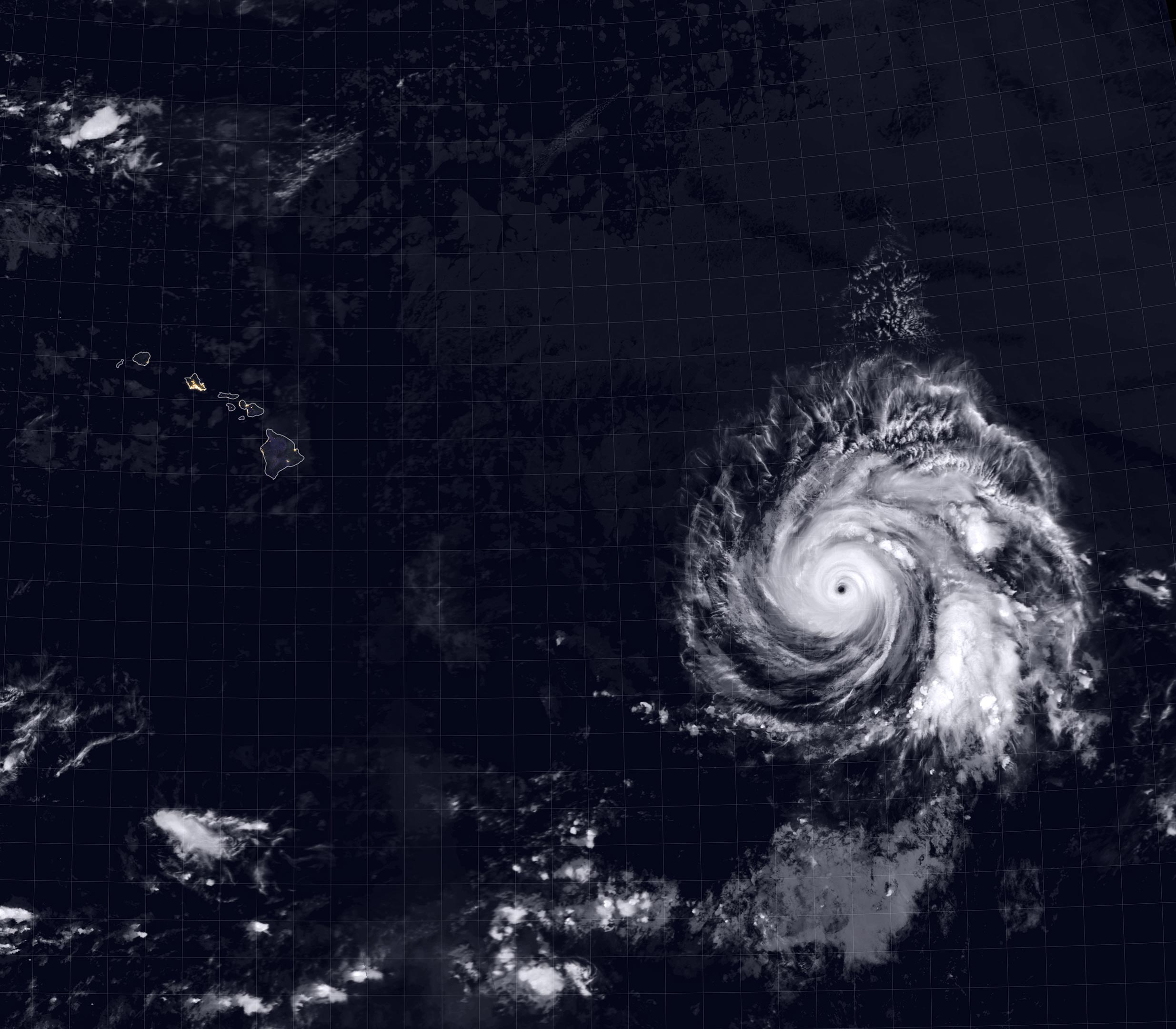
    Hurricane Douglas July 24, 2020 - Annotated
    Click image for full, detailed view.

    In July 2020, the Eastern Pacific experienced its first major hurricane of the year. After intensifying to category 4 strength on July 23, Douglas rapidly moved across the central Pacific and is predicted to make landfall in the eastern Hawaiian Islands by July 26.

    The image above shows Douglas on July 23, 2020, at approximately 9:45 p.m. Hawaiian Standard Time. Clouds are shown in infrared using brightness temperature data, which is useful for distinguishing cooler cloud structures from the warmer surface below, from the Moderate Resolution Imaging Spectroradiometer (MODIS) on NASA’s Terra satellite. The image is overlaid with composite imagery of city lights from NASA’s Black Marble data. As of the morning of July 24, Douglas was a category 3 hurricane with maximum sustained winds near 120 miles (195 kilometers) per hour.

    Douglas has moved over slightly cooler water and is slowly weakening as it encounters drier air. According to the Central Pacific Hurricane Center (CPHC), Douglas will likely downgrade to a category 1 hurricane or strong tropical storm as it approaches the Hawaiian Islands.

    However, heavy rains and strong winds associated with the storm may result in flash flooding, landslides, and life-threatening surf and rip current conditions. Officials are organizing shelters on the “Big Island” of Hawaii and urging residents to stock up on food. Depending on how fast the storm degrades, the storm’s track could affect one or several islands.

    As Douglas churns in the Pacific, the Atlantic basin is also stirring with two storms. Tropical storm Gonzalo is forecasted to bring heavy rain and potentially life-threatening flash flooding to the southern Windward Islands on July 25. Hurricane and tropical storm warnings are in effect for some of them. Tropical storm Hanna is moving across the Gulf of Mexico and is expected to bring heavy rain to parts of southern Texas on July 25.

    NASA Earth Observatory image by Joshua Stevens, using VIIRS day-night band data from the Suomi National Polar-orbiting Partnership and MODIS data from NASA EOSDIS/LANCE and GIBS/Worldview.

    Never miss a breakthrough: Join the SciTechDaily newsletter.
    Follow us on Google and Google News.

    Hurricane NASA NASA Earth Observatory Weather
    Share. Facebook Twitter Pinterest LinkedIn Email Reddit

    Related Articles

    A Changed Landscape in Southern Louisiana After Hurricane Ida: Large New Patches of Open Water

    NASA Satellite Observes Massive Power Outages in New Orleans

    Hurricane Ida Batters Louisiana: 5th-Strongest Storm Ever To Make Landfall in the Continental U.S.

    Incredible View of Tropical Storm Elsa Captured From Space

    Dangerous Category 5 Hurricane Iota Sets Late-Season Records

    Hurricane Zeta Arrives on the Gulf Coast – Dramatic Space Station Flyover Video

    Historic 2020 Atlantic Hurricane Season Is Not Done: Hurricane Delta Aims for the U.S. Gulf Coast

    NASA Watches a Dangerous Storm Nearing the Gulf Coast

    Brace for an Active 2020 Hurricane Season

    Leave A Reply Cancel Reply

    • Facebook
    • Twitter
    • Pinterest
    • YouTube

    Don't Miss a Discovery

    Subscribe for the Latest in Science & Tech!

    Trending News

    Your Blood Pressure Reading Could Be Wrong Because of One Simple Mistake

    Astronomers Stunned by Ancient Galaxy With No Spin

    Physicists May Be on the Verge of Discovering “New Physics” at CERN

    Scientists Solve 320-Million-Year Mystery of Reptile Skin Armor

    Scientists Say This Daily Walking Habit May Be the Secret to Keeping Weight Off After Dieting

    New Therapy Rewires the Brain To Restore Joy in Depression Patients

    Giant Squid Detected off Western Australia in Stunning Deep-Sea Discovery

    Popular Sugar-Free Sweetener Linked to Liver Disease, Study Warns

    Follow SciTechDaily
    • Facebook
    • Twitter
    • YouTube
    • Pinterest
    • Newsletter
    • RSS
    SciTech News
    • Biology News
    • Chemistry News
    • Earth News
    • Health News
    • Physics News
    • Science News
    • Space News
    • Technology News
    Recent Posts
    • Hidden Warm Water Beneath Antarctica Could Rapidly Raise Global Sea Levels
    • Scientists Revive Ancient Chemistry Trick To Engineer Next-Generation Glass
    • Scientists Use AI To Supercharge Ultrafast Laser Simulations by More Than 250x
    • Scientists Just Found a Surprising Way To Destroy “Forever Chemicals”
    • Popular Supplement Ingredient Linked to Shorter Lifespan in Men
    Copyright © 1998 - 2026 SciTechDaily. All Rights Reserved.
    • Science News
    • About
    • Contact
    • Editorial Board
    • Privacy Policy
    • Terms of Use

    Type above and press Enter to search. Press Esc to cancel.