
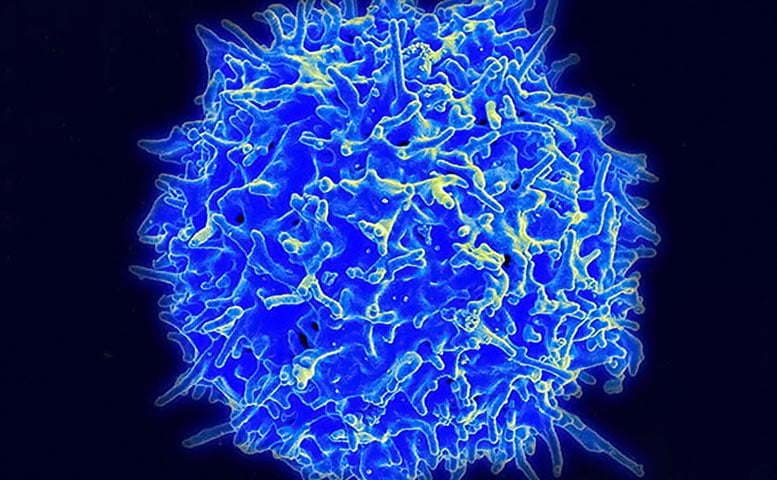
New findings may provide new therapeutic target and help explain why IBD and other autoimmune diseases are often chronic and life-long.
Inflammatory bowel disease (IBD) is a group of intestinal disorders affecting an estimated six to eight million people worldwide. Although there are many treatments for IBD, a number of patients fail to respond long-term, leaving those afflicted with a host of chronic issues, from abdominal pain and cramping to frequent, bloody stools.
In a new study, published on August 21, 2020 in Science Immunology, an international team of researchers, led by scientists at University of California San Diego School of Medicine, report that the lasting nature of IBD may be due to a type of long-lived immune cell that can provoke persistent, damaging inflammation in the intestinal tract.
Led by co-senior authors John T. Chang, MD, professor of medicine, and Gene W. Yeo, Ph.D., professor of cellular and molecular medicine, the research team performed mRNA and antigen receptor sequencing from immune cells isolated from samples taken from rectal biopsies or blood of IBD patients and healthy controls.
“We took advantage of a state-of-the-art approach allowing us to generate mRNA and antigen receptor sequencing data from the same single cells,” said Yeo, “and analyzed thousands of individual cells, which is quite exciting.”
It has long been believed that immune system dysfunction, in concert with genetic susceptibility and changes in the gut microbiome, plays a significant role in IBD. However, the types of immune cells involved and their specific contributions to IBD have remained unclear. CD8+ T cells are one component of the immune system that identify and kill cells infected by microbial pathogens.
When an infection has been conquered, the immune system leaves behind long-lasting cells called memory T cells, which reside in tissues or circulate through the body remembering past pathogens, ever ready to sound the alarm should specific invaders reappear.
Chang and Yeo, along with co-first authors Brigid S. Boland, MD, Zhaoren He, Ph.D., Matthew S. Tsai, MD, Ph.D., and colleagues, discovered that there appear to be several subtypes of CD8+ tissue-resident memory T (TRM) cells, a specific class of memory cell that resides in organs once formed.
One of these TRM cell subtypes was distinguished by high levels of the transcription factor Eomesodermin and programmed to produce large amounts of cytokines and other molecules to kill newly detected infected cells. The downside is that excessive, persistently high levels of some cytokines can cause inflammation and tissue damage.
“We found that this inflammatory TRM cell subtype seemed to be enriched in the intestinal tissues of patients with ulcerative colitis, a form of IBD that affects the colon,” said Chang. “Long-lived memory cells are a goal of vaccines, but this finding suggests that these same cells, coveted in the fight against infectious diseases, may actually be harmful in the context of IBD.”
The researchers also found evidence that this inflammatory TRM cell subtype might not remain confined to intestinal tissue, but may also escape into the bloodstream.
“This may explain why IBD can affect not just the intestines, but many other parts of the body as well,” said Boland, a gastroenterologist at UC San Diego Health and assistant adjunct professor of medicine.
Chang said the findings may help to explain why IBD is chronic and life-long, and point to the possibility of a remedy in the future: Targeting this inflammatory TRM cell subtype for elimination, thus ending the cycle of inflammation and tissue damage.
The researchers noted that much more work is needed to gain a deeper understanding of the role of tissue-resident memory T cells in IBD and to determine whether they can be targeted therapeutically.
Reference: “Heterogeneity and clonal relationships of adaptive immune cells in ulcerative colitis revealed by single-cell analyses” by Brigid S. Boland, Zhaoren He, Matthew S. Tsai, Jocelyn G. Olvera, Kyla D. Omilusik, Han G. Duong, Eleanor S. Kim, Abigail E. Limary, Wenhao Jin, J. Justin Milner, Bingfei Yu, Shefali A. Patel, Tiani L. Louis, Tiffani Tysl, Nadia S. Kurd, Alexandra Bortnick, Lauren K. Quezada, Jad N. Kanbar, Ara Miralles, Danny Huylebroeck, Mark A. Valasek, Parambir S. Dulai, Siddharth Singh, Li-Fan Lu, Jack D. Bui, Cornelis Murre, William J. Sandborn, Ananda W. Goldrath, Gene W. Yeo and John T. Chang, 21 August 2020, Science Immunology.
DOI: 10.1126/sciimmunol.abb4432
Co-authors include: Joselyn G. Olvera, Kyla D. Omilusik, Han G. Duong, Eleanor S. Kim, Abigail E. Limary, Wenhao Jin, J. Justin Milner, Bingfei Yu, Shefali A. Patel, Tiani L. Louis, Tiffani Tysi, Nadia S. Kurd, Alexandra Bortnick, Lauren K. Quezada, Jad N. Kanbar, Ara Miralles, Mark A. Valasek, Parambir S. Dulai, Siddarth Singh, Li-Fan Lu, Jack D. Bui, Conelis Murre, William J. Sandborn, and Ananda W. Goldrath, all at UC San Diego; and Danny Huylebroeck, University of Leuven, Belgium and Erasmus University Medical Center, Netherlands.
Funding for this research came, in part, the National Institutes of Health (grants P30KC063491, P30CA023100, S10OD026929, NS047101, S10OD018499, TR001444, DK123406, DK007202, AI082850, AI00880, AI123202, AI129973, BX003424, AI132122, MH107367), the San Diego Digestive Diseases Research Center (grant P30DK120515) and the Cancer Center Support Grants (grant P30CA23100) and the Kenneth Rainin Foundation.
Never miss a breakthrough: Join the SciTechDaily newsletter.
Follow us on Google and Google News.