
Close Menu
    Facebook X (Twitter) Instagram
    SciTechDaily
    • Biology
    • Chemistry
    • Earth
    • Health
    • Physics
    • Science
    • Space
    • Technology
    Facebook X (Twitter) Pinterest YouTube RSS
    SciTechDaily
    Home»Space»Is Dark Matter… Evolving? A New Theory To Solve the Universe’s Biggest Mystery
    Space

    Is Dark Matter… Evolving? A New Theory To Solve the Universe’s Biggest Mystery

    By Brian Koberlein, Universe TodayOctober 11, 20251 Comment3 Mins Read
    Facebook Twitter Pinterest Telegram LinkedIn WhatsApp Email Reddit
    Share
    Facebook Twitter LinkedIn Pinterest Telegram Email Reddit
    Dark Matter Astrophysics Art Concept Illustration
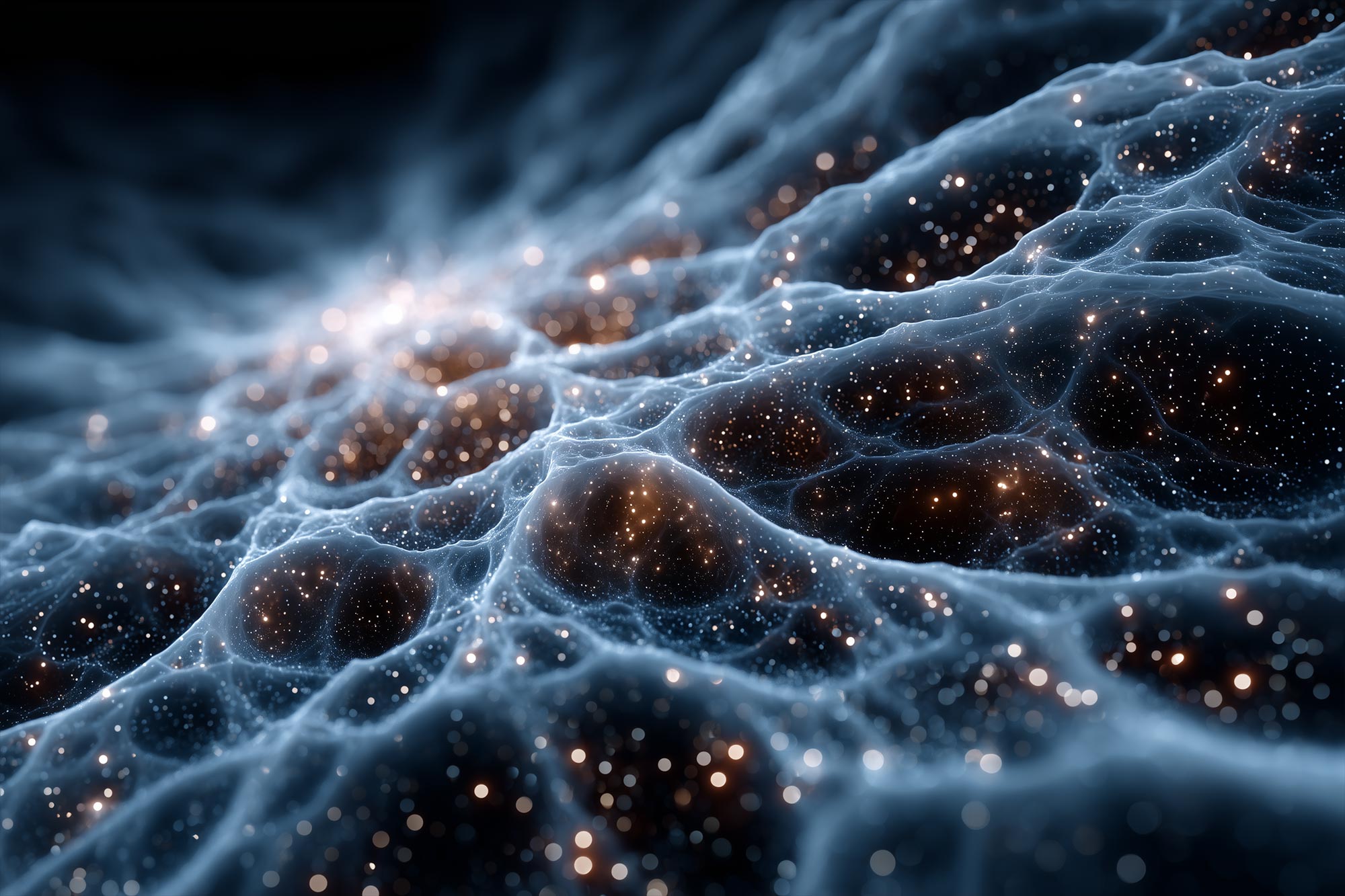
    Cosmologists propose a new angle on the Hubble tension: let a small fraction of dark matter evolve in time rather than revising gravity or dark energy. Credit: SciTechDaily.com

    Evolving dark matter may explain cosmic acceleration. Observations support a mixed model.

    For years, a stubborn puzzle has sat at the center of the standard cosmological model. The evidence clearly supports an expanding Universe, yet measurements from the early cosmos suggest a lower acceleration rate than measurements made nearby in space and time.

    This mismatch is known as the Hubble tension problem, and there is still no agreed solution. Many ideas have been floated. Perhaps general relativity is incomplete. Perhaps dark matter does not exist. Perhaps the flow of time is not uniform. Some even ask whether the entire Universe rotates. Here is another possibility to consider: dark matter might change over time.

    Considering dark matter evolution

    Models in which dark energy evolves have been explored, but the notion that dark matter itself evolves has received far less attention. There are two main reasons. First, observations that point to dark matter are strong. They imply the presence of a substance that barely interacts with light.

    The major weakness is that no one has directly detected a dark matter particle. Second, many critics of dark matter aim to remove it entirely through modified gravity ideas. To them, dark matter is not a concept to adjust but a premise to discard. That is why the proposal of evolving dark matter is intriguing.
    DESI’s 3D Map of the Universe
    DESI has made the largest 3D map of our universe to date. Earth is at the center of this thin slice of the full map. Credit: Claire Lamman/DESI collaboration

    In this work, the authors look at both evolving dark energy and evolving dark matter and argue that the latter is a much better fit to observational data. The first thing they note is that the two models are somewhat related. Since the evolution of the cosmos depends in part on the ratio of energy density to matter density, a model with constant dark matter and evolving dark energy will always appear similar to a model with evolving dark matter and constant dark energy.

    Exotic dark matter and oscillations

    They then go on to explore the idea of some kind of exotic dark matter. One that has a changeable equation of state (EOS). To match observation, the dark matter EOS must oscillate in time. This isn’t an outlandish notion. Neutrinos have mass and don’t interact strongly with light.

    While they can’t account for all the dark matter of the Universe, they are a form of hot dark matter. And neutrinos undergo mass oscillation. Perhaps cold dark matter particles undergo a similar oscillatory effect. The authors find that the best fit to observational data is a Universe where about 15% of the cold dark matter is oscillatory and the remaining 85% is standard dark matter. This would allow for the Hubble tension to be covered while still matching the dark matter observations we have.

    It should be stressed that this work presents a toy model. As the authors themselves note, the work is a broad concept that does not pin down specific constraints for dark matter particles. But this work does open the door to a broader range of dark matter models. At this point, evolving dark matter is worth considering.

    Reference: “Evolving Dark Energy or Evolving Dark Matter?” by Xingang Chen and Abraham Loeb, 5 May 2025, arXiv.
    DOI: 10.48550/arXiv.2505.02645

    Adapted from an article originally published on Universe Today.

    Never miss a breakthrough: Join the SciTechDaily newsletter.
    Follow us on Google and Google News.

    Astrophysics Cosmology Dark Energy Dark Matter Neutrinos
    Share. Facebook Twitter Pinterest LinkedIn Email Reddit

    Related Articles

    A 20-Year Cosmic Quest Ends, but the Universe Just Got More Mysterious

    Scientists Map the Invisible Universe, Revealing New Clues About Dark Matter and Dark Energy

    What If Einstein Was Only Half Right? NASA’s New Test for Dark Energy

    Is Einstein’s “Cosmological Constant” Wrong? New Data Suggests Dark Energy Is Evolving

    Dark Matter and Dark Energy Don’t Exist, New Study Claims

    Study Reveals Indications That Dark Matter is Being Erased by Dark Energy

    New Research Suggests Dark Energy Hides Behind Phantom Fields

    Researchers Use New CMB Data to Analyze the First Hundred Thousand Years of Our Universe

    Module for ESA’s Euclid ‘Dark Universe’ Mission in Development

    1 Comment

    1. Boba on October 12, 2025 2:13 pm

      The only thing evolving in this “dark matter” theory are the goal posts.

      Much like in the “global warming” theory.

      Reply
    Leave A Reply Cancel Reply

    • Facebook
    • Twitter
    • Pinterest
    • YouTube

    Don't Miss a Discovery

    Subscribe for the Latest in Science & Tech!

    Trending News

    Millions Take These IBS Drugs, But a New Study Finds Serious Risks

    Scientists Unlock Hidden Secrets of 2,300-Year-Old Mummies Using Cutting-Edge CT Scanner

    Bread Might Be Making You Gain Weight Even Without Eating More Calories

    Scientists Discover Massive Magma Reservoir Beneath Tuscany

    Europe’s Most Active Volcano Just Got Stranger – Here’s Why Scientists Are Rethinking It

    Alzheimer’s Symptoms May Start Outside the Brain, Study Finds

    Millions Take This Popular Supplement – Scientists Discover a Concerning Link to Heart Failure

    The Universe Is Expanding Too Fast and Scientists Can’t Explain Why

    Follow SciTechDaily
    • Facebook
    • Twitter
    • YouTube
    • Pinterest
    • Newsletter
    • RSS
    SciTech News
    • Biology News
    • Chemistry News
    • Earth News
    • Health News
    • Physics News
    • Science News
    • Space News
    • Technology News
    Recent Posts
    • U.S. Waste Holds $5.7 Billion Worth of Crop Nutrients
    • Scientists Say a Hidden Structure May Exist Inside Earth’s Core
    • Doctors Surprised by the Power of a Simple Drug Against Colon Cancer
    • Why Popular Diabetes Drugs Like Ozempic Don’t Work for Everyone: The “Genetic Glitch”
    • Scientists Create Improved Insulin Cells That Reverse Diabetes in Mice
    Copyright © 1998 - 2026 SciTechDaily. All Rights Reserved.
    • Science News
    • About
    • Contact
    • Editorial Board
    • Privacy Policy
    • Terms of Use

    Type above and press Enter to search. Press Esc to cancel.