
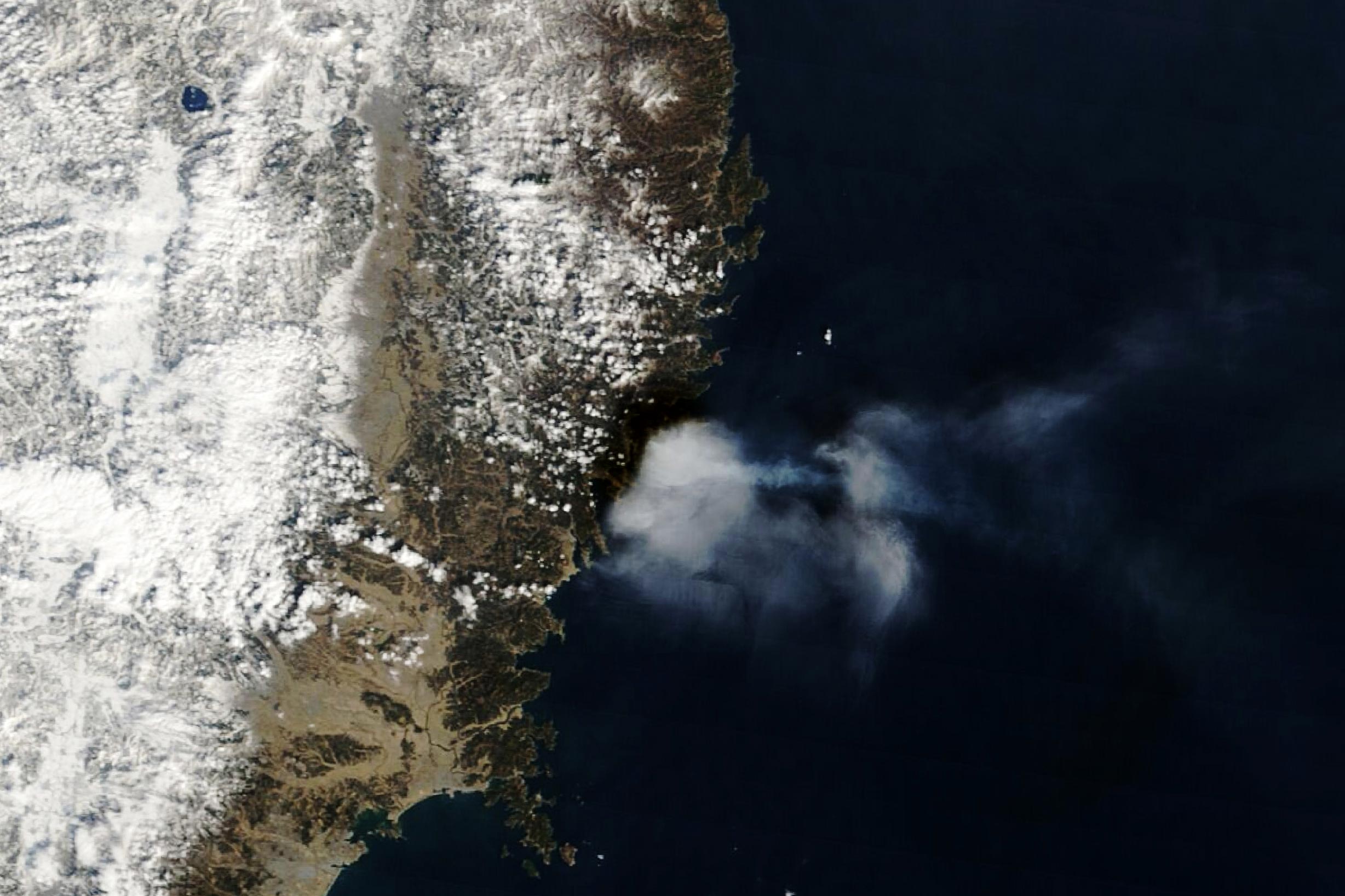
A massive wildfire erupted near Ofunato, Japan, consuming thousands of hectares of forest in what has become the country’s largest blaze in over 30 years.
Dry conditions, record-low February rainfall, and strong winds fueled the flames, making containment efforts extremely difficult. NASA satellites captured dramatic images of thick smoke blanketing the area, while officials scrambled to evacuate thousands of residents. With over 2,000 firefighters battling the inferno, the disaster highlights the growing intensity of Japan’s wildfire seasons.
Massive Wildfire Engulfs Northern Japan
A massive wildfire, the largest Japan has seen in decades, spread rapidly through dry, windy conditions in late winter 2025. By March 3, the fire had scorched approximately 2,100 hectares (8.1 square miles) of forest near Ofunato, a coastal city about 400 kilometers (250 miles) north of Tokyo.
According to Japan’s Fire and Disaster Management Agency (FDMA), the blaze ignited around 1 p.m. local time on February 26. By March 1, NASA’s Terra satellite, using its MODIS (Moderate Resolution Imaging Spectroradiometer) sensor, captured striking images of thick smoke billowing from the fire. A dense plume hovered over the coast, casting shadows on the Ofunato area, while lighter smoke drifted eastward over the Pacific Ocean.
Japan’s Largest Blaze in Over 30 Years
By the time the satellite image was taken, the fire had already burned through an estimated 1,200 hectares (4.6 square miles) of forest, making it Japan’s largest wildfire in over 30 years. For comparison, the country’s previous record-holder, a 1992 fire in Hokkaido, burned 1,030 hectares, according to a fire agency spokesperson cited by The Japan Times.
Wildfires frequently occur in Japan between January and May, when the air is drier, but they tend to be much smaller in size than the one burning in early 2025, according to news reports. However, conditions were unusually dry leading up to this event. Ofunato received only 2.5 millimeters (0.1 inches) of precipitation in February 2025, the lowest monthly total for February in a record going back to 1964. Strong winds that fanned the flames and steep terrain that challenged containment efforts also contributed to this fire’s growth, experts told news outlets.
Widespread Damage and Evacuations
In addition to burning through forested land, the fire damaged dozens of structures and prompted officials to issue evacuation orders to more than 4,500 people, said FDMA. According to news reports, more than 2,000 firefighters from across the country were deployed to combat the blaze.
NASA Earth Observatory image by Lauren Dauphin, using Landsat data from the U.S. Geological Survey.
Never miss a breakthrough: Join the SciTechDaily newsletter.
Follow us on Google and Google News.